The rise of social and home robots: Transforming our lives with AI advancements

From the early days of bulky, room-sized computers to today’s sleek, powerful smartphones, technology has continuously become more integrated into our daily lives. The rise of AI has further accelerated this transformation, enabling innovations such as voice-activated virtual assistants, smart home devices, and autonomous vehicles. Amidst these technological strides, social and home robots have emerged, bringing a new dimension to how we interact with machines in our personal spaces.

Social robots are designed to engage with humans socially, often serving as companions, educators, or caregivers. These robots can recognize and respond to emotions, hold conversations, and even provide companionship to older people or those living alone. 

On the other hand, home robots are primarily designed to perform household tasks, making our lives more convenient and efficient. These robots can assist with cleaning, security, and even personal care.

As technology continues to advance, the capabilities of social and home robots will only expand, further integrating into our lives and transforming the way we live, work, play, and interact with our surroundings.

Robots in our lives

Social and home robots are emerging as valuable tools in modern society. They can play a crucial role in enhancing emotional well-being by providing companionship and reducing loneliness, particularly among older people and those living alone.

Social robots also offer practical benefits by assisting with household chores, allowing individuals more time for meaningful activities. They also support learning in educational settings by providing personalized assistance and engaging students in interactive ways.

As we integrate robots like these into our daily lives, it is crucial to understand the complexities of this technology. Ensuring that robots enhance rather than detract from our lives requires careful consideration of ethical and practical implications. Privacy concerns, the potential for over-reliance, and the need for human oversight are essential factors to address. By thoughtfully incorporating robots into our homes and social environments, we can leverage their benefits while mitigating potential drawbacks, ultimately enriching our lives meaningfully.

It can be your AI companion. As I mentioned, one of the most notable benefits of social robots is their ability to combat loneliness, especially among older people and individuals living alone. An example is Intuition Robotics. The company aims to empower older adults to live happier, healthier, and independent lives at home with an empathetic digital companion.

A study by the University of Glasgow, published in the International Journal of Social Robotics, highlighted another social robot, Pepper’s, potential to combat loneliness. Participants interacted with Pepper via Zoom over five weeks, and results showed that people disclosed more about themselves over time and felt less lonely. This interaction also improved their mood, indicating the robot’s potential as an emotional support tool. These robots can engage in conversations, provide reminders, and even offer entertainment, creating a sense of presence and interaction.

How about a robotic tutor? Researchers recently conducted an experiment involving 26 university students whose native language was Japanese. The students underwent a pre-test to assess their English-speaking skills. Based on their average scores, the students were divided into two groups: 14 students received instruction from a robot, while the remaining 12 participants received online lessons from English language teachers.

The results indicated that the group taught by the robot made fewer errors and spoke more fluently than the group taught by human tutors.

Who doesn’t want a house-cleaning “humanoid”? In addition to emotional and educational support, home robots can significantly reduce the time and effort spent on household tasks. Take Eve, for example. It is a humanoid robot that can perform a range of tasks. Equipped with cameras and sensors to perceive and interact with their surroundings, their mobility, dexterity, and balance allow them to navigate complex environments and manipulate objects effectively. This capability is particularly beneficial for busy families and individuals with physical limitations.

The future with robots

Social and home robots promise to transform our homes and enhance our daily lives in profound ways in the future. These robots can perform mundane tasks, creating more leisure time for us to spend on activities that matter most, such as pursuing hobbies, spending time with loved ones, and engaging in meaningful experiences.

According to Dr. Guy Laban, an Affiliated Research Associate at the University of Glasgow and a Postdoctoral Research Associate at the University of Cambridge, these robots can also become valuable conversational partners, crucial in interventions that support emotional health. His research highlights how robots can provide meaning and a safe space for those in need, lifting people’s moods even during challenging times like the pandemic.

The potential for robots to positively enhance our emotional and physical well-being is immense. Recent advances in AI, such as generative AI and large language models, are rapidly expanding the possibilities.

Roboticists often cite Moravec’s paradox: What is hard for humans is easy for machines, and what is easy for humans is hard for machines. AI is changing that.

One idea is to use the generative AI behind ChatGPT and similar tools to complete faster training and develop more skills for robots. Efforts include ways to program robots with plain written English rather than complex code and using AI systems to have robots learn by observing.

Specialized computer chips for robots will help, too. Nvidia recently unveiled a new chip and AI software for humanoid robots. AMD, Intel, Google, and Qualcomm also designed systems for robots.

AI capabilities will also enable robots to learn, reason, and make decisions based on complex data sets. This will allow robots to perform more complex tasks and adapt to changing environments, making them more versatile and useful.

Sensory abilities such as sight, touch, and hearing will enable robots to navigate their environment more effectively, interact with humans more intuitively, and perform more complex tasks that require precise sensory input.

Ultimately, the goal is not to eliminate human-to-human interaction but to create more space for it. Ethics must be at the forefront as we integrate these technologies into our homes. Understanding how humans establish healthy and constructive relationships with robots is critical to ensuring their ethical and responsible deployment. This careful consideration will help us harness the benefits of social and home robots while safeguarding our values and well-being.

Blog Futurism & Technology Trends Innovation

How Generations Z and Alpha are shaping the future of AI

As artificial intelligence (AI) becomes more and more engrained into our daily lives, we see Generation Z and Generation Alpha pioneering the use and development of this technological frontier. Their interaction with AI is redefining its applications and creating a future that we are only just starting to imagine.

Let’s delve into how these generations use AI today and what we can expect from them in the future.

Today’s AI Playground: From virtual clones to classroom helpers

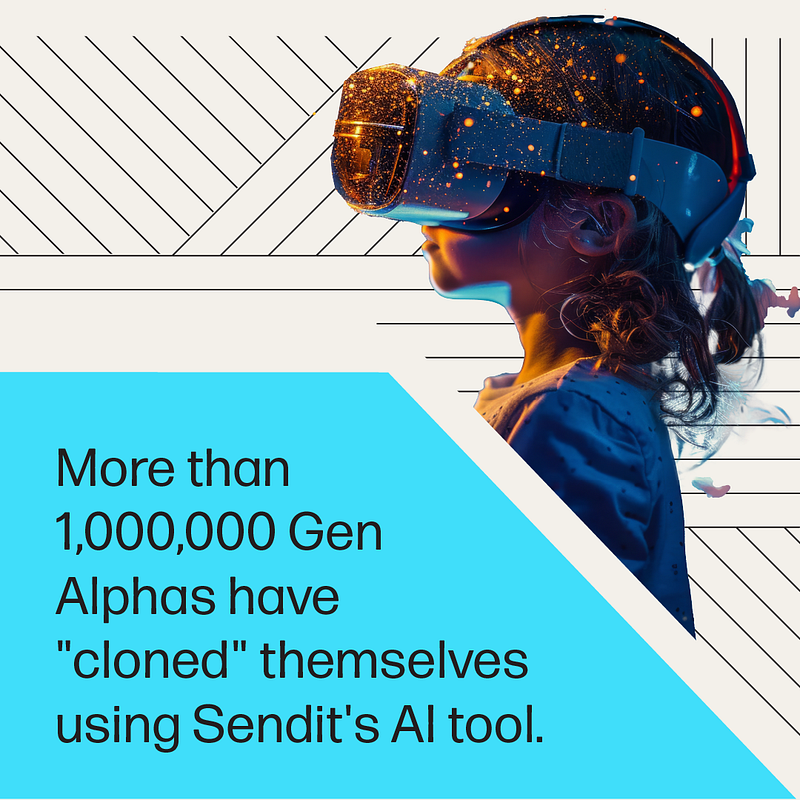
Imagine having a virtual twin — a clone that knows you so well that it can answer and initiate questions on your behalf. For 1 million Gen Alpha users, this isn’t sci-fi: it’s reality, courtesy of Sendit. More than 1,000,000 Gen Alphas have already cloned themselves using Sendit’s AI tool. The app can share your story, even when you are not there, help friends pick out a present for you, or recommend a cool new restaurant to cousins.

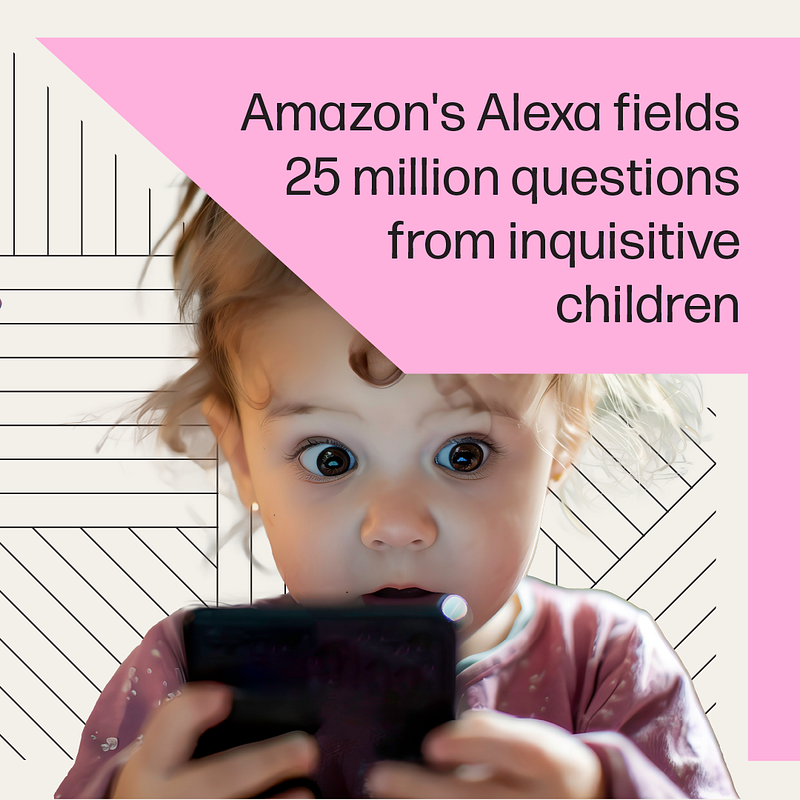
But AI is not all fun and games. It is also transforming the way learning is delivered and received. Every month, Amazon’s Alexa fields 25 million questions from inquisitive children, showing that the thirst for knowledge is now quenched through voice-activated AI. 

ChatGPT is also proving to be a useful tool for both educators and students. A recent survey by Impact Research found that 51% of teachers reported using ChatGPT and a third of students.

AI in the classroom is just the beginning. As 2024 graduates step into the real world, a staggering 50% plan to acquire new skills, fully aware that tools like ChatGPT and DALL-E will be part of their future careers.
Salesforce found that 65% of today’s generative AI users are Millennials or Gen Z, and a formidable 72% of this cohort is gainfully employed, signifying the seamless integration of AI in the working world.

Moreover, nearly half of Gen Z prefer AI over their managers for advice, according to Workplace Intelligence. It’s clear that trust in AI’s capabilities is burgeoning.

Gen Z and Gen Alpha’s imprint on the next wave of AI technologies

With Gen Z being considered digital natives and Gen Alpha taking the crown as AI natives, it’s no wonder they are profoundly impacting where AI technology is heading.

Take Elemental Path’s CogniToy’s Dino, designed for young Gen Alphas, which uses IBM’s Watson to answer children’s questions and converse with them.

LEGO’s Boost Sets combine classic play with coding, demonstrating how introducing technology through fun and popular building blocks can teach kids about coding and AI. But Brian Schwab, director of interactive design at the LEGO Group sees this as only the beginning. In an interview with Toolify.Ai, Schwab shared that LEGO is incorporating AI to enhance the creative and interactive aspects of their iconic building bricks, allowing children to tell their own stories and explore their creativity in new ways.

Language learning has found a new ally in AI. The Duolingo Max application uses ChatGPT-4 to provide feedback and highly tailored lessons, much like a virtual tutor. Thus, creating more personalized learning experiences.

Personalization hits a high note as Spotify’s AI DJ presents music tailored to Gen Z and Gen Alpha tastes — be it fresh hits or old favorites. Spotify editors use GenAI to offer up facts about the music, artists, or genres being listened to. Through their acquisition of Sonantic they are also able to create AI DJs.

Gen Z doesn’t just see personalization for music; they would like to see AI bring personalization to all factors of their lives, including shopping. 88% of Gen Z consumers believe AI will improve online shopping. More than half of them hope for an AI shopping assistant to make it easier to find products based on their personal interests.

How those online products are delivered is also paramount to both Gen Z and Gen Alpha, who put sustainability and social awareness at the top of their interest list. This is helping to fuel new AI innovations. Amazon’s Package Decision Engine uses a multimodal AI model to determine the most efficient packaging for each item sold on its website. Meanwhile, DHL’s AI-powered OptiCarton software plays a game of Tetris with shipping containers, ensuring each container is filled with parcels, leaving no empty spaces.

Gen Z and Gen Alpha’s comfort level with AI and world views will shape what AI-powered apps they will use directly and how AI will be used to enhance the world around them. Their interaction with AI across learning, play, work, and lifestyle is a precursor to a society where AI is not just a tool but a collaborator, co-creator, and confidant.

Blog Futurism & Technology Trends Innovation

The Rapid Evolution of AI Assistants: From Chatbots to Agents

The swift transformation of AI assistants into agents marks a significant shift in how we perceive and interact with digital technology. Gone are the days when these virtual helpers were simply chatbots to interact with. Now, they’re evolving into proactive, autonomous agents capable of independent decision-making and personalized assistance.

Today, AI agents are focused on accomplishing relatively simple tasks, from proactively scheduling your appointments to booking your flights, but in the future, they may help run companies. This transition from assistants to agents is reshaping our relationship with technology and opening new possibilities. 96% of executives agree leveraging AI agent ecosystems will be a significant opportunity for their organizations in the next three years.

Understanding the shift

The distinction between AI assistants and agents is their level of autonomy and intelligence. While traditional assistants primarily respond to user-initiated commands, agents operate more autonomously, leveraging advanced machine learning algorithms to anticipate user needs and take proactive actions.

For example, an AI assistant may remind you to complete a task based on certain criteria. In contrast, an agent could automatically reschedule appointments based on your calendar and preferences without explicit instructions. When ChatGPT launched, some people assumed it was actively looking up information on the web. However, it was actually generating answers based on the vast amounts of data it had been previously trained on, drawing on the relationships between that data to provide users answers. Now, plugins enable ChatGPT to access the internet and AI agents to navigate the current digital world.

And ChatGPT is not alone. Recently, a startup called Cognition AI released a demo showing an AI agent called Devin performing work usually done by well-paid software engineers. While ChatGPT can generate code, Devin goes further — planning how to solve a problem, writing the code, and then testing, debugging, and implementing it.

Proactive personalization

One of the emerging characteristics of AI agents is their ability to provide proactive, personalized assistance. These agents can anticipate user needs by analyzing user behavior, preferences, and historical data to offer tailored recommendations or actions.

Imagine having an AI agent that reminds you of upcoming meetings or birthdays, suggests relevant articles based on your interests, orders groceries when your supplies are running low, and adjusts your smart home devices to optimize energy usage — all without asking it to do so.

Netflix uses learning-based AI agents to offer personalized recommendations based on your viewing history. Aomni’s personalized AI agents can handle sales tasks such as account planning and relationship building.

Empowering decision-making

As AI agents become increasingly sophisticated, they can be entrusted with more decision-making authority. These agents can make informed decisions on behalf of users, ranging from scheduling appointments to making purchase recommendations by learning from past interactions and analyzing real-time data.

In business, AI agents empower employees with insights and recommendations to enhance productivity and decision-making, enabling them to focus on other tasks. For example, in customer service, agents equipped with AI capabilities can analyze customer inquiries, identify patterns, and recommend solutions in real time, leading to more efficient and personalized interactions. This leaves them more time to focus on tasks that require a human touch. Several innovative startups are in this space. Ema, a Universal AI employee, is described as an operating system that makes Generative AI work at an enterprise level. The company believes that if there were fewer repetitive tasks, there would be more time for creative thinking. Gen AI offers an unprecedented opportunity to enable this. Watching apps like these transform the future of work will be fascinating.

Sierra AI is another great example of a startup making waves. Focused on elevating customer experiences with AI, Sierra AI enables customers to self-serve–getting answers, solving problems, and taking action through a natural, conversational experience. The AI agent is personalized to your business and its customers.

There is even work being done to explore the collaboration of Multi-Agent AIs working across an enterprise and various operations tapping into data across an organization to make faster and more informed decision-making.

Ethical considerations and challenges

While the evolution of AI assistants into agents offers immense potential, it raises important ethical considerations and challenges. Issues like data privacy, algorithmic bias, and accountability become more pronounced as AI agents gain autonomy and decision-making capabilities. We must all discuss and address these concerns proactively and ensure that AI agents are designed and deployed responsibly to uphold ethical principles and protect user interests. For example, the United States and Europe have enacted extensive legislation regarding employees and data protection. In Europe, Article 22 of the GDPR specifies that no employment decisions should be made entirely in an automated fashion.

AI’s future

The advancement of AI technology is expected to accelerate the transformation of assistants into agents, ushering in a new era of intelligent, autonomous digital entities.

AI agents promise to revolutionize how we interact with technology and navigate our daily lives, from enhancing productivity by adding time back in our day and personalization to driving innovation across industries.

While the journey to this future has begun, we are just at the beginning. We must all play a role in ensuring we manage it in a way that benefits humanity. A paradigm shift in human-computer interaction is blurring the lines between tools and autonomous entities. It includes everything from apps to agents, from point-and-click to natural language interfaces, and from static UI to UI, which is dynamically generated based on what the user wants. AI agents are becoming AI employees. As a society, we must learn how to collaborate with them as teammates and employees. It’s up to us — will we embrace this transformation with careful consideration of ethical implications and a commitment to leveraging AI technology for the betterment of society? If so, we can unlock our full potential to empower individuals, businesses, and communities in the digital age.

Potential to change the way we interact with computers. From apps to agents, from point-and-click to natural language interfaces, and from static UI to UI that is dynamically generated based on what the user wants to do.

AI agents become AI employees. As a society, we will need to learn how to collaborate with them as teammates and employees.

Blog Futurism & Technology Trends Innovation

Who is Generation Alpha? Understanding our future trendsetters

As the world evolves, so does each generation. Right now, the spotlight is on Generation Alpha, the demographic cohort succeeding Generation Z. But who exactly are they, and what sets them apart?

Meet Gen Alpha

Generation Alpha (Gen Alpha) consists of children born from 2010 to 2025. They are the offspring of Millennials and the first generation born entirely in the 21st century. Gen Alpha is expected to be the largest in history, with more than 2 billion people worldwide, and may outnumber Baby Boomers by next year.

They are also the most globally and racially diverse generation. Around the world, more than 2.8 million Gen Alpha are born every week, with the highest numbers in India, China, and Indonesia. In the U.S., there are over 51 million Gen Alphas. While just over half of Gen Z in the U.S. identify as non-Hispanic white, Gen Alpha will mark the first generation in which less than half of the population is white.

Our most tech-savvy generation yet

The Hyper-Digital Generation

For Generation Alpha, technology isn’t just prevalent; it’s omnipresent. The lines between offline and online life are blurred for these digital natives who have never known a world without smartphones, social media, or instant access to information.   

Augmented reality (AR), virtual reality (VR), and artificial intelligence (AI) are not cutting-edge innovations for Alphas; they are part of their daily lives.

Gen Alpha has never known a world without iPads. Nearly half of Gen Alphas own tablets. They have been exposed to tablets, mobile phones, and other electronic devices since a very young age.   

According to Razorfish, many young Gen Alphas between the ages of three and five already have tablets: 43% have one before age six. As they reach six and seven, they become exposed to more complex technologies, including video game consoles, earbuds, and smart TVs. By eight and nine, laptop and desktop computers are introduced, with their millennial parents giving them their first smartphone around nine.

Welcome to the “screen-age”

According to research firm Gitnux, children aged 8 to 12 spend nearly five hours per day on screens of various devices. Because they have access to many devices, Gen Alphas are used to focusing on multiple screens at once. This means they consume content in a very different way than previous generations.

Noah Mallin, chief strategy officer of media and social agency IMGN Media, provided a great example: “For Gen Alpha, it’s more like studying on Quizlet on your smartphone, while YouTube is on in the background on the family Roku — and you’re using the computer to hang out with friends in Minecraft.” This makes them highly effective multi-taskers and can result in shorter attention spans.

Content consumers and creators

YouTube is Gen Alpha’s favorite platform. In a Breno Bain survey of 7 to 14-year-olds, YouTube was seen as the coolest brand. It is also the favorite platform for consuming content, with 86% of Gen Alphas surveyed consuming content on YouTube. This is thanks to brands targeting this generation on the platform, and Gen Alpha influencers and content creators continually popping up on YouTube and TikTok.

Take Ryan Kaji, a Kidfluencer with nearly 37M followers on YouTube, Everleigh Soutas with nearly 4M followers on YouTube, EthanGamer and his 3.2M followers who watch him play Roblox and Minecraft, and Nastya with her whopping 114M followers.

Creative gamers

Like Gen Z, Gen Alphas are also big gamers. But where Gen Z likes gaming to escape or relax, Gen Alpha sees it as a creative outlet, a place to build their worlds, and a place to socialize. Games like Roblox and Minecraft are their gaming worlds of choice. That’s why brands like Walmart, Nike, Barbie, and the NBA have all found their way onto Gen Alpha-heavy platforms.

AI natives

While Gen Z is referred to as “digital natives,” Gen Alpha has earned the honor of being coined “AI natives.” Gen Alpha has grown up alongside AI innovations, from Alexa to Google Assistant, AI-based characters in video games, deepfake YouTube videos, and ChatGPT. They’re the most comfortable generation yet when collaborating and conversing with AI.

What’s important to Gen Alpha?

Education, creativity, and independence

For Gen Alpha, education is becoming more personalized and technology-driven than any previous generation. They value creativity and are likely to pursue learning paths that allow them to explore their imaginative sides. Gen Alpha knows how to quickly navigate the digital landscape to find solutions, explore new ways of individual expression, and acquire knowledge independently.

Environmental concerns

Growing up with climate change as an ever-present concern, Gen Alpha places great importance on sustainability. They are already aware of our planet’s environmental challenges and are poised to be more eco-conscious in their choices, even more so than Gen Z. One-third of Gen Alphas surveyed said they want to make a difference, help others, or help the planet when asked what they want to be when they grow up.

Diversity, inclusion, and authenticity

Living in a hyperconnected world, Gen Alpha is the most globally aware generation yet. Their interconnectedness offers them access to news, resources, and cultures that have the potential to shape their views as global citizens and how they advocate for causes that are most important to them.

Gen Alpha expects to see these values reflected in society because they were introduced to diversity and inclusion from an early age. They are growing up in a world where gender fluidity and racial equality are increasingly recognized, shaping a more accepting worldview. 92% of Gen Alpha respondents understand the power of authenticity. They value standing up for people, understanding people who are different, learning new things, and self-expression.

Brand loyalty

While Gen Z has expressed its anti-consumerism sentiments, distancing itself from overconsumption, Gen Alpha is more like its Millennial counterparts, exhibiting brand loyalty and obsession. Examples of that can be seen in their recent obsession with Stanley Quenchers and Sephora products.

Gen Alpha also has a big influence on their parents’ purchases, with Morning Consult reporting that by age 5, they are influencing household purchase decisions, with 85% of parents saying that their five- to nine-year-olds have explicitly requested products they’ve seen in stores, on TV, or online.

Gen Alpha is already showing its discerning taste and is looking for authenticity in brand marketing and relatable spokespeople. Brands like Claire’s are creating The Collab, a community platform targeted at Gen Alpha and Gen Z to connect with musicians, dancers, skateboarders, fashion influencers, and more. Crayola is following its massive YouTube success with Gen Alpha-specific content that resulted in a 40X increase in organic views by bringing it to other platforms such as TikTok and Pinterest.

Future job market

Gen Alpha will make up 11% of the adult workforce by 2030, and 65% of Gen Alphas will work in jobs that don’t exist today. Unlike Gen Z, Gen Alphas will enter a job market dominated by AI and automation. Adaptive skills and continuous learning will be essential for success in their careers.

This generation is ready to embrace these new skills and technologies, with 59% of Gen Alpha believing that AI, virtual reality, and smart assistants will be integral to their future jobs. They see technology as a way of engaging with the world and will bring a more global view to their jobs.

They have also watched their parents transition during Covid to a more flexible work set-up, making remote and hybrid work not a nice to have for Gen Alpha but an expectation.

This generation has the potential to be innovative and entrepreneurial trailblazers, adept at research, problem-solving, online collaboration, and a strong desire to make a difference.

Generation Alpha is set to leave a bold imprint on our cultural, technological, and environmental landscape. Their ingrained understanding of technology, alongside a strong sense of social responsibility, may well propel us toward a future that prior generations could scarcely have imagined.

Futurism & Technology Trends

How I manage my to-do list with email: Part 2

Keeping track of all your to-dos is never easy, but implementing a process and system to manage them can really help you function at your optimal capacity.
 
 I recently shared a strategy outlining how to:

  • Archive all your email so you never have to worry about deleting an email again
  • Declutter your inbox
  • Process your inbox
  • Track everything you delegate and everything you are ‘waiting for’ via a Pending folder.

In this post, I’ll cover managing and tracking your next actions so you never have to worry about dropping the ball again.

As mentioned previously, efficiently processing your inbox involves doing one of four things with each email:

  • Read and delete. No action is needed.
  • Do. If I think it will take me less than 2 minutes to respond to an email, I will do it then and there and then delete it.
  • Delegate. Forward, ask someone to do something based on the email, and then delete it. Per my previous post on this topic, remember to copy yourself when you delegate over email so you can track everything you’re waiting on someone for in your Pending folder.
  • Queue up for the next action needed. These are the emails I need to spend more time on and that I haven’t been able to delete, delegate, or do within the 2-minute rule.


Let’s focus on that last point: how to queue up things for the next action needed.

Constructing contexts

One core tenet of “Getting Things Done” is to group all your next actions by context. In its simplest terms, this means defining a set of mutually exclusive categories that you can use to group and prioritize your subsequent actions.
 
Everyone will have different contexts they want to work across (see below for mine). The trick here is to define those contexts in a way that makes sense for you and is as simple as possible. It is also important to define them so that each next action only goes into one context. This keeps the overhead of managing your next actions to a minimum. 
 
Here are mine:

I implement this for my email by creating an email folder for each “context” and then moving each “next action” from my inbox to that folder.
 
Here are a few examples:

  • My friend emails me and wants to catch up. I drag the email from my inbox into my Call folder.
  • My wife emails me and asks if I can pick up paper towels. That goes in my Urgent/Important folder 😊
  • My colleague emails me and requests I review a presentation, but in no hurry. It goes into my Not Urgent/Important folder.
  • Someone sends me an interesting article on Vegemite. Into the Someday folder it goes.
  • My boss emails me and says he wants to discuss an upcoming site visit. This goes into the Agenda folder for when I meet with him next.
  • One of my team members told me they just finished a presentation to an important client. This goes into the Recognize folder.

Hopefully, you get the idea.
 
Later, when I get ready to go on a drive, I check my Calls folder and call my friend.
 
When I next meet with my boss, I go to my Agendas folder to remind myself of everything I need to discuss with him.
 
When I’m at my desk first thing in the morning, I hit my Urgent/Important folder for all the urgent and important things I need to do. 
 
When I finish those, I hit the Not Urgent/important folder and get a start on those.
 
Then, when I’m done with all my projects and have time to breathe, I check my Someday folder for new things to do.
 
Never drop the ball again.

Creating a code

The above works great when you receive and act on emails, but what if you want to create and manage the next actions for things not associated with an email you have received? 
 
For example, you might think of something urgent and essential you must do or someone you need to call. How do you get these follow-up actions into your email system?
 
Here’s what I do.
 
Let’s take an “urgent/important” next action as an example. If I want to remind myself to complete an important presentation by the end of the week, I email myself the Subject line “Complete presentation $ui.” I then have a rule set that looks for emails from myself with a “$ui” in the subject line, which automatically moves that email into my Urgent/Important folder. Voila! Next time I’m at my laptop, I will check my Urgent/Important folder, and see my next action to complete the presentation.
 
 To break this down further, for each context:

  • Come up with a code you can put in the Subject for any next action you want to automatically move to the folder for that context.
  • Create a rule for the context that will look for that code as part of the Subject and then do the move.

For the example above, the rule would look like this:


 Note: The examples in this post are from Microsoft Outlook, but most other email applications allow similar rules and settings

Below are the codes I use for all the contexts mentioned above. All you need to do now is create a rule for each code that is the same as the example above but with the corresponding code for each context.

With the above in place, you can also handle the following scenario:
 
Someone sends you an email to ask you for something, and when you respond to say, “I’m on it!” you tag the subject with “$ui”, so your next action is automatically put in your Urgent/Important folder for follow-up. This saves you from having to respond AND manually move the original email to the folder yourself. Yes, it’s only a few extra steps, but it all adds up over a day, a week, or a year. And these posts are all about being an email ninja, not an email grasshopper.

Final reminders

Two more things and we’re done, but these are very important to remember.
 
First, the ordering of your rules in your email system matters. It’s essential that the first rule is to move all received emails to your Received folder. This ensures you will continue to archive all emails you receive, as explained in my first post. Then come the rules to manage context-based next actions as explained above. Finally, the last rule should be to manage Pending emails, which you copy yourself on when you want to track or monitor that something gets done. Ordering your rules in this way ensures they are applied in the correct order so that the system works.
 
Second, you will need to update your Pending rule so as not to move all these next-action emails to your Pending folder as well. To do this, simply exclude all these emails from the Pending rule, as shown below.

That’s it! Now, you have a way to track your next actions by context. When you complete each next action, you can delete it from the context folder and move on to the next one!
 
 At this point, you now have a way to:

  • Archive all your emails so you never have to worry about deleting them again.
  • Declutter your inbox.
  • Process your inbox.
  • Track everything you delegate and everything you are ‘waiting for’ via a Pending folder.
  • Track your next actions by context.

Stay tuned for my next post on using this system to manage projects and deliverables that require many next actions to complete. It will also include a few additional advanced techniques that will move you into black belt territory.

Blog Entrepreneurship Leadership

How to automate email management 

Automate your Inbox so you have time for more meaningful tasks

Who doesn’t want to be more productive? When the end of your day rolls around, are you looking at your to-do list, wishing you could cross off more items? In my experience, I’ve discovered the most productive people do things differently. They use their time more efficiently and often achieve better results.

If you’re struggling to find time for the more meaningful tasks in your day and want to spend less time tied to emails, I’m sharing these tips for you.

If you’re into personal productivity, then Getting Things Done is a must-read. The author, David Allen, is widely recognized as the world’s leading expert on personal and organizational productivity.

The book inspired me to create an email system that lets me spend less time on emails and more time on meaningful tasks. Here are my tips around email and how to make it work for you. In order to succeed at making the most of your email, you’re going to need two things:

  1. An email program (I use Outlook, so that is what I’ll be highlighting today)
  2. Time (Don’t worry, it won’t take much of your time once you get the system established!)

So, without further ado, here’s how I set up my email to maximize my time:

Create a reliable archive for everything you send and receive. Create a folder called “Received” to archive every email you receive so that you always have a copy on hand, no matter what happens. Create a rule to automatically make a copy of everything you receive, except emails that you send to yourself, as those will be automatically archived in your Sent folder (I’ll explain that in a minute).


In Outlook, this rule might look like this:


At this point, a copy of every email you send will be in Sent, and a copy of every email you receive will be in Received. You’ll never have to worry about deleting an email again. Just follow one rule — don’t touch either of these folders, and you’ll always have a copy saved.

Additional tip: There’s no need to create a similar archive for things you send, as most email programs take care of this for you via the Sent folder.

This provides a few benefits:

  1. You can now use your Inbox as a real Inbox and not as a way of archiving your emails. For example, you can now delete things from your Inbox without worrying about saving a copy.
  2. You don’t have to create some complicated folder structure to store and find emails. You can simply use your email’s Search function across both the Sent and Received folders to search and find any email you’ve ever sent or received. More on this later.

Next, in order to get all the useless emails out of your Inbox and focus on the important stuff, you can use a service like Sanebox. Sanebox does many things, but the best thing it does is learn what you consider important and interesting and move everything else out of your Inbox into a folder called SaneLater. This means that everything left in your Inbox is the things you find most important, and the rest you can process periodically at the end of the day.


If you’re using Outlook, another way to do this is to simply use Outlook’s “Focused Inbox” to automatically sort messages into Focused (important) and Other (not important).

With all the above in place, your Inbox will only contain emails of interest at this point. Now onto processing those emails. For every email remaining, I will take one of the following actions:

  1. Read and delete. No further action is needed.
  2. Do. If I think it will take me less than 2 minutes to respond to an email, I will do it then and there and then delete it.
  3. Delegate. Forward and ask someone to do something based on the email, and then delete it.
  4. Queue up. These are the emails I need to spend more time on and that I haven’t been able to delete, delegate, or do within the 2-minute rule mentioned above.

The really fun part (have I mentioned how much I love productivity tips?) is how to set up email to streamline how you manage all the things you’ve delegated and all the next actions you have on your plate.

Let’s start with how I use email to track everything I’ve delegated and everything I’m waiting for:

  1. Create a folder called “Pending” to store every email request you make that you want to track the result of, or monitor that it gets done.
  2. Create a rule that automatically moves any email you receive from yourself to the Pending folder created in the previous step.


Now, all you need to do is copy yourself on any email you send where you want to track or monitor progress. This will trigger the above rule and store all the emails in the Pending folder.

You can then periodically (daily, weekly, whenever) look at the Pending folder for every ‘waiting for’ action you are tracking. When something gets done, simply delete it from the Pending folder! Remember, no need to worry about saving emails anymore, every email you have ever sent and received is safely archived in Sent and Received.

And voila! You now have:

  • A way to archive all your email so you never have to worry about deleting an email again
  • A way to unclutter your Inbox
  • A way to process your Inbox
  • A way to track everything you delegate and everything you are ‘waiting for’

Stay tuned for the next blog post on how to manage and track all your next actions so you never have to worry about dropping the ball again. In future blog posts, I’ll also cover my approach to personal knowledge management and how I manage my “Second Brain” to stay productive and free my mind from worrying about all the things going on in my life.

Keeping track of all your to-dos is never easy, but it’s within your power to foster a process and system that helps you function at your optimal capacity.

This is what works for me. What works for you? What are your productivity tips for managing your to-do list?


Blog Entrepreneurship

Shaping tomorrow: Exploring digital behavior shifts [5 TRENDS + Key Takeaway]

In today’s rapidly evolving digital landscape, we are witnessing a paradigm shift reshaping our online experiences and interactions. This transformative journey is not just about the advent of new services and technologies but also reflects our growing consciousness about the health implications of our digital lives. This shift is remarkably evident among younger generations like Gen Z and Gen Alpha.

These digital natives, who have seamlessly integrated technology into their daily lives, are steering away from traditional online platforms like standard search engines and news or product websites.

Instead, they are gravitating towards social apps and seeking information, inspiration, and a sense of community in more dynamic and interactive spaces. This change coincides with a growing interest in multi-functional “Super Apps” among all internet users and a rise in immersive, more experiential digital tools.

Recent statistics vividly show this evolving digital behavior, particularly among younger generations.

Here’s a summary highlighting these key trends:

  1. Increased smartphone usage
    Gen Z spends over 6 hours daily on smartphones, indicating a heavy reliance on mobile devices for various aspects of their daily lives.

  2. Changing information sources
    Almost 40% of young people now turn to platforms like TikTok and Instagram for answers, bypassing traditional tools like Google Maps or Search.This reflects a shift towards more visually engaging and social forms of information gathering. Younger generations are beginning their digital explorations from a place of curiosity, favoring immersive and interactive experiences over traditional search and browsing methods.

  3. Rise of super apps
    Apps are increasingly becoming all-in-one solutions, bundling various services to ensure users have everything they need within a single platform. This trend is leading to a more integrated and streamlined digital experience.

    Superapps consolidate and replace multiple apps for customer or employee use and support a composable business ecosystem, according to Gartner. Examples of successful super apps include Rappi, a Colombian on-demand delivery app; WeChat, a Chinese social media platform; and Grab, Southeast Asia’s ride-hailing, taxi, food-delivery, and grocery app. Early super-apps are expected to emerge in Western countries by 2025.

    ShaQ Express in Ghana also exemplifies the transformation from a traditional delivery company to a super app, offering a number of Internet-based services under one roof, yet another example of this trend towards more versatile and comprehensive digital platforms.

    By 2027, it’s projected that more than 50% of the global population will be daily active users of super apps. This trend underscores the growing preference for integrated platforms that offer a range of services in one place.

  4. Brand trust as a key purchase driver
    Brand equity is now the top purchase driver for consumers. This highlights the increasing importance of brand reputation and reliability in consumer decision-making.

  5. High trust in online reviews
    A staggering 88% of customers surveyed trust online reviews from strangers as much as personal contacts. This statistic demonstrates the significant role of digital word-of-mouth in shaping consumer trust and purchase decisions.

The landscape of digital interactions in our daily lives is rapidly evolving, painting a future where technology, trust, and convenience merge seamlessly.

As we navigate through an ever-evolving digital terrain, it becomes increasingly clear that our world is transforming significantly.

The shifts in digital behavior, highlighted by the rise of all-in-one platforms and the nuanced journey of technologies like Generative AI, underscore the dynamic nature of our digital ecosystem.

We must all pay close attention to these changes. Understanding and adapting to these shifts is not just about keeping up with technological advancements; it’s about actively participating in a world that is becoming more interconnected and experiential.

Embracing these opportunities will be the key to thriving in this new digital age?

Blog Futurism & Technology Trends Innovation Leadership

How technology can enhance real-world experiences

From digital transformation to experience transformation

The concept of hybrid reality – blending our virtual and physical worlds – has gained significant traction, fueled by a desire for more meaningful experiences along with advancements in artificial intelligence (AI) and immersive technologies. 

The COVID pandemic accelerated the shift to digital experiences such as remote work, home food delivery, online shopping, telemedicine, and more. While these experiences were initially met with widespread enthusiasm, as they offered unprecedented convenience and efficiencies in various aspects of daily life, many individuals began to recognize what this technology didn’t provide.

The lack of tangible human interaction and richness of real-world experiences left consumers realizing they did not want to live a digital-only life. For example, they loved to shop online but still wanted to go shopping, and while working from home provided new, exciting flexibility, they still wanted to interact with their teams in the office.

We’re all increasingly living in a time where much of our day is spent moving between different environments, experiences, and ways of doing things. From hybrid work to other hybrid physical/digital experiences, consumers will experience the merging of our physical and digital worlds – leading to better, more satisfying, and useful products and experiences for their everyday lives.  There is an opportunity for technology to augment our hybrid world, making it more seamless and adaptable to our needs.

Let’s dive into some of the ways this blending of physical and digital will affect our lives now and in the future.

Hybrid applications

Hybrid reality applications span diverse sectors, including entertainment, education, and healthcare, demonstrating their versatility and broad appeal. Augmented reality (AR) is one technology that will have a massive impact on hybrid reality. The AR market revenue is expected to top $21 billion this year.

Work

Whether someone is attending a meeting remotely or in the office, everyone wants to feel like they are an integral part of the team. This works great when everyone is either in person or virtual but is especially difficult when meetings are hybrid. HP is very focused on using AI-powered audio and video to make hybrid meeting experiences more engaging, no matter where you are. For example, this involves moving from a static video feed of everyone in the room to being able to frame the audio and video of the person speaking automatically.

And HP is not alone. Sixty-three percent of high-growth companies have adopted a “productivity anywhere” workforce model.

Touch

Touch is a big part of our physical world experience, but it is not possible when remote or virtual…yet. A startup, Emerge.io, has developed a virtual touch technology that allows you to feel a remote hug, handshake, or high-five literally. The small device creates a precise, ultrasonic force field, so now you can physically feel what you see on the screen or through your AR glasses. This could also be used for games, media content and video calls to set the stage for new hybrid experiences that include touch.

Writing

Even with all the technology today, some people still prefer using a pen to write in a physical notebook. What if you can have the best of both worlds? One approach is by adding a very accurate sensor to the pen, enabling the stylus to create a digital copy of anything you write or draw on paper. Another is to use the power of Generative AI to enable this, allowing you to have the physical benefit of writing with all the power and benefits of digital. This is another example of hybrid reality, blending our digital and physical worlds to create an even better experience than is possible in just a purely physical or purely digital experience.

Looking forward

The impending arrival of hybrid reality, an innovative blend of physical and digital worlds, is poised to revolutionize our interactions and work landscape. As hybrid reality becomes a tangible part of our daily lives, it will redefine the boundaries between virtual and physical realms and offer new, dynamic ways to interact with each other and our environment, profoundly impacting both our personal and professional lives.

Blog Futurism & Technology Trends Innovation Leadership

Humans at capacity: Navigating the future with augmented intelligence

The plethora of economic, social, environmental, and political challenges, combined with a rapidly aging population, raises the question of “Are humans at capacity?”

How can people alone deal with all the problems being thrown at us and at the same time continue to innovate, advance, and produce without risking human wellness, empathy, and satisfaction?

While much has been made of what AI could take away from us, what if it was used to help us and augment our intelligence and capabilities? Working collaboratively, we could ask the right questions faster, speed up solutions to global problems, and give back valuable time. This would allow us to focus on what’s important, and be more human.

I like to challenge the prevailing narrative that AI is a looming threat, poised to replace and diminish human roles. Instead, another version of the future is one where AI acts as a collaborative partner, empowering humans to navigate complex issues more efficiently. By working in tandem with AI, humans could accelerate the pace of innovation, find solutions to global problems more rapidly, and increase the time we have to work on what’s important or spend more time doing the things we love. The aim is not to replace human ingenuity but to augment it, allowing individuals to focus on critical aspects such as empathy, wellness, and satisfaction.

At the heart of this vision lies the belief that collaborative efforts between humans and AI can lead to a more harmonious and productive future. By automating routine tasks and streamlining processes, AI could free up valuable time and mental resources for individuals to engage in more meaningful endeavors. A key aspect of this collaboration is the ability to ask the right questions faster — an essential skill in addressing complex issues.

Imagine a scenario where AI is a meaningful virtual assistant sorting through vast amounts of data to identify patterns and correlations. This can significantly expedite problem-solving, enabling humans to make informed decisions more quickly. With AI’s analytical prowess, humans can gain deeper insights into intricate problems, fostering a more nuanced understanding of global challenges. And that future is close. 50% of what we do at work in 2023 will be automated within 15 years.


Embracing AI as a collaborative partner can lead to accelerated innovation, too. Humans can dedicate more time to creative thinking, exploration, and experimentation by automating repetitive tasks. This shift in focus from mundane tasks to inventive endeavors has the potential to unlock new realms of possibility, driving progress across various fields. In a recent publication of a case study by the National Bureau of Economic Research, generative AI boosted workers’ productivity by 13.8 percent at a Fortune 500 company, increasing customer satisfaction while reducing employee turnover.


One of the key advantages of this collaborative approach is its potential impact on global problem-solving. As the world grapples with issues like climate change, resource depletion, and public health crises, the collective intelligence of humans and AI converges to devise effective and timely solutions. The speed at which these solutions can be generated becomes crucial in addressing the urgency of many global challenges.

This also applies to the global GDP. Breakthroughs in generative artificial intelligence have the potential to bring about sweeping changes to the global economy, according to Goldman Sachs Research. As tools using advances in natural language processing work their way into businesses and society, they could drive a 7% (or almost $7 trillion) increase in global GDP.


However, the ultimate goal is a more holistic human experience. With AI handling routine tasks, individuals can focus on cultivating empathy, strengthening social bonds, and pursuing personal fulfillment. The future includes a world where humans are liberated from repetitive, mundane work, enabling them to lead more enriching lives.

While this vision paints a promising picture of the future, it has its challenges and ethical considerations. There is a need for responsible AI development, ensuring that the collaboration between humans and machines adheres to ethical standards. Questions of privacy, bias, and accountability must be addressed to create a symbiotic relationship that benefits our future.

The concept of humans at capacity opens the door to a paradigm shift in our approach to technology. Rather than viewing AI as a threat, I invite you to explore the possibilities of collaborative intelligence.
 
By leveraging AI to augment human capabilities, we can address global challenges more effectively, accelerate innovation, and create a future where humanity thrives. It’s not about replacing humans; it’s about empowering them to be more human in the face of an ever-evolving world. As we navigate the complexities of the future, the fusion of human ingenuity and artificial intelligence may hold the key to a more resilient and compassionate world.

Blog Innovation

How to leverage change to impact the future

Change is a powerful force, and we all possess the capacity to harness it to shape the future.

I recently had the pleasure to speak at HP’s Greater Asia Partner Conference in Japan, where I emphasized the crucial role of being proactive change agents and futurists in our rapidly evolving world.

With today’s relentless pace of change, where everything around us is in constant flux, our ability to thrive hinges on our willingness to embrace change wholeheartedly. However, merely reacting to change is not enough; we must learn how to anticipate it, tap into it, and actively harness it to shape the future we desire.

This is the essence of being a futurist.

Reacting to change is not enough; we must learn how to anticipate it, tap into it, and actively harness it to shape the future we desire.

In a world characterized by lightning-fast technological advancements and seismic global shifts that are reshaping industries and societies, cultivating a futurist mindset is no longer a choice but a necessity. It begins with asking the right questions:

What emerging trends lie on the horizon?

How do we proactively prepare for the transformative impact of these trends?

How can we leverage these trends to create the future we want?

Addressing these questions empowers us to become proactive architects of the future, rather than passive bystanders. The truth is that we all have the potential to be futurists, and the future is an unpainted canvas waiting for our unique contributions.

Change is a powerful force, and we all possess the capacity to harness it to shape the future.

However, we must recognize that the journey toward predicting and shaping the future is most successful when undertaken collaboratively. It’s crucial to welcome diverse thoughts and perspectives from various domains. When individuals from different backgrounds and disciplines come together, they unlock the potential to tackle complex problems and innovate in ways that homogeneous groups cannot.

Diverse perspectives are the lifeblood of futuristic thinking, leading to more comprehensive, inclusive, and effective predictions that consider a broad range of factors. This benefits individuals, organizations, and society.

These principles provide a roadmap for success and resilience in our ever-changing world. By thinking like futurists, we take charge of our destinies, actively shaping the future we desire. In our pursuit of a brighter future, let us remember that adaptability, collaboration, and open-mindedness are the keys to unlocking the true potential of tomorrow.

Blog Futurism & Technology Trends Innovation Leadership Videos