How to future-proof your business in the age of AI

The pace of AI advancement has moved from gradual evolution to explosive transformation. In McKinsey’s latest survey, 78% of respondents said their organizations use AI in at least one business function.
 
In my role as a futurist and managing partner of HP Tech Ventures, I’ve witnessed firsthand how artificial intelligence is not just changing individual processes or products, but fundamentally rewiring entire industries in order to succeed. And I’m not alone. 88% of tech leaders believe AI adoption will create a competitive edge.
 
The businesses that will thrive in this new landscape are those that build adaptive capacity today. The good news? Your business doesn’t necessarily need to invest large sums of money to succeed.

The AI Megatrend: beyond the hype

Unlike previous technological shifts that evolved over decades, the impact of AI is compressed into years, sometimes even months.
 
The startups we work with through HP Tech Ventures are helping to transform established industries who are grappling with a fundamental reality: AI isn’t coming to transform their industry — it’s already here.
 
The question becomes how to build resilience and adaptability into your organization when the rate of change itself is accelerating.
 
Four pillars of AI-ready business architecture

  1. Cultivate an experimentation mindset
     
    Future-proof businesses don’t wait for perfect AI solutions; they experiment with imperfect ones. The most successful companies I’ve observed are running small-scale AI pilots across multiple business functions simultaneously. They’re building organizational muscle memory for rapid adoption and iteration.
     
    Start with low-risk, high-learning opportunities. Use AI tools to enhance customer service interactions, optimize scheduling, or improve content creation workflows. The goal isn’t immediate ROI. It’s developing institutional knowledge about how AI integrates with your specific business context.

  2. Invest in human-ai collaboration, not replacement
     
    The companies that thrive will be those that utilize AI to augment human capabilities. This requires rethinking job roles, not eliminating them. Customer service representatives become orchestrators of the customer experience. Financial analysts become strategic advisors. Marketing professionals become campaign architects.
     
    This shift demands significant investment in reskilling and upskilling your workforce. However, it also creates a competitive advantage: while your competitors focus on cost reduction through automation, you’re building enhanced capabilities through augmentation.
     
    It’s a win-win, too. 94% of employees would stay longer at a company that invests in their career development.

  3. Build data infrastructure as a strategic asset
     
    AI is only as good as the data that feeds it, yet most businesses treat data as a byproduct rather than a primary asset. Future-proofing requires viewing data infrastructure as critically important as financial systems or supply chain logistics. Improved data and security, as well as reduced compliance breaches, are among the top benefits of having data governance in place. 
     
    How do you accomplish this? Establish clear data governance protocols, invest in data quality systems, and create mechanisms for data sharing across organizational silos. It also means being strategic about what data you collect and how you structure it for future AI applications you haven’t even imagined yet.

  4. Develop ethical AI frameworks before you need them
     
    As AI becomes more central to business operations, the ethical implications become more complex. Businesses that establish clear ethical guidelines for AI use — covering everything from bias prevention to privacy protection and transparent decision-making — will have a significant advantage over those scrambling to address these issues reactively.
     
    Recent studies indicate a high level of public concern about AI’s negative impacts, with 86% of people supporting the regulation of AI companies. 
     
    But this isn’t just about compliance or public relations; it’s about ensuring the well-being of our employees. Ethical AI frameworks enable businesses to make informed decisions about which AI applications to pursue, how to implement them responsibly, and how to establish trust with customers and employees throughout the transformation process.

The network effects of future-proofing

 
One of the most interesting patterns I’ve observed is that AI-ready businesses create ripple effects throughout their ecosystems. Suppliers adapt their processes to integrate better with AI-enhanced workflows. Customers develop new expectations for service and customization. Partners begin exploring collaborative AI applications.
 
This network effect creates a virtuous cycle: businesses that move early and thoughtfully in adopting AI help shape the standards and expectations for their entire industry. They become the gravitational center around which ecosystem innovation occurs.

Weak signals to watch

While most attention focuses on obvious AI applications like chatbots and process automation, the businesses that will truly dominate are paying attention to weak signals that indicate where AI is heading next:

  • The convergence of AI with other emerging technologies like quantum computing and advanced materials science
  • The development of AI systems that can reason about physical world constraints, not just digital information
  • The emergence of AI that can collaborate with other AI systems to solve complex, multi-step problems
  • The evolution of AI from task-specific tools to general-purpose reasoning systems

How to take action today

Future-proofing isn’t about predicting the future perfectly. It’s about building the organizational capabilities to adapt quickly when the future becomes clear. The businesses that will thrive are already taking concrete steps:

  • This Quarter: Identify three business processes where AI could provide immediate value and launch pilot programs. Establish cross-functional teams to evaluate AI tools and develop initial implementation strategies.
  • This Year: Invest in data infrastructure improvements and staff training programs focused on AI collaboration. Develop ethical guidelines for the use of AI and establish mechanisms for monitoring the performance and impact of AI systems.
  • Ongoing: Build relationships with AI technology providers, participate in industry groups exploring AI applications, and maintain awareness of emerging AI capabilities that could disrupt your business model.

The Age of AI is today’s reality. The businesses that recognize this and act accordingly won’t just survive the transformation; they’ll lead it. The question isn’t whether your business can afford to invest in AI readiness.

The question is whether it can afford not to.

Blog Innovation Leadership
Second Brain AI

Your Digital Brain Partner: How AI Will Transform How We Think and Work

Imagine having a co-worker who never forgets anything, can instantly recall every conversation you’ve ever had, and helps you connect ideas you never would have linked on your own. This is the reality of Second Brain AI, and it can fundamentally change how we work, learn, and think.
 
We’re moving beyond simple AI tools that answer questions or automate tasks. The next wave of artificial intelligence will act as genuine thinking partners, extending our cognitive abilities in ways that feel almost magical. These aren’t replacements for human intelligence. They’re amplifiers that make us dramatically more capable.
 
Tools are now emerging that demonstrate this power. Google’s NotebookLM, launched in 2024 and continuously updated through 2025, serves as an AI research assistant, transforming uploaded documents into interactive conversations and even podcast-style audio overviews. Meanwhile, platforms like Elict help researchers identify valuable research seeds and explore topics through conversational AI. Granola focuses on bringing your team’s conversations into one place and enhancing them with AI through summarizing, finding connections through scattered ideas, and surfacing relevant information.

From Information Overload to Intelligent Insight

We live in an age of information abundance that often feels more like information overwhelm. Every day, we’re bombarded with alerts, emails, articles, videos, podcasts, and conversations. Our natural response is to try to consume more, faster, but that’s a losing battle.
 
Second Brain AI takes a completely different approach. Instead of helping you process more information, it helps you understand the information you already have. It identifies patterns you may have missed, connects ideas across different contexts, and surfaces exactly what you need when you need it.
 
Think of it as having a personal librarian who has read everything you’ve ever encountered and can instantly provide the perfect piece of information for whatever you’re working on. However, unlike a human librarian, this one learns your thinking patterns and improves at helping you over time.
 
ClickUp Brain exemplifies this approach, automatically summarizing lengthy conversation threads, drafting documents, and transcribing voice clips directly within tasks — eliminating the need for teams to switch between multiple tools and contexts.

The End of Forgetting

How many great ideas have you lost because you forgot to write them down? How many important details from meetings have slipped through the cracks? How often do you find yourself thinking, “I know I read something about this, but I can’t remember where”?
 
Second Brain AI solves the fundamental human problem of forgetting. It creates a permanent, searchable record of your thoughts, experiences, and learning that grows more valuable over time. More importantly, it doesn’t just store this information — it actively helps you use it.
 
Your digital brain partner remembers the context around every piece of information. It knows not just what you learned, but when you learned it, what you were working on at the time, and how it connects to other ideas in your mental landscape.
 
Notion with AI integration and Obsidian’s interconnected note system are making this vision a reality. The Second Brain AI platform at thesecondbrain.io now allows users to chat with their saved notes from Notion, Evernote, and other platforms, while Elephas enables users to create topic-specific “brains” that can be shared via URLs for collaborative learning.

Predictive Thinking: Knowing What You Need Before You Ask

The most exciting aspect of Second Brain AI is its ability to anticipate your needs. By learning your patterns of thinking and working, it begins to suggest relevant information and insights before you even realize you need them.
 
Working on a presentation? Your AI partner might surface research from six months ago that perfectly supports your argument. Facing a difficult decision? It could remind you of a similar situation you handled successfully and suggest applying the same approach.
 
This predictive capability transforms how we approach complex problems. Instead of starting from scratch each time, you build on the accumulated wisdom of your past experiences, guided by an AI that sees patterns you might miss.

Everyone Becomes an Expert

One of the most democratizing aspects of Second Brain AI is how it levels the playing field between experts and beginners. Traditionally, expertise comes from years of accumulated knowledge and experience. But what if you could instantly access the insights and patterns that experts have developed over the course of decades?
 
Second Brain AI doesn’t replace the need for deep thinking or creativity, but it dramatically accelerates the learning curve. A junior employee can make decisions informed by organizational wisdom that previously took years to acquire. Students can engage with complex topics by building on the collective knowledge of their field.

The Creative Amplifier

Creativity often comes from combining existing ideas in new ways. Second Brain AI excels at this kind of creative synthesis. It can identify unexpected connections between concepts, suggest novel combinations of ideas, and help you explore creative directions you might never have considered.

This isn’t about AI generating creative work for you. It’s about AI helping you be more creative by expanding the pool of ideas and connections you can draw from. It’s like having a creative partner who has perfect recall of everything you’ve ever been interested in and can suggest fascinating combinations at just the right moment.
 
Tools like MyMind and Bear App are pioneering this creative synthesis, using AI to help users discover unexpected connections between saved content, images, and ideas across different projects and time periods.

Privacy and Control in the Age of AI

A common concern about AI thinking partners is the issue of privacy and control. The most effective Second Brain AI systems are designed to be personal and private, learning from your information without sharing it or using it to benefit others.
 
It’s like the difference between a personal diary and a public social media post. Your Second Brain AI is your private thinking space, designed to serve your goals and protect your information. You maintain complete control over what information it has access to and how it uses that information.
 
For example, HP AI PCs are designed to streamline tasks, speed up workflows with AI data analysis, copy editing, and image creation, all while ensuring the security of on-device AI.

The Learning Revolution

Traditional learning is linear. If you read a book, take a course, or attend a lecture, then you try to remember and apply what you learned. Second Brain AI enables dynamic, contextual learning that adapts to your needs in real-time.
 
Instead of trying to remember everything, you can focus on understanding concepts and making connections, knowing that your AI partner will help you recall specific details when needed. This shift from memorization to comprehension fundamentally changes how we approach learning and skill development.

Building Your Second Brain

 The transition to working with AI thinking partners isn’t about adopting new technology — it’s about developing a new relationship with information and learning. It requires shifting from trying to remember everything to trusting that the right information will be available when needed.
 
This transformation is already beginning. Early adopters are discovering that the most effective approach is gradual integration, starting with simple information capture and organization, then gradually expanding into more sophisticated AI-assisted thinking and decision-making.
 
The current landscape offers multiple entry points that offer increasingly sophisticated ways to build interconnected knowledge networks that grow more valuable over time.

The Future of Human Potential

We’re entering an era where the limiting factor in human achievement won’t be our ability to access information or remember details — it will be our creativity, judgment, and ability to ask the right questions. Second Brain AI handles information processing, allowing us to focus on the uniquely human aspects of thinking and problem-solving.
 
This partnership between human and artificial intelligence promises to unlock human potential in ways we’re only beginning to understand. We’ll be able to tackle more complex problems, make better decisions, and achieve goals that would have been impossible to work on alone.
 
Will you be among the early adopters who shape this transformation or among those who struggle to adapt later?

Blog Entrepreneurship Futurism & Technology Trends Innovation

A Look at the Future of Advanced Compute and Clean Energy

The global technological landscape is undergoing a transformation driven by several converging forces.

These emerging innovations represent not just incremental improvements, but potential paradigm shifts that could fundamentally alter industries, economies, and societies.

While attention often focuses on established trends, it’s the subtle indicators — the weak signals — that offer the most valuable insights into future disruptions. These early indicators, though not yet mainstream, carry significant implications for strategic planning and competitive advantage.

What trends are we seeing?

The tech landscape is constantly shifting, composed of established trends as well as weak signals. Some trends may be game changers while others are foundational breakthroughs, along with a few wild cards still in their nascent phase. Here are some of those trends we are watching closely.

  • Artificial General Intelligence (AGI)
  • Humanoid robots
  • Quantum computing
  • 6G Networks and hyperconnectivity
  • Advanced compute
  • Nuclear energy
  • Biotechnology and synthetic biology
  • Next generation energy storage
  • Clean tech
  • Space tech

Today, I’m diving into two of these trends: advanced compute and clean tech and energy.

Advanced compute

Driven by AI, the increasing demand for computing power is colliding head-on with energy constraints that challenge this infrastructure build out. The result? We will need advancements in both energy efficiency and energy creation to keep up. Innovations such as microfluidic-cooled chips and composable computing architectures are driving computing efficiency and performance to new heights.

At the same time, data centers, cloud computing, and other high-performance applications are placing immense pressure on the global energy supply, pushing the need for cleaner, more reliable energy sources. We’ve seen numerous clean tech products and services focused on energy efficiency and sustainable reuse, and you can expect this trend to accelerate.

The question is: How quickly can we implement solutions that strike a balance between technological growth and sustainability? The interaction between computing and energy production is becoming one of the most critical challenges and opportunities of the modern era.

Compute is getting smarter — and hungrier

Computing advancements are reshaping industries, bringing both efficiency gains and new challenges.

The evolution from massive supercomputers to high-performance, compact chips makes processing power more accessible and scalable, enabling more sophisticated AI models, data analysis, and automation.

These innovations drive digital transformation across sectors, from healthcare to finance, but they also come with a steep energy demand. AI-driven applications, especially large-scale models, require immense computing power, leading to a surge in electricity consumption and an urgent need for clean energy solutions to support this growth.

Today, data centers account for 1% to 2% of overall global energy demand, similar to what experts estimate for the airline industry. When costs related to delivering AI to the world is factored in, that figure is expected to hit 21% by 2030.

Moreover, the International Energy Agency projects that data centers will use 945 TWh of electricity in 2030, roughly equivalent to the current annual electricity consumption of Japan according to Nature.

New energy sources, storage, and compute power

This is resulting in looking at new energy sources. Including a revival of nuclear power, which today accounts for nearly 10% of the world’s electricity but could grow significantly in the coming years due in part to its low-carbon footprint.

That’s why Small Modular Reactors (SMRs) from startups such as Nuscale and TerraPower are stepping into the spotlight as a potential answer to powering AI-driven data centers, offering a steady and reliable energy source that can be deployed more flexibly than traditional nuclear plants. These reactors can generate consistent, carbon-free electricity, making them an attractive option for reducing the environmental footprint of high-performance computing. SMRs can generate up to 300 MW per unit, which is significant when considering that a typical hyperscale data center requires 20–50 MW of power capacity, making them an ideal power source for AI-driven supercluster data centers.

Similarly, looking to other sustainable energy innovations in solar, wind, and gas will be needed for AI to advance. But it’s not just how we create power but also store and distribute it that will be key to new compute models. Solid-state batteries, or SSBs, could play a crucial role in grid storage applications needed to power the future computing needs of AI. While initially being developed for electric vehicles, these next-generation energy storage solutions have the potential to support gri-dscale applications, helping bridge the gap between fluctuating renewable energy sources and computing technology’s increasing power demands. In fact,the solid state battery market is expected to grow at a compound annual growth rate (CAGR) of 33%, with commercialization efforts ramping up.

Advanced Compute Breakthroughs

The energy challenge is also driving innovation in computing itself. New processor architectures designed specifically for AI workloads are dramatically improving performance while reducing energy consumption.

Neuromorphic computing, which mimics the efficiency of the human brain, shows promise for reducing energy requirements by orders of magnitude compared to traditional computing approaches. Research from Intel’s Neuromorphic Research Lab demonstrates that neuromorphic systems can be up to 1,000 times more energy-efficient than conventional architectures for certain AI workloads.

Quantum computing developments could revolutionize how we approach certain computational problems, potentially solving in seconds what would take today’s supercomputers years, all with a fraction of the energy.

These compute breakthroughs, paired with energy innovations, will be essential to sustainable AI growth.

The Power Players

The compute and clean energy race is full of power players. Here’s where innovation is heating up:

Advanced Compute

Clean Tech

Nuclear Energy

Next-Gen Energy Storage:

Unexpected outcomes

The AI energy equation could take unexpected turns in coming years:

What if AI algorithms emerge that drastically reduce computational requirements? Some researchers are exploring “small language models” that deliver impressive results with far less computing power, similar to how the human brain achieves remarkable efficiency.

IBM, Google, Microsoft, and OpenAI have all recently released small language models (SLMs) that use a few billion parameters — a fraction of their bigger LLM counterparts.

Geopolitical implications could be profound if certain nations successfully implement nuclear or other sustainable energy solutions for AI infrastructure while others remain reliant on fossil fuels. Countries that solve the energy puzzle could gain significant advantages in the AI arms race, potentially reshaping global power dynamics.

Could success in one domain–either compute efficiency or clean energy–accelerate the other in a virtuous cycle? Or might we face a scenario where breakthroughs in AI capabilities consistently outpace our ability to power them sustainably?

A global shortage of critical minerals like lithium could emerge as a limiting factor, constraining the growth of both advanced computing and clean energy technologies.

These minerals are essential for producing high-performing batteries, semiconductors, and energy storage systems–components that power AI data centers, renewable energy grids, and more.

AI’s promise could become a paradox if we don’t solve the energy storage issue. We will have smarter tools powered by unsustainable systems.

Moving forward

As computing power and energy needs evolve, the intersection of advanced compute and clean energy will shape the next wave of technological and environmental progress.

The race to develop sustainable, high-performance computing solutions is accelerating, and innovations in energy efficiency, storage, and nuclear technology will define the next decade.

Will we rise to meet the energy demands of intelligent machines? Or will innovation outpace our ability to power it? I want to hear your thoughts on what breakthrough or roadblock you see defining the next decade.

Blog Futurism & Technology Trends Innovation

Driving Strategic Value through Corporate Venture Capital

Since 2014, corporate venture capital (CVC) has participated in over 21% of venture capital deals with 46% of total VC deal value. Yet, according to PitchBook the number of CVC-backed companies their CVC investors eventually acquired has remained below 4%.

If mergers and acquisitions (M&A) aren’t the primary drivers of the active CVC landscape, what motivates companies worldwide to invest in startups?

Investing for strategic advantage

As the world of technology has continued to flourish and startup companies have emerged as drivers of innovation and markets, larger corporations have looked for ways to tap into the startup and venture communities to drive new business growth and stay competitive. Corporate venture capital allows companies to look beyond their core business to explore and drive future growth opportunities.

Unlike traditional venture capital firms, in many cases CVCs invest strategically to align with their parent company’s long-term goals. These investments drive market and technology insights and help foster strategic partnerships that provide startups with access to enterprise resources—such as distribution channels, marketing, and manufacturing—while allowing corporations to stay ahead of industry trends and technological advancements.

Value creation

As HP’s corporate venture arm, HP Tech Ventures focuses on three key areas of value creation:

  1. Strategic Investments—HP Tech Ventures invests in startups aligned with our corporate strategy to drive insights, deepen commercial relationships, strengthen HP’s market position, and hedge against future industry shifts. These investments aim to drive growth while also delivering financial returns.
  2. Startup Partnerships—Supporting commercial partnerships with startups complements HP’s R&D efforts, helping to fill technology gaps and enhance product differentiation.
  3. Startup and Venture Insights—Investing in startups provides HP valuable insights into emerging markets and disruptive technologies. By leveraging these insights, HP can refine its strategy and remain at the forefront of industry innovation.

Example: creating value in Healthcare

HP’s investment and partnership with Adaptiiv led to the development of 3D-printed, personalized accessories for cancer radiation treatments, enabling more precise and consistent radiation dosage.

Example: creating value in Retail

HP’s investment and partnership with AiFi is enabling game-changing retail experiences. AiFi’s autonomous checkout solution is powered by AI computer vision and demonstrates what happens when technology and retail converge to really deliver on what the customer wants: convenience, speed, ease, and a more informed, personalized shopping experience. AiFi’s solution leverages the HP Engage Express and HP Z Workstations to power its next generation retail experience.

Tapping into trends

Strategic investing also offers corporations a way to tap into trends and innovations early. Investing in startups developing new technologies and business models in emerging areas allow companies to stay ahead of customer demand and position themselves for competitive success.  A great example of this is the staggering number of AI Funds created over the past few years by corporations.  From Google’s launch of Gradient back in 2017 to Cisco’s $1B AI fund established in 2024 there is ongoing, deep corporate investing in this emerging area.  In 2024, AI alone accounted for 37% of CVC-backed funding and 21% of CVC deals.

Shaping your future through investment

Long-term growth and adaptability in a rapidly changing world require companies to develop diverse strategic capabilities. Engaging with the startup ecosystem has become a crucial component of corporate success. HP Tech Ventures is dedicated to this mission, using startup investing as a strategic tool to drive innovation and enable future growth.

Blog Innovation

A Day-In-The-Life with Generative AI Part 2: Maximizing Efficiency

Generative AI is becoming embedded in our everyday lives and transforming how we approach daily tasks and activities. With AI seamlessly integrated into our routines, we can experience efficiency and personalization that was once the realm of science fiction.

Remember Aiden, a 26-year-old living in San Francisco, who weaves AI into her daily life to optimize her productivity and enhance her experiences? She’s not the only one leveraging generative AI to create a more streamlined daily life.

Meet Dylan, a 40-year-old corporate executive who expertly uses AI to be more productive, achieve his fitness goals, and maximize his free time.

Morning Start

GIF showing AI-generated vivid dream replay. Very colorful

Dylan enjoys an AI-generated replay of a vivid dream he had, complete with visual and narrative details, providing creative inspiration and insights as he starts his day.

Digital news feed from AI

A customized AI-generated news briefing, with curated headlines and stories based on his preferences and current interests sets a focused tone for Dylan’s day.

bike workout screen with data from AI trainer

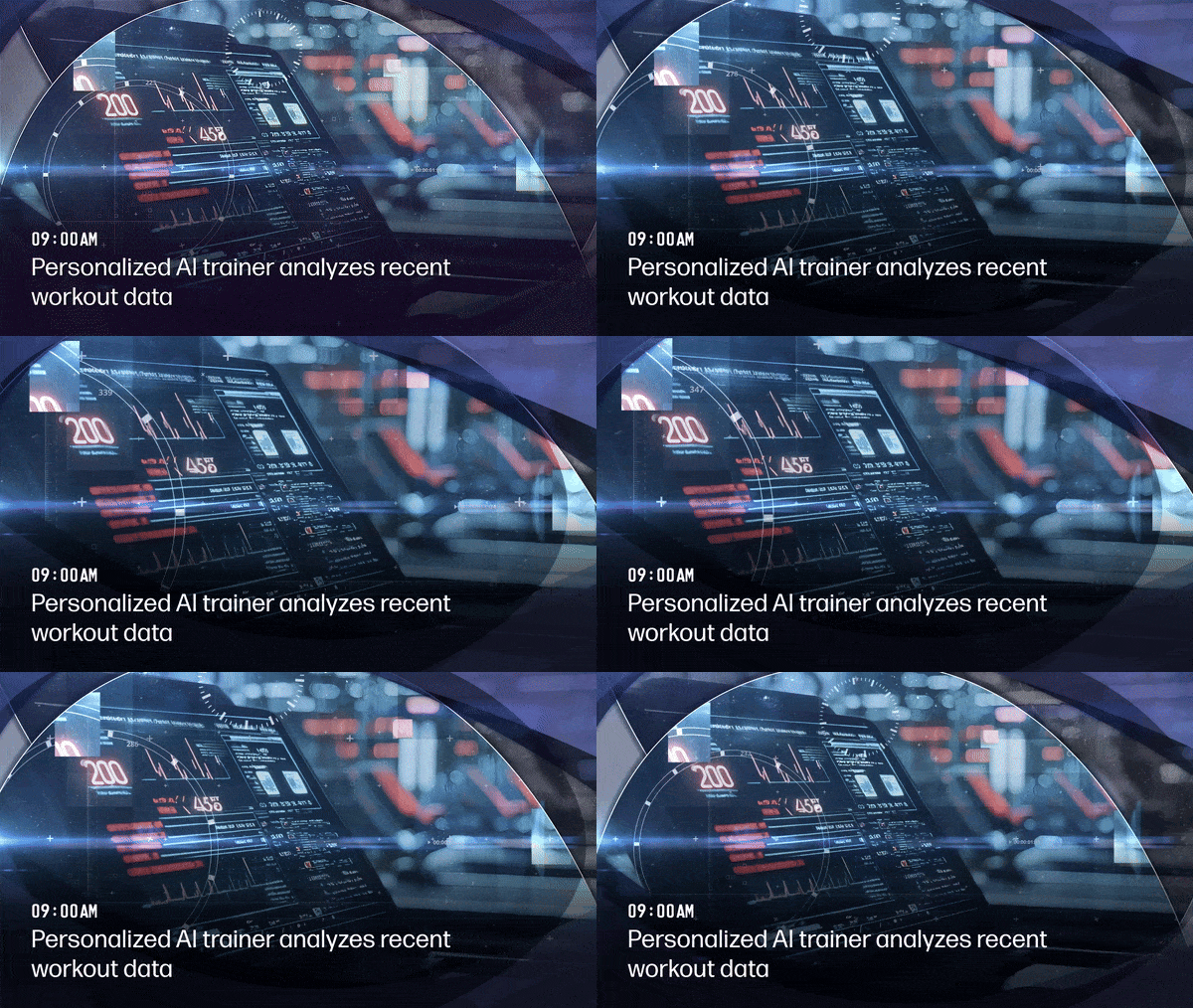
After the news briefing, Dylan’s personalized AI trainer analyzes his recent workout data and suggests a customized exercise routine, including specific cardio and strength training exercises to help him meet his fitness goals.

Efficient Afternoon

food shopping bag ordered by AI chef

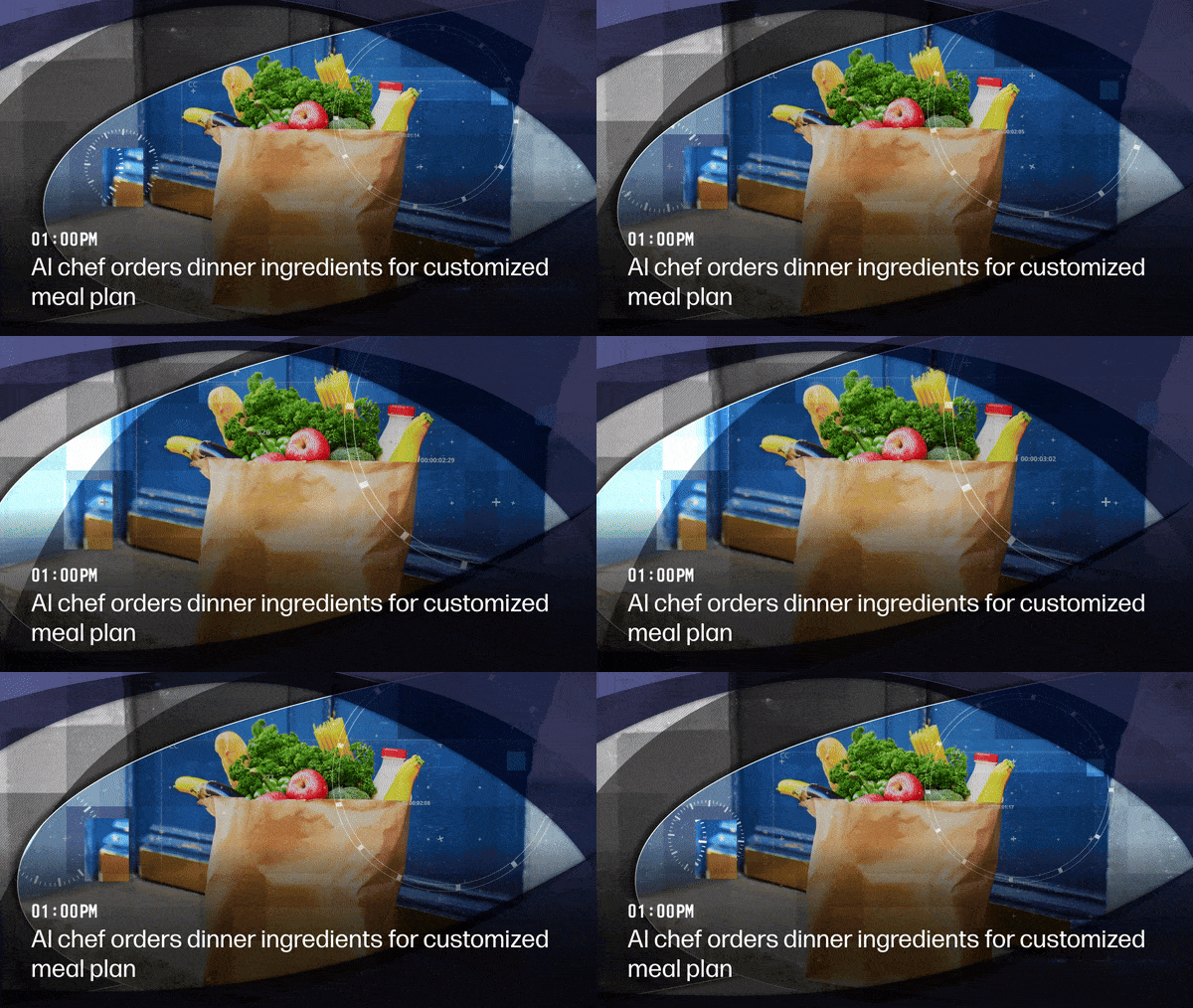
Dylan’s AI Chef orders culinary ingredients according to his AI customized meal plan and schedules delivery, ensuring he has fresh produce and essentials for later, delivered by an AI robot personal shopper.

smart watch on wrist sending emails automatically

While in a meeting, Dylan asks his AI assistant to draft and send follow-up emails, including a proposal for a new project. This allows him to focus on strategic planning while the AI handles the communications.

Engaging Interactions

Virtual Reality meeting with Madam C.J. Walker

During a staff meeting, an AI-powered digital twin of Madam C.J. Walker joins Dylan’s team for a Q&A session. Walker shares insights into her entrepreneurship, philanthropy, and social activism approaches.

Virtual Tutor

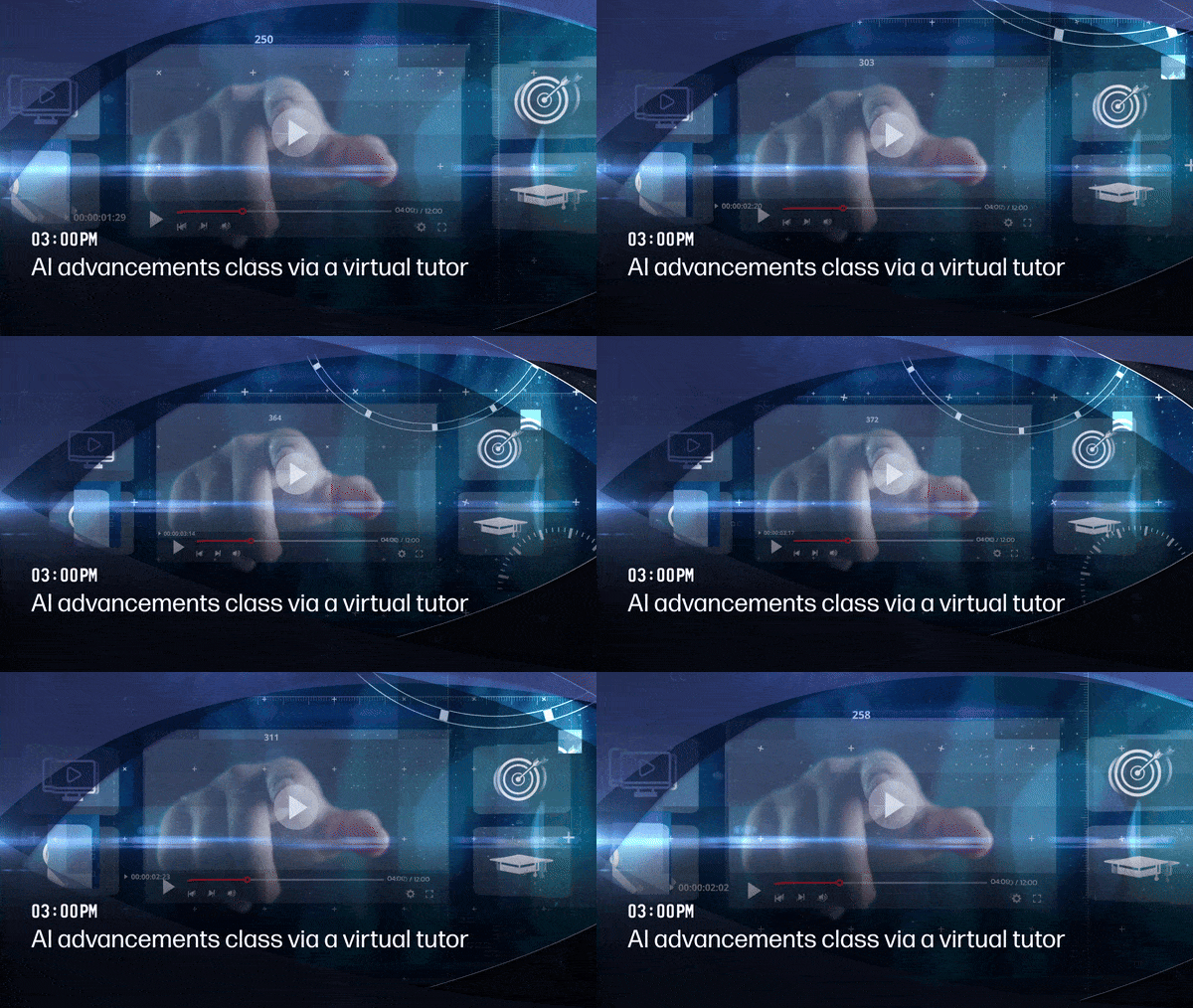
Dylan takes a break to learn about AI advancements via a virtual tutor, exploring topics like machine learning algorithms and their practical applications in his industry.

Wearable device capturing meeting notes

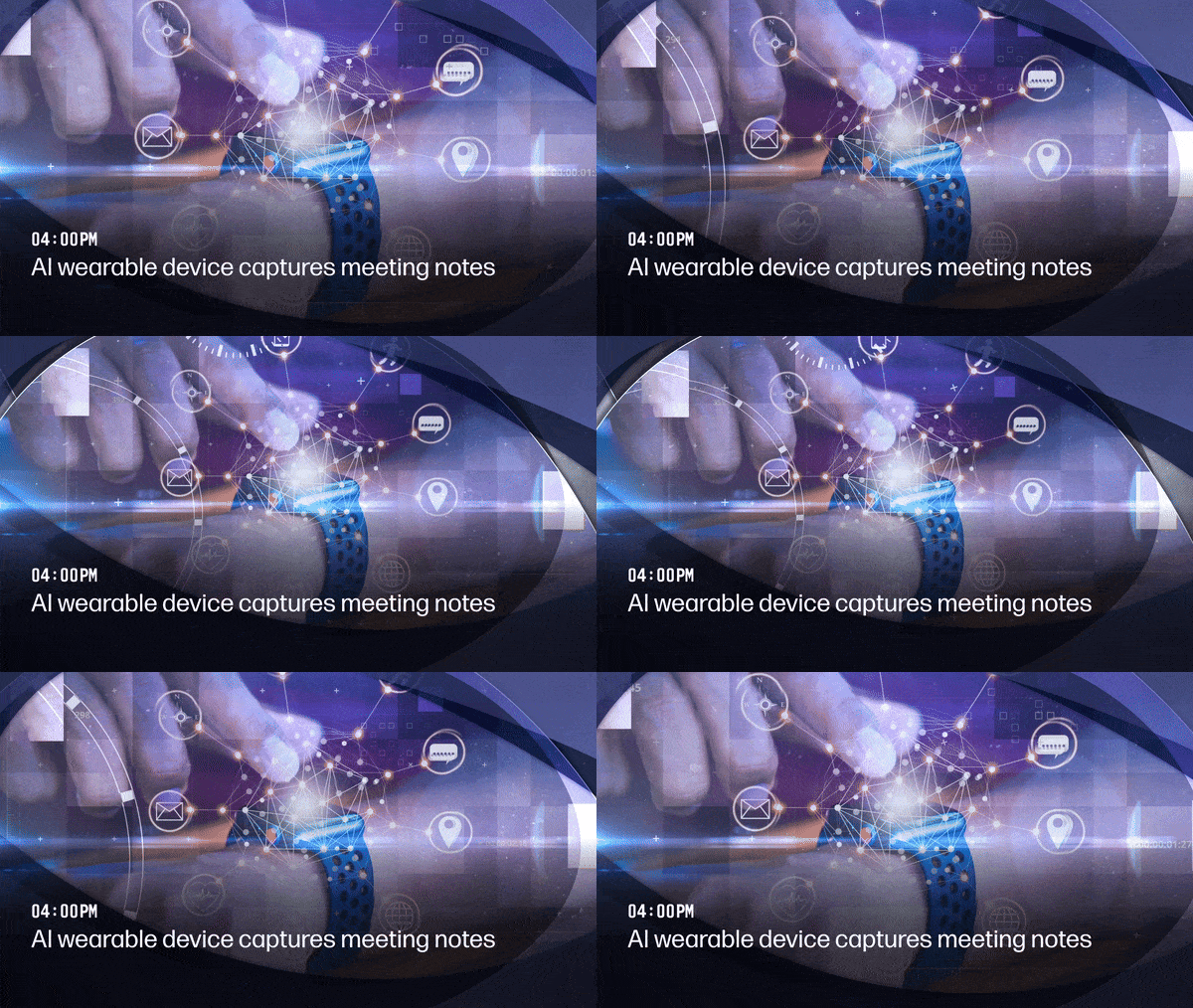
His AI wearable device discreetly reminds him of key contacts he met earlier, captures important meeting notes, and follows up on promised actions.

Evening Relaxation

Chicken and broccoli meal prepared by a Robot

As he winds down from work, Dylan’s robot sous-chef prepares a gourmet dinner, following a recipe from his meal plan, while he relaxes and catches up on personal projects.

Personalized movie on a TV screen

Dylan ends his day watching a movie tailored to his tastes and current mood, with AI creating a personalized viewing experience with a custom storyline.


Generative AI can transform how to manage tasks, access information, and enjoy leisure time. It’s not just about efficiency; it’s about creating a more personalized and enjoyable experience.

How do you envision generative AI transforming your routine and bringing more ease and excitement into your daily life?

Blog Futurism & Technology Trends Innovation

A Day-In-The-Life with Generative AI: A Glimpse into the Future

Technology is seamlessly integrated into our daily routines, and generative AI will revolutionize how we live and work. Let’s imagine a day in the not-too-distant future where generative AI doesn’t just serve as an assistant but as an active participant in every aspect of your life.

Meet Aiden. As a 26-year-old living in San Francisco, Aiden spends her time working at a healthcare startup, socializing with friends, and focusing on hobbies like fitness and reading. Here’s a peek into what a typical day for her might look like with generative AI:

Morning Routine

AI trainer delivers a custom workout plan

Aiden likes to exercise before she starts her day. Her AI trainer sends her a customized workout plan each morning and adjusts her exercise plan based on her current fitness goals.

Digital twin of women attending a virtual meeting

After she finishes her workout, Aiden is ready to start her workday. A morning meeting pops up that could have been handled as an email. Aiden sends her digital assistant to attend the online meeting on her behalf.

Aiden’s digital twin participates by handling routine discussions and updates. As soon as the meeting is complete, her digital twin sends Aiden the meeting notes, key takeaways, and action items.

flying car over Oakland, CA

While her digital twin is in the meeting, Aiden takes a flying car to a face-to-face meeting in Oakland with her boss. With this commute, she cuts down on travel time and avoids traffic on the ground.

Robot feeding a black and white husky dog in a living room

Aiden attends her face-to-face meeting in Oakland, while a humanoid robot manages her household chores back at her apartment – feeding her dog, cleaning her kitchen, folding her laundry, and preparing her lunch. By offloading mundane tasks, Aiden can focus on more high-level tasks, such as in-person meetings and sharing her latest strategy ideas.

Health, Wellbeing, and Lunch

watch showing vital signs being captured and sent to an AI doctor

Aiden continues to work while wearing her AI wearable. Her AI doctor monitors her health statistics and raises a couple of irregularities to Aiden’s human doctor, who is based in Sacramento. When she receives the information, her human doctor sends a report to Aiden with key takeaways, updated prescriptions, and health information.

The meeting concluded in Oakland, and Aiden got a promotion! She’s thrilled and heads back to the City for lunch. On her way home, she sends a request to her AI Assistant to invite her friends for happy hour at her apartment to celebrate her promotion.

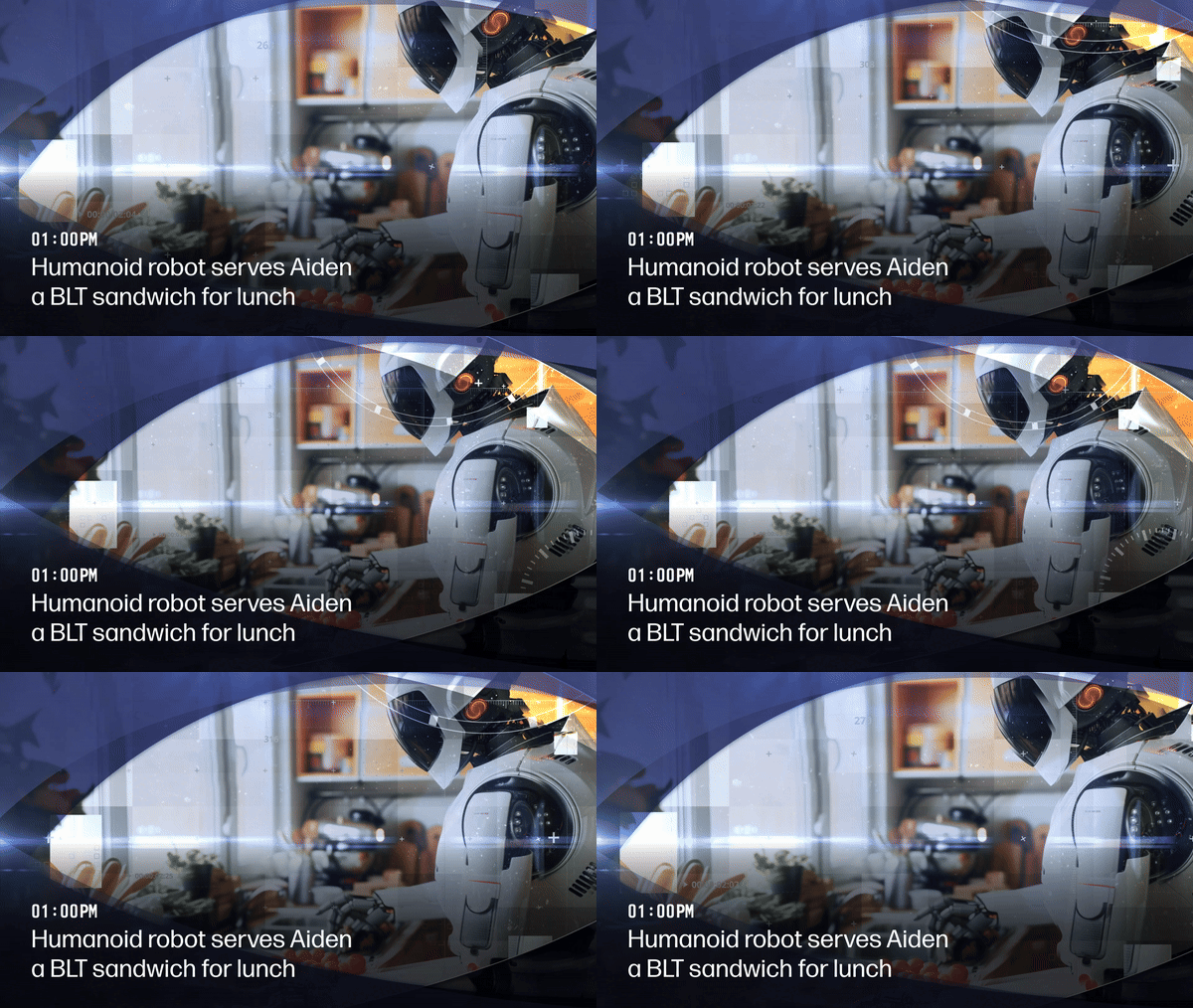
Once Aiden returns to her apartment, she enjoys the BLT her humanoid robot prepared for lunch while she answers work messages.

Happy Hour

Young people dancing in a living room

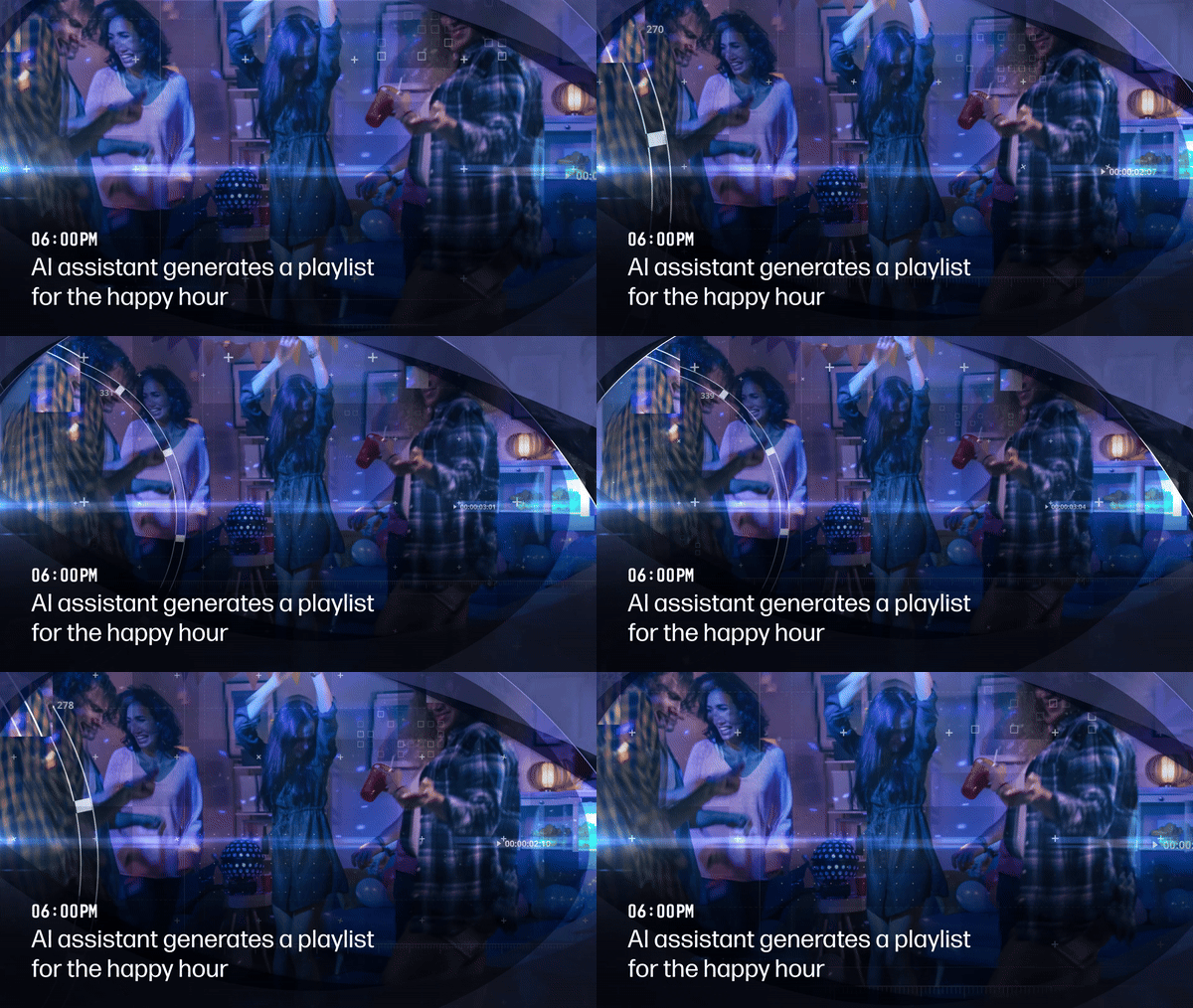
As Aiden’s friends arrive to celebrate her promotion, her AI generates a celebratory playlist for the happy hour.

Drone delivering pizza

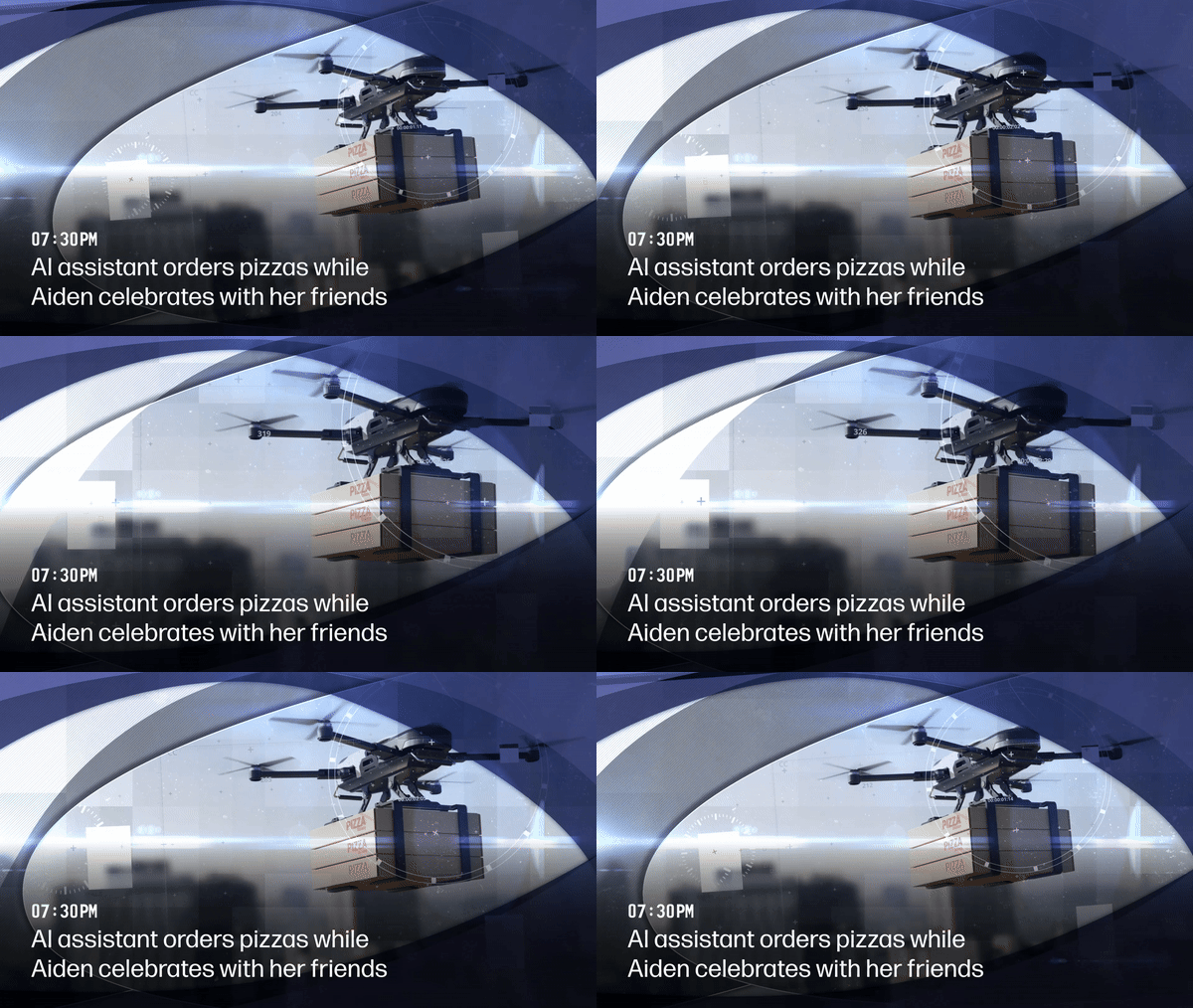
Aiden’s friends toast her accomplishment, and in the background, her AI assistant places an order for pizza delivery which her humanoid robot receives and brings inside. Enjoy!

Evening Routine

AI assistant lowers the lights in a living room

Aiden’s friends head home, and her AI assistant adapts the lighting and sound to her relaxation needs, offering her a comfortable and personalized environment to unwind. She settles into the couch to watch a series curated specifically for her previous viewing preferences.

Person touching screen and selecting next day tasks for AI assistant

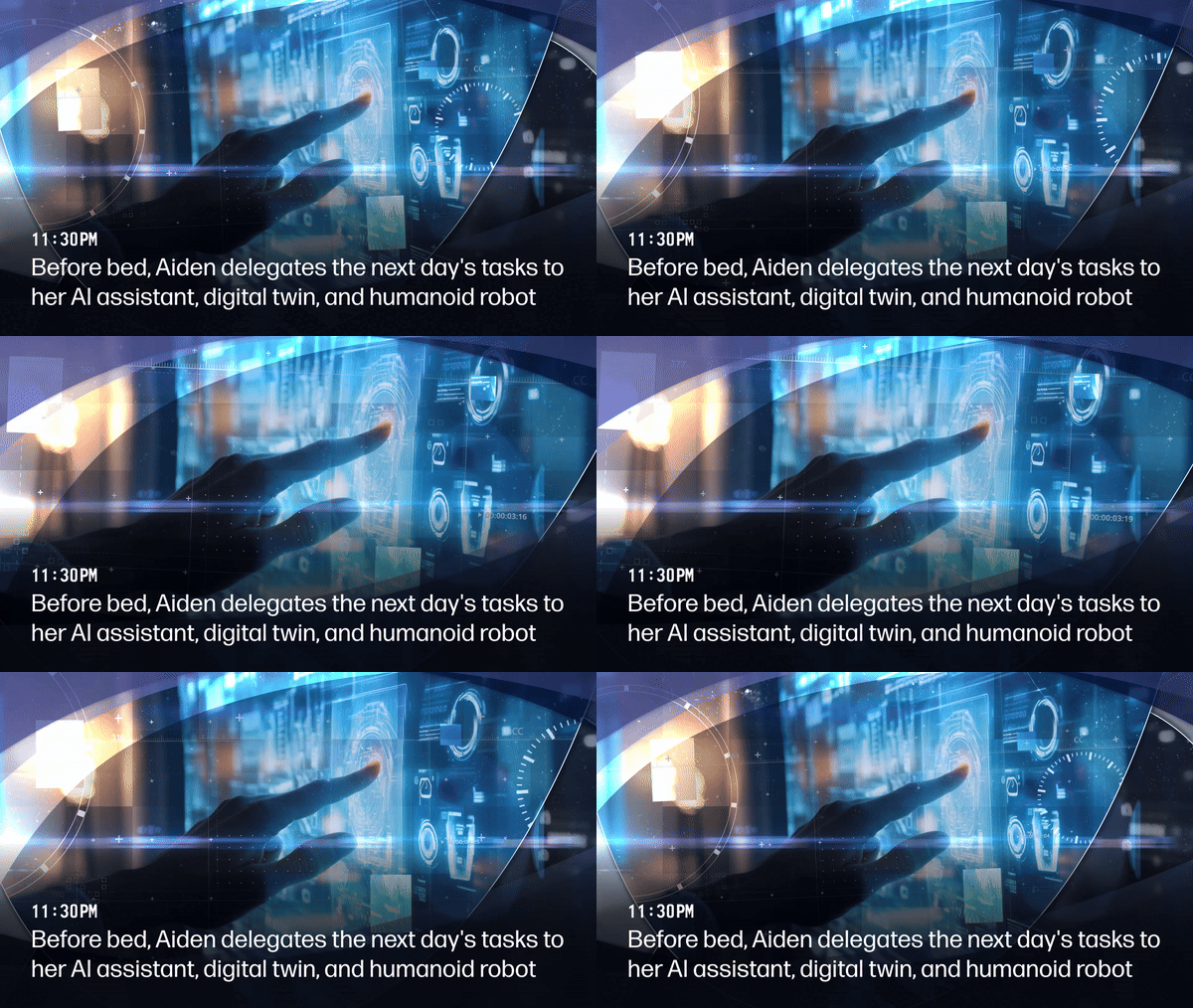
Before she goes to sleep, Aiden delegates the household and work tasks she would like her AI assistant, digital twin, and humanoid robot to complete tomorrow.


Generative AI promises a future where technology enhances our routines, making our lives more efficient and enjoyable. From handling mundane tasks to offering personalized experiences, AI is set to become an integral part of our daily existence, turning futuristic visions into everyday realities.

How do you envision generative AI reshaping your daily life as we move toward this future?

Blog Futurism & Technology Trends Innovation

23 Stats To Show Generative AI’s Role in Our Daily Lives

Generative AI is becoming a cornerstone of modern life, transforming various aspects of our daily routines and industries.

This powerful technology, capable of creating content, providing recommendations, and automating tasks, is poised to revolutionize how we work, learn, receive healthcare, and entertain ourselves.

As AI continues to evolve, its integration into our daily lives is becoming more seamless and impactful. A recent survey highlights this shift, with 78% of people believing that the benefits of generative AI outweigh the risks. This growing confidence in AI’s potential signifies a major shift in public perception, paving the way for broader adoption and innovative applications.

Take a look at these stats that show generative AI’s impact on our daily lives:

Workplace

  • 64% of businesses expect AI to increase productivity. Source: Forbes
  • AI will create 97 million new roles. Source: WeForum
  • 75% of knowledge workers use AI at work today. Source: Microsoft
  • 76% of professionals believe AI skills are essential for job market competitiveness. Source: Microsoft Cloud
  • 68.1% of companies reported increased use of AI tools for hiring. Source: RecruitBetter

Education

  • 54% of parents think AI could potentially have a positive effect on their child’s education. Source: National University
  • 60% of teachers use AI in their classrooms. Source: Forbes
  • AI in the education industry is expected to reach a CAGR of 40.3% between 2019-2025. Source: India AI
  • By 2030, artificial intelligence will automatically score 50% of college essays and nearly all multiple-choice examinations. Source: MMC Global
  • A majority (51%) think AI technologies will improve teacher education. Source: Quizlet
  • Approximately 56% of college students have used AI tools to complete assignments or exams. Source: Best Colleges

Healthcare

Personal Life

  • 54% of consumers think that written content will improve with AI technology. Source: Forbes
  • One in 10 cars will be self-driving by 2030. Source: Marketsandmarkets
  • 63% of consumers expect companies to use AI to personalize their experiences. Source: Master of Code Global
  • 75% of consumers are comfortable with chatbots managing routine customer service tasks. Source: AuthorityHacker
  • 51% of people consider AI helpful for finding a good work-life balance. Source: SnapLogic/Juliety
  • 69% of households in the US have at least one smart device. Source: Hippo/Juliety

Generative AI will play a pivotal role in our future, touching nearly every facet of our lives. From the workplace to education, healthcare, and personal experiences, AI is driving significant changes.

As we continue to embrace this technology, it is crucial to recognize both its potential benefits and the need for responsible implementation to ensure it serves the greater good. 

How will you integrate AI into your life to maximize its benefits?

Blog Futurism & Technology Trends Innovation

The rise of social and home robots: Transforming our lives with AI advancements

From the early days of bulky, room-sized computers to today’s sleek, powerful smartphones, technology has continuously become more integrated into our daily lives. The rise of AI has further accelerated this transformation, enabling innovations such as voice-activated virtual assistants, smart home devices, and autonomous vehicles. Amidst these technological strides, social and home robots have emerged, bringing a new dimension to how we interact with machines in our personal spaces.

Social robots are designed to engage with humans socially, often serving as companions, educators, or caregivers. These robots can recognize and respond to emotions, hold conversations, and even provide companionship to older people or those living alone. 

On the other hand, home robots are primarily designed to perform household tasks, making our lives more convenient and efficient. These robots can assist with cleaning, security, and even personal care.

As technology continues to advance, the capabilities of social and home robots will only expand, further integrating into our lives and transforming the way we live, work, play, and interact with our surroundings.

Robots in our lives

Social and home robots are emerging as valuable tools in modern society. They can play a crucial role in enhancing emotional well-being by providing companionship and reducing loneliness, particularly among older people and those living alone.

Social robots also offer practical benefits by assisting with household chores, allowing individuals more time for meaningful activities. They also support learning in educational settings by providing personalized assistance and engaging students in interactive ways.

As we integrate robots like these into our daily lives, it is crucial to understand the complexities of this technology. Ensuring that robots enhance rather than detract from our lives requires careful consideration of ethical and practical implications. Privacy concerns, the potential for over-reliance, and the need for human oversight are essential factors to address. By thoughtfully incorporating robots into our homes and social environments, we can leverage their benefits while mitigating potential drawbacks, ultimately enriching our lives meaningfully.

It can be your AI companion. As I mentioned, one of the most notable benefits of social robots is their ability to combat loneliness, especially among older people and individuals living alone. An example is Intuition Robotics. The company aims to empower older adults to live happier, healthier, and independent lives at home with an empathetic digital companion.

A study by the University of Glasgow, published in the International Journal of Social Robotics, highlighted another social robot, Pepper’s, potential to combat loneliness. Participants interacted with Pepper via Zoom over five weeks, and results showed that people disclosed more about themselves over time and felt less lonely. This interaction also improved their mood, indicating the robot’s potential as an emotional support tool. These robots can engage in conversations, provide reminders, and even offer entertainment, creating a sense of presence and interaction.

How about a robotic tutor? Researchers recently conducted an experiment involving 26 university students whose native language was Japanese. The students underwent a pre-test to assess their English-speaking skills. Based on their average scores, the students were divided into two groups: 14 students received instruction from a robot, while the remaining 12 participants received online lessons from English language teachers.

The results indicated that the group taught by the robot made fewer errors and spoke more fluently than the group taught by human tutors.

Who doesn’t want a house-cleaning “humanoid”? In addition to emotional and educational support, home robots can significantly reduce the time and effort spent on household tasks. Take Eve, for example. It is a humanoid robot that can perform a range of tasks. Equipped with cameras and sensors to perceive and interact with their surroundings, their mobility, dexterity, and balance allow them to navigate complex environments and manipulate objects effectively. This capability is particularly beneficial for busy families and individuals with physical limitations.

The future with robots

Social and home robots promise to transform our homes and enhance our daily lives in profound ways in the future. These robots can perform mundane tasks, creating more leisure time for us to spend on activities that matter most, such as pursuing hobbies, spending time with loved ones, and engaging in meaningful experiences.

According to Dr. Guy Laban, an Affiliated Research Associate at the University of Glasgow and a Postdoctoral Research Associate at the University of Cambridge, these robots can also become valuable conversational partners, crucial in interventions that support emotional health. His research highlights how robots can provide meaning and a safe space for those in need, lifting people’s moods even during challenging times like the pandemic.

The potential for robots to positively enhance our emotional and physical well-being is immense. Recent advances in AI, such as generative AI and large language models, are rapidly expanding the possibilities.

Roboticists often cite Moravec’s paradox: What is hard for humans is easy for machines, and what is easy for humans is hard for machines. AI is changing that.

One idea is to use the generative AI behind ChatGPT and similar tools to complete faster training and develop more skills for robots. Efforts include ways to program robots with plain written English rather than complex code and using AI systems to have robots learn by observing.

Specialized computer chips for robots will help, too. Nvidia recently unveiled a new chip and AI software for humanoid robots. AMD, Intel, Google, and Qualcomm also designed systems for robots.

AI capabilities will also enable robots to learn, reason, and make decisions based on complex data sets. This will allow robots to perform more complex tasks and adapt to changing environments, making them more versatile and useful.

Sensory abilities such as sight, touch, and hearing will enable robots to navigate their environment more effectively, interact with humans more intuitively, and perform more complex tasks that require precise sensory input.

Ultimately, the goal is not to eliminate human-to-human interaction but to create more space for it. Ethics must be at the forefront as we integrate these technologies into our homes. Understanding how humans establish healthy and constructive relationships with robots is critical to ensuring their ethical and responsible deployment. This careful consideration will help us harness the benefits of social and home robots while safeguarding our values and well-being.

Blog Futurism & Technology Trends Innovation

How Generations Z and Alpha are shaping the future of AI

As artificial intelligence (AI) becomes more and more engrained into our daily lives, we see Generation Z and Generation Alpha pioneering the use and development of this technological frontier. Their interaction with AI is redefining its applications and creating a future that we are only just starting to imagine.

Let’s delve into how these generations use AI today and what we can expect from them in the future.

Today’s AI Playground: From virtual clones to classroom helpers

Imagine having a virtual twin — a clone that knows you so well that it can answer and initiate questions on your behalf. For 1 million Gen Alpha users, this isn’t sci-fi: it’s reality, courtesy of Sendit. More than 1,000,000 Gen Alphas have already cloned themselves using Sendit’s AI tool. The app can share your story, even when you are not there, help friends pick out a present for you, or recommend a cool new restaurant to cousins.

But AI is not all fun and games. It is also transforming the way learning is delivered and received. Every month, Amazon’s Alexa fields 25 million questions from inquisitive children, showing that the thirst for knowledge is now quenched through voice-activated AI. 

ChatGPT is also proving to be a useful tool for both educators and students. A recent survey by Impact Research found that 51% of teachers reported using ChatGPT and a third of students.

AI in the classroom is just the beginning. As 2024 graduates step into the real world, a staggering 50% plan to acquire new skills, fully aware that tools like ChatGPT and DALL-E will be part of their future careers.

Salesforce found that 65% of today’s generative AI users are Millennials or Gen Z, and a formidable 72% of this cohort is gainfully employed, signifying the seamless integration of AI in the working world.

Moreover, nearly half of Gen Z prefer AI over their managers for advice, according to Workplace Intelligence. It’s clear that trust in AI’s capabilities is burgeoning.

Gen Z and Gen Alpha’s imprint on the next wave of AI technologies

With Gen Z being considered digital natives and Gen Alpha taking the crown as AI natives, it’s no wonder they are profoundly impacting where AI technology is heading.

Take Elemental Path’s CogniToy’s Dino, designed for young Gen Alphas, which uses IBM’s Watson to answer children’s questions and converse with them.

LEGO’s Boost Sets combine classic play with coding, demonstrating how introducing technology through fun and popular building blocks can teach kids about coding and AI. But Brian Schwab, director of interactive design at the LEGO Group sees this as only the beginning. In an interview with Toolify.Ai, Schwab shared that LEGO is incorporating AI to enhance the creative and interactive aspects of their iconic building bricks, allowing children to tell their own stories and explore their creativity in new ways.

Language learning has found a new ally in AI. The Duolingo Max application uses ChatGPT-4 to provide feedback and highly tailored lessons, much like a virtual tutor. Thus, creating more personalized learning experiences.

Personalization hits a high note as Spotify’s AI DJ presents music tailored to Gen Z and Gen Alpha tastes — be it fresh hits or old favorites. Spotify editors use GenAI to offer up facts about the music, artists, or genres being listened to. Through their acquisition of Sonantic they are also able to create AI DJs.
Gen Z doesn’t just see personalization for music; they would like to see AI bring personalization to all factors of their lives, including shopping. 88% of Gen Z consumers believe AI will improve online shopping. More than half of them hope for an AI shopping assistant to make it easier to find products based on their personal interests.

How those online products are delivered is also paramount to both Gen Z and Gen Alpha, who put sustainability and social awareness at the top of their interest list. This is helping to fuel new AI innovations. Amazon’s Package Decision Engine uses a multimodal AI model to determine the most efficient packaging for each item sold on its website. Meanwhile, DHL’s AI-powered OptiCarton software plays a game of Tetris with shipping containers, ensuring each container is filled with parcels, leaving no empty spaces.

Gen Z and Gen Alpha’s comfort level with AI and world views will shape what AI-powered apps they will use directly and how AI will be used to enhance the world around them. Their interaction with AI across learning, play, work, and lifestyle is a precursor to a society where AI is not just a tool but a collaborator, co-creator, and confidant.

Blog Futurism & Technology Trends Innovation

The Rapid Evolution of AI Assistants: From Chatbots to Agents

The swift transformation of AI assistants into agents marks a significant shift in how we perceive and interact with digital technology. Gone are the days when these virtual helpers were simply chatbots to interact with. Now, they’re evolving into proactive, autonomous agents capable of independent decision-making and personalized assistance.

Today, AI agents are focused on accomplishing relatively simple tasks, from proactively scheduling your appointments to booking your flights, but in the future, they may help run companies. This transition from assistants to agents is reshaping our relationship with technology and opening new possibilities. 96% of executives agree leveraging AI agent ecosystems will be a significant opportunity for their organizations in the next three years.

Understanding the shift

The distinction between AI assistants and agents is their level of autonomy and intelligence. While traditional assistants primarily respond to user-initiated commands, agents operate more autonomously, leveraging advanced machine learning algorithms to anticipate user needs and take proactive actions.

For example, an AI assistant may remind you to complete a task based on certain criteria. In contrast, an agent could automatically reschedule appointments based on your calendar and preferences without explicit instructions. When ChatGPT launched, some people assumed it was actively looking up information on the web. However, it was actually generating answers based on the vast amounts of data it had been previously trained on, drawing on the relationships between that data to provide users answers. Now, plugins enable ChatGPT to access the internet and AI agents to navigate the current digital world.

And ChatGPT is not alone. Recently, a startup called Cognition AI released a demo showing an AI agent called Devin performing work usually done by well-paid software engineers. While ChatGPT can generate code, Devin goes further — planning how to solve a problem, writing the code, and then testing, debugging, and implementing it.

Proactive personalization

One of the emerging characteristics of AI agents is their ability to provide proactive, personalized assistance. These agents can anticipate user needs by analyzing user behavior, preferences, and historical data to offer tailored recommendations or actions.

Imagine having an AI agent that reminds you of upcoming meetings or birthdays, suggests relevant articles based on your interests, orders groceries when your supplies are running low, and adjusts your smart home devices to optimize energy usage — all without asking it to do so.

Netflix uses learning-based AI agents to offer personalized recommendations based on your viewing history. Aomni’s personalized AI agents can handle sales tasks such as account planning and relationship building.

Empowering decision-making

As AI agents become increasingly sophisticated, they can be entrusted with more decision-making authority. These agents can make informed decisions on behalf of users, ranging from scheduling appointments to making purchase recommendations by learning from past interactions and analyzing real-time data.

In business, AI agents empower employees with insights and recommendations to enhance productivity and decision-making, enabling them to focus on other tasks. For example, in customer service, agents equipped with AI capabilities can analyze customer inquiries, identify patterns, and recommend solutions in real time, leading to more efficient and personalized interactions. This leaves them more time to focus on tasks that require a human touch. Several innovative startups are in this space. Ema, a Universal AI employee, is described as an operating system that makes Generative AI work at an enterprise level. The company believes that if there were fewer repetitive tasks, there would be more time for creative thinking. Gen AI offers an unprecedented opportunity to enable this. Watching apps like these transform the future of work will be fascinating.

Sierra AI is another great example of a startup making waves. Focused on elevating customer experiences with AI, Sierra AI enables customers to self-serve–getting answers, solving problems, and taking action through a natural, conversational experience. The AI agent is personalized to your business and its customers.

There is even work being done to explore the collaboration of Multi-Agent AIs working across an enterprise and various operations tapping into data across an organization to make faster and more informed decision-making.

Ethical considerations and challenges

While the evolution of AI assistants into agents offers immense potential, it raises important ethical considerations and challenges. Issues like data privacy, algorithmic bias, and accountability become more pronounced as AI agents gain autonomy and decision-making capabilities. We must all discuss and address these concerns proactively and ensure that AI agents are designed and deployed responsibly to uphold ethical principles and protect user interests. For example, the United States and Europe have enacted extensive legislation regarding employees and data protection. In Europe, Article 22 of the GDPR specifies that no employment decisions should be made entirely in an automated fashion.

AI’s future

The advancement of AI technology is expected to accelerate the transformation of assistants into agents, ushering in a new era of intelligent, autonomous digital entities.

AI agents promise to revolutionize how we interact with technology and navigate our daily lives, from enhancing productivity by adding time back in our day and personalization to driving innovation across industries.

While the journey to this future has begun, we are just at the beginning. We must all play a role in ensuring we manage it in a way that benefits humanity. A paradigm shift in human-computer interaction is blurring the lines between tools and autonomous entities. It includes everything from apps to agents, from point-and-click to natural language interfaces, and from static UI to UI, which is dynamically generated based on what the user wants. AI agents are becoming AI employees. As a society, we must learn how to collaborate with them as teammates and employees. It’s up to us — will we embrace this transformation with careful consideration of ethical implications and a commitment to leveraging AI technology for the betterment of society? If so, we can unlock our full potential to empower individuals, businesses, and communities in the digital age.

Potential to change the way we interact with computers. From apps to agents, from point-and-click to natural language interfaces, and from static UI to UI that is dynamically generated based on what the user wants to do.

AI agents become AI employees. As a society, we will need to learn how to collaborate with them as teammates and employees.

Blog Futurism & Technology Trends Innovation