How Generations Z and Alpha are shaping the future of AI

As artificial intelligence (AI) becomes more and more engrained into our daily lives, we see Generation Z and Generation Alpha pioneering the use and development of this technological frontier. Their interaction with AI is redefining its applications and creating a future that we are only just starting to imagine.

Let’s delve into how these generations use AI today and what we can expect from them in the future.

Today’s AI Playground: From virtual clones to classroom helpers

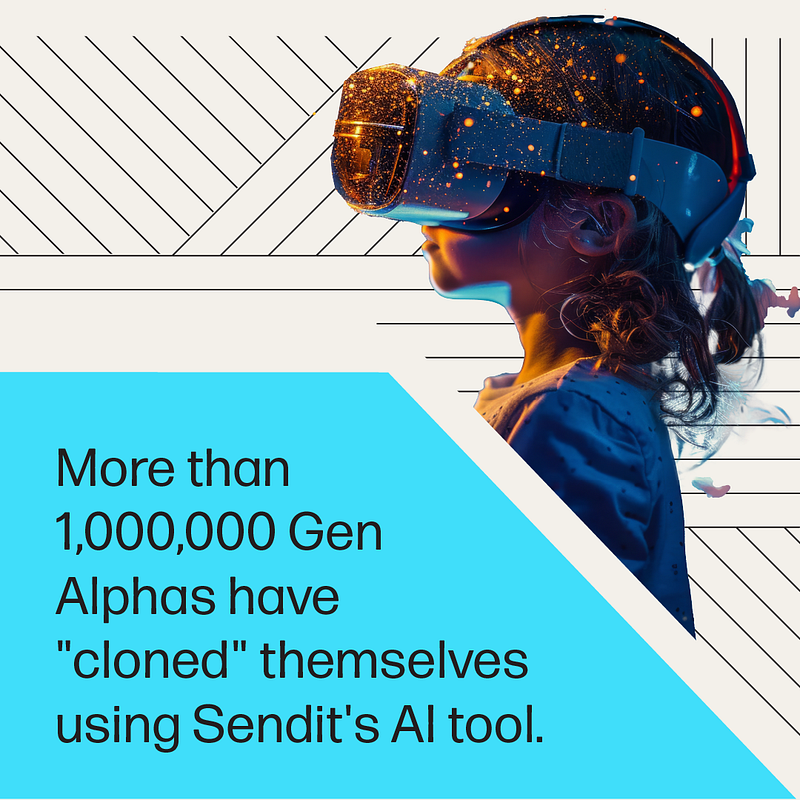
Imagine having a virtual twin — a clone that knows you so well that it can answer and initiate questions on your behalf. For 1 million Gen Alpha users, this isn’t sci-fi: it’s reality, courtesy of Sendit. More than 1,000,000 Gen Alphas have already cloned themselves using Sendit’s AI tool. The app can share your story, even when you are not there, help friends pick out a present for you, or recommend a cool new restaurant to cousins.
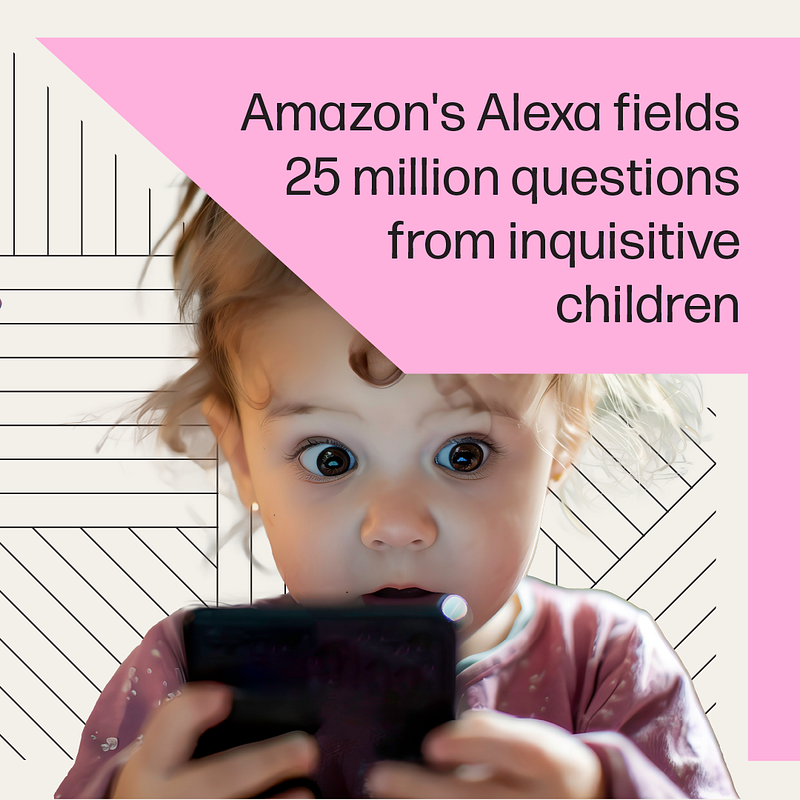
But AI is not all fun and games. It is also transforming the way learning is delivered and received. Every month, Amazon’s Alexa fields 25 million questions from inquisitive children, showing that the thirst for knowledge is now quenched through voice-activated AI. 
ChatGPT is also proving to be a useful tool for both educators and students. A recent survey by Impact Research found that 51% of teachers reported using ChatGPT and a third of students.

AI in the classroom is just the beginning. As 2024 graduates step into the real world, a staggering 50% plan to acquire new skills, fully aware that tools like ChatGPT and DALL-E will be part of their future careers.

Salesforce found that 65% of today’s generative AI users are Millennials or Gen Z, and a formidable 72% of this cohort is gainfully employed, signifying the seamless integration of AI in the working world.

Moreover, nearly half of Gen Z prefer AI over their managers for advice, according to Workplace Intelligence. It’s clear that trust in AI’s capabilities is burgeoning.

Gen Z and Gen Alpha’s imprint on the next wave of AI technologies

With Gen Z being considered digital natives and Gen Alpha taking the crown as AI natives, it’s no wonder they are profoundly impacting where AI technology is heading.

Take Elemental Path’s CogniToy’s Dino, designed for young Gen Alphas, which uses IBM’s Watson to answer children’s questions and converse with them.

LEGO’s Boost Sets combine classic play with coding, demonstrating how introducing technology through fun and popular building blocks can teach kids about coding and AI. But Brian Schwab, director of interactive design at the LEGO Group sees this as only the beginning. In an interview with Toolify.Ai, Schwab shared that LEGO is incorporating AI to enhance the creative and interactive aspects of their iconic building bricks, allowing children to tell their own stories and explore their creativity in new ways.

Language learning has found a new ally in AI. The Duolingo Max application uses ChatGPT-4 to provide feedback and highly tailored lessons, much like a virtual tutor. Thus, creating more personalized learning experiences.

Personalization hits a high note as Spotify’s AI DJ presents music tailored to Gen Z and Gen Alpha tastes — be it fresh hits or old favorites. Spotify editors use GenAI to offer up facts about the music, artists, or genres being listened to. Through their acquisition of Sonantic they are also able to create AI DJs.

Gen Z doesn’t just see personalization for music; they would like to see AI bring personalization to all factors of their lives, including shopping. 88% of Gen Z consumers believe AI will improve online shopping. More than half of them hope for an AI shopping assistant to make it easier to find products based on their personal interests.

How those online products are delivered is also paramount to both Gen Z and Gen Alpha, who put sustainability and social awareness at the top of their interest list. This is helping to fuel new AI innovations. Amazon’s Package Decision Engine uses a multimodal AI model to determine the most efficient packaging for each item sold on its website. Meanwhile, DHL’s AI-powered OptiCarton software plays a game of Tetris with shipping containers, ensuring each container is filled with parcels, leaving no empty spaces.

Gen Z and Gen Alpha’s comfort level with AI and world views will shape what AI-powered apps they will use directly and how AI will be used to enhance the world around them. Their interaction with AI across learning, play, work, and lifestyle is a precursor to a society where AI is not just a tool but a collaborator, co-creator, and confidant.

Blog Futurism & Technology Trends Innovation

The Rapid Evolution of AI Assistants: From Chatbots to Agents

The swift transformation of AI assistants into agents marks a significant shift in how we perceive and interact with digital technology. Gone are the days when these virtual helpers were simply chatbots to interact with. Now, they’re evolving into proactive, autonomous agents capable of independent decision-making and personalized assistance.

Today, AI agents are focused on accomplishing relatively simple tasks, from proactively scheduling your appointments to booking your flights, but in the future, they may help run companies. This transition from assistants to agents is reshaping our relationship with technology and opening new possibilities. 96% of executives agree leveraging AI agent ecosystems will be a significant opportunity for their organizations in the next three years.

Understanding the shift

The distinction between AI assistants and agents is their level of autonomy and intelligence. While traditional assistants primarily respond to user-initiated commands, agents operate more autonomously, leveraging advanced machine learning algorithms to anticipate user needs and take proactive actions.

For example, an AI assistant may remind you to complete a task based on certain criteria. In contrast, an agent could automatically reschedule appointments based on your calendar and preferences without explicit instructions. When ChatGPT launched, some people assumed it was actively looking up information on the web. However, it was actually generating answers based on the vast amounts of data it had been previously trained on, drawing on the relationships between that data to provide users answers. Now, plugins enable ChatGPT to access the internet and AI agents to navigate the current digital world.

And ChatGPT is not alone. Recently, a startup called Cognition AI released a demo showing an AI agent called Devin performing work usually done by well-paid software engineers. While ChatGPT can generate code, Devin goes further — planning how to solve a problem, writing the code, and then testing, debugging, and implementing it.

Proactive personalization

One of the emerging characteristics of AI agents is their ability to provide proactive, personalized assistance. These agents can anticipate user needs by analyzing user behavior, preferences, and historical data to offer tailored recommendations or actions.

Imagine having an AI agent that reminds you of upcoming meetings or birthdays, suggests relevant articles based on your interests, orders groceries when your supplies are running low, and adjusts your smart home devices to optimize energy usage — all without asking it to do so.

Netflix uses learning-based AI agents to offer personalized recommendations based on your viewing history. Aomni’s personalized AI agents can handle sales tasks such as account planning and relationship building.

Empowering decision-making

As AI agents become increasingly sophisticated, they can be entrusted with more decision-making authority. These agents can make informed decisions on behalf of users, ranging from scheduling appointments to making purchase recommendations by learning from past interactions and analyzing real-time data.

In business, AI agents empower employees with insights and recommendations to enhance productivity and decision-making, enabling them to focus on other tasks. For example, in customer service, agents equipped with AI capabilities can analyze customer inquiries, identify patterns, and recommend solutions in real time, leading to more efficient and personalized interactions. This leaves them more time to focus on tasks that require a human touch. Several innovative startups are in this space. Ema, a Universal AI employee, is described as an operating system that makes Generative AI work at an enterprise level. The company believes that if there were fewer repetitive tasks, there would be more time for creative thinking. Gen AI offers an unprecedented opportunity to enable this. Watching apps like these transform the future of work will be fascinating.

Sierra AI is another great example of a startup making waves. Focused on elevating customer experiences with AI, Sierra AI enables customers to self-serve–getting answers, solving problems, and taking action through a natural, conversational experience. The AI agent is personalized to your business and its customers.

There is even work being done to explore the collaboration of Multi-Agent AIs working across an enterprise and various operations tapping into data across an organization to make faster and more informed decision-making.

Ethical considerations and challenges

While the evolution of AI assistants into agents offers immense potential, it raises important ethical considerations and challenges. Issues like data privacy, algorithmic bias, and accountability become more pronounced as AI agents gain autonomy and decision-making capabilities. We must all discuss and address these concerns proactively and ensure that AI agents are designed and deployed responsibly to uphold ethical principles and protect user interests. For example, the United States and Europe have enacted extensive legislation regarding employees and data protection. In Europe, Article 22 of the GDPR specifies that no employment decisions should be made entirely in an automated fashion.

AI’s future

The advancement of AI technology is expected to accelerate the transformation of assistants into agents, ushering in a new era of intelligent, autonomous digital entities.

AI agents promise to revolutionize how we interact with technology and navigate our daily lives, from enhancing productivity by adding time back in our day and personalization to driving innovation across industries.

While the journey to this future has begun, we are just at the beginning. We must all play a role in ensuring we manage it in a way that benefits humanity. A paradigm shift in human-computer interaction is blurring the lines between tools and autonomous entities. It includes everything from apps to agents, from point-and-click to natural language interfaces, and from static UI to UI, which is dynamically generated based on what the user wants. AI agents are becoming AI employees. As a society, we must learn how to collaborate with them as teammates and employees. It’s up to us — will we embrace this transformation with careful consideration of ethical implications and a commitment to leveraging AI technology for the betterment of society? If so, we can unlock our full potential to empower individuals, businesses, and communities in the digital age.

Potential to change the way we interact with computers. From apps to agents, from point-and-click to natural language interfaces, and from static UI to UI that is dynamically generated based on what the user wants to do.

AI agents become AI employees. As a society, we will need to learn how to collaborate with them as teammates and employees.

Blog Futurism & Technology Trends Innovation