12 Tech Trends & Weak Signals Shaping 2026

If we thought things were changing rapidly at the end of last year, the pace of innovation heading into 2026 is unlike any previous cycle. AI is shifting from tool to collaborator. Energy systems are becoming software-defined. Nations are building self-reliant tech stacks. And early-stage breakthroughs in biology, materials, and flight hint at disruptions still in their infancy.

Using the same structure as we did for our 2025 trends forecast, let’s take a look at the trends that matter most for leaders navigating the next 12–36 months.

We organize trends into three categories based on their maturity and impact timeline:

Game Changers — Trends reshaping entire industries right now. These affect how businesses operate, how value is created, and how competitive advantage is built.

Foundational Breakthroughs — Scientific and engineering advances unlocking new possibilities. These create strategic optionality for the decade ahead.

Weak Signals — Early indicators of transformations that will dominate the late 2020s. These require positioning now, even if mainstream adoption is years away.

Game Changers (Reshaping Business in 2026)

1. The Context Shift: AI moves from prompts to persistent understanding

AI is moving beyond “type a prompt, get an answer.” We’re entering an era where systems maintain memory, understand situational context, and adapt to the user — almost like a knowledgeable collaborator who already knows your goals.

Models now handle million-token context windows—enough to reason across entire codebases or product histories in a single session.

What this looks like in practice:

  • Microsoft’s Recall feature reconstructs your past digital activity to support proactive workflows.
  • OpenAI’s ChatGPT now maintains both explicit memories and learns from chat history to deliver personalized responses across sessions.
  • Personal AI applications like Lindy automate entire workflows—triaging inboxes, booking meetings, and updating CRM entries based on your preferences.
  • Otter.ai transforms meeting notes by remembering context from previous discussions to provide more relevant summaries.
  • Meta Ray-Ban Display uses AI, cameras, and the Neural Band to provide information, translations, and navigation relevant to the user’s immediate surroundings, including anticipating needs, suggesting replies, and offering reminders.

Why it matters: Organizations must redesign workflows around AI that already knows your context, not AI that waits for commands.

2. The Agency Economy: Work shifts from doing to directing

One of the biggest shifts heading into 2026 is how human roles are being redefined. For decades, technology focused on productivity—helping us work faster or automate small tasks. Now, as AI agents take on full execution of workflows, human value is moving upstream to direction, judgment, creativity, and decision-making.

A recent Deloitte study found that nearly half of enterprises now use autonomous AI agents in operations. Teams are spending less time performing tasks and more time setting goals, defining constraints, and shaping outcomes. The shift isn’t about humans doing less—it’s about doing fundamentally different things, that only humans excel at.

Why it matters: In the Agency Economy, human value becomes agency itself: the ability to define what work should accomplish, not just how to accomplish it. Organizations that redesign roles around this shift will unlock entirely new levels of impact.

3. The Networked Mind: Hybrid AI spans edge and cloud

AI is evolving into coordinated networks of specialized models working across edge devices and cloud infrastructure. Small, fast models run locally on AI PCs for privacy and speed, while large models in the cloud tackle complex reasoning. Research shows model routing architectures could cut inference costs up to 85% while improving accuracy.

Real-world momentum:

  • HP AI Companion balances local SLMs for privacy with cloud models for complex reasoning.
  • Microsoft Foundry / Azure OpenAI  intelligently routes prompts across OpenAI models, Claude, and other models to optimize cost and performance.
  • Arcee Conductor enable seamless model switching across providers without changing code.
  • Google Gemini Nano is designed to run on mobile devices and leverage larger cloud-based Gemini models for more complex needs.

Why it matters: AI becomes a continuously operating intelligent network rather than a tool you call on demand.

4. Stable Value Rails: Digital dollars become default global settlement

Stablecoins—digital currencies pegged to traditional assets like the US dollar—are becoming core financial infrastructure. In 2024, total stablecoin transfer reached $27.6 trillion, surpassing the combined transaction volume of  Visa and Mastercard by more than 7%.

What’s driving this explosive growth? Faster settlement times (transactions in seconds vs. days), improved liquidity management, and competitive pressure are pushing businesses to adopt stablecoin payment rails. Major financial institutions are recognizing that stablecoins offer 24/7 settlement without geographic constraints.

Recent momentum

  • Circle’s June 2025 IPO saw shares triple on opening day, valuing the USDC stablecoin issuer at $18+ billion and signaling massive institutional confidence.
  • PayPal’s PYUSD and  Stripe’s stablecoin payment integrations bring digital dollars to mainstream commerce.
  • Highnote, an embedded finance platform, enables businesses to integrate stablecoin payments into their apps seamlessly.

Why it matters: By late 2026, expect global commerce to increasingly settle on-chain, whether consumers notice or not.

5. Sovereign Stacks: Nations build independent AI and chip ecosystems

Countries are constructing independent technology stacks—from semiconductor fabs to AI training infrastructure. Since 2021, government incentives in the U.S. and EU have catalyzed over $400 billion in announced semiconductor investments globally, with major production facilities breaking ground in Arizona, Ohio, and across Europe.

Recent movements:

  • China’s DeepSeek models and Harmony OS power domestic alternatives to Western tech.
  • India’s BharatGPT project builds national AI models and cloud infrastructure.
  • U.S. National AI Safety Institutes establish sovereign oversight and capability.

Why it matters: Technology = geopolitics = economic leverage. Global tech companies must navigate increasingly nationalized infrastructure.

Foundational Breakthroughs (Unlocking the Next Decade)

6. Living AI: Models that learn as they go

Today’s AI models know only what they are trained on. In the future AI will be able to continuously learn and adapt in real time — potentially unlocking AI superintelligence. 

Where this is emerging:

  • HP Wolf Security uses adaptive AI to learn from endpoint behavior across millions of devices.
  • Safe Superintelligence reflects a new class of AI companies focused on building systems that can learn and improve over time—without sacrificing safety, alignment, or human oversight.
  • Hazy Research (Stanford) – Is working on adaptive data-centric AI systems that evolve with changing inputs.

Why it matters: Continual learning is the missing piece for AI superintelligence. Today’s models are frozen in time after training. Models that learn continuously can discover new insights, adapt to changing environments, and potentially develop reasoning capabilities beyond their initial programming—transforming AI from a tool that recalls information to one that can genuinely innovate and invent.

7. Omnimodal Intelligence: AI that perceives the entire world

Multimodal AI (text + image + audio) was only the beginning. Omnimodal systems can combine vision, language, spatial data, code, simulation, physics, and robotic action— enabling AI to understand not just our digital worlds but the physical world around us.

In 2025, Google DeepMind’s advanced Gemini with Deep Think achieved gold-medal performance at the International Mathematical Olympiad, solving five out of six problems and earning 35 points . This multimodal breakthrough demonstrated AI’s ability to reason across complex domains—processing mathematical language, geometric representations, and abstract symbolic relationships simultaneously—all within the competition’s 4.5-hour time limit.

Where we’re seeing it emerge:

  • OpenAI Sora2 links language, vision, motion, and sound into a single generative system.
  • WorldLabs Marble generates 3D worlds from text, images, video, and layouts in a frontier multimodal world model.
  • OmniVinci (NVIDIA Research) builds shared vision, audio, and text understanding in a unified omni-modal embedding space.

Why it matters: This is the foundation for robotics, AR, autonomous systems, and digital environments that understand us as richly as we understand them.

8. Fusion Breakthroughs: Commercial fusion enters the transition zone

Fusion is crossing from physics research into engineering reality. This year Helion Energy started construction on the first nuclear fusion powerplant and establishing manufacturing operations to assemble future facilities.

Breakthrough momentum:

Why it matters: Fusion solves AI’s energy bottleneck. Unlimited clean energy would remove the primary constraint on computing advancement, revolutionize manufacturing, and enable breakthroughs from desalination to space exploration. Strategic leaders should model scenarios where baseload energy costs drop 70–80%.

9. Skydriven Mobility: Cities prepare for air-first commuting

Electric air taxis and autonomous aerial systems are moving from prototype to certification. Joby Aviation recently added three additional vertiports to its Dubai’s electric air taxi network.

How it’s taking off:

Why it matters: This mirrors early rideshare—niche at first, then indispensable for urban mobility.

Weak Signals (Position Now for 2028–2030)

10. Responsive Reality: work and spaces assembled around intent

Work is no longer confined to fixed offices, static software, or predefined workflows. As AI becomes more context-aware, it can assemble tools, interfaces, and even physical environments on demand, reshaping workspaces around human intent rather than forcing people to adapt to systems.

Early signals are already visible. In 2024, AI-generated software development environments cut setup time by up to 90%. That same capability is now extending to collaboration, meetings, and hybrid work environments.

In a Responsive Reality, offices become just-in-time spaces — digital and physical — appearing when needed, adapting as work changes, and disappearing when they’re not. The most powerful workplace isn’t a location or a toolset, but a moment of focused intent, dynamically assembled around the people doing the work.

Where we’re seeing it emerge:

  • AI workspaces (e.g., Radiant) — adaptive digital environments that connect context and action.
  • Microsoft Places — intelligent hybrid work planning that allocates real space based on team needs.
  • Superblocks — enterprise AI app generation for on-demand internal tools.
  • AI app builders (Cursor/Lovable/ToolJet/UI Bakery) — platforms enabling tailored software creation.

Why it matters: Organizations that design for shapeshifting software and spaces will move faster, waste less time and real estate, and unlock higher-leverage human work by removing friction between intent and execution.

11. The Elastic Grid: Energy as a dynamic, software-defined network

Energy is shifting from a centralized utility to a decentralized, flexible grid coordinated by AI.

Virtual Power Plants expanded 33% year-over-year in 2024, powered largely by EVs and home batteries contributing energy back to the grid.

Examples in motion:

Why it matters: Energy becomes elastic—expanding and contracting in real-time based on software signals, not just physical infrastructure.

12. The Longevity Stack: health span as a technology platform

Longevity is shifting from supplements to integrated technology stacks—genomics, wearables, metabolic sensors, and AI diagnostics working together to not just make us healthier but live longer than we can imagine today.

In 2025, the longevity and anti-ageing market was valued around USD 85 billion and is forecast to exceed USD 120 billion by 2030. A strong sign that longevity is transitioning from niche science to mainstream investment.

Early examples:

  • Altos Labs and Calico advancing cellular rejuvenation research.
  • Apple Watch and Whoop embedding early-detection biomarker analysis.
  • Biotech–AI research and startups using foundation models to predict disease years in advance.
  • Viome’s RNA-level insight into thousands of biomarkers and using AI to decode your body and help develop a longevity game plan.

Why it matters: As longevity becomes a programmable technology stack, healthcare shifts from reactive treatment to proactive optimization — extending healthy, productive years while reshaping healthcare costs, workforce dynamics, and entire wellness industries.

Looking Ahead

As we look forward,  AI becomes contextual, energy becomes flexible, mobility takes to the skies, and biology turns programmable. These aren’t separate breakthroughs — they’re converging into a new operating system for society, redefining how work happens, how economies function, and how humans extend their capabilities. Organizations won’t compete on access to technology alone, but on how well they design for convergence — connecting intelligence, infrastructure, and human agency into systems that can adapt continuously.

The leaders who thrive in this next chapter won’t simply adopt new tools. They’ll design for what only humans bring: judgment, creativity, empathy, values, and the ability to imagine futures that don’t yet exist. As AI and machines accelerate execution, our humanness becomes the scarce advantage — the compass that guides intelligent systems toward outcomes worth pursuing.

The future isn’t something that happens to us.
It’s something we choose to shape.
In a world where machines learn fast, our advantage isn’t speed — it’s soul.

Blog Futurism & Technology Trends

How to future-proof your business in the age of AI

The pace of AI advancement has moved from gradual evolution to explosive transformation. In McKinsey’s latest survey, 78% of respondents said their organizations use AI in at least one business function.
 
In my role as a futurist and managing partner of HP Tech Ventures, I’ve witnessed firsthand how artificial intelligence is not just changing individual processes or products, but fundamentally rewiring entire industries in order to succeed. And I’m not alone. 88% of tech leaders believe AI adoption will create a competitive edge.
 
The businesses that will thrive in this new landscape are those that build adaptive capacity today. The good news? Your business doesn’t necessarily need to invest large sums of money to succeed.

The AI Megatrend: beyond the hype

Unlike previous technological shifts that evolved over decades, the impact of AI is compressed into years, sometimes even months.
 
The startups we work with through HP Tech Ventures are helping to transform established industries who are grappling with a fundamental reality: AI isn’t coming to transform their industry — it’s already here.
 
The question becomes how to build resilience and adaptability into your organization when the rate of change itself is accelerating.
 
Four pillars of AI-ready business architecture

  1. Cultivate an experimentation mindset
     
    Future-proof businesses don’t wait for perfect AI solutions; they experiment with imperfect ones. The most successful companies I’ve observed are running small-scale AI pilots across multiple business functions simultaneously. They’re building organizational muscle memory for rapid adoption and iteration.
     
    Start with low-risk, high-learning opportunities. Use AI tools to enhance customer service interactions, optimize scheduling, or improve content creation workflows. The goal isn’t immediate ROI. It’s developing institutional knowledge about how AI integrates with your specific business context.

  2. Invest in human-ai collaboration, not replacement
     
    The companies that thrive will be those that utilize AI to augment human capabilities. This requires rethinking job roles, not eliminating them. Customer service representatives become orchestrators of the customer experience. Financial analysts become strategic advisors. Marketing professionals become campaign architects.
     
    This shift demands significant investment in reskilling and upskilling your workforce. However, it also creates a competitive advantage: while your competitors focus on cost reduction through automation, you’re building enhanced capabilities through augmentation.
     
    It’s a win-win, too. 94% of employees would stay longer at a company that invests in their career development.

  3. Build data infrastructure as a strategic asset
     
    AI is only as good as the data that feeds it, yet most businesses treat data as a byproduct rather than a primary asset. Future-proofing requires viewing data infrastructure as critically important as financial systems or supply chain logistics. Improved data and security, as well as reduced compliance breaches, are among the top benefits of having data governance in place. 
     
    How do you accomplish this? Establish clear data governance protocols, invest in data quality systems, and create mechanisms for data sharing across organizational silos. It also means being strategic about what data you collect and how you structure it for future AI applications you haven’t even imagined yet.

  4. Develop ethical AI frameworks before you need them
     
    As AI becomes more central to business operations, the ethical implications become more complex. Businesses that establish clear ethical guidelines for AI use — covering everything from bias prevention to privacy protection and transparent decision-making — will have a significant advantage over those scrambling to address these issues reactively.
     
    Recent studies indicate a high level of public concern about AI’s negative impacts, with 86% of people supporting the regulation of AI companies. 
     
    But this isn’t just about compliance or public relations; it’s about ensuring the well-being of our employees. Ethical AI frameworks enable businesses to make informed decisions about which AI applications to pursue, how to implement them responsibly, and how to establish trust with customers and employees throughout the transformation process.

The network effects of future-proofing

 
One of the most interesting patterns I’ve observed is that AI-ready businesses create ripple effects throughout their ecosystems. Suppliers adapt their processes to integrate better with AI-enhanced workflows. Customers develop new expectations for service and customization. Partners begin exploring collaborative AI applications.
 
This network effect creates a virtuous cycle: businesses that move early and thoughtfully in adopting AI help shape the standards and expectations for their entire industry. They become the gravitational center around which ecosystem innovation occurs.

Weak signals to watch

While most attention focuses on obvious AI applications like chatbots and process automation, the businesses that will truly dominate are paying attention to weak signals that indicate where AI is heading next:

  • The convergence of AI with other emerging technologies like quantum computing and advanced materials science
  • The development of AI systems that can reason about physical world constraints, not just digital information
  • The emergence of AI that can collaborate with other AI systems to solve complex, multi-step problems
  • The evolution of AI from task-specific tools to general-purpose reasoning systems

How to take action today

Future-proofing isn’t about predicting the future perfectly. It’s about building the organizational capabilities to adapt quickly when the future becomes clear. The businesses that will thrive are already taking concrete steps:

  • This Quarter: Identify three business processes where AI could provide immediate value and launch pilot programs. Establish cross-functional teams to evaluate AI tools and develop initial implementation strategies.
  • This Year: Invest in data infrastructure improvements and staff training programs focused on AI collaboration. Develop ethical guidelines for the use of AI and establish mechanisms for monitoring the performance and impact of AI systems.
  • Ongoing: Build relationships with AI technology providers, participate in industry groups exploring AI applications, and maintain awareness of emerging AI capabilities that could disrupt your business model.

The Age of AI is today’s reality. The businesses that recognize this and act accordingly won’t just survive the transformation; they’ll lead it. The question isn’t whether your business can afford to invest in AI readiness.

The question is whether it can afford not to.

Blog Innovation Leadership
Second Brain AI

How Corporate Venture Capital is Reshaping Innovation

The corporate venture capital landscape is undergoing a fundamental transformation, driven by evolving economic conditions, new organizational models, and the increasing convergence of internal R&D with external innovation partnerships.

As we navigate through 2025, the data tells a compelling story of how CVCs are not just adapting to change but actively reshaping the innovation ecosystem.

The Numbers Don’t Lie: CVC’s Growing Influence

The momentum behind corporate venture capital continues to accelerate. Global CVC-backed funding reached $65.9B, a 20% YoY increase in 2024. More telling is that CVCs made up 28% of all active investors in 2024, with a shift toward strategic early-stage investing rather than concentration in large late-stage rounds.

This shift represents more than just increased funding. It signals a strategic evolution in how corporations approach innovation.

New CVC Models Emerging in 2025

The Rise of Corporate Venture Studios

The traditional CVC model of pure investment is giving way to more hands-on approaches. Venture studios combine the entrepreneurial spirit of creating new ventures with the scale and resources of corporations. This hybrid model is particularly attractive to corporations seeking deeper control over innovation outcomes.

Corporations across industries are adopting venture studio models to create new businesses from scratch, while leveraging their existing capabilities and market positions.

Accelerator Programs with Strategic Focus

Corporate accelerator programs have evolved into strategic alliances that provide startups with frameworks for growth, product innovation, and market access, rather than just funding and mentorship.

These programs are becoming more sector-specific and deeply integrated with corporate strategic objectives. Companies are using accelerators not just to scout for external innovation, but to create systematic pathways for bringing that innovation into their core business operations.

Innovation Partnership Platforms

A new model emerging in 2025 involves corporations creating comprehensive innovation platforms that combine multiple touchpoints — venture capital, accelerators, partnership programs, and even acquisition vehicles — under unified strategic frameworks. This approach allows for more flexible engagement with startups at different stages of maturity and alignment. An example of this would be the Microsoft for Startups program, which includes a founder’s hub, investor network, regional accelerators, and strategic partnerships.

Economic Shifts Reshaping CVC Strategies

The macroeconomic environment has fundamentally altered how both VCs and CVCs operate right now, with more selective investments emphasizing strategic value, lean models, and clear pathways to profitability. Yet CVCs still maintain their more holistic strategic views of their investments.

Strategic Value Over Pure Returns

Unlike traditional VCs focused primarily on financial returns, CVCs are increasingly prioritizing strategic value creation. This shift has several implications:

  • Portfolio Construction: CVCs are building portfolios that complement and enhance their core business capabilities, rather than pursuing maximum financial diversification.
  • Investment Timelines: Corporate investors can afford longer development cycles when investments align with strategic objectives, providing crucial runway for deep-tech and complex innovation projects.
  • Market Validation: CVCs can offer startups immediate access to enterprise customers and market validation opportunities that traditional VCs cannot provide.

While traditional VCs face pressure for quick returns as markets recover, CVCs may be better positioned to take advantage of the strategic opportunities created by market dislocations.

The Blurring Lines: Internal R&D Meets External Innovation

The most significant transformation in corporate innovation is the dissolution of boundaries between internal R&D and external venture partnerships. This convergence is creating new models of collaborative innovation that leverage the best of both approaches.

Integrated Innovation Ecosystems

Modern corporations are creating innovation ecosystems where internal teams work directly with portfolio companies, sharing resources, expertise, and market access.

This integration goes far beyond traditional corporate-startup partnerships:

  • Shared Technology Platforms: Portfolio companies gain access to proprietary corporate platforms and APIs, while corporations benefit from rapid external innovation cycles.
  • Cross-Pollination of Talent: Employees move between corporate R&D teams and portfolio companies, creating knowledge transfer and cultural bridges.
  • Collaborative Product Development: Joint development projects between corporate teams and startups are becoming more common, leading to products that neither could create independently.

Toyota Open Labs is an open innovation platform that connects startups with various business units across the Toyota ecosystem to drive the future of mobility. The program focuses on key areas such as energy, circular economy, carbon neutrality, smart communities, and inclusive mobility.

From Venture Capital to Innovation Capital

This integration is leading to a new category that transcends traditional venture capital — innovation capital. This approach combines:

  • Financial investment with a strategic partnership
  • Technology licensing with joint development
  • Market access with co-innovation
  • Talent exchange with knowledge transfer

CVC-Driven Innovation Breakthroughs

AI and Machine Learning Revolution

Generative AI funding continues to grow rapidly, with funding in the first half of 2025 already surpassing the 2024 total. According to Bain & Company, Software and AI companies now account for around 45% of VC funding. Corporate venture arms have been particularly active in this space, not just as investors but as strategic partners providing data, compute resources, and enterprise distribution channels.

One notable example is the collaboration between corporate CVCs and AI startups. Examples of this include Salesforce investment in AnthropicMicrosoft’s investment in Databricks, and HP’s investment in EdgeRunner AI. These partnerships leverage corporate scale and customer access while benefiting from startup agility and innovation capabilities.

New Success Metrics

CVCs will increasingly measure success through strategic impact metrics rather than purely financial returns, tracking portfolio companies’ contributions to core business growth, new market creation, and competitive advantage.

The Innovation Imperative

Corporate venture capital is no longer just an investment strategy — it’s become a core component of corporate innovation infrastructure. The companies that succeed in leveraging CVC effectively will be those that view it not as a separate activity, but as an integral part of their innovation and growth strategies.

The data from 2024 and early 2025 clearly show that CVCs are not just surviving economic uncertainty, but thriving by offering startups something traditional VCs cannot: immediate access to enterprise customers, operational expertise, and strategic partnerships that can accelerate growth and market adoption.

For corporations, the message is clear: in an era of accelerating technological change, external innovation partnerships through CVC are essential for staying competitive and relevant. The question is not whether to engage in corporate venture capital, but how deeply to integrate it into your innovation strategy.

Blog Entrepreneurship
Second Brain AI

Your Digital Brain Partner: How AI Will Transform How We Think and Work

Imagine having a co-worker who never forgets anything, can instantly recall every conversation you’ve ever had, and helps you connect ideas you never would have linked on your own. This is the reality of Second Brain AI, and it can fundamentally change how we work, learn, and think.
 
We’re moving beyond simple AI tools that answer questions or automate tasks. The next wave of artificial intelligence will act as genuine thinking partners, extending our cognitive abilities in ways that feel almost magical. These aren’t replacements for human intelligence. They’re amplifiers that make us dramatically more capable.
 
Tools are now emerging that demonstrate this power. Google’s NotebookLM, launched in 2024 and continuously updated through 2025, serves as an AI research assistant, transforming uploaded documents into interactive conversations and even podcast-style audio overviews. Meanwhile, platforms like Elict help researchers identify valuable research seeds and explore topics through conversational AI. Granola focuses on bringing your team’s conversations into one place and enhancing them with AI through summarizing, finding connections through scattered ideas, and surfacing relevant information.

From Information Overload to Intelligent Insight

We live in an age of information abundance that often feels more like information overwhelm. Every day, we’re bombarded with alerts, emails, articles, videos, podcasts, and conversations. Our natural response is to try to consume more, faster, but that’s a losing battle.
 
Second Brain AI takes a completely different approach. Instead of helping you process more information, it helps you understand the information you already have. It identifies patterns you may have missed, connects ideas across different contexts, and surfaces exactly what you need when you need it.
 
Think of it as having a personal librarian who has read everything you’ve ever encountered and can instantly provide the perfect piece of information for whatever you’re working on. However, unlike a human librarian, this one learns your thinking patterns and improves at helping you over time.
 
ClickUp Brain exemplifies this approach, automatically summarizing lengthy conversation threads, drafting documents, and transcribing voice clips directly within tasks — eliminating the need for teams to switch between multiple tools and contexts.

The End of Forgetting

How many great ideas have you lost because you forgot to write them down? How many important details from meetings have slipped through the cracks? How often do you find yourself thinking, “I know I read something about this, but I can’t remember where”?
 
Second Brain AI solves the fundamental human problem of forgetting. It creates a permanent, searchable record of your thoughts, experiences, and learning that grows more valuable over time. More importantly, it doesn’t just store this information — it actively helps you use it.
 
Your digital brain partner remembers the context around every piece of information. It knows not just what you learned, but when you learned it, what you were working on at the time, and how it connects to other ideas in your mental landscape.
 
Notion with AI integration and Obsidian’s interconnected note system are making this vision a reality. The Second Brain AI platform at thesecondbrain.io now allows users to chat with their saved notes from Notion, Evernote, and other platforms, while Elephas enables users to create topic-specific “brains” that can be shared via URLs for collaborative learning.

Predictive Thinking: Knowing What You Need Before You Ask

The most exciting aspect of Second Brain AI is its ability to anticipate your needs. By learning your patterns of thinking and working, it begins to suggest relevant information and insights before you even realize you need them.
 
Working on a presentation? Your AI partner might surface research from six months ago that perfectly supports your argument. Facing a difficult decision? It could remind you of a similar situation you handled successfully and suggest applying the same approach.
 
This predictive capability transforms how we approach complex problems. Instead of starting from scratch each time, you build on the accumulated wisdom of your past experiences, guided by an AI that sees patterns you might miss.

Everyone Becomes an Expert

One of the most democratizing aspects of Second Brain AI is how it levels the playing field between experts and beginners. Traditionally, expertise comes from years of accumulated knowledge and experience. But what if you could instantly access the insights and patterns that experts have developed over the course of decades?
 
Second Brain AI doesn’t replace the need for deep thinking or creativity, but it dramatically accelerates the learning curve. A junior employee can make decisions informed by organizational wisdom that previously took years to acquire. Students can engage with complex topics by building on the collective knowledge of their field.

The Creative Amplifier

Creativity often comes from combining existing ideas in new ways. Second Brain AI excels at this kind of creative synthesis. It can identify unexpected connections between concepts, suggest novel combinations of ideas, and help you explore creative directions you might never have considered.

This isn’t about AI generating creative work for you. It’s about AI helping you be more creative by expanding the pool of ideas and connections you can draw from. It’s like having a creative partner who has perfect recall of everything you’ve ever been interested in and can suggest fascinating combinations at just the right moment.
 
Tools like MyMind and Bear App are pioneering this creative synthesis, using AI to help users discover unexpected connections between saved content, images, and ideas across different projects and time periods.

Privacy and Control in the Age of AI

A common concern about AI thinking partners is the issue of privacy and control. The most effective Second Brain AI systems are designed to be personal and private, learning from your information without sharing it or using it to benefit others.
 
It’s like the difference between a personal diary and a public social media post. Your Second Brain AI is your private thinking space, designed to serve your goals and protect your information. You maintain complete control over what information it has access to and how it uses that information.
 
For example, HP AI PCs are designed to streamline tasks, speed up workflows with AI data analysis, copy editing, and image creation, all while ensuring the security of on-device AI.

The Learning Revolution

Traditional learning is linear. If you read a book, take a course, or attend a lecture, then you try to remember and apply what you learned. Second Brain AI enables dynamic, contextual learning that adapts to your needs in real-time.
 
Instead of trying to remember everything, you can focus on understanding concepts and making connections, knowing that your AI partner will help you recall specific details when needed. This shift from memorization to comprehension fundamentally changes how we approach learning and skill development.

Building Your Second Brain

 The transition to working with AI thinking partners isn’t about adopting new technology — it’s about developing a new relationship with information and learning. It requires shifting from trying to remember everything to trusting that the right information will be available when needed.
 
This transformation is already beginning. Early adopters are discovering that the most effective approach is gradual integration, starting with simple information capture and organization, then gradually expanding into more sophisticated AI-assisted thinking and decision-making.
 
The current landscape offers multiple entry points that offer increasingly sophisticated ways to build interconnected knowledge networks that grow more valuable over time.

The Future of Human Potential

We’re entering an era where the limiting factor in human achievement won’t be our ability to access information or remember details — it will be our creativity, judgment, and ability to ask the right questions. Second Brain AI handles information processing, allowing us to focus on the uniquely human aspects of thinking and problem-solving.
 
This partnership between human and artificial intelligence promises to unlock human potential in ways we’re only beginning to understand. We’ll be able to tackle more complex problems, make better decisions, and achieve goals that would have been impossible to work on alone.
 
Will you be among the early adopters who shape this transformation or among those who struggle to adapt later?

Blog Entrepreneurship Futurism & Technology Trends Innovation

A Look at the Future of Advanced Compute and Clean Energy

The global technological landscape is undergoing a transformation driven by several converging forces.

These emerging innovations represent not just incremental improvements, but potential paradigm shifts that could fundamentally alter industries, economies, and societies.

While attention often focuses on established trends, it’s the subtle indicators — the weak signals — that offer the most valuable insights into future disruptions. These early indicators, though not yet mainstream, carry significant implications for strategic planning and competitive advantage.

What trends are we seeing?

The tech landscape is constantly shifting, composed of established trends as well as weak signals. Some trends may be game changers while others are foundational breakthroughs, along with a few wild cards still in their nascent phase. Here are some of those trends we are watching closely.

  • Artificial General Intelligence (AGI)
  • Humanoid robots
  • Quantum computing
  • 6G Networks and hyperconnectivity
  • Advanced compute
  • Nuclear energy
  • Biotechnology and synthetic biology
  • Next generation energy storage
  • Clean tech
  • Space tech

Today, I’m diving into two of these trends: advanced compute and clean tech and energy.

Advanced compute

Driven by AI, the increasing demand for computing power is colliding head-on with energy constraints that challenge this infrastructure build out. The result? We will need advancements in both energy efficiency and energy creation to keep up. Innovations such as microfluidic-cooled chips and composable computing architectures are driving computing efficiency and performance to new heights.

At the same time, data centers, cloud computing, and other high-performance applications are placing immense pressure on the global energy supply, pushing the need for cleaner, more reliable energy sources. We’ve seen numerous clean tech products and services focused on energy efficiency and sustainable reuse, and you can expect this trend to accelerate.

The question is: How quickly can we implement solutions that strike a balance between technological growth and sustainability? The interaction between computing and energy production is becoming one of the most critical challenges and opportunities of the modern era.

Compute is getting smarter — and hungrier

Computing advancements are reshaping industries, bringing both efficiency gains and new challenges.

The evolution from massive supercomputers to high-performance, compact chips makes processing power more accessible and scalable, enabling more sophisticated AI models, data analysis, and automation.

These innovations drive digital transformation across sectors, from healthcare to finance, but they also come with a steep energy demand. AI-driven applications, especially large-scale models, require immense computing power, leading to a surge in electricity consumption and an urgent need for clean energy solutions to support this growth.

Today, data centers account for 1% to 2% of overall global energy demand, similar to what experts estimate for the airline industry. When costs related to delivering AI to the world is factored in, that figure is expected to hit 21% by 2030.

Moreover, the International Energy Agency projects that data centers will use 945 TWh of electricity in 2030, roughly equivalent to the current annual electricity consumption of Japan according to Nature.

New energy sources, storage, and compute power

This is resulting in looking at new energy sources. Including a revival of nuclear power, which today accounts for nearly 10% of the world’s electricity but could grow significantly in the coming years due in part to its low-carbon footprint.

That’s why Small Modular Reactors (SMRs) from startups such as Nuscale and TerraPower are stepping into the spotlight as a potential answer to powering AI-driven data centers, offering a steady and reliable energy source that can be deployed more flexibly than traditional nuclear plants. These reactors can generate consistent, carbon-free electricity, making them an attractive option for reducing the environmental footprint of high-performance computing. SMRs can generate up to 300 MW per unit, which is significant when considering that a typical hyperscale data center requires 20–50 MW of power capacity, making them an ideal power source for AI-driven supercluster data centers.

Similarly, looking to other sustainable energy innovations in solar, wind, and gas will be needed for AI to advance. But it’s not just how we create power but also store and distribute it that will be key to new compute models. Solid-state batteries, or SSBs, could play a crucial role in grid storage applications needed to power the future computing needs of AI. While initially being developed for electric vehicles, these next-generation energy storage solutions have the potential to support gri-dscale applications, helping bridge the gap between fluctuating renewable energy sources and computing technology’s increasing power demands. In fact,the solid state battery market is expected to grow at a compound annual growth rate (CAGR) of 33%, with commercialization efforts ramping up.

Advanced Compute Breakthroughs

The energy challenge is also driving innovation in computing itself. New processor architectures designed specifically for AI workloads are dramatically improving performance while reducing energy consumption.

Neuromorphic computing, which mimics the efficiency of the human brain, shows promise for reducing energy requirements by orders of magnitude compared to traditional computing approaches. Research from Intel’s Neuromorphic Research Lab demonstrates that neuromorphic systems can be up to 1,000 times more energy-efficient than conventional architectures for certain AI workloads.

Quantum computing developments could revolutionize how we approach certain computational problems, potentially solving in seconds what would take today’s supercomputers years, all with a fraction of the energy.

These compute breakthroughs, paired with energy innovations, will be essential to sustainable AI growth.

The Power Players

The compute and clean energy race is full of power players. Here’s where innovation is heating up:

Advanced Compute

Clean Tech

Nuclear Energy

Next-Gen Energy Storage:

Unexpected outcomes

The AI energy equation could take unexpected turns in coming years:

What if AI algorithms emerge that drastically reduce computational requirements? Some researchers are exploring “small language models” that deliver impressive results with far less computing power, similar to how the human brain achieves remarkable efficiency.

IBM, Google, Microsoft, and OpenAI have all recently released small language models (SLMs) that use a few billion parameters — a fraction of their bigger LLM counterparts.

Geopolitical implications could be profound if certain nations successfully implement nuclear or other sustainable energy solutions for AI infrastructure while others remain reliant on fossil fuels. Countries that solve the energy puzzle could gain significant advantages in the AI arms race, potentially reshaping global power dynamics.

Could success in one domain–either compute efficiency or clean energy–accelerate the other in a virtuous cycle? Or might we face a scenario where breakthroughs in AI capabilities consistently outpace our ability to power them sustainably?

A global shortage of critical minerals like lithium could emerge as a limiting factor, constraining the growth of both advanced computing and clean energy technologies.

These minerals are essential for producing high-performing batteries, semiconductors, and energy storage systems–components that power AI data centers, renewable energy grids, and more.

AI’s promise could become a paradox if we don’t solve the energy storage issue. We will have smarter tools powered by unsustainable systems.

Moving forward

As computing power and energy needs evolve, the intersection of advanced compute and clean energy will shape the next wave of technological and environmental progress.

The race to develop sustainable, high-performance computing solutions is accelerating, and innovations in energy efficiency, storage, and nuclear technology will define the next decade.

Will we rise to meet the energy demands of intelligent machines? Or will innovation outpace our ability to power it? I want to hear your thoughts on what breakthrough or roadblock you see defining the next decade.

Blog Futurism & Technology Trends Innovation
business meeting with man with blue tie speaking

Why startups are leaning into Corporate Venture Capital in 2025 [+ 8 TIPS FOR FOUNDERS]

What founders need to know:

  • CVCs are participating in one of every six startup funding rounds
  • They are backing startups of all sizes, with 65% of their deals now happening at early stages
  • Beyond capital, these relationships offer invaluable resources: distribution channels, technical expertise, and supply chain leverage that traditional VCs rarely provide

In the ever-evolving venture capital landscape of 2025, one trend has become impossible to ignore: startups are increasingly turning to Corporate Venture Capital (CVC) for funding, strategic partnerships, and competitive advantages. This shift isn’t just about money—it represents a fundamental change in how emerging companies view their path to success.

The surge of corporate investors in the VC ecosystem

The numbers tell a compelling story. The number of corporate investors has tripled in the last decade, and they now participate in one of every six startup funding rounds. This isn’t a temporary blip—it’s a sustained transformation of the venture capital landscape.

CVCs’ share of the venture pie continues to expand:

  • 28% of all venture deals in 2024 included at least one corporate investor—a level that has remained in the high 20s for nine consecutive years.
  • 35% of global deal value in Q4 2024 came from CVC-participating rounds, marking the highest quarterly share since 2019, as reported by Bain.
  • Corporate investors gravitate toward larger tickets, which means their share of dollars is trending higher than their share of deals, indicating growing influence over the biggest checks in the industry.

CVCs are dominating mega-rounds

When it comes to the crucial nine-figure funding rounds that can make or break scaling companies, corporate investors have become indispensable:

  • In 2024, over half of all CVC dollars went into rounds of $100 million or more. AI innovators like Perplexity and Lightmatter topped the league tables for the largest CVC-backed deals.
  • The median US deal size with CVC participation was three times larger than non-CVC deals in 2024.
  • Large corporations can fund capital-intensive bets in emerging fields like AI infrastructure, semiconductors, and climate tech, where many traditional VCs hesitate to commit significant capital independently.

Moving earlier in the funding funnel

Perhaps most surprisingly, corporate investors aren’t just waiting for startups to prove themselves before getting involved. Early-stage rounds comprised 65% of CVC deals in 2024, tying the highest share in a decade.

This early engagement signals a fundamental shift, with startups increasingly viewing corporates not merely as strategic late-stage partners but as first-check believers in their vision.

The survival advantage: CVC-backed startups fail less often

According to GCV’s 2024 “The World Of Corporate Venturing” report, the numbers tell a startling story: startups without CVC funding were more than twice as likely to go bankrupt compared to their CVC-backed counterparts. The advantages don’t stop at survival. CVC-backed companies are also twice as likely to advance to the next funding round, creating a compounding advantage throughout their growth journey.

This isn’t just correlation—there are concrete reasons why CVC backing provides a survival advantage.

Strategic advantages CVCs offer beyond capital

In-the-trenches advisors and mentors

CVC partners often provide specialized industry expertise that traditional VCs may lack, including seasoned advisors who have experience and have navigated similar challenges in the corporate world.

Credibility and market validation

A corporate investment serves as a powerful signal to the market, customers, and other potential investors that established industry players have vetted your solution.

Access to distribution networks

The right corporate partner can dramatically accelerate a startup’s go-to-market strategy:

  • Amazon’s backing of Rivian provided capital and a massive initial order for electric delivery vehicles.
  • HP uses its global scale and reach to help support the scaleup of our portfolio companies, whether that be connecting them with new customers to putting a marketing spotlight on their achievements.
  • Walmart’s partnership with vertical farming startup Plenty secured investment and nationwide distribution for its sustainably grown produce.

Supply chain leverage

Corporate backing can transform a startup’s position in the supply chain:

  • Tyson Foods’ investment in Beyond Meat gave the plant-based protein startup unprecedented access to meat distribution channels historically closed to alternative protein companies.

R&D synergy and advancement

The R&D resources of corporate partners can accelerate innovation:

  • Moderna gained access to AstraZeneca’s extensive R&D capabilities and clinical trial networks, accelerating its path to market.
  • OpenAI’s partnership with Microsoft provided crucial access to Azure cloud computing resources, enabling the development of increasingly sophisticated AI models.
  • SoundHound integrated its AI-powered Houndify platform directly into Honda vehicles, gaining access to real-world testing environments that would have been impossible to access otherwise.

Channel access

Strategic CVC partnerships can unlock entire market channels:

  • ChargePoint’s investments from Siemens and Daimler opened doors to integrated EV charging solutions across the automotive and energy sectors.

Customer base access and brand credibility

A corporate partner’s customer relationships can be invaluable:

  • Google’s early investment in Uber helped the ridesharing company establish credibility and integration with Google Maps.
  • Salesforce’s backing of Snowflake provided enterprise validation that accelerated the data cloud company’s adoption among large organizations.

Tips for successful startup-CVC collaboration

For founders considering CVC partnerships in 2025, these strategic approaches can maximize success:

1.          Understand synergy and conflict points

Map out where your interests align with potential corporate investors—and where they might diverge. Be explicit about these in early discussions to avoid painful misalignments later.

2.        Define what success looks like

Is your primary goal additional funding, a proof-of-concept partnership, co-marketing opportunities, or something else? Clarifying expectations early helps both parties measure progress.

3.        Consider scale compatibility

Ensure your startup can reasonably meet the scale requirements of your corporate partner, especially if product integration is a goal.

4.        Qualify interest rigorously

Don’t let big companies waste your most precious resource—time. Look for concrete commitments rather than vague expressions of interest.

5.        Charge for proofs-of-concept and pilots

Getting paid for initial work serves as an excellent qualifier of serious interest. Free pilots often indicate low organizational commitment.

6.        Establish internal champions

Identify and cultivate relationships with specific executives who will advocate for your startup within the corporate structure. These champions are critical for helping you navigate complex organizational dynamics.

7.         Prepare for extended sales cycles

Corporate decision-making, approvals, contracts, and procurement processes typically move much slower than startup timelines. Build this reality into your planning and runway calculations.

8.       Research strategic priorities

Study your potential corporate investor’s latest earnings calls and investor relations materials. As one venture advisor noted, “Listen to the latest corporate investor relations call for insights into what’s on the CEO’s mind, and as context for potential synergies and partnership opportunities.”

Next steps

As we navigate 2025’s challenging funding environment, CVCs represent not just a capital source but potentially transformative partnerships that provide startups with strategic advantages beyond what traditional VCs typically offer.

The data is clear: corporate venture capital has evolved from an occasional player to a central force in the startup ecosystem, offering both enhanced survival rates and accelerated paths to market leadership.

For today’s founders, the question is increasingly not whether to consider corporate venture capital, but how to strategically leverage these partnerships to maximize short-term growth and long-term success.

Entrepreneurship Uncategorized

How Generations Z and Alpha are shaping the future of AI

As artificial intelligence (AI) becomes more and more engrained into our daily lives, we see Generation Z and Generation Alpha pioneering the use and development of this technological frontier. Their interaction with AI is redefining its applications and creating a future that we are only just starting to imagine.

Let’s delve into how these generations use AI today and what we can expect from them in the future.

Today’s AI Playground: From virtual clones to classroom helpers

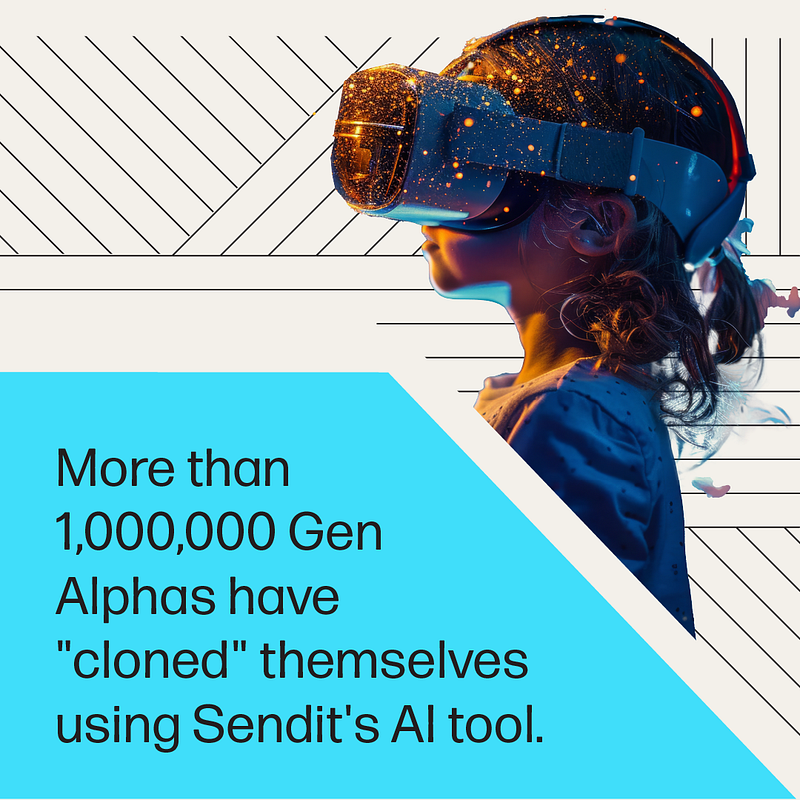
Imagine having a virtual twin — a clone that knows you so well that it can answer and initiate questions on your behalf. For 1 million Gen Alpha users, this isn’t sci-fi: it’s reality, courtesy of Sendit. More than 1,000,000 Gen Alphas have already cloned themselves using Sendit’s AI tool. The app can share your story, even when you are not there, help friends pick out a present for you, or recommend a cool new restaurant to cousins.

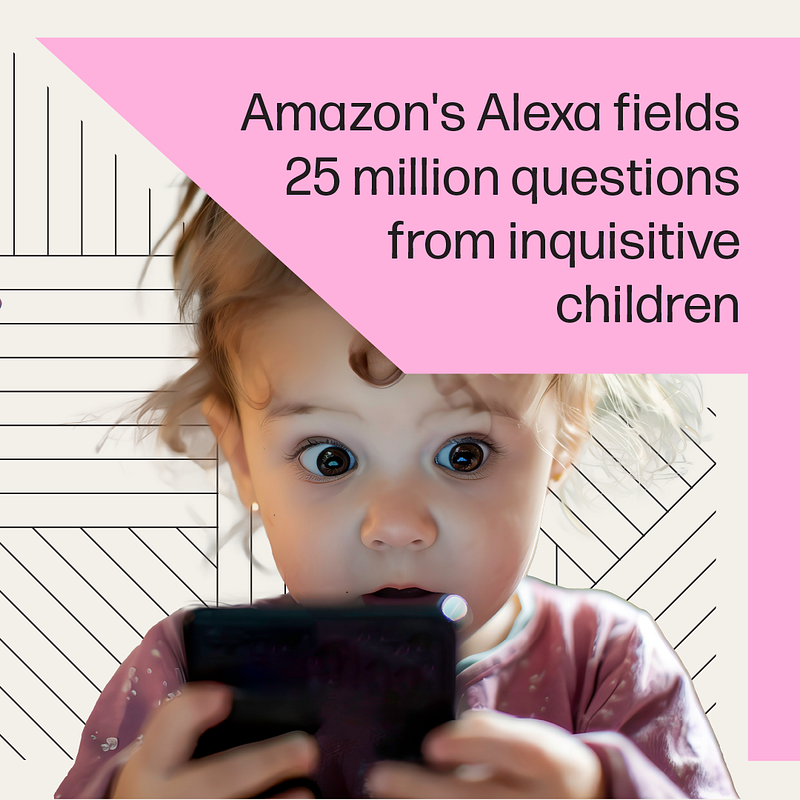
But AI is not all fun and games. It is also transforming the way learning is delivered and received. Every month, Amazon’s Alexa fields 25 million questions from inquisitive children, showing that the thirst for knowledge is now quenched through voice-activated AI. 

ChatGPT is also proving to be a useful tool for both educators and students. A recent survey by Impact Research found that 51% of teachers reported using ChatGPT and a third of students.

AI in the classroom is just the beginning. As 2024 graduates step into the real world, a staggering 50% plan to acquire new skills, fully aware that tools like ChatGPT and DALL-E will be part of their future careers.

Salesforce found that 65% of today’s generative AI users are Millennials or Gen Z, and a formidable 72% of this cohort is gainfully employed, signifying the seamless integration of AI in the working world.

Moreover, nearly half of Gen Z prefer AI over their managers for advice, according to Workplace Intelligence. It’s clear that trust in AI’s capabilities is burgeoning.

Gen Z and Gen Alpha’s imprint on the next wave of AI technologies

With Gen Z being considered digital natives and Gen Alpha taking the crown as AI natives, it’s no wonder they are profoundly impacting where AI technology is heading.

Take Elemental Path’s CogniToy’s Dino, designed for young Gen Alphas, which uses IBM’s Watson to answer children’s questions and converse with them.

LEGO’s Boost Sets combine classic play with coding, demonstrating how introducing technology through fun and popular building blocks can teach kids about coding and AI. But Brian Schwab, director of interactive design at the LEGO Group sees this as only the beginning. In an interview with Toolify.Ai, Schwab shared that LEGO is incorporating AI to enhance the creative and interactive aspects of their iconic building bricks, allowing children to tell their own stories and explore their creativity in new ways.

Language learning has found a new ally in AI. The Duolingo Max application uses ChatGPT-4 to provide feedback and highly tailored lessons, much like a virtual tutor. Thus, creating more personalized learning experiences.

Personalization hits a high note as Spotify’s AI DJ presents music tailored to Gen Z and Gen Alpha tastes — be it fresh hits or old favorites. Spotify editors use GenAI to offer up facts about the music, artists, or genres being listened to. Through their acquisition of Sonantic they are also able to create AI DJs.

Gen Z doesn’t just see personalization for music; they would like to see AI bring personalization to all factors of their lives, including shopping. 88% of Gen Z consumers believe AI will improve online shopping. More than half of them hope for an AI shopping assistant to make it easier to find products based on their personal interests.

How those online products are delivered is also paramount to both Gen Z and Gen Alpha, who put sustainability and social awareness at the top of their interest list. This is helping to fuel new AI innovations. Amazon’s Package Decision Engine uses a multimodal AI model to determine the most efficient packaging for each item sold on its website. Meanwhile, DHL’s AI-powered OptiCarton software plays a game of Tetris with shipping containers, ensuring each container is filled with parcels, leaving no empty spaces.

Gen Z and Gen Alpha’s comfort level with AI and world views will shape what AI-powered apps they will use directly and how AI will be used to enhance the world around them. Their interaction with AI across learning, play, work, and lifestyle is a precursor to a society where AI is not just a tool but a collaborator, co-creator, and confidant.

Blog Futurism & Technology Trends Innovation

How I manage my to-do list with email: Part 2

Keeping track of all your to-dos is never easy, but implementing a process and system to manage them can really help you function at your optimal capacity.
 
 I recently shared a strategy outlining how to:

  • Archive all your email so you never have to worry about deleting an email again
  • Declutter your inbox
  • Process your inbox
  • Track everything you delegate and everything you are ‘waiting for’ via a Pending folder.

In this post, I’ll cover managing and tracking your next actions so you never have to worry about dropping the ball again.

As mentioned previously, efficiently processing your inbox involves doing one of four things with each email:

  • Read and delete. No action is needed.
  • Do. If I think it will take me less than 2 minutes to respond to an email, I will do it then and there and then delete it.
  • Delegate. Forward, ask someone to do something based on the email, and then delete it. Per my previous post on this topic, remember to copy yourself when you delegate over email so you can track everything you’re waiting on someone for in your Pending folder.
  • Queue up for the next action needed. These are the emails I need to spend more time on and that I haven’t been able to delete, delegate, or do within the 2-minute rule.


Let’s focus on that last point: how to queue up things for the next action needed.

Constructing contexts

One core tenet of “Getting Things Done” is to group all your next actions by context. In its simplest terms, this means defining a set of mutually exclusive categories that you can use to group and prioritize your subsequent actions.
 
Everyone will have different contexts they want to work across (see below for mine). The trick here is to define those contexts in a way that makes sense for you and is as simple as possible. It is also important to define them so that each next action only goes into one context. This keeps the overhead of managing your next actions to a minimum. 
 
Here are mine:

I implement this for my email by creating an email folder for each “context” and then moving each “next action” from my inbox to that folder.
 
Here are a few examples:

  • My friend emails me and wants to catch up. I drag the email from my inbox into my Call folder.
  • My wife emails me and asks if I can pick up paper towels. That goes in my Urgent/Important folder 😊
  • My colleague emails me and requests I review a presentation, but in no hurry. It goes into my Not Urgent/Important folder.
  • Someone sends me an interesting article on Vegemite. Into the Someday folder it goes.
  • My boss emails me and says he wants to discuss an upcoming site visit. This goes into the Agenda folder for when I meet with him next.
  • One of my team members told me they just finished a presentation to an important client. This goes into the Recognize folder.

Hopefully, you get the idea.
 
Later, when I get ready to go on a drive, I check my Calls folder and call my friend.
 
When I next meet with my boss, I go to my Agendas folder to remind myself of everything I need to discuss with him.
 
When I’m at my desk first thing in the morning, I hit my Urgent/Important folder for all the urgent and important things I need to do. 
 
When I finish those, I hit the Not Urgent/important folder and get a start on those.
 
Then, when I’m done with all my projects and have time to breathe, I check my Someday folder for new things to do.
 
Never drop the ball again.

Creating a code

The above works great when you receive and act on emails, but what if you want to create and manage the next actions for things not associated with an email you have received? 
 
For example, you might think of something urgent and essential you must do or someone you need to call. How do you get these follow-up actions into your email system?
 
Here’s what I do.
 
Let’s take an “urgent/important” next action as an example. If I want to remind myself to complete an important presentation by the end of the week, I email myself the Subject line “Complete presentation $ui.” I then have a rule set that looks for emails from myself with a “$ui” in the subject line, which automatically moves that email into my Urgent/Important folder. Voila! Next time I’m at my laptop, I will check my Urgent/Important folder, and see my next action to complete the presentation.
 
 To break this down further, for each context:

  • Come up with a code you can put in the Subject for any next action you want to automatically move to the folder for that context.
  • Create a rule for the context that will look for that code as part of the Subject and then do the move.

For the example above, the rule would look like this:


 Note: The examples in this post are from Microsoft Outlook, but most other email applications allow similar rules and settings

Below are the codes I use for all the contexts mentioned above. All you need to do now is create a rule for each code that is the same as the example above but with the corresponding code for each context.

With the above in place, you can also handle the following scenario:
 
Someone sends you an email to ask you for something, and when you respond to say, “I’m on it!” you tag the subject with “$ui”, so your next action is automatically put in your Urgent/Important folder for follow-up. This saves you from having to respond AND manually move the original email to the folder yourself. Yes, it’s only a few extra steps, but it all adds up over a day, a week, or a year. And these posts are all about being an email ninja, not an email grasshopper.

Final reminders

Two more things and we’re done, but these are very important to remember.
 
First, the ordering of your rules in your email system matters. It’s essential that the first rule is to move all received emails to your Received folder. This ensures you will continue to archive all emails you receive, as explained in my first post. Then come the rules to manage context-based next actions as explained above. Finally, the last rule should be to manage Pending emails, which you copy yourself on when you want to track or monitor that something gets done. Ordering your rules in this way ensures they are applied in the correct order so that the system works.
 
Second, you will need to update your Pending rule so as not to move all these next-action emails to your Pending folder as well. To do this, simply exclude all these emails from the Pending rule, as shown below.

That’s it! Now, you have a way to track your next actions by context. When you complete each next action, you can delete it from the context folder and move on to the next one!
 
 At this point, you now have a way to:

  • Archive all your emails so you never have to worry about deleting them again.
  • Declutter your inbox.
  • Process your inbox.
  • Track everything you delegate and everything you are ‘waiting for’ via a Pending folder.
  • Track your next actions by context.

Stay tuned for my next post on using this system to manage projects and deliverables that require many next actions to complete. It will also include a few additional advanced techniques that will move you into black belt territory.

Blog Entrepreneurship Leadership

Shaping tomorrow: Exploring digital behavior shifts [5 TRENDS + Key Takeaway]

In today’s rapidly evolving digital landscape, we are witnessing a paradigm shift reshaping our online experiences and interactions. This transformative journey is not just about the advent of new services and technologies but also reflects our growing consciousness about the health implications of our digital lives. This shift is remarkably evident among younger generations like Gen Z and Gen Alpha.

These digital natives, who have seamlessly integrated technology into their daily lives, are steering away from traditional online platforms like standard search engines and news or product websites.

Instead, they are gravitating towards social apps and seeking information, inspiration, and a sense of community in more dynamic and interactive spaces. This change coincides with a growing interest in multi-functional “Super Apps” among all internet users and a rise in immersive, more experiential digital tools.

Recent statistics vividly show this evolving digital behavior, particularly among younger generations.

Here’s a summary highlighting these key trends:

  1. Increased smartphone usage
    Gen Z spends over 6 hours daily on smartphones, indicating a heavy reliance on mobile devices for various aspects of their daily lives.

  2. Changing information sources
    Almost 40% of young people now turn to platforms like TikTok and Instagram for answers, bypassing traditional tools like Google Maps or Search.This reflects a shift towards more visually engaging and social forms of information gathering. Younger generations are beginning their digital explorations from a place of curiosity, favoring immersive and interactive experiences over traditional search and browsing methods.

  3. Rise of super apps
    Apps are increasingly becoming all-in-one solutions, bundling various services to ensure users have everything they need within a single platform. This trend is leading to a more integrated and streamlined digital experience.

    Superapps consolidate and replace multiple apps for customer or employee use and support a composable business ecosystem, according to Gartner. Examples of successful super apps include Rappi, a Colombian on-demand delivery app; WeChat, a Chinese social media platform; and Grab, Southeast Asia’s ride-hailing, taxi, food-delivery, and grocery app. Early super-apps are expected to emerge in Western countries by 2025.

    ShaQ Express in Ghana also exemplifies the transformation from a traditional delivery company to a super app, offering a number of Internet-based services under one roof, yet another example of this trend towards more versatile and comprehensive digital platforms.

    By 2027, it’s projected that more than 50% of the global population will be daily active users of super apps. This trend underscores the growing preference for integrated platforms that offer a range of services in one place.

  4. Brand trust as a key purchase driver
    Brand equity is now the top purchase driver for consumers. This highlights the increasing importance of brand reputation and reliability in consumer decision-making.

  5. High trust in online reviews
    A staggering 88% of customers surveyed trust online reviews from strangers as much as personal contacts. This statistic demonstrates the significant role of digital word-of-mouth in shaping consumer trust and purchase decisions.

The landscape of digital interactions in our daily lives is rapidly evolving, painting a future where technology, trust, and convenience merge seamlessly.

As we navigate through an ever-evolving digital terrain, it becomes increasingly clear that our world is transforming significantly.

The shifts in digital behavior, highlighted by the rise of all-in-one platforms and the nuanced journey of technologies like Generative AI, underscore the dynamic nature of our digital ecosystem.

We must all pay close attention to these changes. Understanding and adapting to these shifts is not just about keeping up with technological advancements; it’s about actively participating in a world that is becoming more interconnected and experiential.

Embracing these opportunities will be the key to thriving in this new digital age?

Blog Futurism & Technology Trends Innovation Leadership

How technology can enhance real-world experiences

From digital transformation to experience transformation

The concept of hybrid reality – blending our virtual and physical worlds – has gained significant traction, fueled by a desire for more meaningful experiences along with advancements in artificial intelligence (AI) and immersive technologies. 

The COVID pandemic accelerated the shift to digital experiences such as remote work, home food delivery, online shopping, telemedicine, and more. While these experiences were initially met with widespread enthusiasm, as they offered unprecedented convenience and efficiencies in various aspects of daily life, many individuals began to recognize what this technology didn’t provide.

The lack of tangible human interaction and richness of real-world experiences left consumers realizing they did not want to live a digital-only life. For example, they loved to shop online but still wanted to go shopping, and while working from home provided new, exciting flexibility, they still wanted to interact with their teams in the office.

We’re all increasingly living in a time where much of our day is spent moving between different environments, experiences, and ways of doing things. From hybrid work to other hybrid physical/digital experiences, consumers will experience the merging of our physical and digital worlds – leading to better, more satisfying, and useful products and experiences for their everyday lives.  There is an opportunity for technology to augment our hybrid world, making it more seamless and adaptable to our needs.

Let’s dive into some of the ways this blending of physical and digital will affect our lives now and in the future.

Hybrid applications

Hybrid reality applications span diverse sectors, including entertainment, education, and healthcare, demonstrating their versatility and broad appeal. Augmented reality (AR) is one technology that will have a massive impact on hybrid reality. The AR market revenue is expected to top $21 billion this year.

Work

Whether someone is attending a meeting remotely or in the office, everyone wants to feel like they are an integral part of the team. This works great when everyone is either in person or virtual but is especially difficult when meetings are hybrid. HP is very focused on using AI-powered audio and video to make hybrid meeting experiences more engaging, no matter where you are. For example, this involves moving from a static video feed of everyone in the room to being able to frame the audio and video of the person speaking automatically.

And HP is not alone. Sixty-three percent of high-growth companies have adopted a “productivity anywhere” workforce model.

Touch

Touch is a big part of our physical world experience, but it is not possible when remote or virtual…yet. A startup, Emerge.io, has developed a virtual touch technology that allows you to feel a remote hug, handshake, or high-five literally. The small device creates a precise, ultrasonic force field, so now you can physically feel what you see on the screen or through your AR glasses. This could also be used for games, media content and video calls to set the stage for new hybrid experiences that include touch.

Writing

Even with all the technology today, some people still prefer using a pen to write in a physical notebook. What if you can have the best of both worlds? One approach is by adding a very accurate sensor to the pen, enabling the stylus to create a digital copy of anything you write or draw on paper. Another is to use the power of Generative AI to enable this, allowing you to have the physical benefit of writing with all the power and benefits of digital. This is another example of hybrid reality, blending our digital and physical worlds to create an even better experience than is possible in just a purely physical or purely digital experience.

Looking forward

The impending arrival of hybrid reality, an innovative blend of physical and digital worlds, is poised to revolutionize our interactions and work landscape. As hybrid reality becomes a tangible part of our daily lives, it will redefine the boundaries between virtual and physical realms and offer new, dynamic ways to interact with each other and our environment, profoundly impacting both our personal and professional lives.

Blog Futurism & Technology Trends Innovation Leadership