A Day-In-The-Life with Generative AI Part 2: Maximizing Efficiency

Generative AI is becoming embedded in our everyday lives and transforming how we approach daily tasks and activities. With AI seamlessly integrated into our routines, we can experience efficiency and personalization that was once the realm of science fiction.

Remember Aiden, a 26-year-old living in San Francisco, who weaves AI into her daily life to optimize her productivity and enhance her experiences? She’s not the only one leveraging generative AI to create a more streamlined daily life.

Meet Dylan, a 40-year-old corporate executive who expertly uses AI to be more productive, achieve his fitness goals, and maximize his free time.

Morning Start

GIF showing AI-generated vivid dream replay. Very colorful

Dylan enjoys an AI-generated replay of a vivid dream he had, complete with visual and narrative details, providing creative inspiration and insights as he starts his day.

Digital news feed from AI

A customized AI-generated news briefing, with curated headlines and stories based on his preferences and current interests sets a focused tone for Dylan’s day.

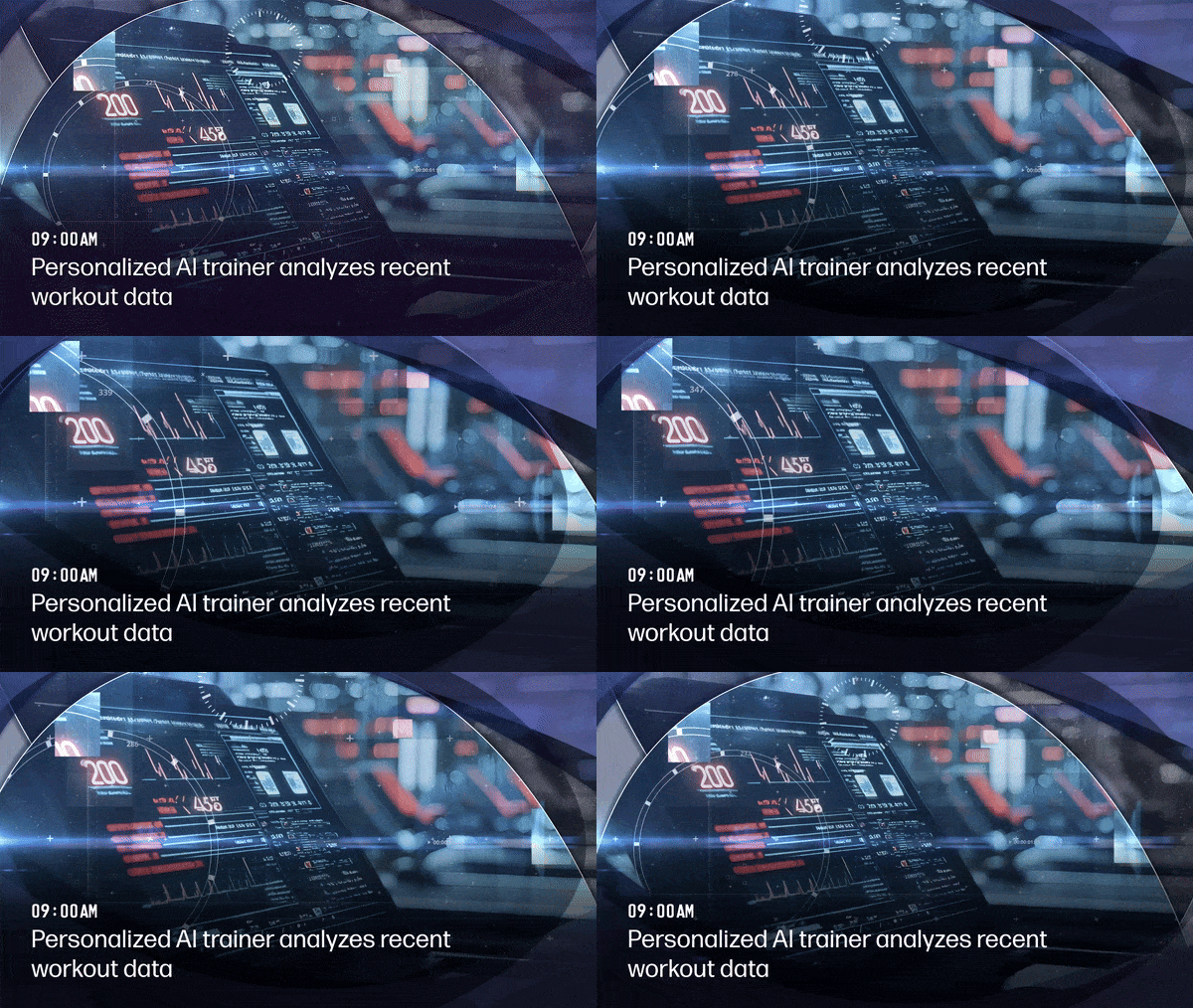
bike workout screen with data from AI trainer

After the news briefing, Dylan’s personalized AI trainer analyzes his recent workout data and suggests a customized exercise routine, including specific cardio and strength training exercises to help him meet his fitness goals.

Efficient Afternoon

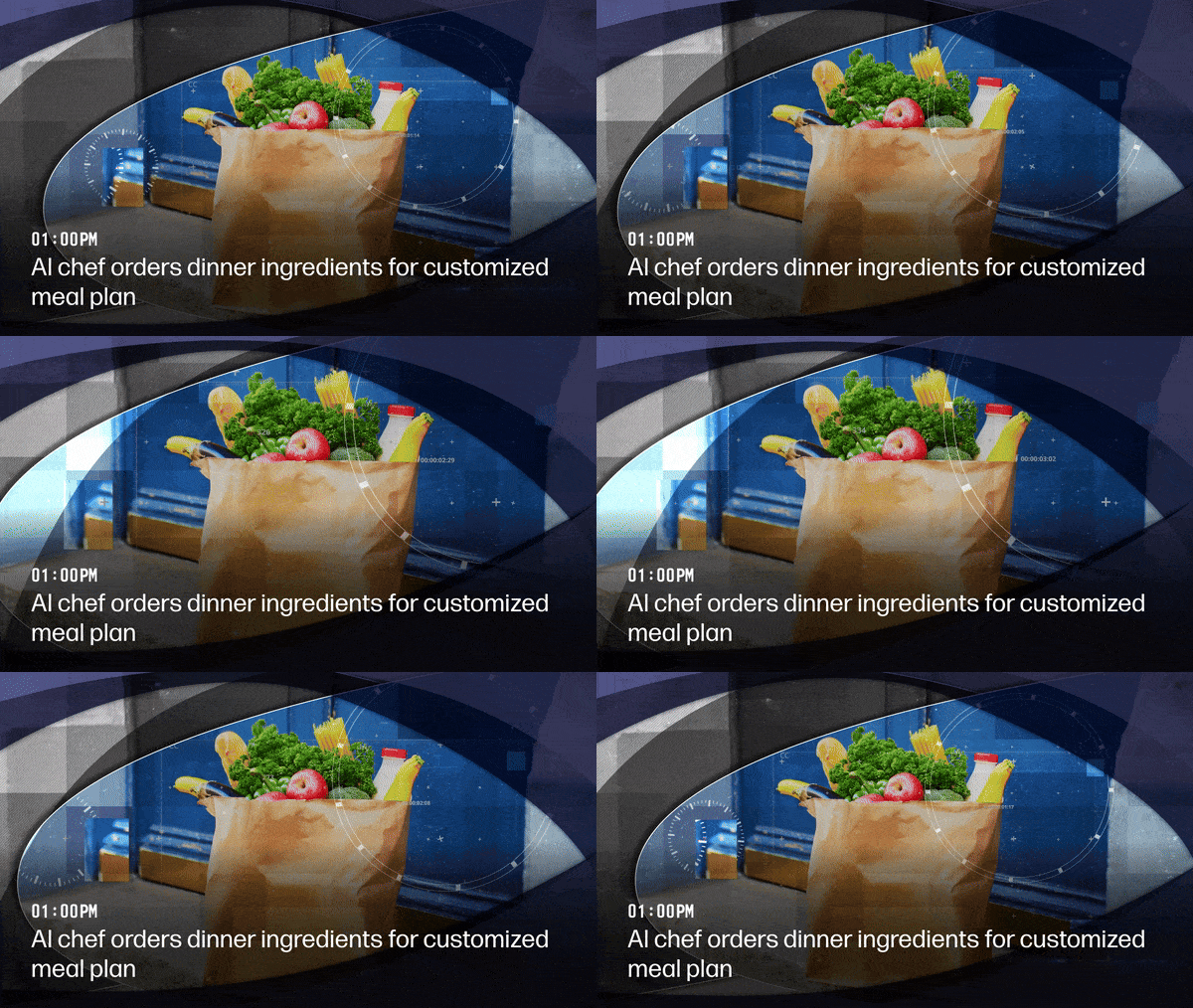
food shopping bag ordered by AI chef

Dylan’s AI Chef orders culinary ingredients according to his AI customized meal plan and schedules delivery, ensuring he has fresh produce and essentials for later, delivered by an AI robot personal shopper.

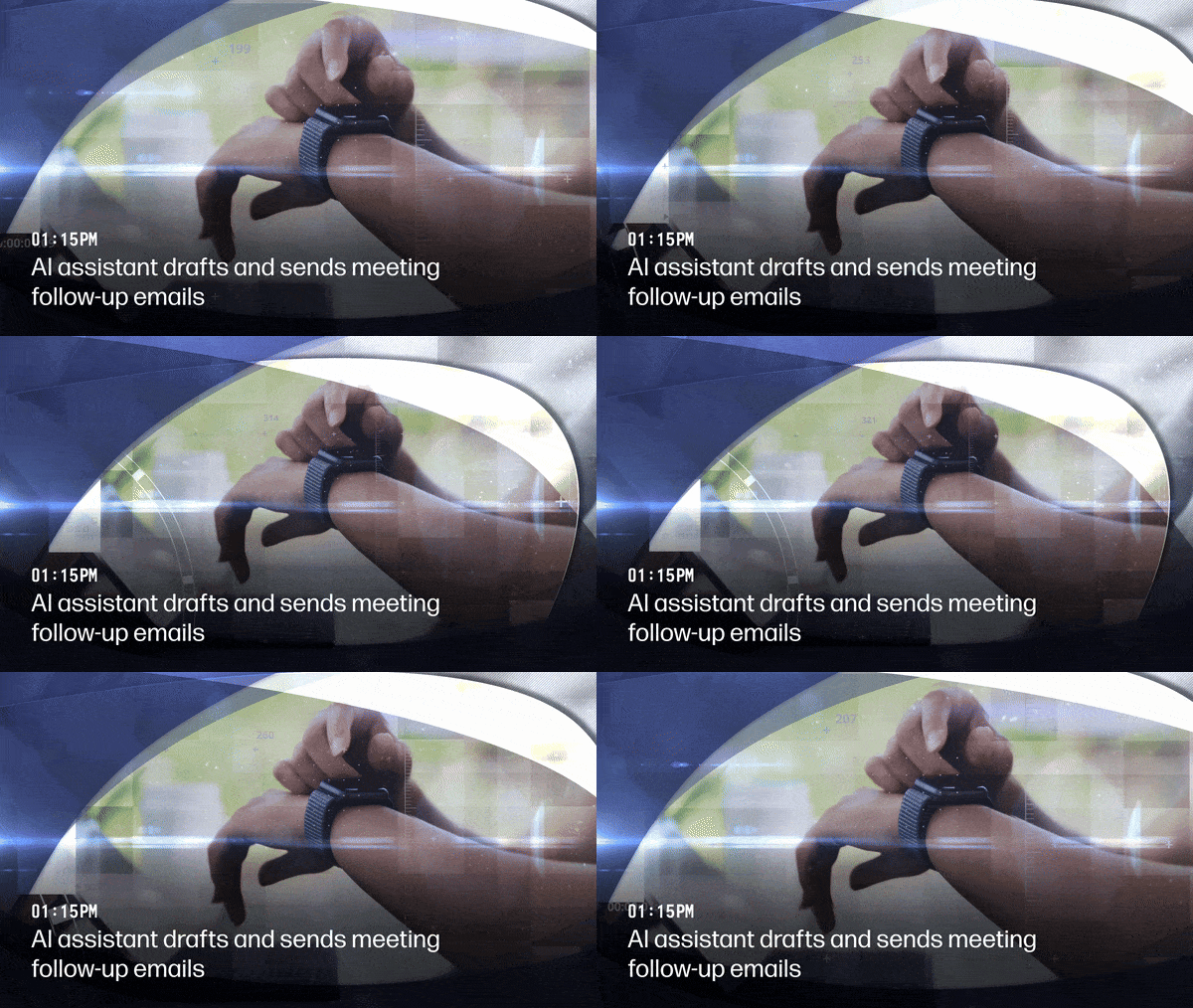
smart watch on wrist sending emails automatically

While in a meeting, Dylan asks his AI assistant to draft and send follow-up emails, including a proposal for a new project. This allows him to focus on strategic planning while the AI handles the communications.

Engaging Interactions

Virtual Reality meeting with Madam C.J. Walker

During a staff meeting, an AI-powered digital twin of Madam C.J. Walker joins Dylan’s team for a Q&A session. Walker shares insights into her entrepreneurship, philanthropy, and social activism approaches.

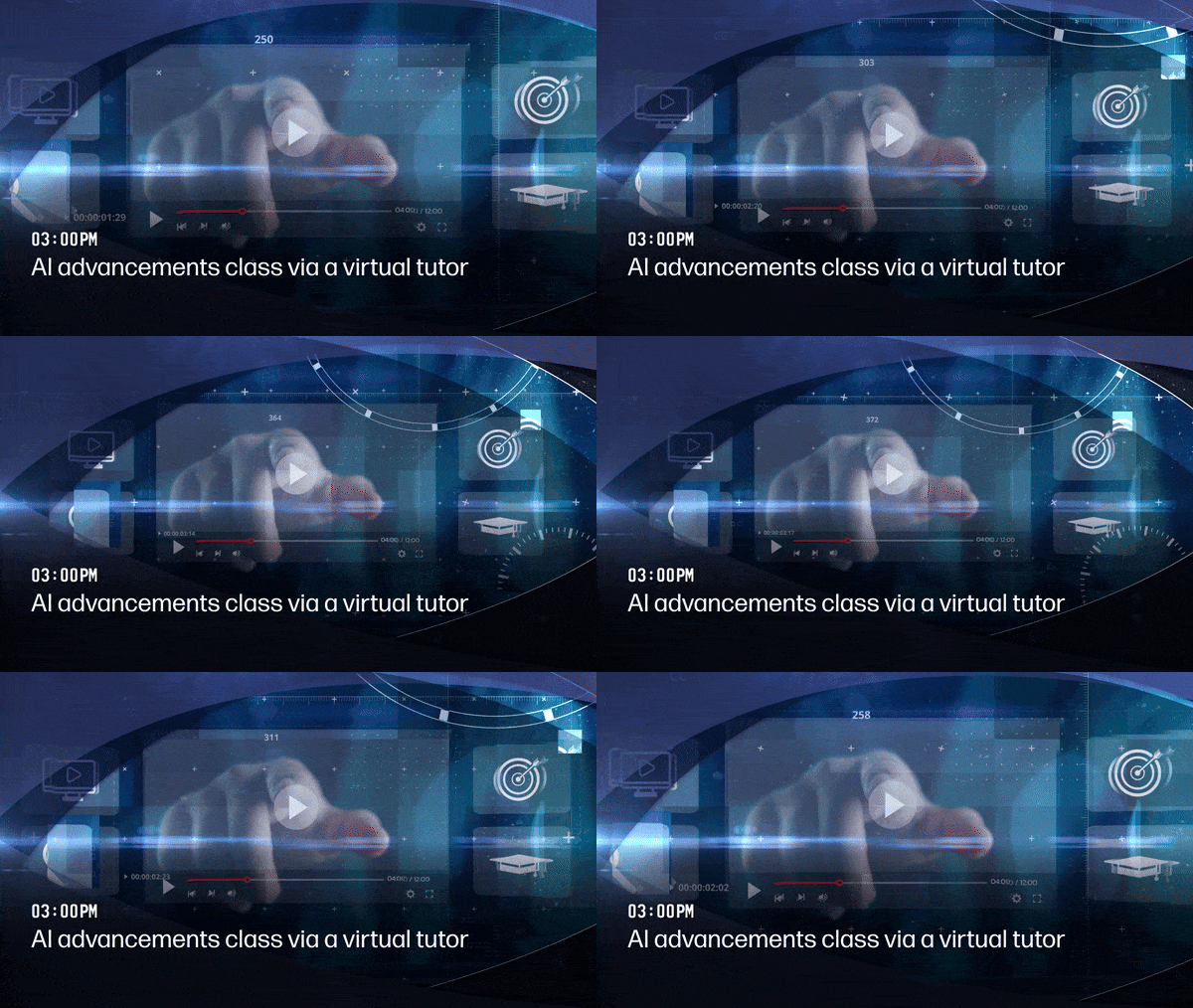
Virtual Tutor

Dylan takes a break to learn about AI advancements via a virtual tutor, exploring topics like machine learning algorithms and their practical applications in his industry.

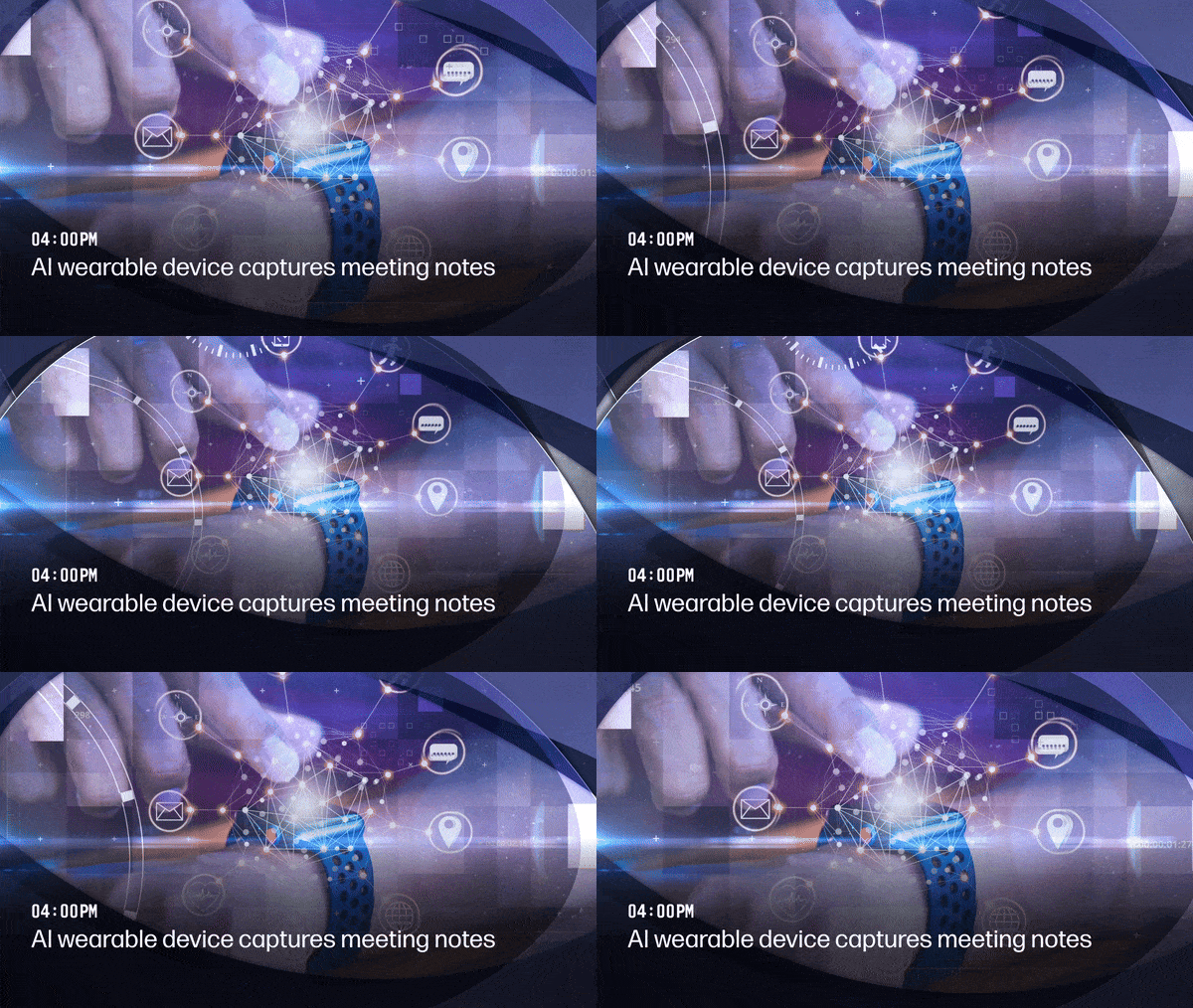
Wearable device capturing meeting notes

His AI wearable device discreetly reminds him of key contacts he met earlier, captures important meeting notes, and follows up on promised actions.

Evening Relaxation

Chicken and broccoli meal prepared by a Robot

As he winds down from work, Dylan’s robot sous-chef prepares a gourmet dinner, following a recipe from his meal plan, while he relaxes and catches up on personal projects.

Personalized movie on a TV screen

Dylan ends his day watching a movie tailored to his tastes and current mood, with AI creating a personalized viewing experience with a custom storyline.


Generative AI can transform how to manage tasks, access information, and enjoy leisure time. It’s not just about efficiency; it’s about creating a more personalized and enjoyable experience.

How do you envision generative AI transforming your routine and bringing more ease and excitement into your daily life?

Blog Futurism & Technology Trends Innovation

A Day-In-The-Life with Generative AI: A Glimpse into the Future

Technology is seamlessly integrated into our daily routines, and generative AI will revolutionize how we live and work. Let’s imagine a day in the not-too-distant future where generative AI doesn’t just serve as an assistant but as an active participant in every aspect of your life.

Meet Aiden. As a 26-year-old living in San Francisco, Aiden spends her time working at a healthcare startup, socializing with friends, and focusing on hobbies like fitness and reading. Here’s a peek into what a typical day for her might look like with generative AI:

Morning Routine

AI trainer delivers a custom workout plan

Aiden likes to exercise before she starts her day. Her AI trainer sends her a customized workout plan each morning and adjusts her exercise plan based on her current fitness goals.

Digital twin of women attending a virtual meeting

After she finishes her workout, Aiden is ready to start her workday. A morning meeting pops up that could have been handled as an email. Aiden sends her digital assistant to attend the online meeting on her behalf.

Aiden’s digital twin participates by handling routine discussions and updates. As soon as the meeting is complete, her digital twin sends Aiden the meeting notes, key takeaways, and action items.

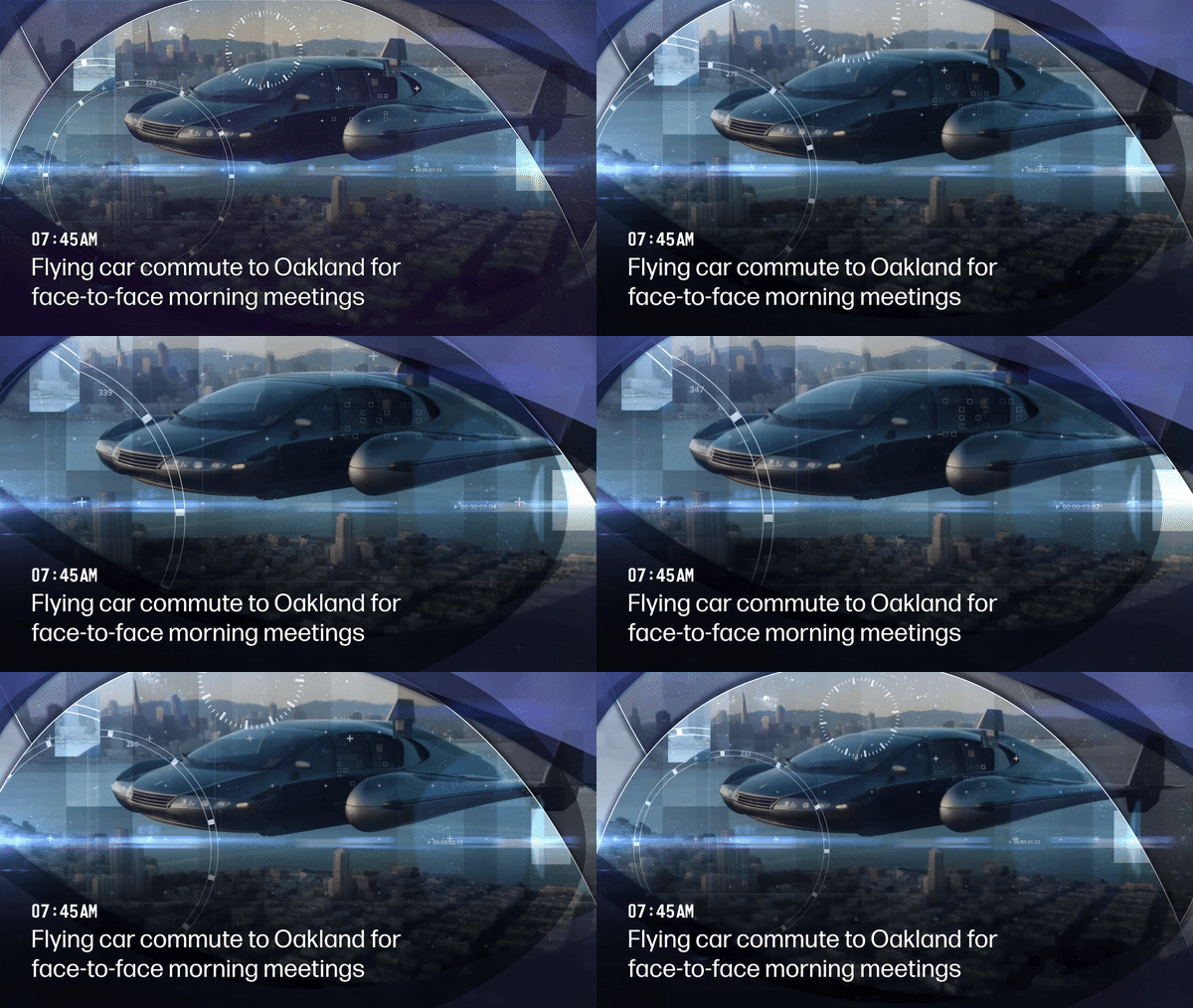
flying car over Oakland, CA

While her digital twin is in the meeting, Aiden takes a flying car to a face-to-face meeting in Oakland with her boss. With this commute, she cuts down on travel time and avoids traffic on the ground.

Robot feeding a black and white husky dog in a living room

Aiden attends her face-to-face meeting in Oakland, while a humanoid robot manages her household chores back at her apartment – feeding her dog, cleaning her kitchen, folding her laundry, and preparing her lunch. By offloading mundane tasks, Aiden can focus on more high-level tasks, such as in-person meetings and sharing her latest strategy ideas.

Health, Wellbeing, and Lunch

watch showing vital signs being captured and sent to an AI doctor

Aiden continues to work while wearing her AI wearable. Her AI doctor monitors her health statistics and raises a couple of irregularities to Aiden’s human doctor, who is based in Sacramento. When she receives the information, her human doctor sends a report to Aiden with key takeaways, updated prescriptions, and health information.

The meeting concluded in Oakland, and Aiden got a promotion! She’s thrilled and heads back to the City for lunch. On her way home, she sends a request to her AI Assistant to invite her friends for happy hour at her apartment to celebrate her promotion.

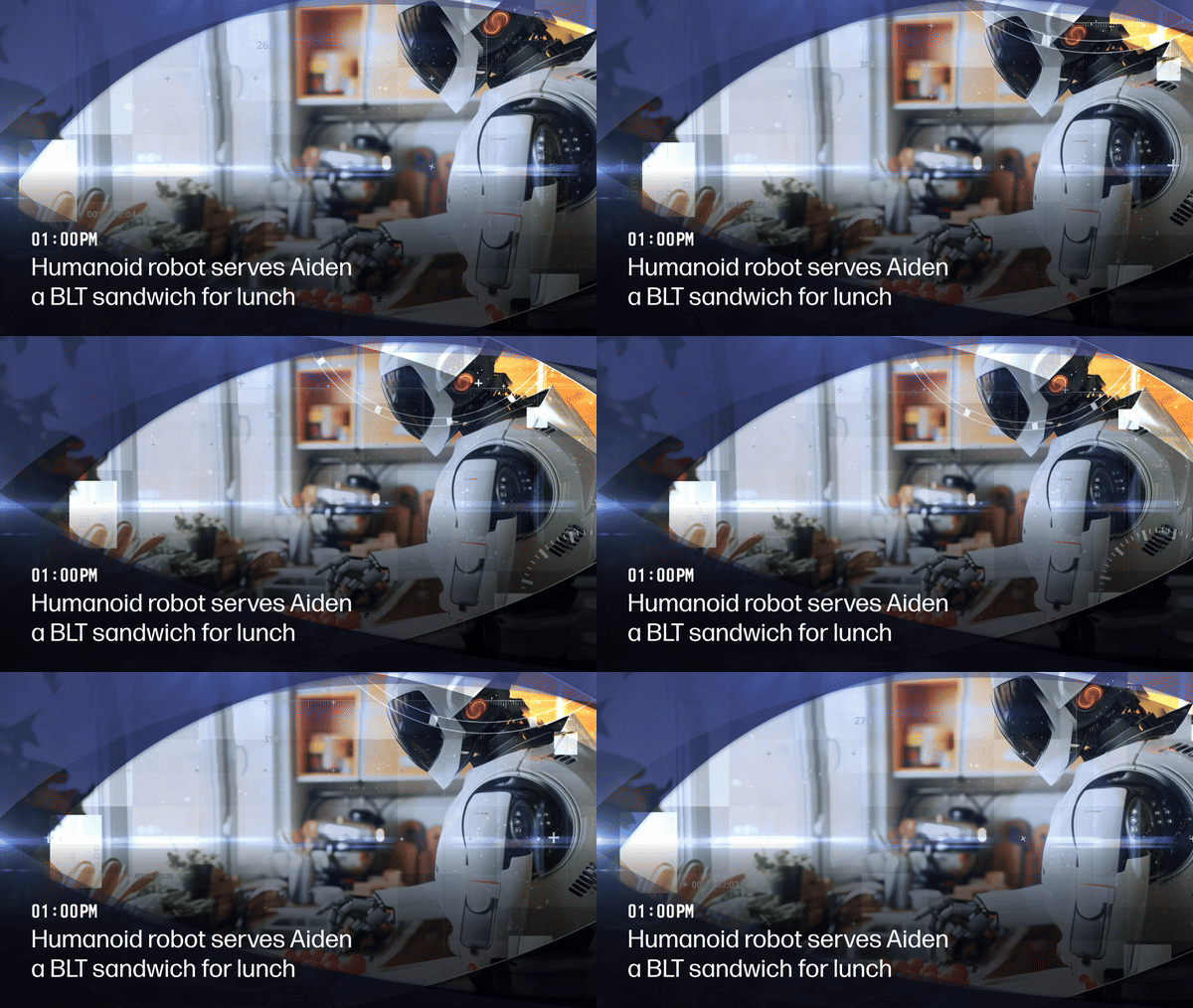
Once Aiden returns to her apartment, she enjoys the BLT her humanoid robot prepared for lunch while she answers work messages.

Happy Hour

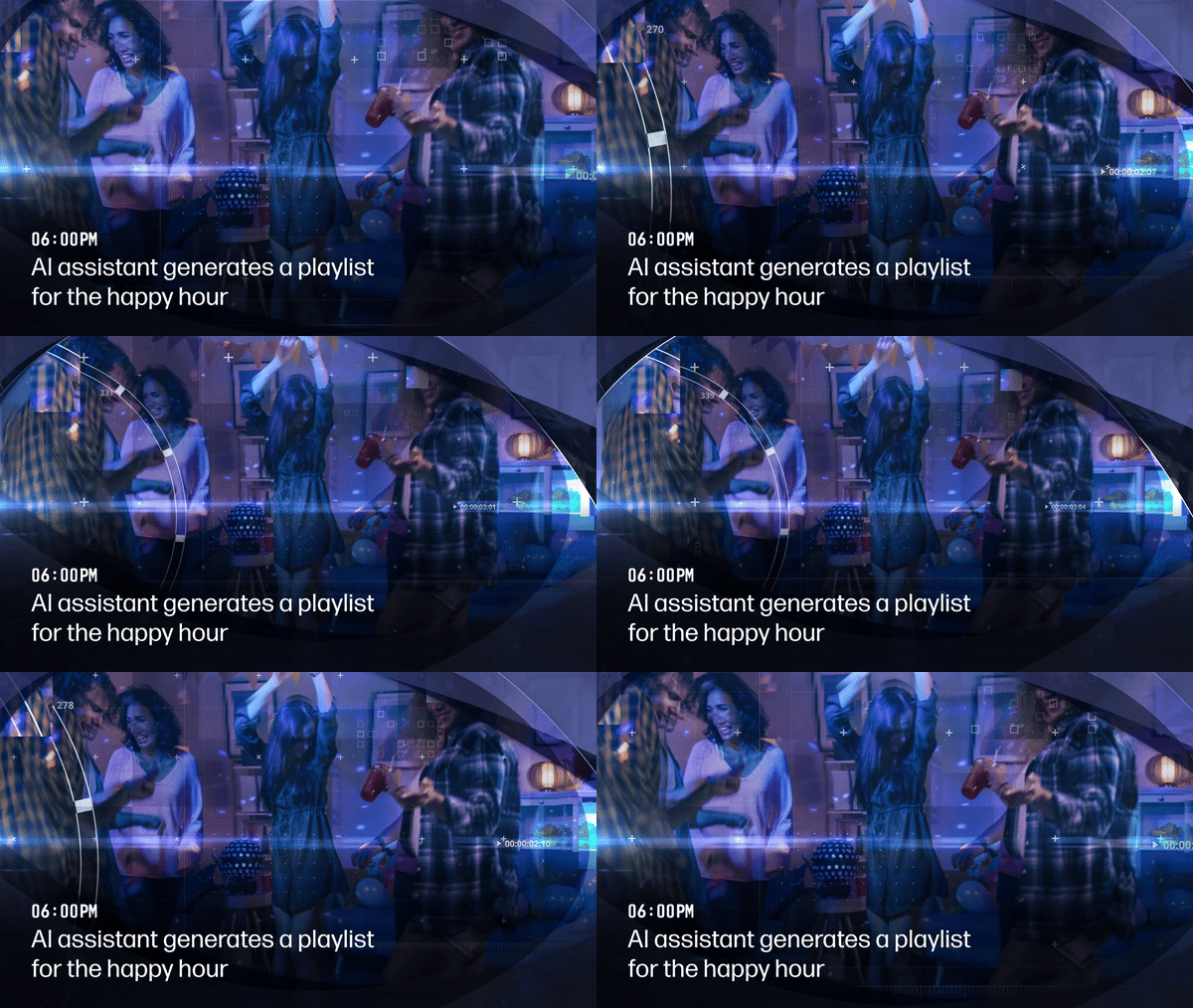
Young people dancing in a living room

As Aiden’s friends arrive to celebrate her promotion, her AI generates a celebratory playlist for the happy hour.

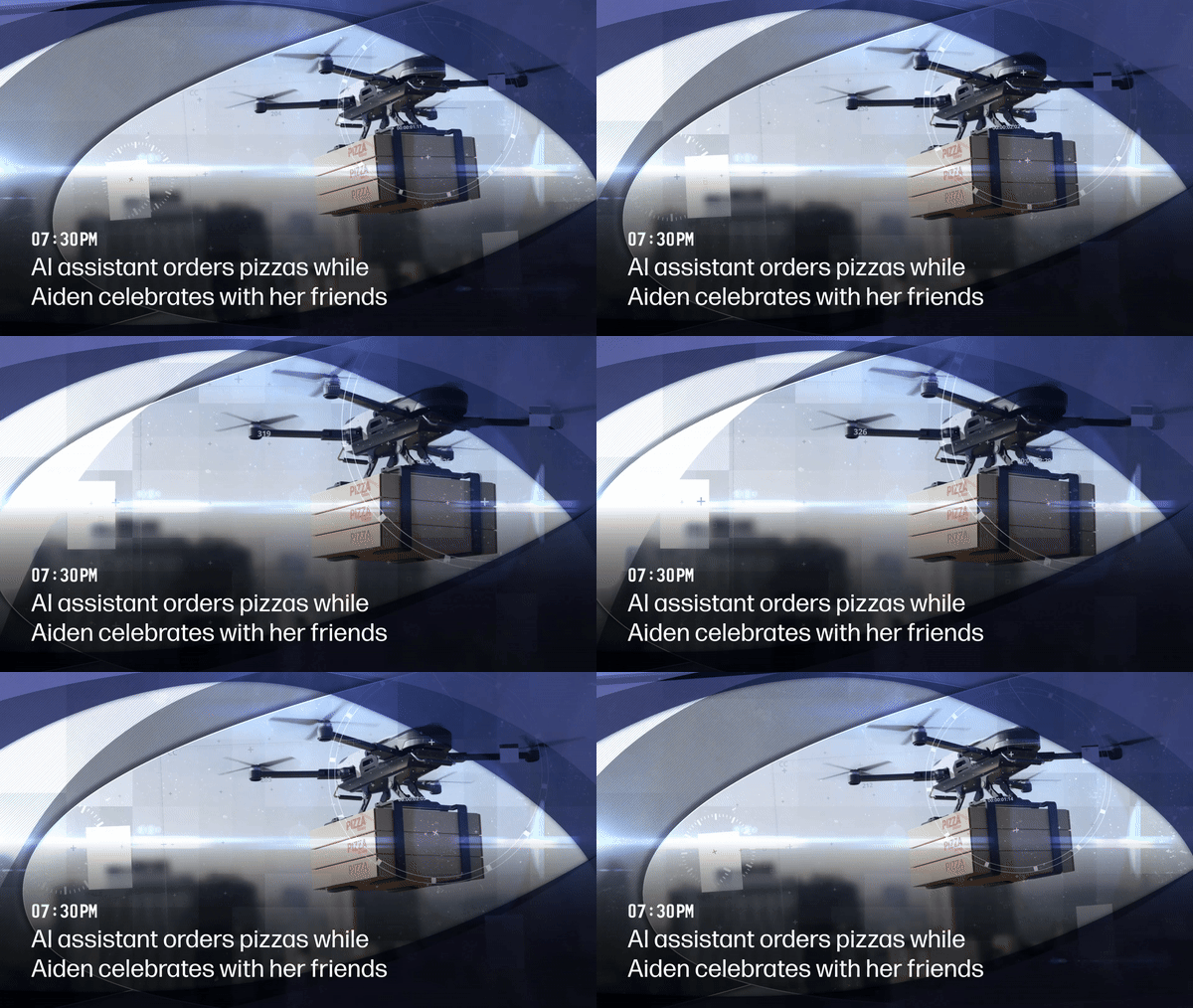
Drone delivering pizza

Aiden’s friends toast her accomplishment, and in the background, her AI assistant places an order for pizza delivery which her humanoid robot receives and brings inside. Enjoy!

Evening Routine

AI assistant lowers the lights in a living room

Aiden’s friends head home, and her AI assistant adapts the lighting and sound to her relaxation needs, offering her a comfortable and personalized environment to unwind. She settles into the couch to watch a series curated specifically for her previous viewing preferences.

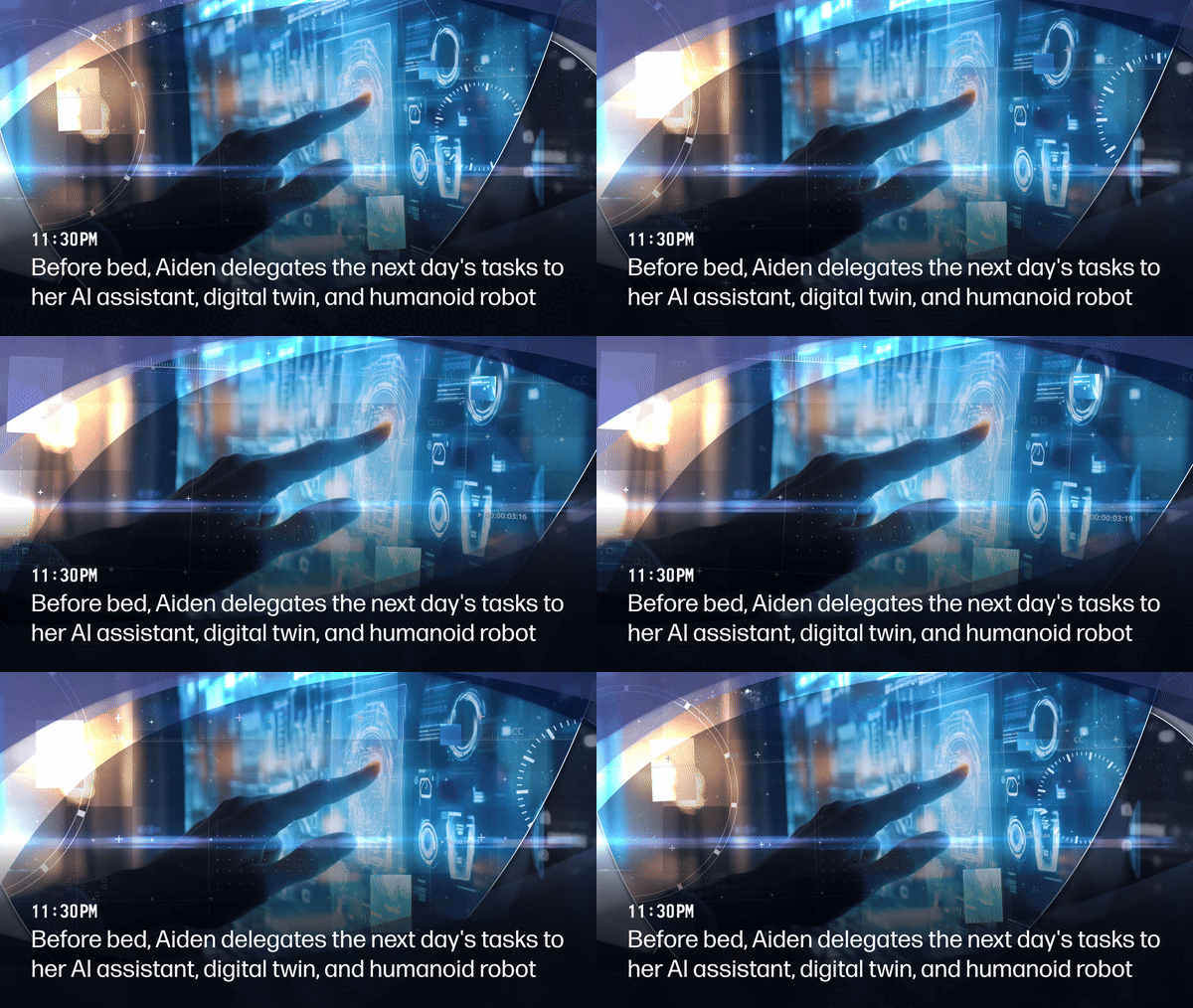
Person touching screen and selecting next day tasks for AI assistant

Before she goes to sleep, Aiden delegates the household and work tasks she would like her AI assistant, digital twin, and humanoid robot to complete tomorrow.


Generative AI promises a future where technology enhances our routines, making our lives more efficient and enjoyable. From handling mundane tasks to offering personalized experiences, AI is set to become an integral part of our daily existence, turning futuristic visions into everyday realities.

How do you envision generative AI reshaping your daily life as we move toward this future?

Blog Futurism & Technology Trends Innovation

Using trends to create a sustainable future

Thinking like a futurist in this era of constant change provides an incredible opportunity to create the future we want. By staying on the lookout for trends and weak signals shaping the world around us, futurists can identify future opportunities that lead to consequential disruption.

But what happens if you miss these trends?

In the best-case scenario, missing these signals may simply leave you reacting to disruption and working hard to catch up. At worst, however, you are in danger of becoming irrelevant and going out of business. The corporate graveyard is littered with companies that didn’t react fast enough to the changes in the world around them.

Blockbuster

Founded in 1985 by David Cook, Blockbuster was an entertainment staple in the 1990s and early 2000s. At its peak, there were 9,094 stores globally. Consumers would flock to their local stores to rent movies and buy snacks for their Friday nights, making Blockbuster a fixture in households worldwide.

After a few CEOs and missteps, Blockbuster made its biggest blunder when it failed to acquire Netflix in 2000. Netflix saw the rise of DVDs as a significant opportunity and launched its original mail-based DVD rental business in 1997. Because DVD players were not yet standard in the average household, Netflix partnered with HP, Sony, and Toshiba to offer free DVD rentals to new DVD player buyers. Netflix grew in popularity but wasn’t yet profitable, so its leadership approached Blockbuster to propose an acquisition, which the movie-rental giant declined.

Netflix persisted, confident that DVD players would gain popularity, and that confidence paid off as the company became profitable in 2003. The following year, Blockbuster began its DVD-by-mail service seven years after Netflix. From 2007 to 2010, Netflix continued to monitor trends and take calculated risks that majorly paid off, starting their on-demand video streaming service and signing deals with industry giants from Disney to Paramount.

On the other hand, Blockbuster failed to innovate in time and had to play catch up with Netflix while rapidly losing customers. That failure to embrace change, paired with severe debt, became the unraveling of Blockbuster, which declared bankruptcy in 2010 and closed all but one store.

Toys “R” Us

Later considered a category killer, Toys “R” Us had a humble beginning as a baby-furniture retailer in Washington, D.C., in 1948. Initially named “Children’s Bargaintown,” founder Charles P. Lazarus changed it to Toys “R” Us in 1957, dedicating the store entirely to toys and moving it to Rockville, Maryland. Throughout the next half-century, Toys “R” Us experienced incredible success, building a powerful brand, exploring spin-off clothing stores, and assisting in the launch of several pop culture games and toys.

By the late ‘90s, Toys “R” Us began to feel the pressure from growing competition, like Walmart and Target, which eventually led to the closure of its spin-off, Kids “R” Us, in 2003. While competing companies created their e-commerce sites, Toys “R” Us entered an exclusive 10-year partnership with Amazon in 2000. This partnership, while successful, prevented Toys “R” Us from developing autonomy over its online presence, which became a severe problem when Amazon elected to grow its toy category and allow competitors to sell on its platform.

Toys “R” Us sued Amazon and won, but it was too late. The once powerful toy seller had lost out on the essential opportunity to create its e-commerce website, and by the time it had one, it fell far behind what competitors had to offer. Toys “R” Us not only failed to keep up with e-commerce, but it also ignored changing consumer habits and buying preferences, instead focusing on offering the lowest prices, which proved unsustainable. Finally, Toys “R” Us failed to create an enticing in-store experience, instead deciding to cut costs. Unable to provide a satisfying in-store experience and struggling to keep up with e-commerce innovation, Toys “R” Us filed for bankruptcy in 2017 and closed all stores in 2018.

In 2019, the company rebranded as Tru Kids post-bankruptcy, opened new stores, and partnered with Target to sell toys. By 2020, the agreement had lapsed, and Amazon took on Target’s role as a fulfillment partner. In 2021, the financial impact of the COVID-19 pandemic closed its stores again. In 2022, the company plans to open stores within all U.S. Macy’s by October 15.

Borders

The first Borders bookshop opened in Ann Arbor, Michigan, in 1971, by brothers Tom and Louis Borders. The company didn’t open its second store in Beverly Hills, Michigan, until 1985 and was subsequently acquired by Kmart in 1992. Three years later, Kmart spun off Borders into a new company named Borders Group. Through the 1990s and early 2000s, the Borders Group expanded globally, with stores and franchises everywhere from Singapore to Puerto Rico.

Initially, Borders stayed ahead of innovation with a robust inventory system that could predict consumer behavior. However, when the industry began to go digital in the early 2000s, Borders began to lose its grip, leaning heavily into CD and DVD sales instead of working on its internet presence. Competitors like Barnes & Noble focused on online sales and digital innovations like e-readers, while Borders chose to outsource its online operation to Amazon, which rapidly became a competitor.

As competitors grew and embraced innovation, Borders steadily lost revenue, and its last profitable year was 2006. After constant financial trouble, Borders filed for bankruptcy in 2011, closing all its stores except those operating in the United Arab Emirates, Oman, and Malaysia, which other owners took over.

In the examples above, it’s clear that while some companies missed the boat on specific innovations, others were on the right track. They did this by paying attention, listening to the true needs of their customers, and prioritizing learning from all failures.

So how can you avoid missing trends?

I may sound like a broken record, but thinking like a futurist is the best way to avoid being left behind by innovation. Pay attention to weak signals, explore emerging trends and technologies, and adopt an innovative mindset. You need to have a good sense of what you want in the future. Ask yourself:

  • What outcomes am I looking for?
  • What inspiring vision and goals do I need to put in place?

Your goals need to be bold enough that they cause you to work backward to discover what disruptions will get you there, rather than taking today’s solutions and incrementally improving them over time.

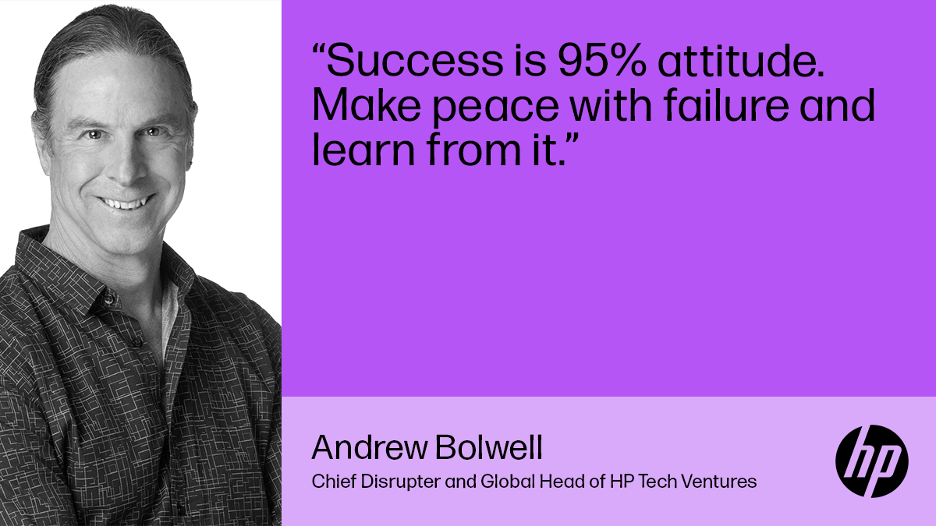
Visualizing outcomes is essential, and so is having an open, innovative mindset and attitude. Success is 95% attitude. Make peace with failure and learn from it instead. Think boldly, and never give up. Having the right attitude is essential to staying ahead of all this change and creating the future you seek.

Finally, remember: the future hasn’t happened yet. The future is something that we all get to create. It is the result of all the choices that we make today.

What future will you create?

Blog Futurism & Technology Trends Innovation Leadership

How to think like a futurist: Microfluidics

The world never stops changing, and it’s the job of a futurist to stay ahead of change and prepare for the future. Anyone can be a futurist by paying attention to trends and embracing the constant shifts in society and technology. As futurists, we can take advantage of opportunities to lead, innovate, and build a better future.

In this new series, we will look through the lens of a futurist to explore some of the exciting technologies and trends bound to shape our future lives.

Ready to think like a futurist? Let’s dive into microfluidics.

Step 1: What is microfluidics?

In short, microfluidics is the ability to work with tiny amounts of fluid and at great precision. Printing is an excellent example of that. Over the last 30 years, HP has perfected the art of placing very small amounts of fluid in exact locations on a page to create printing. The technology behind this is microfluidics.

We are talking here about manipulating fluids that are a fifth the size of a human cell and a thousand times smaller than a raindrop. Hence the name microfluidics, and of course, microfluidics isn’t something that is only applied to printing. There are a lot of fluids in the world, including within our bodies. From life sciences to agriculture to healthcare, microfluidics has a whole host of existing and potential applications.

Step 2: Trendspotting

Did you know that someone is added to the US national organ transplant waiting list every nine minutes? Along with many other sobering statistics, that fact showcases the immense need for innovation within biotech, and microfluidics may be the solution.

Recent advancements from the Stevens’ Schaefer School of Engineering & Science have found a way to accelerate the creation of 3D-printed organs. Led by associate professor Robert Chang, these researchers hope to use microfluidics to achieve a more precise and controllable method for 3D-printing organs. By creating a microfluidics-enabled 3D printer, researchers could more accurately print organs at the scale of human cells. Microfluidics can also utilize multiple “bio-inks,” allowing for the reproduction of any type of tissue and opening exciting new avenues for healthcare technology.

Another healthcare innovation using microfluidics is these wearable sweat sensors. Using paper-based microfluidics, these sensors can measure various chemicals, drugs, and hormones in sweat. The information gathered from these sensors could help diagnose several health issues, from cardio-renal disease to cystic fibrosis.

Step 3: Opportunity knocks

As startups and scientists continue to explore the potential behind microfluidics, the technology will become further refined and precise, leading to more opportunities within healthcare and diagnostic tech.

One such company is Fluigent, which aims to develop more advanced fluid control systems. Doing so could help accelerate the development of new medicines, therapeutic treatments, vaccines, and more. By introducing pressure pumps to its microfluidics chips, Fluigent could achieve complete control of flow rates, allowing for much higher precision. HP Labs is also exploring microfluidics and its many uses, such as cancer detection.

Due to the rising demand for point-of-care diagnostics and other microfluidics technologies, the global microfluidics market is expected to be worth $43 billion by 2027. Though microfluidics technology could be applied across several industries, the healthcare industry will likely see the most significant impact. After the effects of COVID-19, healthcare has received more attention than ever, specifically diagnostic technologies enabled by microfluidics.

Let’s also look at food and water contamination. One in 10 people suffer and fall ill from food contamination every year. One in four people lacks access to safe drinking water. But how do they know? Today these tests for contaminated food and water need to be sent into a central lab facility with large and expensive equipment, and it takes days to get results back. But what if all of us could carry something in our pocket that could in real-time test whether the food we’re eating or the water we’re drinking is safe? That’s the power of microfluidics.  

When I think of microfluidics, I believe it’s very similar now to how computing was 50 years ago. Fifty years ago, we had these vast mainframe computers in central facilities. If you wanted to use them, you’d mail in punch cards that got processed, and you’d need to wait days for the result. Microprocessors changed all of that, effectively shrinking a mainframe down into a PC or a phone to democratize access to computing. Today microfluidics promises to do the same for healthcare and life sciences, taking large centralized and expensive lab equipment and shrinking it down to a lab-on-a-chip, enabling a world where everyone can have a “lab” on their desk or in their pocket, and providing everyone with access to instant disease diagnostics or personalized treatment information.

Microfluidics technology will change our world, from how we diagnose illnesses to how we heal people. Beyond healthcare, the technology could reinvent food science or even space travel! Microfluidics is likely to significantly improve our future lives, and futurists must look for opportunities to embrace and contribute to this technology.

Now it’s your turn: How do you think microfluidics will change our world?

Blog Futurism & Technology Trends Innovation

E3 Reckoning: Equality, Equity, and Environment

The COVID-19 pandemic shined an unflattering light on the need for further advancements in equality and equity, as well as growing concerns for sustainability post-pandemic. As our team began to study the cause and effect of these dire circumstances, we noticed three key trends and opportunities that will impact all of our futures.

1. From digital divide to digital parity

Nearly half of the world’s population remains unconnected to the Internet and locked out of opportunity. Inequality in access to the Internet and communication services, known as the digital divide, affects 52% of women and 42% of men worldwide. That gap becomes even more pronounced in rural regions of the world or here in the U.S. in urban locations that lack affordable and reliable access to broadband Internet. In Africa, only 39.3% of its inhabitants have Internet access, compared to 87.2% of Europeans and 94.6% of Americans.

COVID-19 further highlighted this issue when it pushed us all to work and study from home. Take education, for example. Pre-COVID, roughly 260M children were not in school, which soared to 460M. However, according to the United Nations, almost half of the earth’s inhabitants — some 3.6 billion people — did not even have access to the Internet at the end of 2019. It is nearly impossible to work or study from home without access to the Internet.

There’s also a cost to digital equity. The U.S. alone loses more than $130 million a day in economic activity when people aren’t online.

Closing the digital divide will take trillions of dollars, and no one company can solve it alone. Yet digital equity is indispensable for exercising fundamental human rights, including access to education, healthcare, and economic opportunity.

The HP Refresh Program aims to empower communities by providing schools with the resources to equip every student with the tech they need. HP software helps organizers restore previously used PCs, providing a workaround that avoids dipping into already-strained school district budgets. Plus, this helps to reduce tech waste by keeping devices in good condition and in use.

Microsoft also recently expanded their Airband Initiative, connecting rural areas to eight cities: Atlanta, Cleveland, Detroit, Los Angeles, Milwaukee, New York City, El Paso, and Memphis. The Airband program provides affordable internet access and computers. Microsoft also intends to make devices more affordable by providing free and low-cost refurbished computers and tablets to communities of color. Microsoft is partnering with companies like PCs for PeopleHuman-I-T, and PlanITROI, whose Digital Dreams Project provides refurbished devices to K-12 students in need.

HP has also set very aggressive goals to help bridge the divide by 2025:

  • Enabling better learning outcomes for 100 million people by 2025, since the beginning of 2015
  • Contributing 1.5 million employee volunteering hours by 2025
  • Contributing $100 million in HP Foundation and employee community giving by 2025

2. From business capital to human capital

According to the Credit Suisse Global Wealth Report, the world’s richest 1 percent, those with more than $1 million, own 43.4% of the world’s wealth. That disparity only grows greater when you look at it by class and race.

According to a McKinsey study, Black workers make approximately 30% less than their white co-workers. At the same time, Latinx Americans make just 73 cents for every dollar earned by white Americans.

At HP, we believe leveling the playing field is critical. We believe in creating a culture of inclusion, equality, and empowerment for our employees. We also believe in creating a platform for human rights that extends beyond HP, where we will strive to drive policy changes that fight racism, advocate for human rights, and advance social justice across the globe.

Diversity and inclusion are fundamental drivers of innovation and creativity. HP was built on the values of diversity and inclusion, fairness, and equality. We embed diversity, equity, and inclusion into everything we do. HP’s Board of Directors is one of the most diverse of any U.S. technology company. We encourage our suppliers and business partners to commit to diversity, equity, and inclusion goals and invest in programs and partnerships that build the pipeline for diverse talent. We are committed to creating inclusive technology that affirms human dignity, promotes independence, and unleashes creativity.

Our 2025 goals include:

  • Double the number of Black and African American HP executives (VP level and above) in the U.S. by 2025
  • Developing skills and improving the well-being of 500,000 factory workers by 2025
  • Doubling factory participation in our supply chain sustainability programs by 2025, compared to 2015

One of those programs helping us achieve these goals is HP LIFE, a free, skill-training program for entrepreneurs, business owners & lifelong learners. HP LIFE is intentionally accessible offline — given the current digital divide. Since 2012, more than 1 million people have taken courses.

3. From resource consumer to environmental steward

Corporations across the globe are stepping up and making more meaningful goals to battle climate change. Climate impact on business and supply chain and growing demand from customers to buy from and work with companies that better align with their values drive these efforts.

Nielsen studies show that 66% of consumers would spend more for a product if it came from a sustainable brand, and 81% of global consumers feel strongly that companies should help improve the environment.

At HP, we have long been proponents of climate action. Our mission is to drive toward a net-zero carbon, fully regenerative economy while engineering the industry’s most sustainable portfolio of products and solutions. In April 2021, we set new goals that outline our comprehensive plans to combat climate change, focused on carbon emissions, circularity, and forests. We are also working to address the fiber of non-HP paper used in HP printing products and services through initiatives like the HP Sustainable Forests Collaborative and are restoring, protecting, and improving the management of over 200,000 acres of forest in Brazil and China. Being an environmental steward is not only good business but also smart and impactful business.

Our broad goals include:

  • Using 30% post-consumer recycled content plastic across HP’s personal systems and print product portfolio by 2025.
  • Eliminating 75% of single-use plastic packaging by 2025, compared to 2018
  • Recycling 1.2 million tonnes of hardware and supplies by 2025
  • Achieving zero deforestation associated with HP brand paper and paper-based product packaging
  • Using 100% renewable electricity in our operations by 2025

We have an opportunity as technologists, entrepreneurs, and global leaders to drive the change needed to create a more balanced, equitable, and sustainable future. What steps will you take this year?

Blog Futurism & Technology Trends

HP Megatrends 2020 Refresh

Staying ahead of constant requires a keen understanding of the global forces that will shape our human experiences and business decisions

The amount of change happening in the world today is accelerating, creating a continuous challenge for how companies stay ahead of it all, decide where to invest, think about the future, and innovate in ways that enable them to do the disrupting, instead of being the ones disrupted.

Blog Futurism & Technology Trends Innovation Leadership

5 Tips to Think Like a Futurist

The art of being a futurist is a necessary skill in today’s world. Thinking like a futurist shouldn’t be reserved for a select group of people, rather a basic skill set that anyone can learn. I believe in democratizing the skills of a futurist. The more people that can see down the path, the better off we’ll be. The ongoing problems the world is facing, like poverty and climate change, cannot be solved with short-term thinking. If we want to move forward and create the future we want, we must adopt long-term, futuristic thinking.

At HP, the CTO Office team and I work to define new market segments, products, and business models that will help shape HP’s future growth. We focus on industry-shifting trends like Internet of Things, 3D transformation, immersive experiences, AI, advanced robotics, and hypermobility, to determine HP’s long-term innovation and technology vision.  See below for a few things I’ve learned along the way for learning how to read signals, see trends, test your assumptions, and become a futurist:

Stay up to date on trends. Socio-economic, demographic, and technological forces are impacting our future. At HP, we call these Megatrends.  Megatrends allow us to directionally predict where the world is heading, and identify opportunities for HP and our customers.

Fueled by accelerating technology advancements, our rapidly changing world finds us more connected and reliant on digital technologies, altering how we live, work, and socialize with one another. It’s important to monitor both global, and technology trends to stay ahead of all this change, to innovate, adapt, reinvent and engineer experiences for a future that promises to look very different from today.

Personally, I stay on top of trends by reading the latest technology news, speaking with customers and industry pundits, paying attention to university and academic research areas, monitoring venture investing trends and start-up activity. I also draw from my personal experiences, media coverage, and public data sources.

Don’t forget, it’s important to keep an open mind when researching trends. Open yourself to considering all kinds of possible scenarios and interpretations.

Visualize. Once you identify emerging trends, the next step is powering up your imagination.  Allow yourself to time-travel (at least in your mind for now) to a future date.  Keeping in mind your research, imagine what the world might look like, what a daily routine would be in different parts of the world, what experiences our future-selves might encounter.

Now work back and think about how we arrived there.  Ask questions about timing, what trends spearheaded those experiences, market conditions, business models and technologies.  Now think about how your company, your team and you personally played a role in arriving at this future state.

For example, if you consider self-driving cars, it’s obvious that the technology will affect our future, but in what capacity? Think about these core questions: How will current markets and industries be impacted?  What new opportunities will arise? What role will you or your company play in that future?

Looking at short and long-term time intervals, identify what technology advancements, business models and new solutions have the potential for the greatest impact.

As more people work to become futurists, it’s important to concentrate on the trends in a systematic, diligent way.

Put it through the business sniff test.  Good business acumen is an important asset in the futurist’s tool kit.  Having a strategy and methodology for testing your scenarios and hypotheses are critical.

At HP, we start with a pivotal choice point of deciding whether a new technology should be merely observed, is an incremental innovation—new feature or function, value-add to an existing product, or possible accessory—or a disruptive innovation, such as a new product or service.

Each idea then goes through a rigorous business lens to understand strategic intent—opportunity, purpose, value—business rationale and actionable outcomes.

Have boring conversations, too. It’s easy to fantasize how technology will improve our lives in the future, but it’s just as important to have tactile conversations as well. . While it’s not necessary to have a formal method for making predictions about the future, you should have a strategy. As more people work to become futurists, it’s important to concentrate on the trends in a systematic, diligent way. . Here are a few questions to spark your next “boring” conversation:

  • What is your current strategy to predict the future?
  • How well is that plan being executed?
  • Where are place you can improve your results?
  • What resources do you have available to try something different?

Picture1.png

Adopt a growth mindset. If you have a fixed mindset, your qualities are carved in stone. If you lack a skill, you will continue to lack it. However, when you adopt a growth mindset, you can grow and change through persistence and experience. With a fixed mindset, you can be easily overwhelmed with the future’s uncertainty, but the future belongs to those who can adopt a growth mindset.

At HP, we believe a growth mindset and open innovation are a perfect match. Open innovation allows you to bring the outside in, and the inside out. The “outside in” aspect occurs when external ideas and innovation are brought into the company. On the other hand, “inside out” refers to ideas and technologies within your company that can be incorporated into others’ innovation processes.

We’re living open innovation with HP Tech Ventures. Powering the next generation of technology innovation, we’re partnering with the start-up community to share innovation “outside in” and “inside out”. Our teams focus on global, early stage investments in industry shifting trends—Hypermobility, Internet of All Things, 3D transformation, immersive experiences, advanced robotics, and artificial intelligence.

It’s for that exact community that we designed our first immersive computing platform: Sprout. It started in HP Labs, where we tried to imagine a better experience for makers. Sprout integrates five devices into one: a projector, keyboard, scanner, touch canvas, and a 3D camera.

Learn from failure. Don’t confuse failure with bad work. If your team is doing good work, innovating, and still failing, they’re still learning. It’s essential that leaders and organizations encourage and embrace failure. At HP, we say, “If you must fail, fail fast, and allow your employees to do the same.” When everyone knows they can fail, they can truly innovate.

In today’s world, we tend to feel like we don’t have control over the future, but that isn’t the case. With strategic, long-term thinking, action, and an open mind, we can improve lives, and create new businesses, markets, industries and experiences.

I’ll leave you with with one of my favorite quotes. “See first, think later, then test. But always see first. Otherwise, you will only see what you were expecting.” -Douglas Adams

A good futurist is always learning, and I’d love to hear your tips and thoughts about becoming a futurist in the comments section below.

Blog Futurism & Technology Trends Innovation