Using trends to create a sustainable future

Thinking like a futurist in this era of constant change provides an incredible opportunity to create the future we want. By staying on the lookout for trends and weak signals shaping the world around us, futurists can identify future opportunities that lead to consequential disruption.

But what happens if you miss these trends?

In the best-case scenario, missing these signals may simply leave you reacting to disruption and working hard to catch up. At worst, however, you are in danger of becoming irrelevant and going out of business. The corporate graveyard is littered with companies that didn’t react fast enough to the changes in the world around them.

Blockbuster

Founded in 1985 by David Cook, Blockbuster was an entertainment staple in the 1990s and early 2000s. At its peak, there were 9,094 stores globally. Consumers would flock to their local stores to rent movies and buy snacks for their Friday nights, making Blockbuster a fixture in households worldwide.

After a few CEOs and missteps, Blockbuster made its biggest blunder when it failed to acquire Netflix in 2000. Netflix saw the rise of DVDs as a significant opportunity and launched its original mail-based DVD rental business in 1997. Because DVD players were not yet standard in the average household, Netflix partnered with HP, Sony, and Toshiba to offer free DVD rentals to new DVD player buyers. Netflix grew in popularity but wasn’t yet profitable, so its leadership approached Blockbuster to propose an acquisition, which the movie-rental giant declined.

Netflix persisted, confident that DVD players would gain popularity, and that confidence paid off as the company became profitable in 2003. The following year, Blockbuster began its DVD-by-mail service seven years after Netflix. From 2007 to 2010, Netflix continued to monitor trends and take calculated risks that majorly paid off, starting their on-demand video streaming service and signing deals with industry giants from Disney to Paramount.

On the other hand, Blockbuster failed to innovate in time and had to play catch up with Netflix while rapidly losing customers. That failure to embrace change, paired with severe debt, became the unraveling of Blockbuster, which declared bankruptcy in 2010 and closed all but one store.

Toys “R” Us

Later considered a category killer, Toys “R” Us had a humble beginning as a baby-furniture retailer in Washington, D.C., in 1948. Initially named “Children’s Bargaintown,” founder Charles P. Lazarus changed it to Toys “R” Us in 1957, dedicating the store entirely to toys and moving it to Rockville, Maryland. Throughout the next half-century, Toys “R” Us experienced incredible success, building a powerful brand, exploring spin-off clothing stores, and assisting in the launch of several pop culture games and toys.

By the late ‘90s, Toys “R” Us began to feel the pressure from growing competition, like Walmart and Target, which eventually led to the closure of its spin-off, Kids “R” Us, in 2003. While competing companies created their e-commerce sites, Toys “R” Us entered an exclusive 10-year partnership with Amazon in 2000. This partnership, while successful, prevented Toys “R” Us from developing autonomy over its online presence, which became a severe problem when Amazon elected to grow its toy category and allow competitors to sell on its platform.

Toys “R” Us sued Amazon and won, but it was too late. The once powerful toy seller had lost out on the essential opportunity to create its e-commerce website, and by the time it had one, it fell far behind what competitors had to offer. Toys “R” Us not only failed to keep up with e-commerce, but it also ignored changing consumer habits and buying preferences, instead focusing on offering the lowest prices, which proved unsustainable. Finally, Toys “R” Us failed to create an enticing in-store experience, instead deciding to cut costs. Unable to provide a satisfying in-store experience and struggling to keep up with e-commerce innovation, Toys “R” Us filed for bankruptcy in 2017 and closed all stores in 2018.

In 2019, the company rebranded as Tru Kids post-bankruptcy, opened new stores, and partnered with Target to sell toys. By 2020, the agreement had lapsed, and Amazon took on Target’s role as a fulfillment partner. In 2021, the financial impact of the COVID-19 pandemic closed its stores again. In 2022, the company plans to open stores within all U.S. Macy’s by October 15.

Borders

The first Borders bookshop opened in Ann Arbor, Michigan, in 1971, by brothers Tom and Louis Borders. The company didn’t open its second store in Beverly Hills, Michigan, until 1985 and was subsequently acquired by Kmart in 1992. Three years later, Kmart spun off Borders into a new company named Borders Group. Through the 1990s and early 2000s, the Borders Group expanded globally, with stores and franchises everywhere from Singapore to Puerto Rico.

Initially, Borders stayed ahead of innovation with a robust inventory system that could predict consumer behavior. However, when the industry began to go digital in the early 2000s, Borders began to lose its grip, leaning heavily into CD and DVD sales instead of working on its internet presence. Competitors like Barnes & Noble focused on online sales and digital innovations like e-readers, while Borders chose to outsource its online operation to Amazon, which rapidly became a competitor.

As competitors grew and embraced innovation, Borders steadily lost revenue, and its last profitable year was 2006. After constant financial trouble, Borders filed for bankruptcy in 2011, closing all its stores except those operating in the United Arab Emirates, Oman, and Malaysia, which other owners took over.

In the examples above, it’s clear that while some companies missed the boat on specific innovations, others were on the right track. They did this by paying attention, listening to the true needs of their customers, and prioritizing learning from all failures.

So how can you avoid missing trends?

I may sound like a broken record, but thinking like a futurist is the best way to avoid being left behind by innovation. Pay attention to weak signals, explore emerging trends and technologies, and adopt an innovative mindset. You need to have a good sense of what you want in the future. Ask yourself:

  • What outcomes am I looking for?
  • What inspiring vision and goals do I need to put in place?

Your goals need to be bold enough that they cause you to work backward to discover what disruptions will get you there, rather than taking today’s solutions and incrementally improving them over time.
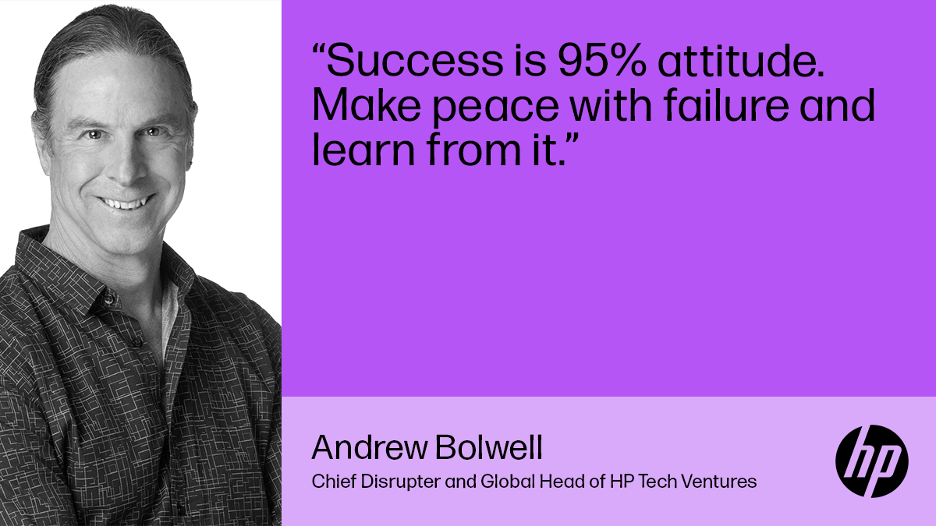
Visualizing outcomes is essential, and so is having an open, innovative mindset and attitude. Success is 95% attitude. Make peace with failure and learn from it instead. Think boldly, and never give up. Having the right attitude is essential to staying ahead of all this change and creating the future you seek.

Finally, remember: the future hasn’t happened yet. The future is something that we all get to create. It is the result of all the choices that we make today.

What future will you create?
Blog Futurism & Technology Trends Innovation Leadership

HP Megatrends 2020 Refresh

Staying ahead of constant requires a keen understanding of the global forces that will shape our human experiences and business decisions

The amount of change happening in the world today is accelerating, creating a continuous challenge for how companies stay ahead of it all, decide where to invest, think about the future, and innovate in ways that enable them to do the disrupting, instead of being the ones disrupted.

Blog Futurism & Technology Trends Innovation Leadership

Are you ready for the future?

As the pace of change continues to accelerate, one thing is certain. The future will look very different than it does today. I believe this accelerated innovation and the Megatrends driving it will have a sustained, transformative impact on the world in the years ahead — on businesses, societies, economies, cultures and our personal lives.
 
This change is inevitable, and those that anticipate and embrace it will be the revolutionaries of the experience age. In fact, adapting to the changes is the difference between leading change and being led by it. Unfortunately, there is no magic pill. No silver bullet. It takes dedication and thought. So, how can you lead the way and future-proof yourself?

1. Adopt an innovation mindset

When I was in college, a single computer took up an entire room. Yes, am dating myself a little here…. Now, we hold computing devices in the palms of our hands. In fact, we have more computing power in our pockets than all of NASA had when they put the first man on the moon in 1969.
 
Innovation is significantly shaping our world. And it’s the number #1 topic I’m most frequently asked about. Whether it’s at the HP offices, at speaking engagements, or when I attend conferences, people want to know how they can tap into their own inner innovator, and spark innovation at their offices.
 
Innovation is an attitude. As an innovator you need to believe you can change the world, that if you keep working on a problem you will eventually find a solution, and that anything is possible. Innovators have a passion to make things happen. They relentlessly take action.

Start with small things. Have lunch every week with someone outside of your team. Talk to them about what they do and how they do it. Innovation is about leveraging diversity, and the more you know about more things, the better you will be able to innovate.

Write down your ideas. Sometimes the simple act of writing things down can bring your ideas to life. You never know when that list will come in handy.
 
Once you become comfortable with those, move on to larger mindset shifts.

Question your assumptions about everything. Many times, the “right” way to do things can be altered and improved, it just takes someone to question the underlying assumptions. Ask yourself, how can this be improved? How can we make it better?

2. Keep learning or unlearning

“In times of change, learners inherit the earth, while the learned find themselves beautifully equipped to deal with a world that no longer exists.” –Eric Hoffer

If you have a fixed mindset, your qualities are carved in stone. If you lack a skill, you will continue to lack it. However, when you adopt a growth mindset, you can grow and change through persistence and experience. With a fixed mindset, you can be easily overwhelmed with the future’s uncertainty, but the future belongs to those who can adopt a growth mindset and keep learning.

I’m currently learning about Quantum Computing by reading “In Search of Schrödinger’s Cat: Quantum Physics and Reality”.

I’m very interested in how the line between science and philosophy is blurring. It seems where science doesn’t have all the answers (e.g. quantum mechanics and the true nature of reality), philosophy comes back to the fore to help us imagine the possibilities that we hope science might one day prove out. Consider Einstein’s original thought experiment about sitting on the end of a light beam (philosophy) and how that led him to the special theory of relativity (science). Both are equally important for charting the human future in a world of accelerating change and technology.

3. Collaborate

A Nielsen study examined the impact of collaboration in the development stage of innovation. It showed ideas developed by teams of three or more people have 156% greater appeal with consumers than those developed by just one or two people who played a hands-on role.

Ideas developed by teams of three or more people have 156% greater appeal with consumers than those developed by just one or two people who played a hands-on role.

Connect with people in your field (current or desired) by discovering how they think and their vision of the future. When you get to know one another, you feel more comfortable sharing ideas and voicing your opinions, creating healthy collaboration.

4. Pay attention to emerging technology trends

Stay current on trends by reading, watching, and listening to sources you trust. As a futurist, my job requires a keen understanding of how the world around us is evolving, the global forces that are dramatically changing the landscape of markets and industries, and trends that are reshaping customer expectation. 
 
At HP, we’ve formalized our analysis and forecasting process into a body of work we call Megatrends, a systematic effort to identify the global technological, economic, and social currents that are influencing how people will live and work around the world in the future. Take a look at this year’s report that looks at how innovation and disruptions in economics, data, automation, and energy impact megatrends.

Personally, I stay on top of trends by reading the latest technology news, speaking with customers and industry pundits, paying attention to university and academic research areas, monitoring venture investing trends and start-up activity. I also draw from my personal experiences, media coverage, and public data sources.

It’s important to have a vision and desired outcomes in mind. Then explore how trends and technologies can help you realize those outcomes. Ongoing problems the world is facing, like poverty and climate change, cannot be solved with short-term thinking. If we want to move forward and create the future we want, we must adopt long-term, futuristic thinking.

Once you’ve identified the trends, come up with proactive statements about where you think the future is going. This is something that true disrupters do. So … ask outlandish questions, free your mind, and push yourself outside of your box. The future is yours to create.

5. Give yourself a break

After all that, are you feeling a bit frazzled? We spend hours pondering how we can stay ahead of this change instead of being led by it. Even if we could predict the future perfectly (which, of course, we can’t), we need to be willing to reinvent ourselves continuously as all of this change in our world occurs.
 
It’s okay to take a break from future-proofing yourself. Read a book. Take a walk outside. Listen to your favorite music. Give your brain a chance to breath and recharge.

Our future will be transformed by people like you, who are strategic thinkers, quick to innovate, and passionate. What do you think? What skills or mindsets will we need to adopt today for the future? Sound off below. 👇

Blog Futurism & Technology Trends Innovation Videos