Generative AI is becoming embedded in our everyday lives and transforming how we approach daily tasks and activities. With AI seamlessly integrated into our routines, we can experience efficiency and personalization that was once the realm of science fiction.
Remember Aiden, a 26-year-old living in San Francisco, who weaves AI into her daily life to optimize her productivity and enhance her experiences? She’s not the only one leveraging generative AI to create a more streamlined daily life.
Meet Dylan, a 40-year-old corporate executive who expertly uses AI to be more productive, achieve his fitness goals, and maximize his free time.
Morning Start
Dylan enjoys an AI-generated replay of a vivid dream he had, complete with visual and narrative details, providing creative inspiration and insights as he starts his day.
A customized AI-generated news briefing, with curated headlines and stories based on his preferences and current interests sets a focused tone for Dylan’s day.
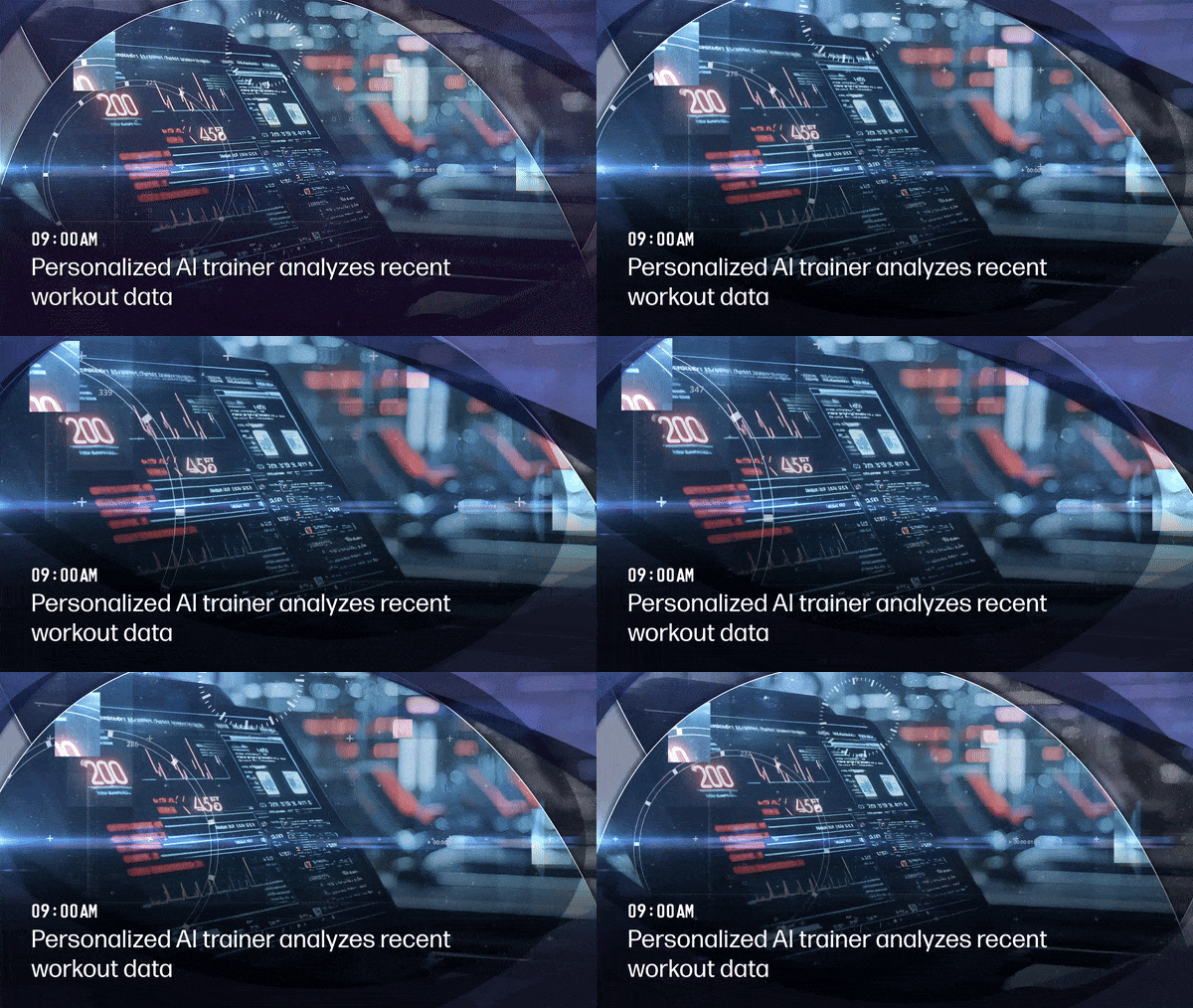
After the news briefing, Dylan’s personalized AI trainer analyzes his recent workout data and suggests a customized exercise routine, including specific cardio and strength training exercises to help him meet his fitness goals.
Efficient Afternoon
Dylan’s AI Chef orders culinary ingredients according to his AI customized meal plan and schedules delivery, ensuring he has fresh produce and essentials for later, delivered by an AI robot personal shopper.
While in a meeting, Dylan asks his AI assistant to draft and send follow-up emails, including a proposal for a new project. This allows him to focus on strategic planning while the AI handles the communications.
Engaging Interactions
During a staff meeting, an AI-powered digital twin of Madam C.J. Walker joins Dylan’s team for a Q&A session. Walker shares insights into her entrepreneurship, philanthropy, and social activism approaches.
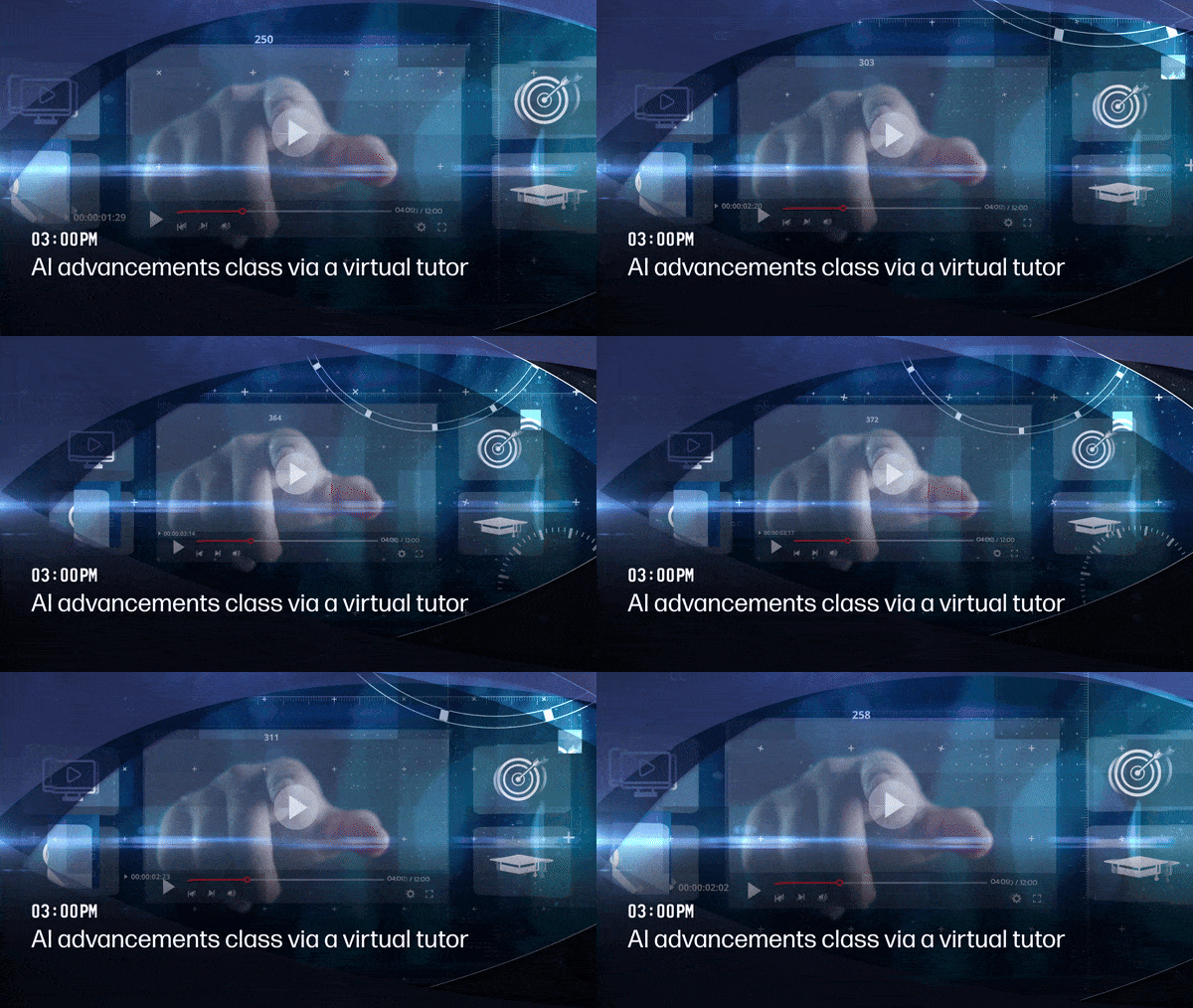
Dylan takes a break to learn about AI advancements via a virtual tutor, exploring topics like machine learning algorithms and their practical applications in his industry.
His AIwearable device discreetly reminds him of key contacts he met earlier, captures important meeting notes, and follows up on promised actions.
Evening Relaxation
As he winds down from work, Dylan’s robot sous-chef prepares a gourmet dinner, following a recipe from his meal plan, while he relaxes and catches up on personal projects.
Dylan ends his day watching a movie tailored to his tastes and current mood, with AI creating a personalized viewing experience with a custom storyline.
Generative AI can transform how to manage tasks, access information, and enjoy leisure time. It’s not just about efficiency; it’s about creating a more personalized and enjoyable experience.
How do you envision generative AI transforming your routine and bringing more ease and excitement into your daily life?
Technology is seamlessly integrated into our daily routines, and generative AI will revolutionize how we live and work. Let’s imagine a day in the not-too-distant future where generative AI doesn’t just serve as an assistant but as an active participant in every aspect of your life.
Meet Aiden. As a 26-year-old living in San Francisco, Aiden spends her time working at a healthcare startup, socializing with friends, and focusing on hobbies like fitness and reading. Here’s a peek into what a typical day for her might look like with generative AI:
Morning Routine
Aiden likes to exercise before she starts her day. Her AI trainer sends her a customized workoutplan each morning and adjusts her exercise plan based on her current fitness goals.
After she finishes her workout, Aiden is ready to start her workday. A morning meeting pops up that could have been handled as an email. Aiden sends her digitalassistant to attend the online meeting on her behalf.
Aiden’s digital twin participates by handling routine discussions and updates. As soon as the meeting is complete, her digital twin sends Aiden the meeting notes, key takeaways, and action items.
While her digital twin is in the meeting, Aiden takes a flying car to a face-to-face meeting in Oakland with her boss. With this commute, she cuts down on travel time and avoids traffic on the ground.
Aiden attends her face-to-face meeting in Oakland, while a humanoid robot manages her household chores back at her apartment – feeding her dog, cleaning her kitchen, folding her laundry, and preparing her lunch. By offloading mundane tasks, Aiden can focus on more high-level tasks, such as in-person meetings and sharing her latest strategy ideas.
Health, Wellbeing, and Lunch
Aiden continues to work while wearing her AI wearable. Her AI doctor monitors her health statistics and raises a couple of irregularities to Aiden’s human doctor, who is based in Sacramento. When she receives the information, her human doctor sends a report to Aiden with key takeaways, updated prescriptions, and health information.
The meeting concluded in Oakland, and Aiden got a promotion! She’s thrilled and heads back to the City for lunch. On her way home, she sends a request to her AI Assistant to invite her friends for happy hour at her apartment to celebrate her promotion.
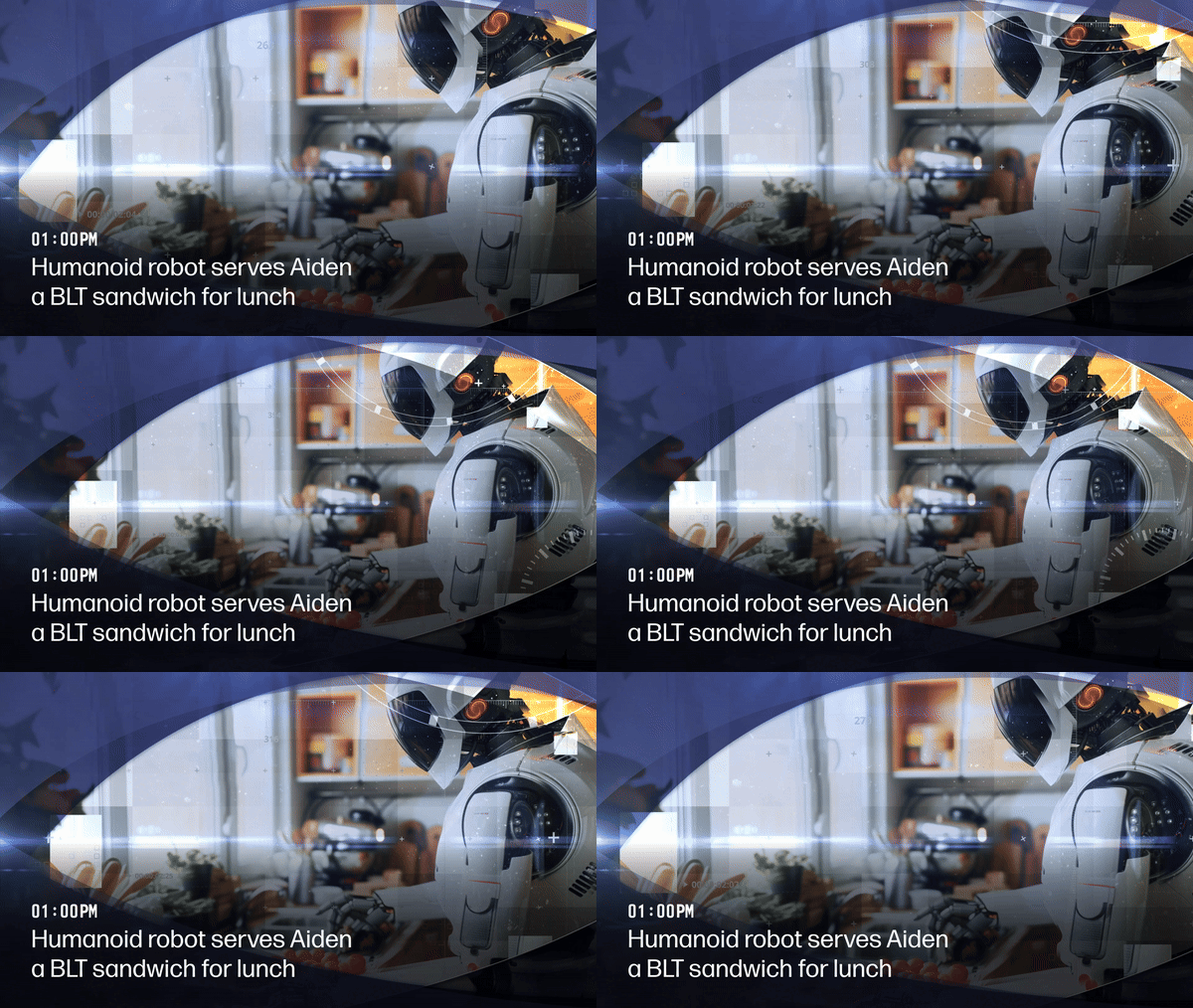
Once Aiden returns to her apartment, she enjoys the BLT her humanoid robot prepared for lunch while she answers work messages.
Happy Hour
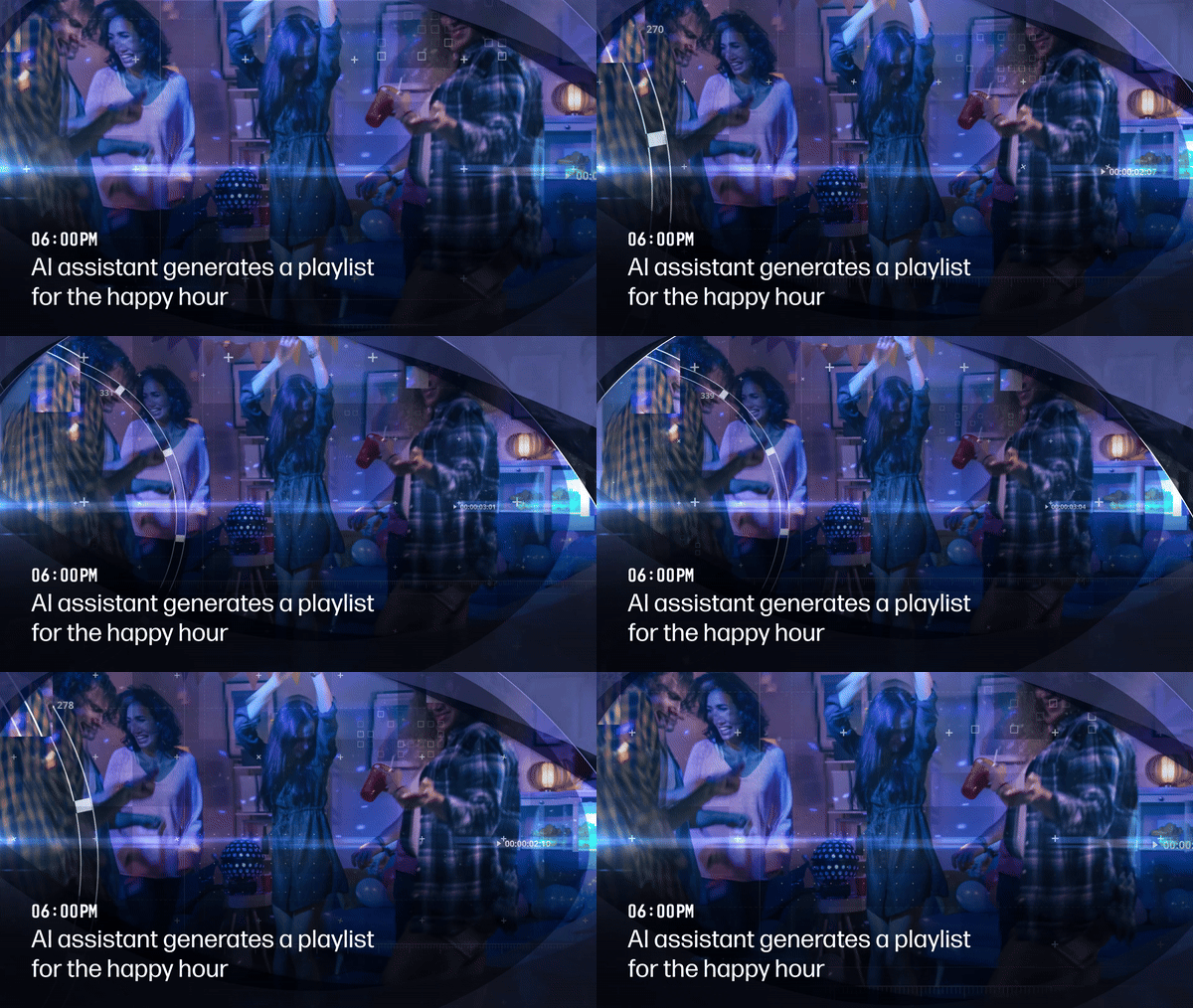
As Aiden’s friends arrive to celebrate her promotion, her AI generates a celebratory playlist for the happy hour.
Aiden’s friends toast her accomplishment, and in the background, her AI assistant places an order for pizza delivery which her humanoid robot receives and brings inside. Enjoy!
Evening Routine
Aiden’s friends head home, and her AI assistant adapts the lighting and sound to her relaxation needs, offering her a comfortable and personalized environment to unwind. She settles into the couch to watch a series curated specifically for her previous viewing preferences.
Before she goes to sleep, Aiden delegates the household and work tasks she would like her AI assistant, digital twin, and humanoid robot to complete tomorrow.
Generative AI promises a future where technology enhances our routines, making our lives more efficient and enjoyable. From handling mundane tasks to offering personalized experiences, AI is set to become an integral part of our daily existence, turning futuristic visions into everyday realities.
How do you envision generative AI reshaping your daily life as we move toward this future?
The swift transformation of AI assistants into agents marks a significant shift in how we perceive and interact with digital technology. Gone are the days when these virtual helpers were simply chatbots to interact with. Now, they’re evolving into proactive, autonomous agents capable of independent decision-making and personalized assistance.
Today, AI agents are focused on accomplishing relatively simple tasks, from proactively scheduling your appointments to booking your flights, but in the future, they may help run companies. This transition from assistants to agents is reshaping our relationship with technology and opening new possibilities. 96% of executives agree leveraging AI agent ecosystems will be a significant opportunity for their organizations in the next three years.
Understanding the shift
The distinction between AI assistants and agents is their level of autonomy and intelligence. While traditional assistants primarily respond to user-initiated commands, agents operate more autonomously, leveraging advanced machine learning algorithms to anticipate user needs and take proactive actions.
For example, an AI assistant may remind you to complete a task based on certain criteria. In contrast, an agent could automatically reschedule appointments based on your calendar and preferences without explicit instructions. When ChatGPT launched, some people assumed it was actively looking up information on the web. However, it was actually generating answers based on the vast amounts of data it had been previously trained on, drawing on the relationships between that data to provide users answers. Now, plugins enable ChatGPT to access the internet and AI agents to navigate the current digital world.
And ChatGPT is not alone. Recently, a startup called Cognition AI released a demo showing an AI agent called Devin performing work usually done by well-paid software engineers. While ChatGPT can generate code, Devin goes further — planning how to solve a problem, writing the code, and then testing, debugging, and implementing it.
Proactive personalization
One of the emerging characteristics of AI agents is their ability to provide proactive, personalized assistance. These agents can anticipate user needs by analyzing user behavior, preferences, and historical data to offer tailored recommendations or actions.
Imagine having an AI agent that reminds you of upcoming meetings or birthdays, suggests relevant articles based on your interests, orders groceries when your supplies are running low, and adjusts your smart home devices to optimize energy usage — all without asking it to do so.
As AI agents become increasingly sophisticated, they can be entrusted with more decision-making authority. These agents can make informed decisions on behalf of users, ranging from scheduling appointments to making purchase recommendations by learning from past interactions and analyzing real-time data.
In business, AI agents empower employees with insights and recommendations to enhance productivity and decision-making, enabling them to focus on other tasks. For example, in customer service, agents equipped with AI capabilities can analyze customer inquiries, identify patterns, and recommend solutions in real time, leading to more efficient and personalized interactions. This leaves them more time to focus on tasks that require a human touch. Several innovative startups are in this space. Ema, a Universal AI employee, is described as an operating system that makes Generative AI work at an enterprise level. The company believes that if there were fewer repetitive tasks, there would be more time for creative thinking. Gen AI offers an unprecedented opportunity to enable this. Watching apps like these transform the future of work will be fascinating.
Sierra AI is another great example of a startup making waves. Focused on elevating customer experiences with AI, Sierra AI enables customers to self-serve–getting answers, solving problems, and taking action through a natural, conversational experience. The AI agent is personalized to your business and its customers.
There is even work being done to explore the collaboration of Multi-Agent AIs working across an enterprise and various operations tapping into data across an organization to make faster and more informed decision-making.
Ethical considerations and challenges
While the evolution of AI assistants into agents offers immense potential, it raises important ethical considerations and challenges. Issues like data privacy, algorithmic bias, and accountability become more pronounced as AI agents gain autonomy and decision-making capabilities. We must all discuss and address these concerns proactively and ensure that AI agents are designed and deployed responsibly to uphold ethical principles and protect user interests. For example, the United States and Europe have enacted extensive legislation regarding employees and data protection. In Europe, Article 22 of the GDPR specifies that no employment decisions should be made entirely in an automated fashion.
AI’s future
The advancement of AI technology is expected to accelerate the transformation of assistants into agents, ushering in a new era of intelligent, autonomous digital entities.
AI agents promise to revolutionize how we interact with technology and navigate our daily lives, from enhancing productivity by adding time back in our day and personalization to driving innovation across industries.
While the journey to this future has begun, we are just at the beginning. We must all play a role in ensuring we manage it in a way that benefits humanity. A paradigm shift in human-computer interaction is blurring the lines between tools and autonomous entities. It includes everything from apps to agents, from point-and-click to natural language interfaces, and from static UI to UI, which is dynamically generated based on what the user wants. AI agents are becoming AI employees. As a society, we must learn how to collaborate with them as teammates and employees. It’s up to us — will we embrace this transformation with careful consideration of ethical implications and a commitment to leveraging AI technology for the betterment of society? If so, we can unlock our full potential to empower individuals, businesses, and communities in the digital age.
Potential to change the way we interact with computers. From apps to agents, from point-and-click to natural language interfaces, and from static UI to UI that is dynamically generated based on what the user wants to do.
AI agents become AI employees. As a society, we will need to learn how to collaborate with them as teammates and employees.
The plethora of economic, social, environmental, and political challenges, combined with a rapidly aging population, raises the question of “Are humans at capacity?”
How can people alone deal with all the problems being thrown at us and at the same time continue to innovate, advance, and produce without risking human wellness, empathy, and satisfaction?
While much has been made of what AI could take away from us, what if it was used to help us and augment our intelligence and capabilities? Working collaboratively, we could ask the right questions faster, speed up solutions to global problems, and give back valuable time. This would allow us to focus on what’s important, and be more human.
I like to challenge the prevailing narrative that AI is a looming threat, poised to replace and diminish human roles. Instead, another version of the future is one where AI acts as a collaborative partner, empowering humans to navigate complex issues more efficiently. By working in tandem with AI, humans could accelerate the pace of innovation, find solutions to global problems more rapidly, and increase the time we have to work on what’s important or spend more time doing the things we love. The aim is not to replace human ingenuity but to augment it, allowing individuals to focus on critical aspects such as empathy, wellness, and satisfaction.
At the heart of this vision lies the belief that collaborative efforts between humans and AI can lead to a more harmonious and productive future. By automating routine tasks and streamlining processes, AI could free up valuable time and mental resources for individuals to engage in more meaningful endeavors. A key aspect of this collaboration is the ability to ask the right questions faster — an essential skill in addressing complex issues.
Imagine a scenario where AI is a meaningful virtual assistant sorting through vast amounts of data to identify patterns and correlations. This can significantly expedite problem-solving, enabling humans to make informed decisions more quickly. With AI’s analytical prowess, humans can gain deeper insights into intricate problems, fostering a more nuanced understanding of global challenges. And that future is close. 50% of what we do at work in 2023 will be automated within 15 years.
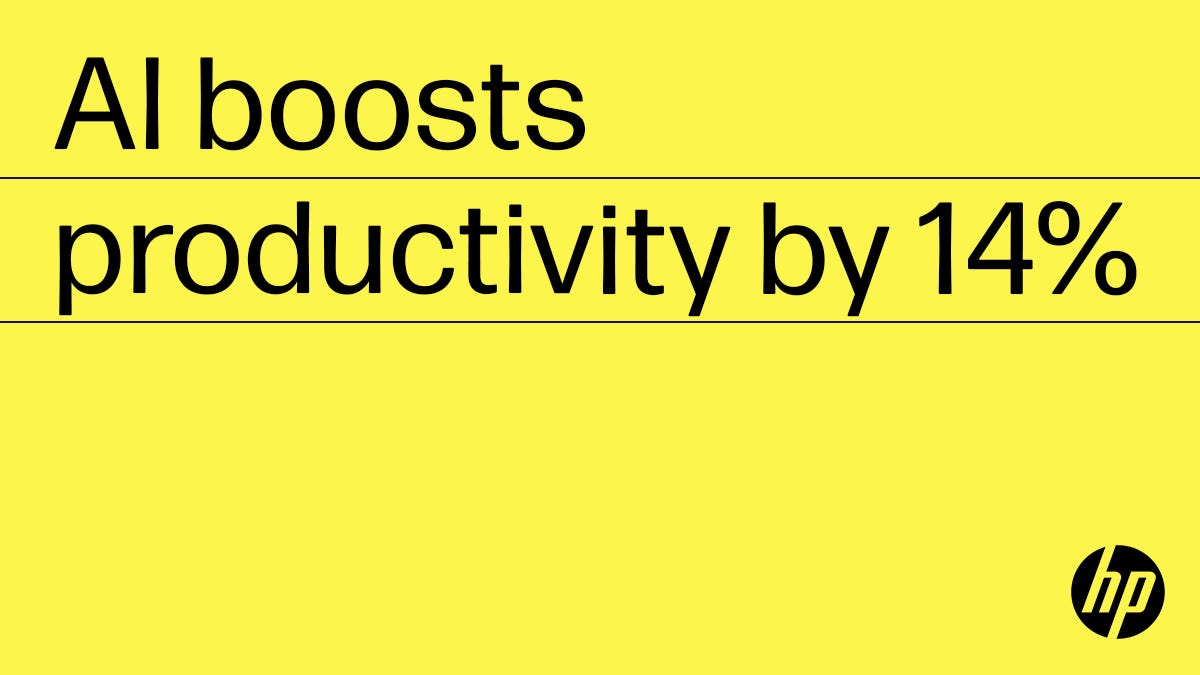
Embracing AI as a collaborative partner can lead to accelerated innovation, too. Humans can dedicate more time to creative thinking, exploration, and experimentation by automating repetitive tasks. This shift in focus from mundane tasks to inventive endeavors has the potential to unlock new realms of possibility, driving progress across various fields. In a recent publication of a case study by the National Bureau of Economic Research, generative AI boosted workers’ productivity by 13.8 percent at a Fortune 500 company, increasing customer satisfaction while reducing employee turnover.
One of the key advantages of this collaborative approach is its potential impact on global problem-solving. As the world grapples with issues like climate change, resource depletion, and public health crises, the collective intelligence of humans and AI converges to devise effective and timely solutions. The speed at which these solutions can be generated becomes crucial in addressing the urgency of many global challenges.
This also applies to the global GDP. Breakthroughs in generative artificial intelligence have the potential to bring about sweeping changes to the global economy, according to Goldman Sachs Research. As tools using advances in natural language processing work their way into businesses and society, they could drive a 7% (or almost $7 trillion) increase in global GDP.
However, the ultimate goal is a more holistic human experience. With AI handling routine tasks, individuals can focus on cultivating empathy, strengthening social bonds, and pursuing personal fulfillment. The future includes a world where humans are liberated from repetitive, mundane work, enabling them to lead more enriching lives.
While this vision paints a promising picture of the future, it has its challenges and ethical considerations. There is a need for responsible AI development, ensuring that the collaboration between humans and machines adheres to ethical standards. Questions of privacy, bias, and accountability must be addressed to create a symbiotic relationship that benefits our future.
The concept of humans at capacity opens the door to a paradigm shift in our approach to technology. Rather than viewing AI as a threat, I invite you to explore the possibilities of collaborative intelligence.
By leveraging AI to augment human capabilities, we can address global challenges more effectively, accelerate innovation, and create a future where humanity thrives. It’s not about replacing humans; it’s about empowering them to be more human in the face of an ever-evolving world. As we navigate the complexities of the future, the fusion of human ingenuity and artificial intelligence may hold the key to a more resilient and compassionate world.
Several exciting technologies are at the center of discussions about the future, from virtual reality (VR) and the metaverse to 5G and artificial intelligence (AI). While these emerging technologies are expected to disrupt our daily lives eventually, most of them must still overcome significant obstacles before mass adoption is plausible. However, augmented reality (AR) could bridge the gap between the present and the future due to its increased accessibility and interactivity.
First, what is AR?
AR is the integration of virtual objects into the real world. In an AR experience, users can interact with virtual features that are overlaid in the real world, in real-time. These virtual items are accurately rendered within the real physical environment to create a believable experience for users. While VR creates an entirely simulated world, AR alters the perception of the real world with its added elements, which can include visual, haptic, auditory, and olfactory components.
The current state of AR
AR is far from perfect and still has many issues to iron out, but its growth is possible alongside its adoption. AR does not necessarily require more than a smartphone to function. This differentiates it from technologies like VR that require specific gear and virtual environments, which limits adoption until its framework is fully resolved. VR headsets can be somewhat uncomfortable and can cause eyestrain and motion sickness. While developers are addressing those concerns, there is also the issue of true immersion. One of the main benefits of VR over AR is its promise of total immersion into virtual worlds and scenarios. Technologies that would support that capability exist, such as haptics and omnidirectional treadmills, but they are still a growing sector and difficult to afford for the average consumer. An ever-improving AR app on your smartphone is far easier to adopt than expensive VR gear that takes you to limited virtual experiences and currently incomplete worlds. By introducing AR to consumers on devices they already own, it could become easier to encourage them to adopt fully fleshed-out AR and VR technologies down the line.
AR is currently used in applications like mobile, retail, healthcare, and education. Mobile applications include popular games, like PokemonGO, Amon, and Angry Birds AR; visualizer apps that allow you to place furniture or change the color of your home’s walls, like DecorateAR and Paint Tester; and social media apps like Snapchat and TikTok. Retail AR saw significant growth during the COVID-19 lockdown. Many brands embraced different virtual try-on technologies, from IKEA Studio to ASOS’ “See My Fit” to Kohl’s virtual closet on Snapchat. AR in healthcare is currently focused on medical imaging technologies that improve surgical planning and outcomes, such as HP Tech Ventures’ partner Surgical Theater, which uses AR, VR, and 3D technologies to provide a precise visualization platform for surgeons and medical students. For non-medical education, AR apps like Elements 4D and JigSpace help students learn important concepts through immersive visualization.
The future of AR
In the future, AR applications will see both improvement and innovation. The AR market is expected to grow at an impressive compound annual growth rate of 40+% from 2022 to 2030. Already existing technologies, like the above apps, will improve, expand, and become easier to use and access. New and emerging technologies, like AR glasses, smart lenses, holograms, and the metaverse, will enable AR’s further expansion and adoption. AR glasses and smart lenses are already in progress, with companies like Apple and Nreal working to create comfortable and fully functional AR glasses. HP Tech Ventures’ portfolio company Mojo Vision is also working on smart contact lenses and recently reached an incredible milestone with the first-ever on-eye demonstration of a feature-complete AR smart contact lens.
Holograms, powered by AR goggles, glasses, or contact lenses, are another potential technology innovators are beginning to explore. As our world embraces hybrid and remote work, hologram meetings could become the new norm. 3D holographic displays could also become another feature of the future of work. And in our personal lives, board games of the near future could see a holographic boost, with companies like Tilt Five creating holographic AR versions of popular games like Settlers of Catan.
Finally, AR technologies will play a significant role in adopting the metaverse. While many envision the metaverse as a fully immersive experience enabled by VR headsets, there is a growing belief that AR will be a more palatable gateway, augmenting our existing world rather than replacing it with a virtual one. Perhaps more likely is the existence of two metaverses: one enabled by AR and the other by VR, with possible entry points between them.
The importance of AR boils down to one essential factor: accessibility. Incredible strides have been — and will continue to be made — with several emerging technologies, however mass adoption cannot occur if the average consumer can’t access them. Allowing consumers to interact with the metaverse and related technologies through devices they own will shorten the adoption time and onboarding process for future devices. This makes AR the perfect gateway to VR, the metaverse, and many future technologies.
Thinking like a futurist in this era of constant change provides an incredible opportunity to create the future we want. By staying on the lookout for trends and weak signals shaping the world around us, futurists can identify future opportunities that lead to consequential disruption.
But what happens if you miss these trends?
In the best-case scenario, missing these signals may simply leave you reacting to disruption and working hard to catch up. At worst, however, you are in danger of becoming irrelevant and going out of business. The corporate graveyard is littered with companies that didn’t react fast enough to the changes in the world around them.
Blockbuster
Founded in 1985 by David Cook, Blockbuster was an entertainment staple in the 1990s and early 2000s. At its peak, there were 9,094 stores globally. Consumers would flock to their local stores to rent movies and buy snacks for their Friday nights, making Blockbuster a fixture in households worldwide.
After a few CEOs and missteps, Blockbuster made its biggest blunder when it failed to acquire Netflix in 2000. Netflix saw the rise of DVDs as a significant opportunity and launched its original mail-based DVD rental business in 1997. Because DVD players were not yet standard in the average household, Netflix partnered with HP, Sony, and Toshiba to offer free DVD rentals to new DVD player buyers. Netflix grew in popularity but wasn’t yet profitable, so its leadership approached Blockbuster to propose an acquisition, which the movie-rental giant declined.
Netflix persisted, confident that DVD players would gain popularity, and that confidence paid off as the company became profitable in 2003. The following year, Blockbuster began its DVD-by-mail service seven years after Netflix. From 2007 to 2010, Netflix continued to monitor trends and take calculated risks that majorly paid off, starting their on-demand video streaming service and signing deals with industry giants from Disney to Paramount.
On the other hand, Blockbuster failed to innovate in time and had to play catch up with Netflix while rapidly losing customers. That failure to embrace change, paired with severe debt, became the unraveling of Blockbuster, which declared bankruptcy in 2010 and closed all but one store.
Toys “R” Us
Later considered a category killer, Toys “R” Us had a humble beginning as a baby-furniture retailer in Washington, D.C., in 1948. Initially named “Children’s Bargaintown,” founder Charles P. Lazarus changed it to Toys “R” Us in 1957, dedicating the store entirely to toys and moving it to Rockville, Maryland. Throughout the next half-century, Toys “R” Us experienced incredible success, building a powerful brand, exploring spin-off clothing stores, and assisting in the launch of several pop culture games and toys.
By the late ‘90s, Toys “R” Us began to feel the pressure from growing competition, like Walmart and Target, which eventually led to the closure of its spin-off, Kids “R” Us, in 2003. While competing companies created their e-commerce sites, Toys “R” Us entered an exclusive 10-year partnership with Amazon in 2000. This partnership, while successful, prevented Toys “R” Us from developing autonomy over its online presence, which became a severe problem when Amazon elected to grow its toy category and allow competitors to sell on its platform.
Toys “R” Us sued Amazon and won, but it was too late. The once powerful toy seller had lost out on the essential opportunity to create its e-commerce website, and by the time it had one, it fell far behind what competitors had to offer. Toys “R” Us not only failed to keep up with e-commerce, but it also ignored changing consumer habits and buying preferences, instead focusing on offering the lowest prices, which proved unsustainable. Finally, Toys “R” Us failed to create an enticing in-store experience, instead deciding to cut costs. Unable to provide a satisfying in-store experience and struggling to keep up with e-commerce innovation, Toys “R” Us filed for bankruptcy in 2017 and closed all stores in 2018.
In 2019, the company rebranded as Tru Kids post-bankruptcy, opened new stores, and partnered with Target to sell toys. By 2020, the agreement had lapsed, and Amazon took on Target’s role as a fulfillment partner. In 2021, the financial impact of the COVID-19 pandemic closed its stores again. In 2022, the company plans to open stores within all U.S. Macy’s by October 15.
Borders
The first Borders bookshop opened in Ann Arbor, Michigan, in 1971, by brothers Tom and Louis Borders. The company didn’t open its second store in Beverly Hills, Michigan, until 1985 and was subsequently acquired by Kmart in 1992. Three years later, Kmart spun off Borders into a new company named Borders Group. Through the 1990s and early 2000s, the Borders Group expanded globally, with stores and franchises everywhere from Singapore to Puerto Rico.
Initially, Borders stayed ahead of innovation with a robust inventory system that could predict consumer behavior. However, when the industry began to go digital in the early 2000s, Borders began to lose its grip, leaning heavily into CD and DVD sales instead of working on its internet presence. Competitors like Barnes & Noble focused on online sales and digital innovations like e-readers, while Borders chose to outsource its online operation to Amazon, which rapidly became a competitor.
As competitors grew and embraced innovation, Borders steadily lost revenue, and its last profitable year was 2006. After constant financial trouble, Borders filed for bankruptcy in 2011, closing all its stores except those operating in the United Arab Emirates, Oman, and Malaysia, which other owners took over.
In the examples above, it’s clear that while some companies missed the boat on specific innovations, others were on the right track. They did this by paying attention, listening to the true needs of their customers, and prioritizing learning from all failures.
So how can you avoid missing trends?
I may sound like a broken record, but thinking like a futurist is the best way to avoid being left behind by innovation. Pay attention to weak signals, explore emerging trends and technologies, and adopt an innovative mindset. You need to have a good sense of what you want in the future. Ask yourself:
What outcomes am I looking for?
What inspiring vision and goals do I need to put in place?
Your goals need to be bold enough that they cause you to work backward to discover what disruptions will get you there, rather than taking today’s solutions and incrementally improving them over time.
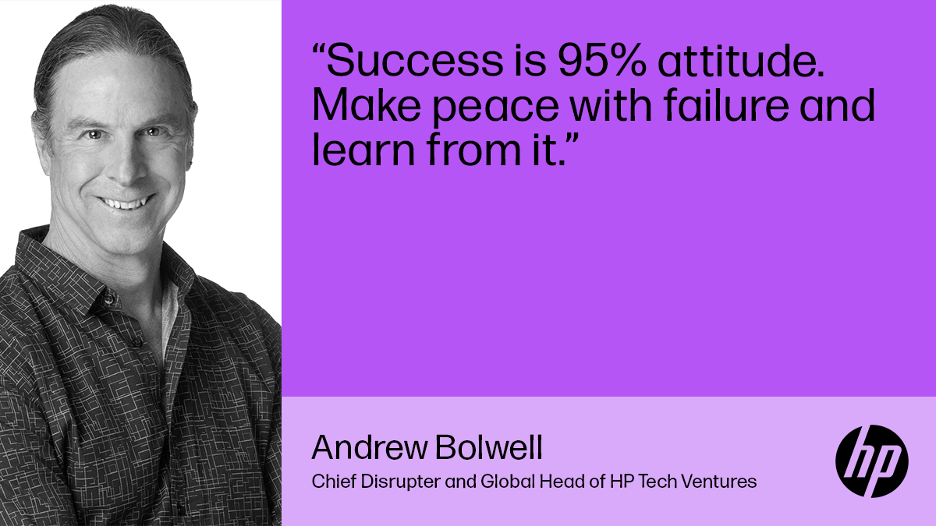
Visualizing outcomes is essential, and so is having an open, innovative mindset and attitude. Success is 95% attitude. Make peace with failure and learn from it instead. Think boldly, and never give up. Having the right attitude is essential to staying ahead of all this change and creating the future you seek.
Finally, remember: the future hasn’t happened yet. The future is something that we all get to create. It is the result of all the choices that we make today.
Change is happening faster and faster around us. So how do we manage it and stay ahead of it? How do we ensure we are leading change and not being disrupted by it to create the future we want? One of the key ingredients for any successful business is understanding the trends that are shaping the world around us and that are pointing to what the opportunities of the future might be. The corporate graveyard is littered with companies who weren’t monitoring trends and went out of business because they didn’t react fast enough to the changing world around them. But if you can catch these shifts early and figure out how to capitalize on them, that is where growth and opportunity lie.
In this new series, I’m helping you see through the lens of a futurist by exploring some of the exciting technologies and trends bound to shape our future lives.
Ready to think like a futurist? Let’s explore cybersecurity.
What is cybersecurity?
Cybersecurity is the practice of protecting connected technologies against unauthorized digital access. It applies to everything from devices to digital networks to critical data. As our digital lives grow, so does the importance of cybersecurity. With the number of cyberattacks occurring at alarming rates, the cybersecurity industry must continue to adapt and improve to keep up with cyber threats.
There are several different facets of cybersecurity, including:
Endpoint security: Securing endpoint devices such as laptops, printers, and point-of-sale devices
Data security: Protecting and managing digital information
Network security: Safeguarding access to secure networks by monitoring access and use
Identity management: Technologies and infrastructure that control user access to networks and/or data
Mobile security: A facet of endpoint security that focuses on protecting mobile devices
Disaster recovery: The recovery of IT infrastructure following a disaster includes anything from a cyber-attack to a natural disaster
In an ideal situation, these facets work together to create a comprehensive approach to cybersecurity for organizations and individuals, however, it is extremely difficult to do that, which is the source of many problems the industry is facing.
What are the trends?
Our society has become dependent on digital tools and technologies, and the impact of cybersecurity breaches and attacks cannot be overstated.
HP understands the importance of cybersecurity and endlessly works to build safe and secure products. With a deep focus on endpoint security, HP is constantly adapting to stay ahead of cybersecurity trends and risks. In 2019, HP acquired Bromium and now utilizes its technology for essential malware protection. HP also offers HP Wolf Security as powerful endpoint protection that is built-in to its PCs and printers. Starting at the hardware level and extending across software, HP Wolf Security is a unique and comprehensive cybersecurity offering. As a true prevention-first solution with containment of threats, HP Wolf Security is better than detection alone.
When cybersecurity fails or is ill-equipped, several aspects of our lives are at risk, from our data and identities to our safety. Governments, organizations, and individuals respond to cybersecurity threats with new approaches and regulations in our increasingly digital world.
These new approaches include zero-trust frameworks and multi-factor authentication, which provide a heightened level of security for users. Zero-trust framework adoption has increased by 27% in the past two years. Zero-trust security works by requiring all users to be authenticated and regularly validated before gaining access to any networks, data, or applications. Multi-factor authentication is a part of zero trust, requiring multiple verification points before granting access to any user, thus protecting against brute force logins and login theft.
Individuals are now expected to be more responsible for cybersecurity, as well. With hybrid and remote work now commonplace, more responsibility is placed on employees to stay on top of their organization’s cybersecurity requirements. Many organizations now require remote employees to install a VPN (virtual private network) to protect their internet connections. Network segmentation is also becoming popular amongst IT professionals, as it gives administrators more control over who has access to which data. While this increases security, it also adds steps for all employees as they maneuver these new systems.
Governments are enacting new regulations and policies to navigate this new world of cybersecurity and digital risks. In June 2022, U.S. President Joe Biden signed two new cybersecurity bills into law. The State and Local Government Cybersecurity Act of 2021 is meant to improve coordination amongst different departments and governments, allowing for more accessible tools and information sharing. The Federal Rotational Cyber Workforce Program Act of 2021 focuses on skill-building for federal employees, allowing role rotations amongst those in cybersecurity-related fields to enable a more comprehensive learning experience. The U.S. is not alone in its cybersecurity laws. The UK and EU are also considering new legislation addressing the growing cyber protection demand.
Where is the opportunity?
There was a 125% increase in cyberattacks in 2021, a percentage expected to grow in the coming years. Not only were there more attacks, but they were also more complex, with many having the ability to evade existing endpoint protection tools. To maintain cybersecurity in the future, there must be continuous improvement and adaptation in security tools and frameworks and increased skill development for cyber professionals and leadership.
As explored above, more organizations must adopt a zero-trust framework. While this framework is not a perfect solution, it is still a powerful strategy against cyber risk. Zero trust inherently focuses on prevention rather than reacting to threats, which is essential for organizations dealing with constant cyber-attack attempts.
Another area of opportunity for cybersecurity is blockchain technology. From secure transactions to identity management, blockchain has the potential to be a powerful cybersecurity solution. Due to its transparency and interoperability, blockchain could make it easier to verify data, identify fraud, and create innovative cybersecurity solutions.
The downside to blockchain, however, is its immaturity as a technology. As it is a somewhat recent innovation, it is likely to have unknown vulnerabilities that leave it open for risk. This issue applies to all emerging technologies, such as AI and quantum computing, because cyber threats tend to evolve alongside technological advancements, creating an ongoing feedback loop. Due to this, assumptions about cybersecurity practices will need to be constantly challenged as nascent technologies grow.
Finally, there is an incredible demand for cybersecurity talent, with over 700,000 roles needing to be filled. Because cybersecurity positions often require specific credentials and certifications, there aren’t enough qualified job seekers to fill those roles. Some companies are addressing this issue by removing some requirements, and others are creating talent pipelines and programs specifically for cybersecurity professionals. There is also a lack of cybersecurity talent in leadership, with 45% of companies lacking a Chief Information Security Officer. This lack of cyber skills opens an opportunity for company programs and online courses that could help build a qualified and effective cybersecurity workforce.
Data rules our digital lives, and protecting that information from bad actors is essential. As emerging technologies bring us deeper into the digital world, cybersecurity tools, approaches, and skills will become critical for everyone. Cybersecurity professionals may be the only people honing their abilities now, but these skills could soon become necessary for anyone accessing the internet.
Now it’s your turn. Do you think cybersecurity will be able to keep up with future threats? Should we all be taking cybersecurity courses? Sound off in the comments.
The world never stops changing, and it’s the job of a futurist to stay ahead of change and prepare for the future. Anyone can be a futurist by paying attention to trends and embracing the constant shifts in society and technology. As futurists, we can take advantage of opportunities to lead, innovate, and build a better future.
In this new series, we will look through the lens of a futurist to explore some of the exciting technologies and trends bound to shape our future lives.
Ready to think like a futurist? Let’s dive into microfluidics.
Step 1: What is microfluidics?
In short, microfluidics is the ability to work with tiny amounts of fluid and at great precision. Printing is an excellent example of that. Over the last 30 years, HP has perfected the art of placing very small amounts of fluid in exact locations on a page to create printing. The technology behind this is microfluidics.
We are talking here about manipulating fluids that are a fifth the size of a human cell and a thousand times smaller than a raindrop. Hence the name microfluidics, and of course, microfluidics isn’t something that is only applied to printing. There are a lot of fluids in the world, including within our bodies. From life sciences to agriculture to healthcare, microfluidics has a whole host of existing and potential applications.
Step 2: Trendspotting
Did you know that someone is added to the US national organ transplant waiting list every nine minutes? Along with many other sobering statistics, that fact showcases the immense need for innovation within biotech, and microfluidics may be the solution.
Recent advancements from the Stevens’ Schaefer School of Engineering & Science have found a way to accelerate the creation of 3D-printed organs. Led by associate professor Robert Chang, these researchers hope to use microfluidics to achieve a more precise and controllable method for 3D-printing organs. By creating a microfluidics-enabled 3D printer, researchers could more accurately print organs at the scale of human cells. Microfluidics can also utilize multiple “bio-inks,” allowing for the reproduction of any type of tissue and opening exciting new avenues for healthcare technology.
Another healthcare innovation using microfluidics is these wearable sweat sensors. Using paper-based microfluidics, these sensors can measure various chemicals, drugs, and hormones in sweat. The information gathered from these sensors could help diagnose several health issues, from cardio-renal disease to cystic fibrosis.
Step 3: Opportunity knocks
As startups and scientists continue to explore the potential behind microfluidics, the technology will become further refined and precise, leading to more opportunities within healthcare and diagnostic tech.
One such company is Fluigent, which aims to develop more advanced fluid control systems. Doing so could help accelerate the development of new medicines, therapeutic treatments, vaccines, and more. By introducing pressure pumps to its microfluidics chips, Fluigent could achieve complete control of flow rates, allowing for much higher precision. HP Labs is also exploring microfluidics and its many uses, such as cancer detection.
Due to the rising demand for point-of-care diagnostics and other microfluidics technologies, the global microfluidics market is expected to be worth $43 billion by 2027. Though microfluidics technology could be applied across several industries, the healthcare industry will likely see the most significant impact. After the effects of COVID-19, healthcare has received more attention than ever, specifically diagnostic technologies enabled by microfluidics.
Let’s also look at food and water contamination. One in 10 people suffer and fall ill from food contamination every year. One in four people lacks access to safe drinking water. But how do they know? Today these tests for contaminated food and water need to be sent into a central lab facility with large and expensive equipment, and it takes days to get results back. But what if all of us could carry something in our pocket that could in real-time test whether the food we’re eating or the water we’re drinking is safe? That’s the power of microfluidics.
When I think of microfluidics, I believe it’s very similar now to how computing was 50 years ago. Fifty years ago, we had these vast mainframe computers in central facilities. If you wanted to use them, you’d mail in punch cards that got processed, and you’d need to wait days for the result. Microprocessors changed all of that, effectively shrinking a mainframe down into a PC or a phone to democratize access to computing. Today microfluidics promises to do the same for healthcare and life sciences, taking large centralized and expensive lab equipment and shrinking it down to a lab-on-a-chip, enabling a world where everyone can have a “lab” on their desk or in their pocket, and providing everyone with access to instant disease diagnostics or personalized treatment information.
Microfluidics technology will change our world, from how we diagnose illnesses to how we heal people. Beyond healthcare, the technology could reinvent food science or even space travel! Microfluidics is likely to significantly improve our future lives, and futurists must look for opportunities to embrace and contribute to this technology.
Now it’s your turn: How do you think microfluidics will change our world?
Keeping up with our ever-changing world can feel like a full-time job. Adapting to a never-ending stream of news, innovations, and societal shifts can be overwhelming but can also be a source of excitement. For futurists, change brings opportunities to lead, innovate, and build a better future.
In this new series, we will look through the lens of a futurist to explore some of the exciting technologies and trends bound to shape our future lives.
Ready to think like a futurist? First up: Blockchain.
Step 1: What is blockchain?
While blockchain is still relatively new and its adoption slow, it is a core component of most cryptocurrencies and a clear opportunity for innovation.
But what is blockchain, and why is it important?
Blockchain is a distributed public ledger technology (DLT) that allows users to record immutable transactions in a secure digital system. Unlike traditional ways of managing data and transactions, blockchain decentralizes its data instead of holding information on one central database. This is one of the reasons blockchains are so secure.
Most blockchains are public, adding transparency. All transactions on public blockchains are viewable by anyone with a blockchain explorer. This makes it extra difficult for hackers (though not impossible) to steal cryptocurrencies, as every transaction is traceable.
Step 2: Trendspotting
Let’s look at the current trends and use cases that paint a picture of the potential opportunities for blockchain.
Blockchain has predominantly enabled cryptocurrencies and updated banking in recent years. Now, thanks to the hyper-popularity of NFTs, increasing uses in supply chain, financial services, entertainment and other industries there is added legitimacy to blockchain-enabled innovations. According to a recent report, the blockchain market is expected to see exponential growth, from $4.9 billion in 2021 to $67.4 billion by 2026. In 2021, venture capital funding for blockchain startups increased by an impressive 713% from 2020, reaching $25.2 billion. With this increased investment and enablement, blockchain could continue to support everything from cryptocurrencies to NFTs to smart contracts. It could also enable asset transfers, remittances, supply chain monitoring, vaccine management, GameFi, and the Metaverse.
Asset transfers: Did you know that the use of blockchain could also apply to tangible assets, like houses and cars? For example, suppose Person A wanted to buy a house from Person B. They could use the blockchain to verify ownership, transfer funds, and update title and deed records using the blockchain rather than through an escrow company. One example of this is startup Propy, a platform that uses blockchain to simplify and secure the home-purchasing process.
Remittances and Payments: When it comes to making global payments, the current processes are less than ideal. Due to long processing times and expensive fees, people are seeking out better methods. By using blockchain technology, the remittance economy could remove the mediator and therefore eliminate fees and greatly reduce transaction times. Ripple is a great example of this opportunity, using the power of blockchain to shape an inclusive financial system and the future of global payments.
Supply chain monitoring: Global issues surrounding the supply chain have been unrelenting since the start of the pandemic, but these issues present opportunities for several emerging technologies to provide solutions, including blockchain. Because the global supply chain generates huge amounts of data, it can be challenging to track down specific information. Blockchain’s transparency and traceability could help simplify supply chain monitoring, as exemplified by VeChain’s solutions. Using blockchain, IoT, and other solutions, VeChain helps to mitigate the many data issues that arise within supply chain logistics.
Vaccine management: The distribution of COVID-19 vaccines presented several logistical challenges, such as temperature tracking. Because most COVID-19 vaccines needed to stay at specific temperatures, these British hospitals turned to temperature sensors paired with blockchain to ensure that any batches that experienced temperature disruptions would be removed from use. IBM has also stepped up and created a vaccine distribution network using their blockchain, making the process easier to control for manufacturers, distributors, and patients.
GameFi: Gamers are exploring “play-to-earn” models that combine cryptocurrency, NFTs, and blockchain. This trend is known as GameFi, and earnings range from bonuses for gameplay to full-time income. By utilizing blockchain, GameFi projects allow users to earn crypto for gameplay and own and store their game assets on a public blockchain.
Metaverse: Possibly the hottest topic right now, the Metaverse has opened numerous possibilities for emerging technologies like blockchain. Purchasing power within a Metaverse could rely on cryptocurrencies secured by blockchain technology, and user data could also be fully secured using blockchain. If our lives become intertwined with the Metaverse, security could prove essential. Similarly, the decentralized nature of blockchain has become an area of interest for people exploring Metaverse possibilities. Instead of hosting virtual worlds on corporate servers, some believe that a decentralized Metaverse could have more opportunities. Blockchain also empowers and secures digital real estate within the Metaverse, with everyone from PwC to Snoop Dogg buying virtual property.
Step 3: Opportunity knocks
As exciting as these trends may be, some issues hinder realization. When it comes to blockchain, the main problem is scalability. Because of its decentralized nature, using blockchain has certain limitations — storage, compute power, environmental impact, uptime etc. — which can lead to significant issues, like network outages, such as those recently experienced by Solana and Polygon.
Storage capacity is another big concern for blockchain because each node on a network holds a copy of its distributed digital ledger. As more users add information to that blockchain, scalability becomes an issue. In that same vein, response time slows down as more information is added to a blockchain, as each new transaction requires a network-wide verification process from all connected nodes.
Those large computing needs come at a cost. Because each transaction requires so much processing power, many are concerned about blockchain’s heavy energy consumption. Blockchain can also leave quite a carbon footprint because of its storage.
These issues may seem like difficult hurdles to overcome. But obstacles can also become opportunities.
Innovative thinking is required to develop strategic solutions or complementary technologies to solve blockchain scalability issues. Blockchain professionals are looking at several solutions, such as switching from Proof of Work to Proof of Stake consensus algorithms, improving capacity, and reducing computational energy.
To help address sustainability issues many new cryptocurrencies have emerged, aiming to use the most eco-friendly methods. One blockchain, Algorand, was specifically built with sustainability in mind and pledged to be forever carbon neutral. HP is also working to find ways to reduce the climate impact of the Metaverse, an emerging technology likely to be powered by blockchain. With Z by HP and its acquisition of Teradici, Metaverse creators will be able to turn to cloud-based alternatives. As consumer demand for environmentally friendly options grows stronger, blockchain creators are wise to pay attention and find viable solutions.
By looking at technologies and trends through the lens of a futurist, we can begin to shape an idea of how they will impact our futures. Blockchain has the potential to revolutionize how we manage and secure critical data, which is no simple feat in our increasingly digital world.
By keeping aware of trends and obstacles, futurists can explore and influence opportunities that could significantly impact our world. New technologies and trends contribute to a constant state of change, altering everything from how we do business to how we live our lives. By thinking like a futurist, you can become a part of that change.
Now that we’ve explored blockchain, how do you think it will have changed our world in the next ten years?
The world around us is changing and advancing at breakneck speed. From cars that can see around corners to robots on Mars, hyperloop travel, and artificial intelligence (AI) that can write a poem like Coleridge or fiction like Kafka, keeping up can be overwhelming. For business leaders, innovators, and organizations, the central question becomes: How do we lead this change, rather than being led by it?
I’d posit that we all need to learn to think like futurists. Thinking like a futurist shouldn’t be reserved for a select group of people, but instead is a basic skill set that anyone can learn.
Tapping into your inner futurist requires that you stay aware of what’s happening in the world around you, and think through the long-term impact on countries, societies, industries, and our day-to-day lives. But it’s not a spectator sport; it also requires that you anticipate, plan for, and take action to create the future you want. It’s about monitoring shifts, visualizing outcomes, and adopting an innovation mindset.
Monitoring shifts
No one can predict the future, but understanding the global socioeconomic, demographic, and technological shifts that are shaping the world around us can help point the way. It’s important to understand how these trends will influence our human experiences — from how and where we work, to how we make things, to how we stay healthy, learn, and live our lives. Being aware of these shifts enables you to spot new opportunities, reach your goals, and make plans based on the world of the future, not the world of the past.
For example, prior to the pandemic, only a quarter of US workers did some work at home. During the pandemic that number skyrocketed to more than 80%. The future of work will undoubtedly see many jobs becoming primarily hybrid. Many employees will do their desk work at home or at coworking spaces, while offices transform into places employees go to collaborate and innovate as a team.
The pandemic and today’s geopolitics have also shone a light on the need for supply chains to become more flexible and resilient. As we look to the future, the inherently digital nature of 3D printing opens a world of possibilities for manufacturing to become more digitized and sustainable as well, and for products to become more personalized.
Similar shifts are happening in healthcare, education, retail, and across our business and personal lives in general. Moreover, the role of business in society is changing, as customers increasingly expect more from the companies they engage with, and companies must stand for more than the products they sell.





























 Andrew Bolwell