From digital transformation to experience transformation
The concept of hybrid reality – blending our virtual and physical worlds – has gained significant traction, fueled by a desire for more meaningful experiences along with advancements in artificial intelligence (AI) and immersive technologies.
The COVID pandemic accelerated the shift to digital experiences such as remote work, home food delivery, online shopping, telemedicine, and more. While these experiences were initially met with widespread enthusiasm, as they offered unprecedented convenience and efficiencies in various aspects of daily life, many individuals began to recognize what this technology didn’t provide.
The lack of tangible human interaction and richness of real-world experiences left consumers realizing they did not want to live a digital-only life. For example, they loved to shop online but still wanted to go shopping, and while working from home provided new, exciting flexibility, they still wanted to interact with their teams in the office.
We’re all increasingly living in a time where much of our day is spent moving between different environments, experiences, and ways of doing things. From hybrid work to other hybrid physical/digital experiences, consumers will experience the merging of our physical and digital worlds – leading to better, more satisfying, and useful products and experiences for their everyday lives. There is an opportunity for technology to augment our hybrid world, making it more seamless and adaptable to our needs.
Let’s dive into some of the ways this blending of physical and digital will affect our lives now and in the future.
Hybrid applications
Hybrid reality applications span diverse sectors, including entertainment, education, and healthcare, demonstrating their versatility and broad appeal. Augmented reality (AR) is one technology that will have a massive impact on hybrid reality. The AR market revenue is expected to top $21 billion this year.
Work
Whether someone is attending a meeting remotely or in the office, everyone wants to feel like they are an integral part of the team. This works great when everyone is either in person or virtual but is especially difficult when meetings are hybrid. HP is very focused on using AI-powered audio and video to make hybrid meeting experiences more engaging, no matter where you are. For example, this involves moving from a static video feed of everyone in the room to being able to frame the audio and video of the person speaking automatically.
And HP is not alone. Sixty-three percent of high-growth companies have adopted a “productivity anywhere” workforce model.
Touch
Touch is a big part of our physical world experience, but it is not possible when remote or virtual…yet. A startup, Emerge.io, has developed a virtual touch technology that allows you to feel a remote hug, handshake, or high-five literally. The small device creates a precise, ultrasonic force field, so now you can physically feel what you see on the screen or through your AR glasses. This could also be used for games, media content and video calls to set the stage for new hybrid experiences that include touch.
Writing
Even with all the technology today, some people still prefer using a pen to write in a physical notebook. What if you can have the best of both worlds? One approach is by adding a very accurate sensor to the pen, enabling the stylus to create a digital copy of anything you write or draw on paper. Another is to use the power of Generative AI to enable this, allowing you to have the physical benefit of writing with all the power and benefits of digital. This is another example of hybrid reality, blending our digital and physical worlds to create an even better experience than is possible in just a purely physical or purely digital experience.
Looking forward
The impending arrival of hybrid reality, an innovative blend of physical and digital worlds, is poised to revolutionize our interactions and work landscape. As hybrid reality becomes a tangible part of our daily lives, it will redefine the boundaries between virtual and physical realms and offer new, dynamic ways to interact with each other and our environment, profoundly impacting both our personal and professional lives.
The plethora of economic, social, environmental, and political challenges, combined with a rapidly aging population, raises the question of “Are humans at capacity?”
How can people alone deal with all the problems being thrown at us and at the same time continue to innovate, advance, and produce without risking human wellness, empathy, and satisfaction?
While much has been made of what AI could take away from us, what if it was used to help us and augment our intelligence and capabilities? Working collaboratively, we could ask the right questions faster, speed up solutions to global problems, and give back valuable time. This would allow us to focus on what’s important, and be more human.
I like to challenge the prevailing narrative that AI is a looming threat, poised to replace and diminish human roles. Instead, another version of the future is one where AI acts as a collaborative partner, empowering humans to navigate complex issues more efficiently. By working in tandem with AI, humans could accelerate the pace of innovation, find solutions to global problems more rapidly, and increase the time we have to work on what’s important or spend more time doing the things we love. The aim is not to replace human ingenuity but to augment it, allowing individuals to focus on critical aspects such as empathy, wellness, and satisfaction.
At the heart of this vision lies the belief that collaborative efforts between humans and AI can lead to a more harmonious and productive future. By automating routine tasks and streamlining processes, AI could free up valuable time and mental resources for individuals to engage in more meaningful endeavors. A key aspect of this collaboration is the ability to ask the right questions faster — an essential skill in addressing complex issues.
Imagine a scenario where AI is a meaningful virtual assistant sorting through vast amounts of data to identify patterns and correlations. This can significantly expedite problem-solving, enabling humans to make informed decisions more quickly. With AI’s analytical prowess, humans can gain deeper insights into intricate problems, fostering a more nuanced understanding of global challenges. And that future is close. 50% of what we do at work in 2023 will be automated within 15 years.
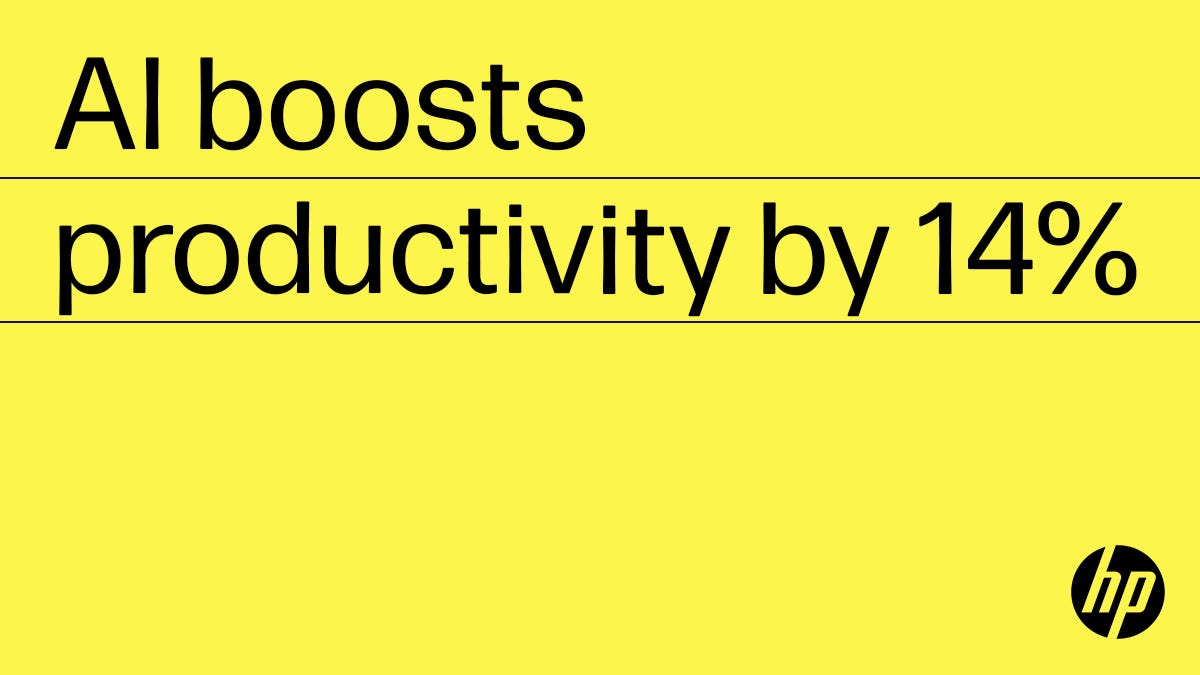
Embracing AI as a collaborative partner can lead to accelerated innovation, too. Humans can dedicate more time to creative thinking, exploration, and experimentation by automating repetitive tasks. This shift in focus from mundane tasks to inventive endeavors has the potential to unlock new realms of possibility, driving progress across various fields. In a recent publication of a case study by the National Bureau of Economic Research, generative AI boosted workers’ productivity by 13.8 percent at a Fortune 500 company, increasing customer satisfaction while reducing employee turnover.
One of the key advantages of this collaborative approach is its potential impact on global problem-solving. As the world grapples with issues like climate change, resource depletion, and public health crises, the collective intelligence of humans and AI converges to devise effective and timely solutions. The speed at which these solutions can be generated becomes crucial in addressing the urgency of many global challenges.
This also applies to the global GDP. Breakthroughs in generative artificial intelligence have the potential to bring about sweeping changes to the global economy, according to Goldman Sachs Research. As tools using advances in natural language processing work their way into businesses and society, they could drive a 7% (or almost $7 trillion) increase in global GDP.
However, the ultimate goal is a more holistic human experience. With AI handling routine tasks, individuals can focus on cultivating empathy, strengthening social bonds, and pursuing personal fulfillment. The future includes a world where humans are liberated from repetitive, mundane work, enabling them to lead more enriching lives.
While this vision paints a promising picture of the future, it has its challenges and ethical considerations. There is a need for responsible AI development, ensuring that the collaboration between humans and machines adheres to ethical standards. Questions of privacy, bias, and accountability must be addressed to create a symbiotic relationship that benefits our future.
The concept of humans at capacity opens the door to a paradigm shift in our approach to technology. Rather than viewing AI as a threat, I invite you to explore the possibilities of collaborative intelligence.
By leveraging AI to augment human capabilities, we can address global challenges more effectively, accelerate innovation, and create a future where humanity thrives. It’s not about replacing humans; it’s about empowering them to be more human in the face of an ever-evolving world. As we navigate the complexities of the future, the fusion of human ingenuity and artificial intelligence may hold the key to a more resilient and compassionate world.
Change is a powerful force, and we all possess the capacity to harness it to shape the future.
I recently had the pleasure to speak at HP’s Greater Asia Partner Conference in Japan, where I emphasized the crucial role of being proactive change agents and futurists in our rapidly evolving world.
With today’s relentless pace of change, where everything around us is in constant flux, our ability to thrive hinges on our willingness to embrace change wholeheartedly. However, merely reacting to change is not enough; we must learn how to anticipate it, tap into it, and actively harness it to shape the future we desire.
This is the essence of being a futurist.
Reacting to change is not enough; we must learn how to anticipate it, tap into it, and actively harness it to shape the future we desire.
In a world characterized by lightning-fast technological advancements and seismic global shifts that are reshaping industries and societies, cultivating a futurist mindset is no longer a choice but a necessity. It begins with asking the right questions:
What emerging trends lie on the horizon?
How do we proactively prepare for the transformative impact of these trends?
How can we leverage these trends to create the future we want?
Addressing these questions empowers us to become proactive architects of the future, rather than passive bystanders. The truth is that we all have the potential to be futurists, and the future is an unpainted canvas waiting for our unique contributions.
Change is a powerful force, and we all possess the capacity to harness it to shape the future.
However, we must recognize that the journey toward predicting and shaping the future is most successful when undertaken collaboratively. It’s crucial to welcome diverse thoughts and perspectives from various domains. When individuals from different backgrounds and disciplines come together, they unlock the potential to tackle complex problems and innovate in ways that homogeneous groups cannot.
Diverse perspectives are the lifeblood of futuristic thinking, leading to more comprehensive, inclusive, and effective predictions that consider a broad range of factors. This benefits individuals, organizations, and society.
These principles provide a roadmap for success and resilience in our ever-changing world. By thinking like futurists, we take charge of our destinies, actively shaping the future we desire. In our pursuit of a brighter future, let us remember that adaptability, collaboration, and open-mindedness are the keys to unlocking the true potential of tomorrow.
In 1950 Alan Turing asked a simple question in his paper Computing Machinery and Intelligence, “Can machines think?” The last seven decades of computing, artificial intelligence (AI), and machine learning advancements have responded to that question with a resounding “Yes.”
From IBM’s Deep Blue program to Teslas, Roombas, Siris, Alexas, and now ChatGPT and Bard, the advancements in AI have lived up to and surpassed many of Turing’s early musings. Yet we find ourselves at a pivotal point, wondering if this advancement will fundamentally change how we work, learn, design, write, live, and communicate for better or worse.
Generative AI (GenAI), an AI system capable of generating images, text, audio, video, code, and other media in response to prompts, has turned up the volume on this line of questioning as it challenges what and who we believe can create new things, and how valid and unbiased are the things created.
To understand the challenges and opportunities GenAI offers, it is important to know how we’ve gotten here.
Technology advancements have led us here
GenAI has been enabled by significant advancements in AI technology over recent decades. The first was the development of deep learning, a technique for “learning” inspired by how the brain works via neural networks. At the same time, there were advancements in graphics processing units (GPUs) which allowed for complex tasks to be rapidly broken down into smaller subtasks and continuously performed in tandem. While initially applied to gaming, the calculations used by AI models are very parallel in nature, making them ideal for GPUs.
This combination of deep learning and GPUs ushered in a new AI development and adoption era. Deep learning allowed us to develop new AI models that, in many cases, could surpass human capabilities–image and speech recognition, self-driving cars, fraud detection, virtual assistants, and more. GPUs gave us the computational capacity and scale to create these AI models.
The deep learning architecture continued to advance, which in 2017 led to the invention of transformer-based models that give AI the ability to “remember” by tracking relationships in sequential data like the words in a sentence. Because transformers can “remember” what they’ve “seen,” they can build on this to create new content, not just recognize a face or detect spam. As such, transformers and GPUs have ushered in a new era of AI, the era of Creative AI or GenAI, which is poised to become the next platform shift after personal computing, mobile, and the cloud.
Boundless opportunities
It can be argued that in the same way, the internet brought down the marginal cost of content distribution to $0, GenAI could do the same for content creation. That’s why some estimates show the global GenAI market reaching more than $110 Billion by 2030. Couple that with user demand (ChatGPT reached 1 million users in just five days) and the fact that it’s one of the fastest-growing open-source projects, there is a strong case that GenAI could usher in a sea of disruptive change on par with the internet.
From email copy creation to bug testing, customer support, movie making, legal assistance, and invoice automation, the possibilities of GenAI are unprecedented.
Here are a few recent examples of the transformative nature of this technology:
Travel:Expedia developed a GenAI travel advisor enabling travelers to ask for recommendations on where to go, where to stay, what to do, and more. So, if you are planning your next family vacation to Maui or looking for tee times at St. Andrews, let GenAI do some of the work for you.
Shopping:Walmart expects GenAI will “be as big a shift as mobile, in terms of how our customers are going to expect to interact with us.” They have already started to use GenAI in their Text to Shop, allowing customers to add Walmart products to their cart by texting or speaking the names of the items they need as if talking to a human retail assistant.
Education: At the Khan Lab School in Silicon Valley, a GenAI tutor named Khanmigo helps students move towards finding the right answers themselves.
Sports Commentator:IBM partnered with The Masters to have a GenAI commentator provide detailed golf narration for more than 20,000 video clips over the course of this year’s tournament.
Who will lead the pack?
We are still in the early days of GenAI, so it’s still being determined who will be the driving force in bringing this technology mainstream and how. While some big tech players like Microsoft, Google, Adobe, and Amazon are already starting to stake their claim, other incumbents and startups are lurking in the wings.
There are a variety of questions about how the competitive landscape will play out, including whether it will be dominated by proprietary models or open source, whether it will foster a whole new set of “GenAI First” applications (think Uber for mobile) or just make today’s applications smarter, and the level of verticalization we might see (or not) across the entire value chain. These all factor into what the competitive landscape might look like.
And given the disruptive potential of the technology, it is also attracting a huge number of new startups that hope to beat out incumbents in tried-and-true ways:
New market disruption — Go after customer needs not served by incumbents.
Low-end disruption — Go after customer needs not attractive to incumbents.
10x better products — Create products so good incumbents can’t compete.
So how does this apply to GenAI?
GenAI is different from AI until now. It is 10x better technology, meaning it will enable 10x better startups. We’ve already seen 10x better products from “GenAI First” startups like OpenAI and Jasper.
Incumbents and startups will battle it out at both the platform and application levels. Attracting the talent needed will be key.
Application startups will be susceptible to co-option by incumbents (e.g., via adding and bundling). They will need to quickly create defensive moats via time-to-market and network effects, focusing on customer needs not served by incumbents and through innovative business models not attractive to incumbents.
Growing pains
While GenAI offers obvious opportunities, it comes with its pitfalls and detractors. There is still much to be known about how AI is trained. OpenAI only says that GPT-4 was pre-trained using both publicly available data (think internet data) and data licensed from third-party providers. The amount of data and where it comes from matters, as there are already copyright challenges, and it will be hard to fully rely on GenAI or, worse yet, deal with misinformation.
Deepfakes abound, from Tom Cruise to the Pope to former U.S. President Barack Obama. A deepfake video can show a politician or celebrity saying anything and be very convincing, as seen in the deepfake video below.
Deepfake video example
There are also legal hurdles and regulations that will certainly have to be overcome. Just recently, Italy’s data protection authority ordered OpenAI to stop processing local data for its ChatGPT generative AI chatbot. It argued that the company breached the European Union’s General Data Protection Regulation (GDPR) regarding data access and protection of minors. Not to mention intellectual property and ethics concerns.
What does the future hold?
Just as we worked through the land minds of the early days of the internet, I expect we will do the same with GenAI. With the exponential increase in data coupled with compute performance, GenAI is likely on an exponential growth trajectory and will drive an accelerating pace of change in the world around us. As with any exponential change, humans could be better at predicting its future impact. Our brains aren’t used to thinking exponentially, and we tend to extrapolate linearly. As such, we consistently underestimate the impact of exponential technologies. The future will be on us before we know it, and we all need to prepare for it.
Companies need to proactively invest in understanding the technology and how it might impact their markets, customers, products, and operations. Maybe more importantly, how it could disrupt them and where it can be used to disrupt others.
As consumers, we should all invest time learning how to use it and understanding its limitations. It will soon become integral to nearly everything we do.
We shouldn’t be surprised or shocked by what comes next. GenAI will move quickly from the new kid on the block to an entirely new era of human-computer evolution. We will have AI doctors, AI lawyers, AI therapists, AI developers, AI artists and composers, AI actors, AI co-workers, and even AI friends. Some are even predicting this is a precursor to general artificial intelligence and digital lifeforms that will exist and evolve independently of humans, maybe even competing with us for the title of “dominant species” at some point in the future.
And, of course, legal and ethical pundits, governments, and the industry, in general, will need to collaborate closely to ensure the needed safeguards are in place.
Whatever happens, we should also remember that the future hasn’t happened yet, and we all get to create it.
The pandemic has caused a shift in the way we work, with more people working from home than ever before. As we look to the future, it’s clear that technology will continue to transform how we work, both in and out of the office. Join us as we explore how technology has impacted the hybrid and remote workforce.
Technology has been instrumental in increasing productivity while working from home. With advancements in technology to revolutionize working from home, such as virtual and augmented reality, digital whiteboards, and advanced video conferencing tools, we can expect even more solutions to help remote teams work efficiently and effectively in the future.
HP is committed to helping the remote workforce by providing advanced technology solutions that enable seamless remote work. One example is our focus on providing home office tech for hybrid work success. With the rise of remote work due to the pandemic, HP has recognized the need for high-quality technology solutions to help workers transition between home and office environments. HP offers a range of products and services to support remote workers, including a powerful laptop like the HP Dragonfly Pro, the user-friendly HP 710 rechargeable wireless mouse, or an all-in-one printer like the HP ENVY 6000.
Video conferencing boom
Over the past three years, video conferencing has restructured how we work from home, enabling us to stay connected with our colleagues despite being physically distant. With the increased use of technologies like Zoom and Microsoft Teams, people can now conduct face-to-face meetings, collaborate on projects, and attend training sessions without being in the same room. Video conferencing has made remote work more manageable and reduced the isolation many remote workers face.
A study by HP Tech Ventures portfolio partner Owl Labs found that 71% of remote workers find it easier to present on a video call than in person and feel more connected to their team when they use video conferencing. By seeing each other’s faces and body language, employees can build stronger relationships and better understand each other’s perspectives, improving teamwork and productivity. Moreover, video conferencing has eliminated the need for long commutes and allows people to save time and focus on their work. Another study by Axios found that working from home saved workers around the world an average of 72 minutes in commute time everyday in 2021 and 2022, leading to improved work-life balance and higher job satisfaction.
Streamlined communication and collaboration have been vital to keeping remote teams functioning smoothly. Technology has provided employees with a level of interaction never seen before. The influx of technology allows for effective employee engagement and entirely transforms communication norms. Video conferencing has become crucial in making remote work more manageable and connected. As more companies adopt remote work policies, video conferencing will continue to be vital for maintaining productivity, staying connected, and fostering teamwork.
HP acquired Poly last year, reinforcing our commitment to helping the remote workforce by providing advanced technology solutions that enable seamless remote work. We’re leveraging our combined strengths with Poly to create a unique, pro-grade experience for hybrid workers. According to a study by Lifesize, video conferencing leads to productivity for 94% of companies. As video conferencing is paramount for hybrid work, we are excited to see how HP will incorporate Poly into its software and PC offerings. The Poly Studio Room Kits for Microsoft Teams Rooms can now be paired with the Microsoft Teams-certified HP Mini Conferencing PC with Microsoft Teams Rooms to deliver a complete solution experience for meeting rooms of any size.
Ctrl + Alt + Secure
As more people work remotely, cybersecurity has become a significant concern. Cybercriminals are constantly looking for new ways to exploit vulnerabilities and gain access to sensitive information. Companies and employees must work together to fend off cyber threats. Between 2008 and 2021, the FBI recorded a 207% increase in cybercrime reports, with losses hitting almost $7 billion last year. HP Wolf Security’s Evolution of Cybersecurity report also details the rise of cybercrime and the importance of implementing advanced security measures.
As employees are often the last line of defense in an attempted cyber-attack, it is critical to equip them with the knowledge to recognize when such an attack occurs and what steps they should take to mitigate the threat. One of the most significant cybersecurity risks associated with remote work is using unsecured networks. According to the Norton Cyber Security Insights Report, 49% of people in the U.S. never use a virtual private network (VPN) when they connect to public Wi-Fi. To protect against this risk, remote workers should use a VPN to encrypt their data and prevent it from being intercepted. To minimize the risk of a data breach, remote workers should ensure that their devices are equipped with up-to-date antivirus software and that all software and operating systems are regularly patched and updated.
Overall, cybersecurity is critical when working from home. Remote workers should be aware of the risks associated with remote work and take appropriate measures to protect their devices and data. By using secure networks, regularly updating software, and utilizing strong passwords, remote workers can help minimize the risk of a cyberattack and ensure that sensitive data remains safe and secure.
Technology is transforming how we work from home, with increased productivity, improved collaboration, and advanced cybersecurity measures. As we continue to adapt to a new way of working, it’s clear that technology will play a vital role in ensuring that remote workers can work effectively and securely.
Gaming continues to be a hot topic this year as startups innovate for the world’s 3 billion gamers. From haptic clothing that lets you feel your games to technology that adds smell to your virtual reality experiences, here are the top gaming startups to watch this year:
Mobalytics, (we’re biased; it is an HP Tech Ventures portfolio company) is an AI-powered personal gaming assistant that helps gamers conquer their favorite games. As the first personal performance analytics for competitive gamers, the platform analyzes players’ performance over many sessions and, helps them define their weaknesses and strengths, and provides personalized advice on improving their aim, strategy, teamwork, etc.
Why we’re watching
We admire Mobalytics’ bold vision to help all gamers reach their full potential, and their founder and CEO, Bogdan Suchyk, embodies that spirit by leading as though nothing is impossible.
Avalon is revolutionizing how games and virtual experiences are built. Founded by pioneers and leaders from games including EverQuest, Call of Duty, Diablo, God of War, Assassin’s Creed, and Elden Ring, Avalon is building a new interoperable universe.
Why we’re watching
With a comprehensive and extensive background in games, Avalon solves problems that will face creators and designers in the near future and is building the tools and framework that will allow them to do so.
Parsec, an HP Tech Ventures that exited to Unity, has a proprietary desktop capturing application perfect for any graphically intense applications in game development, broadcast, media and entertainment, architecture, engineering, and construction.
Why we’re watching
Optimized for low latency, high framerate, and security, Parsec enables gamers to stream video game footage through an Internet connection. It allows users to run a game on one computer but play it remotely through another device, which has proven a winning formula for professionals and gamers with high-end compute needs.
Tangle is a virtual space for teams to connect and collaborate. A central hub for remote communications, Tangle enables customers to grow a thriving remote work culture that teams love.
Why we’re watching
Where gaming and hybrid work meet, Tangle offers avatars and other fun features to make remote work a unique and enjoyable experience. Users can project their personality yet still protect their privacy while also communicating to colleagues their openness to collaborate vs. the need to focus. Sort of like closing or opening that office when people had private offices with a lot more useful features and gradations.
Runway’s mission is to make content creation accessible to all. They’re taking recent advancements in computer graphics and machine learning to push the boundaries of creativity and lower the barriers to content creation.
Why we’re watching
Runway offers a broad toolset for art generation and supplements another long-time favorite or ours, user-generated content. The platform is forming the next generation of generative AI tools as it embodies a spectrum of tools, e.g., text input of course, but easy-to-use editing, personalized data set training…
Scenario enables artists and game developers to create their own image generators trained on the specific style of their games. Starting with specific training data should enable creators to rapidly iterate and go much faster than trying to develop everything from scratch themselves.
Why we’re watching
Regardless of the level of technical expertise, game developers can create custom generators capable of producing entirely new game assets consistent with a given style.
We’re looking forward to seeing the innovations these gaming and eSports startups deliver this year.
The lasting impact of remote work results in a reassessment of the IT infrastructure that enables workforce automation capabilities. Worldwide IT spending is expected to reach $4.5 trillion in 2022 as the post-pandemic recovery continues and remote and hybrid work takes an even greater hold on businesses everywhere. This creates a significant opportunity for companies looking to bridge the gap between home and office work, create remote first solutions, automate workplace processes, and create a more seamless experience for employees.
Digital products and services will play a critical role in these digital transformation efforts, requiring continued investment in remote-first technology implementations and new technologies. Peerbie, for example, transforms how teams work with one super app for everyone and everything needed to get work done.
It’s estimated that 31% of all workers worldwide will be hybrid or fully remote in 2022. The U.S. is projected to harness the trend, with remote workers reaching 53% of the workforce. A hybrid workforce will continue to increase the demand for PCs and tablets. In fact, in 2021, PC and tablet shipments exceeded 500 million units for the first time in history, highlighting the demand across both business and consumer markets. Hofy offers a device pre-configuration service to give IT teams peace of mind–knowing that any devices they provide are set up correctly and securely–and to spare new hires a tedious first-day setting things up.
A hybrid workforce will continue to increase the demand for PCs and tablets.
The pandemic-fueled growth in the adoption of software robots designed to ease routine office work is making at least one task easier for CIOs: selling the idea to their corporate bosses. The technology — robotic process automation (RPA), or software bots — became a critical tool last year during COVID-19 lockdowns and office closures as companies worked to keep their businesses up and running. Many turned to bots to handle tasks like processing payroll data or expense reports and fielding call-center queries. At the height of the pandemic last year, UiPath said it added more than ten corporate customers daily.
The complexity and interdependency of systems today mean that when something doesn’t work between two entities — be it apps, servers, or something else — the effects can be disastrous unless those overlaps can be detected and mitigated ahead of a live deployment or found and fixed quickly even if they are already out in the wild. Gluware has built a platform that aims to do just that — specifically by providing network orchestration and automation tools that identify and automatically fix when something is about to go awry on a network.
Opportunities to automate common workplace processes are everywhere, which is why automation is becoming a common element of every business. This includes providing good customer service, streamlining the hiring process, or managing marketing campaigns more efficiently. As technology improves, more tasks will become suitable for automation.
Opportunities to automate common workplace processes are everywhere, which is why automation is becoming a common element of every business.
Machine learning and artificial intelligence enable new forms of “smart” automation. As the software learns, the more adaptable it becomes. These technologies open the door for the automation of higher-order tasks in addition to basic, repetitive tasks. There’s much focus now on tasks humans don’t want to do, but in the future, automation will not just be about automating those tasks humans are doing today. Still, it will be about realizing potential opportunities. For example, RPA can automate tedious insurance processes as insurers undergo many manual but critical processes involving disparate systems. RPA can help streamline and automate these processes without changing large amounts of legacy code — assisting insurers in cutting costs in necessary departments like underwriting, claims, and regulatory and compliance, as well as expedite policy decisions.
As data sets become more thorough and available, and as software draws on more sources and synthesizes more data sets, contextual information in human decision-making will only improve. Machine learning will serve as a supplement to–or perhaps even an enhancement to–human knowledge. Combine AI capabilities with improved data retention through the Internet of Things (IoT), and the possibilities are endless. Kadence is building an all-in-one solution for desk booking, room scheduling, people, and visitor management. The company’s platform helps transform workspaces into smarter, safer spaces to create frictionless experiences. It also offers workplace leaders to deliver data-driven insights into how people use spaces to work, enabling clients to manage their spaces when work patterns and workflows change dynamically in response to our ever-changing world.
VC and startup opportunities
Workforce automation sectors are becoming a hotbed for venture capital investing. In 2021, HR technology alone received $12.3 billion in investments worldwide. At the same time, global funding to RPA companies hit a record high of $3.5B, driven predominantly by a handful of mega-rounds (deals worth $100M+). And in the first part of this year, we saw Lattice, a start-up making software to help employers fight the “big quit,” tripling its valuation to $3 billion in 10 months. While Envoy, the leading workplace platform that allows companies to reopen safe and flexible workplaces, secured $111 million in Series C funding led by Brookfield Growth. Envoy’s workplace platform is built to solve the problems of flexible workplaces where teams split their time between home and the office.
In 2021, HR technology alone received $12.3 billion in investments worldwide.
These are exciting times for startups in this space, and these are a few of the ones that have caught our attention.
EthSign is a developer of a decentralized application designed to revolutionize agreement and signing. The company’s application helps to make comments, edit, and access each version of your electronic agreement without privacy and communication concerns, enabling clients to have a simple and decentralized alternative and helping parties to upload a document with pending signatures.
Seatti is a developer of a flexible working platform intended to bring together your hybrid team. The company’s platform provides Microsoft Teams and Office365 integrated SaaS solutions allowing you to book a workspace in or outside of the office and share location plans with the team.
Namely is a developer of a human capital management platform intended to meet the complex demands faced by today’s HR professionals. The company’s cloud-based platform provides tools across payroll, benefits, human resource information, and talent management, enabling mid-sized companies to focus on developing their people and providing a better employee experience.
Diversio is a developer of a people intelligence platform intended to measure, track, and improve diversity, equity, and inclusion. The company’s platform is created using artificial intelligence to bring rigor data, diagnosis, and analysis to help organizations become more inclusive, develop cutting-edge technology, and eliminate barriers to diversity and inclusion. Their platform enables users to trust a platform that values feedback, transparency, collaboration, and impact.
Planless is a developer of a project and task management tool designed to automate teamwork. The company’s intelligent platform takes care of the planning by finding the people in the team who are the best suited to perform a task depending on their knowledge and availability, enabling organizations to focus on their core business.
TeamEQ can accelerate results through intelligent teams for leaders who no longer want to guess the situation of their teams but instead take their decisions based on actual data. Team analytics and intelligence platform designed to transform any group into a high-performance team that exceeds its objectives. The company’s product uses artificial intelligence to track the impact of a person’s actions. It guides people in real-time with transparent data and predictive algorithms while offering tailored people management strategies and training programs for leadership development, enabling businesses to monitor performance, discover and reduce attritions and boost productivity by promoting collective intelligence engagement and well-being.
TenSpot (Future of Work, HRtech) is a workforce engagement platform that helps companies connect and engage distributed teams to boost employee happiness, morale, and productivity. The company’s platform combines live and on-demand content with sophisticated tools that help measure engagement and sentiment, enabling clients to improve their culture, identify leaders, and create a space that welcomes everyone.
The extent to which automation transforms the economy remains to be seen, but it appears inevitable that we’re headed toward a future of more automation. What this means for businesses, workers and consumers will be the subject of enormous debate moving forward. One thing seems inevitable, however: if it can be automated, it will be.
Several exciting technologies are at the center of discussions about the future, from virtual reality (VR) and the metaverse to 5G and artificial intelligence (AI). While these emerging technologies are expected to disrupt our daily lives eventually, most of them must still overcome significant obstacles before mass adoption is plausible. However, augmented reality (AR) could bridge the gap between the present and the future due to its increased accessibility and interactivity.
First, what is AR?
AR is the integration of virtual objects into the real world. In an AR experience, users can interact with virtual features that are overlaid in the real world, in real-time. These virtual items are accurately rendered within the real physical environment to create a believable experience for users. While VR creates an entirely simulated world, AR alters the perception of the real world with its added elements, which can include visual, haptic, auditory, and olfactory components.
The current state of AR
AR is far from perfect and still has many issues to iron out, but its growth is possible alongside its adoption. AR does not necessarily require more than a smartphone to function. This differentiates it from technologies like VR that require specific gear and virtual environments, which limits adoption until its framework is fully resolved. VR headsets can be somewhat uncomfortable and can cause eyestrain and motion sickness. While developers are addressing those concerns, there is also the issue of true immersion. One of the main benefits of VR over AR is its promise of total immersion into virtual worlds and scenarios. Technologies that would support that capability exist, such as haptics and omnidirectional treadmills, but they are still a growing sector and difficult to afford for the average consumer. An ever-improving AR app on your smartphone is far easier to adopt than expensive VR gear that takes you to limited virtual experiences and currently incomplete worlds. By introducing AR to consumers on devices they already own, it could become easier to encourage them to adopt fully fleshed-out AR and VR technologies down the line.
AR is currently used in applications like mobile, retail, healthcare, and education. Mobile applications include popular games, like PokemonGO, Amon, and Angry Birds AR; visualizer apps that allow you to place furniture or change the color of your home’s walls, like DecorateAR and Paint Tester; and social media apps like Snapchat and TikTok. Retail AR saw significant growth during the COVID-19 lockdown. Many brands embraced different virtual try-on technologies, from IKEA Studio to ASOS’ “See My Fit” to Kohl’s virtual closet on Snapchat. AR in healthcare is currently focused on medical imaging technologies that improve surgical planning and outcomes, such as HP Tech Ventures’ partner Surgical Theater, which uses AR, VR, and 3D technologies to provide a precise visualization platform for surgeons and medical students. For non-medical education, AR apps like Elements 4D and JigSpace help students learn important concepts through immersive visualization.
The future of AR
In the future, AR applications will see both improvement and innovation. The AR market is expected to grow at an impressive compound annual growth rate of 40+% from 2022 to 2030. Already existing technologies, like the above apps, will improve, expand, and become easier to use and access. New and emerging technologies, like AR glasses, smart lenses, holograms, and the metaverse, will enable AR’s further expansion and adoption. AR glasses and smart lenses are already in progress, with companies like Apple and Nreal working to create comfortable and fully functional AR glasses. HP Tech Ventures’ portfolio company Mojo Vision is also working on smart contact lenses and recently reached an incredible milestone with the first-ever on-eye demonstration of a feature-complete AR smart contact lens.
Holograms, powered by AR goggles, glasses, or contact lenses, are another potential technology innovators are beginning to explore. As our world embraces hybrid and remote work, hologram meetings could become the new norm. 3D holographic displays could also become another feature of the future of work. And in our personal lives, board games of the near future could see a holographic boost, with companies like Tilt Five creating holographic AR versions of popular games like Settlers of Catan.
Finally, AR technologies will play a significant role in adopting the metaverse. While many envision the metaverse as a fully immersive experience enabled by VR headsets, there is a growing belief that AR will be a more palatable gateway, augmenting our existing world rather than replacing it with a virtual one. Perhaps more likely is the existence of two metaverses: one enabled by AR and the other by VR, with possible entry points between them.
The importance of AR boils down to one essential factor: accessibility. Incredible strides have been — and will continue to be made — with several emerging technologies, however mass adoption cannot occur if the average consumer can’t access them. Allowing consumers to interact with the metaverse and related technologies through devices they own will shorten the adoption time and onboarding process for future devices. This makes AR the perfect gateway to VR, the metaverse, and many future technologies.
Thinking like a futurist in this era of constant change provides an incredible opportunity to create the future we want. By staying on the lookout for trends and weak signals shaping the world around us, futurists can identify future opportunities that lead to consequential disruption.
But what happens if you miss these trends?
In the best-case scenario, missing these signals may simply leave you reacting to disruption and working hard to catch up. At worst, however, you are in danger of becoming irrelevant and going out of business. The corporate graveyard is littered with companies that didn’t react fast enough to the changes in the world around them.
Blockbuster
Founded in 1985 by David Cook, Blockbuster was an entertainment staple in the 1990s and early 2000s. At its peak, there were 9,094 stores globally. Consumers would flock to their local stores to rent movies and buy snacks for their Friday nights, making Blockbuster a fixture in households worldwide.
After a few CEOs and missteps, Blockbuster made its biggest blunder when it failed to acquire Netflix in 2000. Netflix saw the rise of DVDs as a significant opportunity and launched its original mail-based DVD rental business in 1997. Because DVD players were not yet standard in the average household, Netflix partnered with HP, Sony, and Toshiba to offer free DVD rentals to new DVD player buyers. Netflix grew in popularity but wasn’t yet profitable, so its leadership approached Blockbuster to propose an acquisition, which the movie-rental giant declined.
Netflix persisted, confident that DVD players would gain popularity, and that confidence paid off as the company became profitable in 2003. The following year, Blockbuster began its DVD-by-mail service seven years after Netflix. From 2007 to 2010, Netflix continued to monitor trends and take calculated risks that majorly paid off, starting their on-demand video streaming service and signing deals with industry giants from Disney to Paramount.
On the other hand, Blockbuster failed to innovate in time and had to play catch up with Netflix while rapidly losing customers. That failure to embrace change, paired with severe debt, became the unraveling of Blockbuster, which declared bankruptcy in 2010 and closed all but one store.
Toys “R” Us
Later considered a category killer, Toys “R” Us had a humble beginning as a baby-furniture retailer in Washington, D.C., in 1948. Initially named “Children’s Bargaintown,” founder Charles P. Lazarus changed it to Toys “R” Us in 1957, dedicating the store entirely to toys and moving it to Rockville, Maryland. Throughout the next half-century, Toys “R” Us experienced incredible success, building a powerful brand, exploring spin-off clothing stores, and assisting in the launch of several pop culture games and toys.
By the late ‘90s, Toys “R” Us began to feel the pressure from growing competition, like Walmart and Target, which eventually led to the closure of its spin-off, Kids “R” Us, in 2003. While competing companies created their e-commerce sites, Toys “R” Us entered an exclusive 10-year partnership with Amazon in 2000. This partnership, while successful, prevented Toys “R” Us from developing autonomy over its online presence, which became a severe problem when Amazon elected to grow its toy category and allow competitors to sell on its platform.
Toys “R” Us sued Amazon and won, but it was too late. The once powerful toy seller had lost out on the essential opportunity to create its e-commerce website, and by the time it had one, it fell far behind what competitors had to offer. Toys “R” Us not only failed to keep up with e-commerce, but it also ignored changing consumer habits and buying preferences, instead focusing on offering the lowest prices, which proved unsustainable. Finally, Toys “R” Us failed to create an enticing in-store experience, instead deciding to cut costs. Unable to provide a satisfying in-store experience and struggling to keep up with e-commerce innovation, Toys “R” Us filed for bankruptcy in 2017 and closed all stores in 2018.
In 2019, the company rebranded as Tru Kids post-bankruptcy, opened new stores, and partnered with Target to sell toys. By 2020, the agreement had lapsed, and Amazon took on Target’s role as a fulfillment partner. In 2021, the financial impact of the COVID-19 pandemic closed its stores again. In 2022, the company plans to open stores within all U.S. Macy’s by October 15.
Borders
The first Borders bookshop opened in Ann Arbor, Michigan, in 1971, by brothers Tom and Louis Borders. The company didn’t open its second store in Beverly Hills, Michigan, until 1985 and was subsequently acquired by Kmart in 1992. Three years later, Kmart spun off Borders into a new company named Borders Group. Through the 1990s and early 2000s, the Borders Group expanded globally, with stores and franchises everywhere from Singapore to Puerto Rico.
Initially, Borders stayed ahead of innovation with a robust inventory system that could predict consumer behavior. However, when the industry began to go digital in the early 2000s, Borders began to lose its grip, leaning heavily into CD and DVD sales instead of working on its internet presence. Competitors like Barnes & Noble focused on online sales and digital innovations like e-readers, while Borders chose to outsource its online operation to Amazon, which rapidly became a competitor.
As competitors grew and embraced innovation, Borders steadily lost revenue, and its last profitable year was 2006. After constant financial trouble, Borders filed for bankruptcy in 2011, closing all its stores except those operating in the United Arab Emirates, Oman, and Malaysia, which other owners took over.
In the examples above, it’s clear that while some companies missed the boat on specific innovations, others were on the right track. They did this by paying attention, listening to the true needs of their customers, and prioritizing learning from all failures.
So how can you avoid missing trends?
I may sound like a broken record, but thinking like a futurist is the best way to avoid being left behind by innovation. Pay attention to weak signals, explore emerging trends and technologies, and adopt an innovative mindset. You need to have a good sense of what you want in the future. Ask yourself:
What outcomes am I looking for?
What inspiring vision and goals do I need to put in place?
Your goals need to be bold enough that they cause you to work backward to discover what disruptions will get you there, rather than taking today’s solutions and incrementally improving them over time.
Visualizing outcomes is essential, and so is having an open, innovative mindset and attitude. Success is 95% attitude. Make peace with failure and learn from it instead. Think boldly, and never give up. Having the right attitude is essential to staying ahead of all this change and creating the future you seek.
Finally, remember: the future hasn’t happened yet. The future is something that we all get to create. It is the result of all the choices that we make today.
A crucial ingredient for any successful business is understanding the trends shaping the world around us and that point to future opportunities.
If you miss these shifts, you risk being disrupted and, worse, going out of business. But if you can catch these potential trends early and capitalize on them, they instead mean growth and opportunity.
Catching these subtle changes early isn’t easy, however. All world-changing shifts don’t just magically appear, they start as weak signals, and you must look for them. A weak signal is very early evidence of a potential future mainstream trend. Given the very early nature of these signals, they may or may not actually become a trend. But identifying and monitoring weak signals over time is integral to getting in on new trends early. Sometimes this can be the difference between catching a new wave and leading this change or getting left behind.
As futurists, we want to be the disrupters, not those being disrupted. To do that, we need to constantly observe society and the world around us to find these new trends and weak signals.
Here are eight weak signals that our team is watching for future impact.
Eco-consumerism
Consumers are becoming more aware of how their consumption contributes to climate change, and this is changing their buying behaviors accordingly. As consumers become more eco-friendly, they’re putting pressure on brands to do the same by repurposing waste, using biodegradable materials, and prioritizing renewable resources. Companies that don’t embrace sustainability or give back to the planet in some way risk losing the support of consumers. With 77% of consumers concerned about the environmental impact of the products they buy, that’s a large demographic to risk losing.
Here’s a look at eco-consumerism at play:
These bio-concrete tiles are made with Japanese knotweed and American signal crayfish, two invasive species in the UK that would otherwise be considered waste. They also reduce carbon emissions caused by traditionally made concrete.
These running shoes from Zen Running Club are made entirely from plant-based materials, resulting in a fully biodegradable shoe.
Molded fiber, an eco-friendly packaging alternative, is gaining momentum. Once a time-consuming process, recent innovations like HP’s Molded Fiber Advanced Tooling Solution are accelerating the adoption of more sustainable packaging.
Rise of reality
While we are still living highly digital lives, and there is significant hype surrounding a potentially virtual future in the metaverse, there is also a growing need for a return to reality. After the lockdown portion of the pandemic, many of us are ready to return to physical spaces, travel, and in-person entertainment to escape Zoom fatigue and tech burnout. As more people crave unplugging over new online experiences, it will be critical for new technologies to enhance our physical experiences and interactions. Even further, tech companies are responsible for improving their products to battle burnout and enhance user experience.
Here’s a look at the rise of reality at play:
AiFi, an HP Tech Ventures portfolio company, offers AI-powered autonomous retail solutions, making shopping a seamless experience for consumers and retailers.
To address tech fatigue, many tech companies could provide time-limit features or recommend breaks to users. Other companies are getting even more creative, like these hologram startups aiming to make remote meetings feel less impersonal.
In a recent HP Wolf Security report, 46% of office workers admitted using their work devices for personal tasks, and 69% claimed to have used their personal devices for work activities. This overlap between work and personal devices has been exacerbated by the increase in remote work, which has further blurred the line between consumer and enterprise. Enterprise products and services are being increasingly distributed across smaller home offices rather than large company headquarters. This has significant implications for cybersecurity and maintenance and could contribute to feature changes.
Here’s a look at distributed enterprise at play:
With the era of hybrid work upon us, there is a growing need for devices connecting home and corporate offices. Solutions like HP Presence provide powerful collaboration tools to reinvent how people connect.
Employees and companies can better protect their data from cybercriminals by embracing decentralized cybersecurity. Approaches like zero trust security are gaining popularity, with 78% of firms planning to adopt zero trust in 2022.
Remote maintenance is not entirely new, but it’s increasingly essential as remote work grows. Advanced remote management technologies, like NVIDIA’s Fleet Command, are working to optimize processes for global IT professionals.
Omniscient health
As people continue to be hyper-conscious of their health, there has been significant growth in health-related technologies ranging from wearable devices to AI-powered diagnostics. Wearables like fitness trackers have become smarter and more powerful, so users are gaining greater insight into their health. Health providers can use this new data, paired with the power of AI, to aid in their care. Microfluidics could also enable faster, less invasive, and more accurate diagnostics. As monitoring our health becomes part of our daily routine, chronic issues could be caught sooner, leading to more proactive care.
Here’s a look at omniscient health at play:
Using data from continuous wearable sensors, physiQ generates personalized and actionable insights for patients and their healthcare providers.
For people with chronic illnesses, health monitoring tools are essential. Fortunately, many startups are working to create more straightforward and less invasive health monitoring methods, such as BOYDSense, which developed a breath-based glucose level monitor for those with diabetes.
Using microfluidics, researchers at Northwestern developed a sticker that absorbs and uses sweat to accurately diagnose cystic fibrosis in newborns. Another research team from the University of Minnesota has also created a new microfluidic chip that could provide point-of-care diagnostics.
Internet of energy
At our current rate, global energy consumption is set to see a 50% increase between 2020 and 2050. With the growing volume of data, demand for clean energy, and increasing adoption of emerging technologies, a new energy system may be critical. Antiquated energy infrastructure, like electrical grids, cannot keep up with technology advancements and energy demands. The Internet of Energy may be the best solution, as it can reduce inefficiencies, limit waste, and maximize the potential of existing infrastructures. It could also lead to the adoption of smart grid technology, which would hugely benefit users and energy consumption.
Here’s a look at the internet of energy at play:
Smart panels from startups like Span balance home electricity use to avoid overloading utility grids.
Packetized Energy, recently acquired by EnergyHub, is a software platform aggregating energy devices such as water heaters, HVAC systems, electric vehicle chargers, solar inverters, and distributed batteries into dispatchable and flexible grid resources.
General Electric (GE) launched a startup, Current, which pairs LEDs and solar panels with software. This allows the system to gather data to apply insights to corporate operations to increase lighting and productivity savings.
Geospatial AI
The increasing number of satellites and improved image quality provides a plethora of data that, combined with supercomputing, allows Geospatial AI (GEOAI) to extract and impart impactful insights. This integration of geospatial studies and AI helps machine learning mimic human spatial reasoning and dynamics to better understand environmental and geographical impacts. This could lead to hyper-local and instantaneous weather forecasting, real-time wildfire detection, and other capabilities that could make environmental conservation and planning more seamless.
The city of Boston will use data from satellites in the TreeTect pilot to improve tree equity and anticipate tree maintenance tasks.
Scientists from Stanford University developed a deep-learning model that maps fuel moisture levels across 12 of the US’ Western states, making it easier to predict where wildfires are likely to ignite and spread.
Transportation transformation
Growing concern for pollution and congestion is leading to disruptive innovation in transportation technology, policy, and infrastructure, which will radically change how we transport people and things in the future. Crowded freeways, slow delivery times, and an urgency to counteract climate change all demand revolutionary change in the transportation industry.
Urban transportation is central to the effort to slow climate change, with plenty of opportunities for growth and innovation. Home to more than half the world’s population, cities account for more than two-thirds of global carbon dioxide emissions. Transportation is often the most prominent and fastest-growing source of emissions and is the U.S.’ second-largest source of greenhouse gas emissions.
Here’s a look at transportation transformation at play:
Though not quite a reality yet, the idea of a hyperloop has long captivated society, with companies like Virgin and The Boring Company working towards its creation. The technology exists to create the ultra-fast transportation concept, but there are still significant hurdles to overcome.
TuSimple has created autonomous trucks, which promise improved safety, efficiency, and sustainability. Its trucks allegedly shaved 10 hours off a 24-hour run.
Florence has implemented smart trams, which could shape future transportation for other European cities.
3D-printed electronics
Advances in 3D printing technology that allow for voxel-level specification of materials, combined with improvements in metal substrates, will enable electronic components to be printed at the same time as durable parts, rather than being added as a separate assembly step after printing. These capabilities could allow electronic devices to be 3D-printed on demand as all-in-one elements, with no assembly required. This would minimize production costs and time and create an opportunity to reduce the size and weight of electronics.
Here’s a look at 3D-printed electronics at play:
Japanese CAD and 3D printing company SOLIZE uses HP 3D printers to make out-of-production spare parts for NISMO, the motorsport division of Nissan
Researchers at the University of Florida have developed a method of printing copper on fabric, a milestone for wearable electronics.
Considering the state of our world, futuristic thinking is a necessary skill we all need to learn and practice. With the constant and rapid pace of change, everyone should be honing their futurist skills. And thinking like a futurist isn’t reserved for a select group of people. It is a fundamental skill set that anyone can learn.
This is not something all of us do naturally, though. Only a small percent of the population thinks and plans for the future. In fact, only 35% of Americans regularly think about their five-year future. Those who aren’t thinking of their futures are disadvantaged over those who do. If we want to stay one step ahead in our fast-paced world, and if we’re going to move forward and create the future we want, we must adopt long-term, futuristic thinking.
To help you get started, here are three essential practices that I have found very useful in my career as a futurist:
Monitor shifts — Pay attention and understand what’s happening in the world around you. Notice the small changes that create new needs. Keep an eye on these weak signals and any others that appear.
Visualize future outcomes — Start with your vision for the future and work backward from there, not the other way around. What was the catalyst for your vision of the future?
Adopt an innovative mindset — Have a “can do” attitude and be unstoppable. Embrace everything as a learning opportunity, even failure.
The more you think like a futurist, the better you can create the future you want.
Which of these weak signals are you interested in? Any others you are monitoring? Share your thoughts with me in the comments.