Generative AI is becoming embedded in our everyday lives and transforming how we approach daily tasks and activities. With AI seamlessly integrated into our routines, we can experience efficiency and personalization that was once the realm of science fiction.
Remember Aiden, a 26-year-old living in San Francisco, who weaves AI into her daily life to optimize her productivity and enhance her experiences? She’s not the only one leveraging generative AI to create a more streamlined daily life.
Meet Dylan, a 40-year-old corporate executive who expertly uses AI to be more productive, achieve his fitness goals, and maximize his free time.
Morning Start
Dylan enjoys an AI-generated replay of a vivid dream he had, complete with visual and narrative details, providing creative inspiration and insights as he starts his day.
A customized AI-generated news briefing, with curated headlines and stories based on his preferences and current interests sets a focused tone for Dylan’s day.
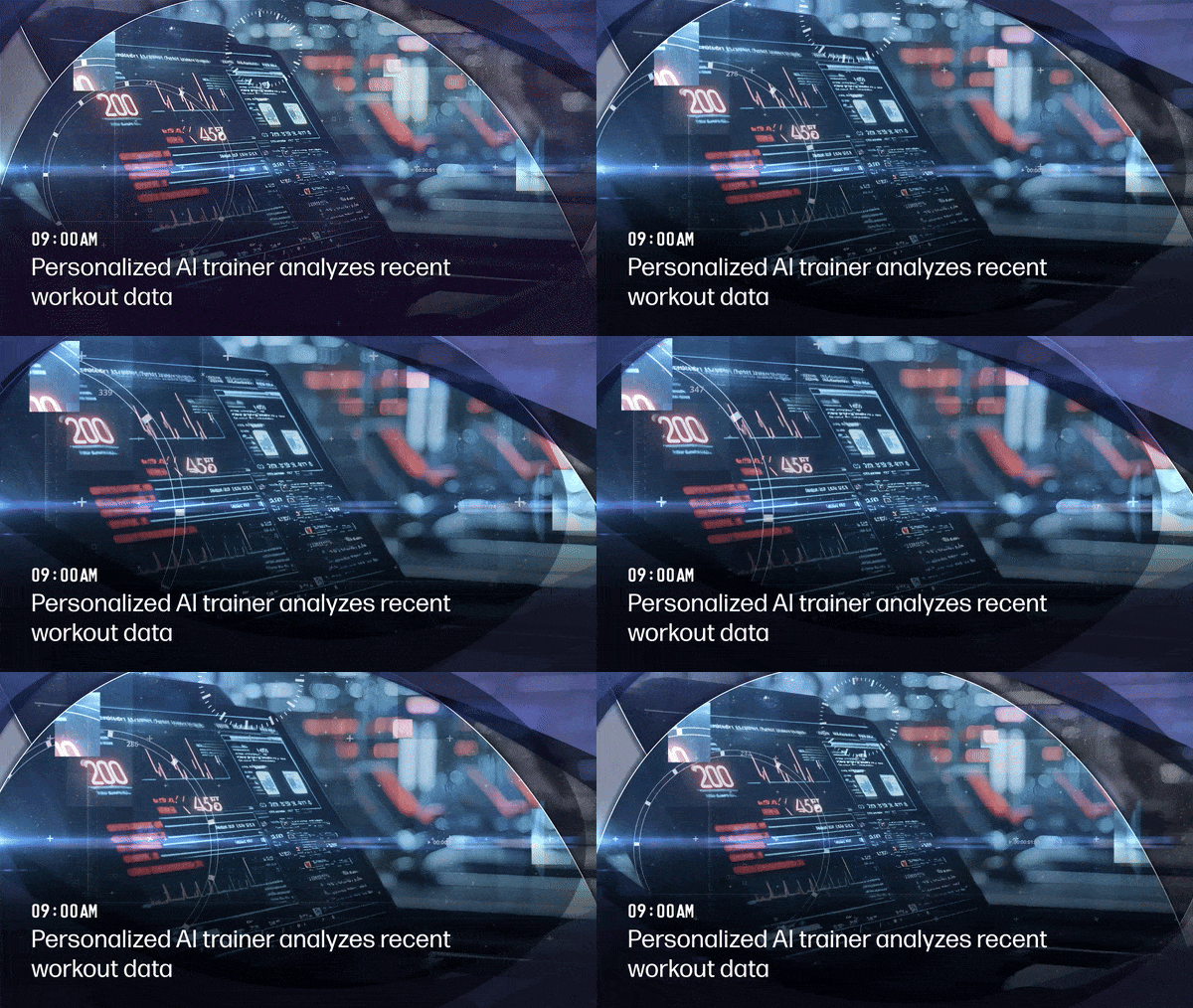
After the news briefing, Dylan’s personalized AI trainer analyzes his recent workout data and suggests a customized exercise routine, including specific cardio and strength training exercises to help him meet his fitness goals.
Efficient Afternoon
Dylan’s AI Chef orders culinary ingredients according to his AI customized meal plan and schedules delivery, ensuring he has fresh produce and essentials for later, delivered by an AI robot personal shopper.
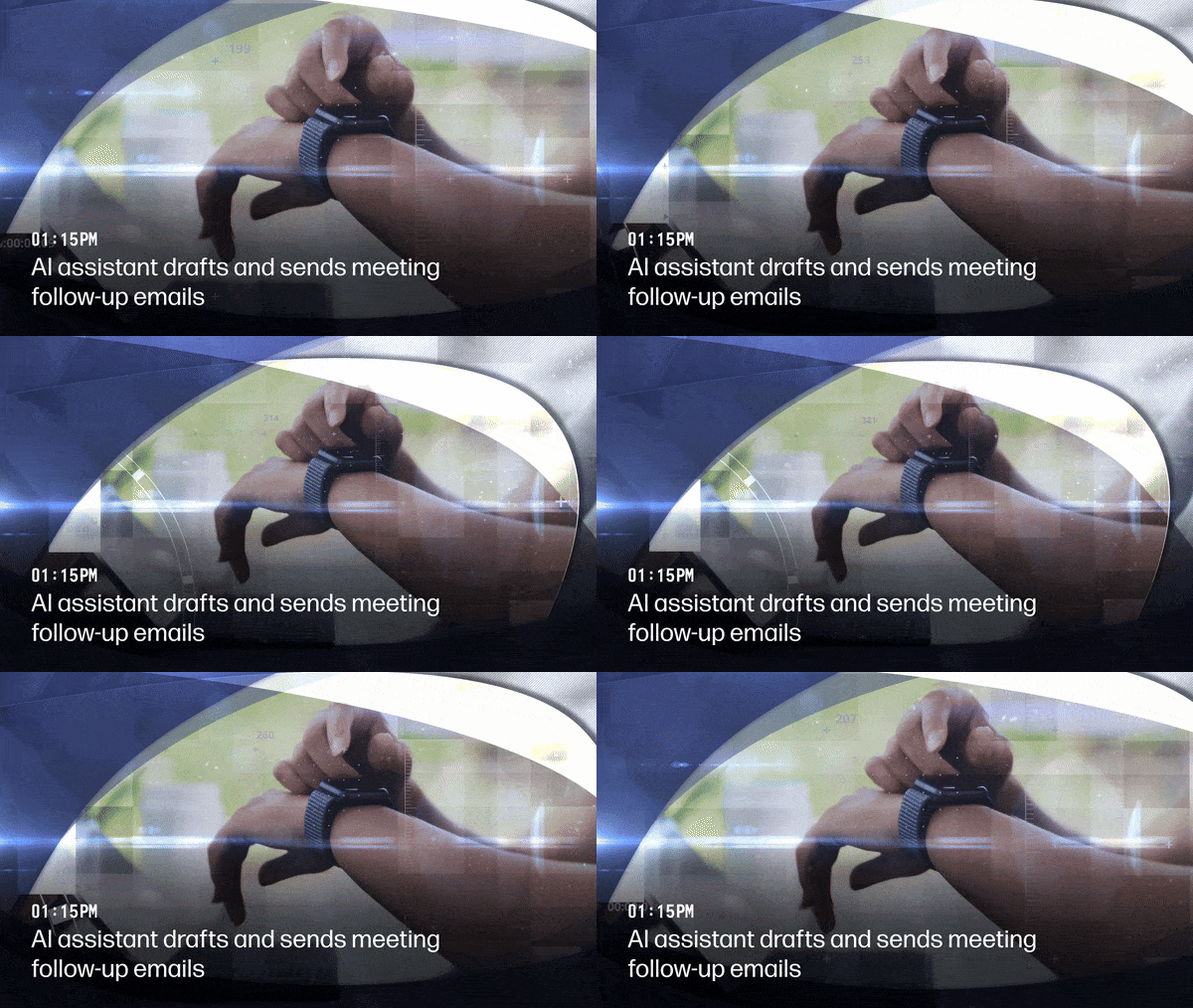
While in a meeting, Dylan asks his AI assistant to draft and send follow-up emails, including a proposal for a new project. This allows him to focus on strategic planning while the AI handles the communications.
Engaging Interactions
During a staff meeting, an AI-powered digital twin of Madam C.J. Walker joins Dylan’s team for a Q&A session. Walker shares insights into her entrepreneurship, philanthropy, and social activism approaches.
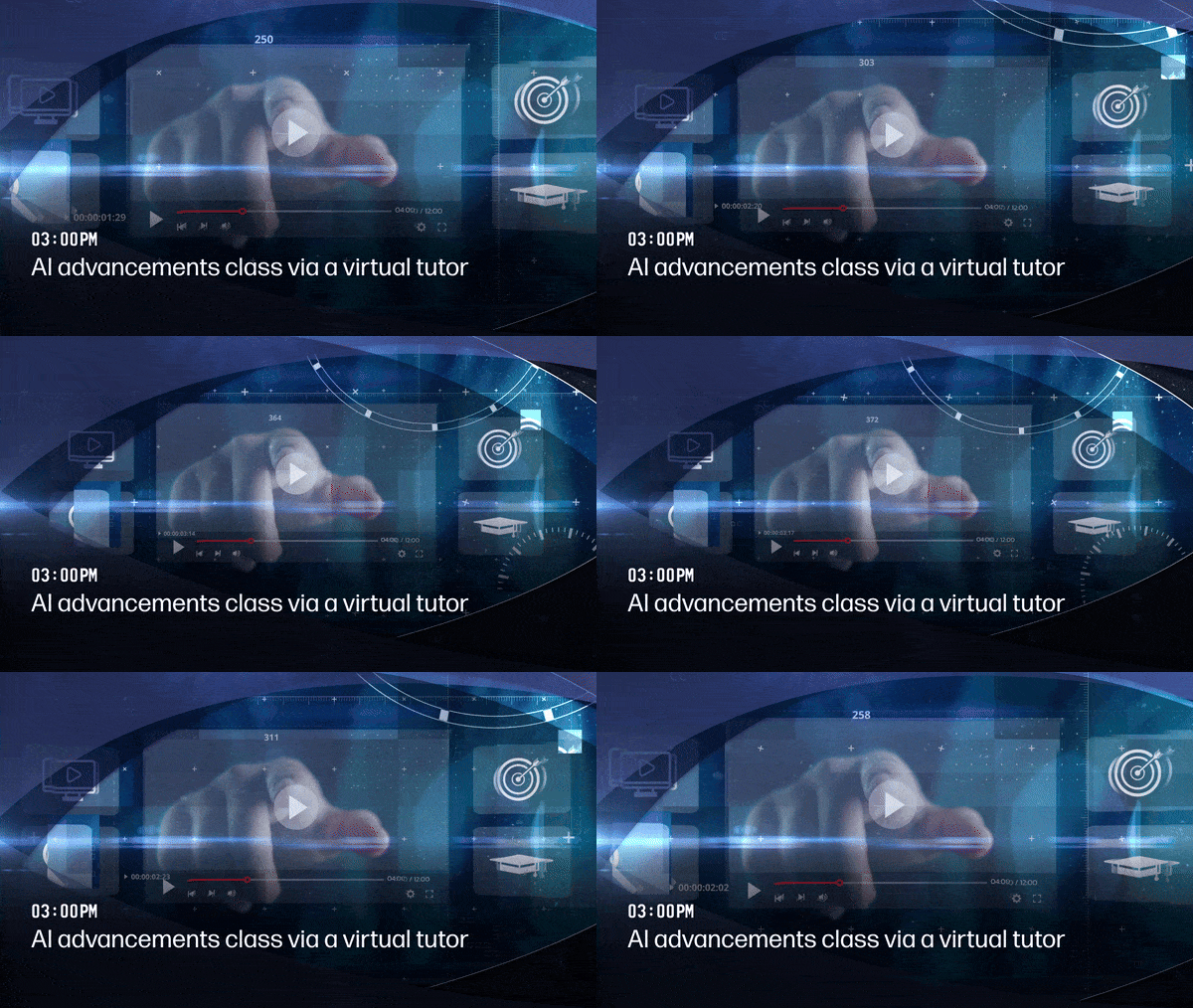
Dylan takes a break to learn about AI advancements via a virtual tutor, exploring topics like machine learning algorithms and their practical applications in his industry.
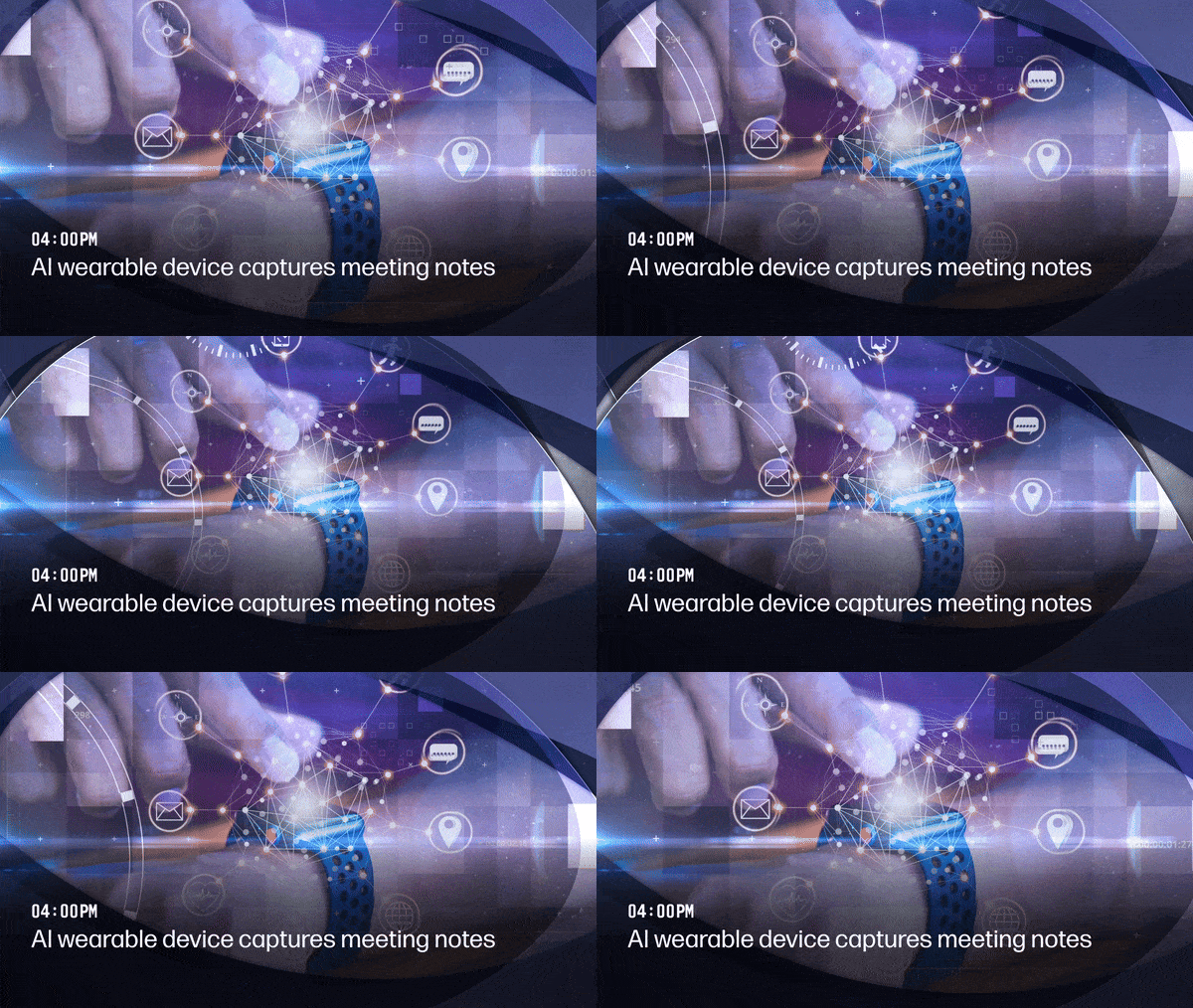
His AIwearable device discreetly reminds him of key contacts he met earlier, captures important meeting notes, and follows up on promised actions.
Evening Relaxation
As he winds down from work, Dylan’s robot sous-chef prepares a gourmet dinner, following a recipe from his meal plan, while he relaxes and catches up on personal projects.
Dylan ends his day watching a movie tailored to his tastes and current mood, with AI creating a personalized viewing experience with a custom storyline.
Generative AI can transform how to manage tasks, access information, and enjoy leisure time. It’s not just about efficiency; it’s about creating a more personalized and enjoyable experience.
How do you envision generative AI transforming your routine and bringing more ease and excitement into your daily life?
Technology is seamlessly integrated into our daily routines, and generative AI will revolutionize how we live and work. Let’s imagine a day in the not-too-distant future where generative AI doesn’t just serve as an assistant but as an active participant in every aspect of your life.
Meet Aiden. As a 26-year-old living in San Francisco, Aiden spends her time working at a healthcare startup, socializing with friends, and focusing on hobbies like fitness and reading. Here’s a peek into what a typical day for her might look like with generative AI:
Morning Routine
Aiden likes to exercise before she starts her day. Her AI trainer sends her a customized workoutplan each morning and adjusts her exercise plan based on her current fitness goals.
After she finishes her workout, Aiden is ready to start her workday. A morning meeting pops up that could have been handled as an email. Aiden sends her digitalassistant to attend the online meeting on her behalf.
Aiden’s digital twin participates by handling routine discussions and updates. As soon as the meeting is complete, her digital twin sends Aiden the meeting notes, key takeaways, and action items.
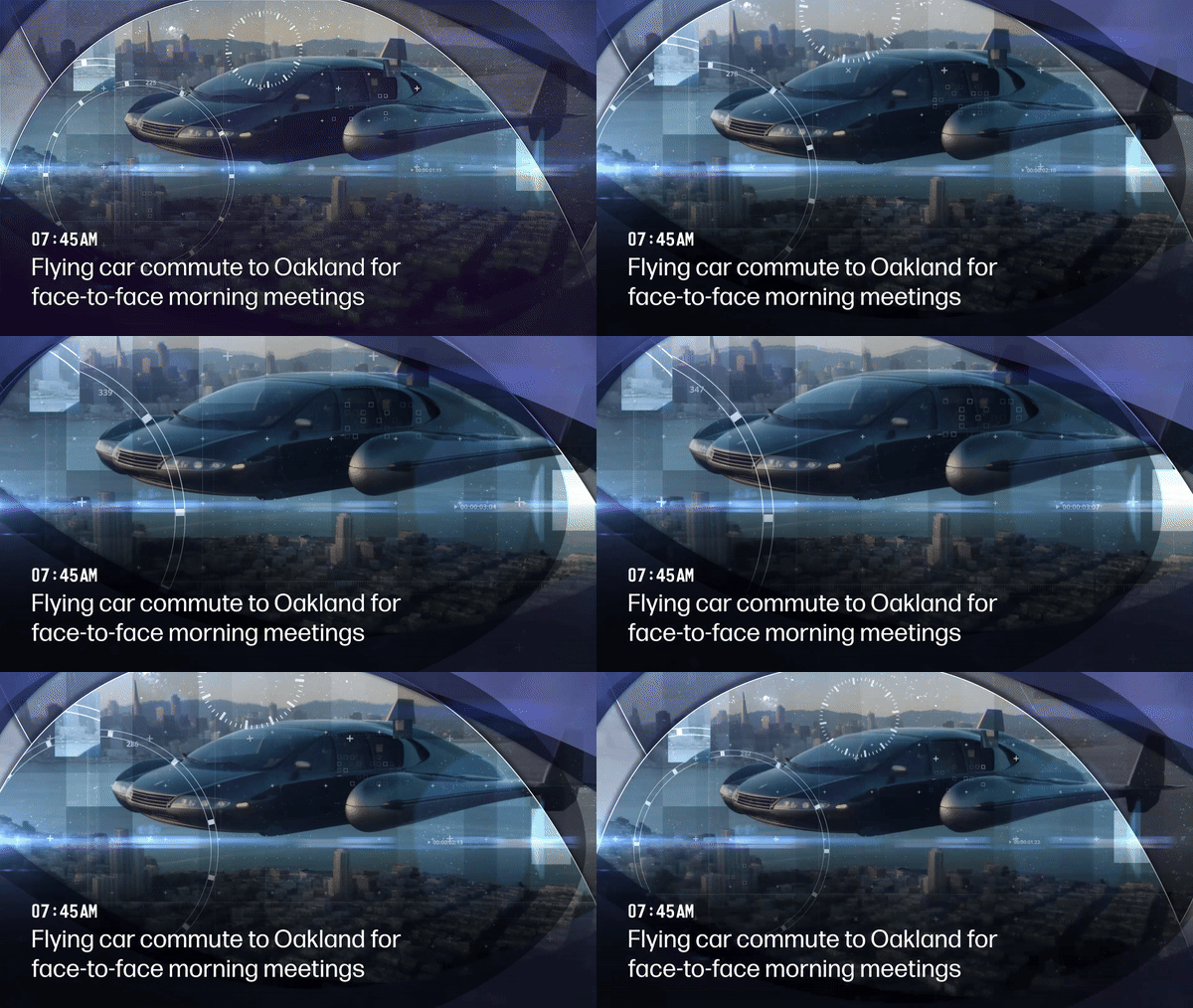
While her digital twin is in the meeting, Aiden takes a flying car to a face-to-face meeting in Oakland with her boss. With this commute, she cuts down on travel time and avoids traffic on the ground.
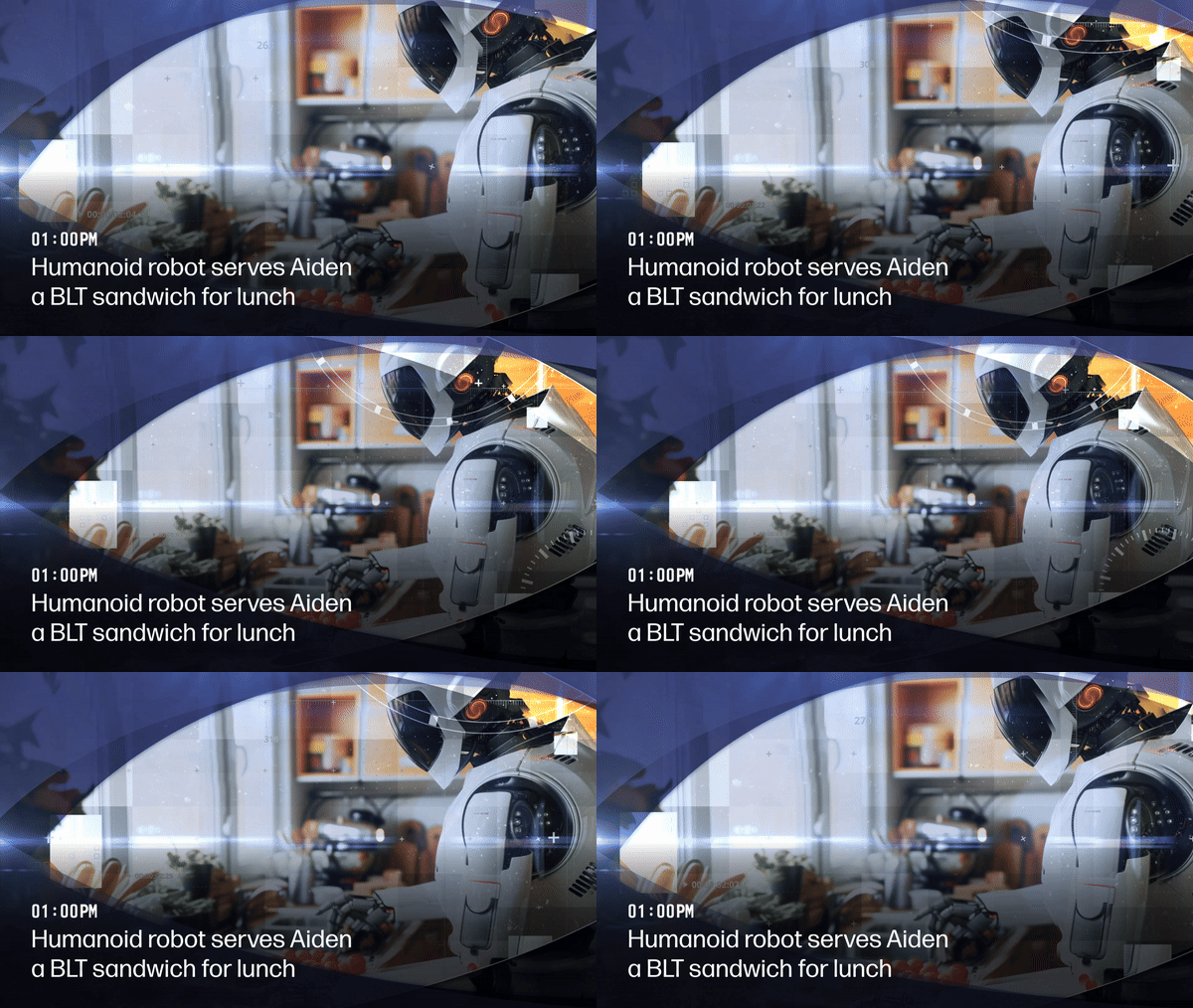
Aiden attends her face-to-face meeting in Oakland, while a humanoid robot manages her household chores back at her apartment – feeding her dog, cleaning her kitchen, folding her laundry, and preparing her lunch. By offloading mundane tasks, Aiden can focus on more high-level tasks, such as in-person meetings and sharing her latest strategy ideas.
Health, Wellbeing, and Lunch
Aiden continues to work while wearing her AI wearable. Her AI doctor monitors her health statistics and raises a couple of irregularities to Aiden’s human doctor, who is based in Sacramento. When she receives the information, her human doctor sends a report to Aiden with key takeaways, updated prescriptions, and health information.
The meeting concluded in Oakland, and Aiden got a promotion! She’s thrilled and heads back to the City for lunch. On her way home, she sends a request to her AI Assistant to invite her friends for happy hour at her apartment to celebrate her promotion.
Once Aiden returns to her apartment, she enjoys the BLT her humanoid robot prepared for lunch while she answers work messages.
Happy Hour
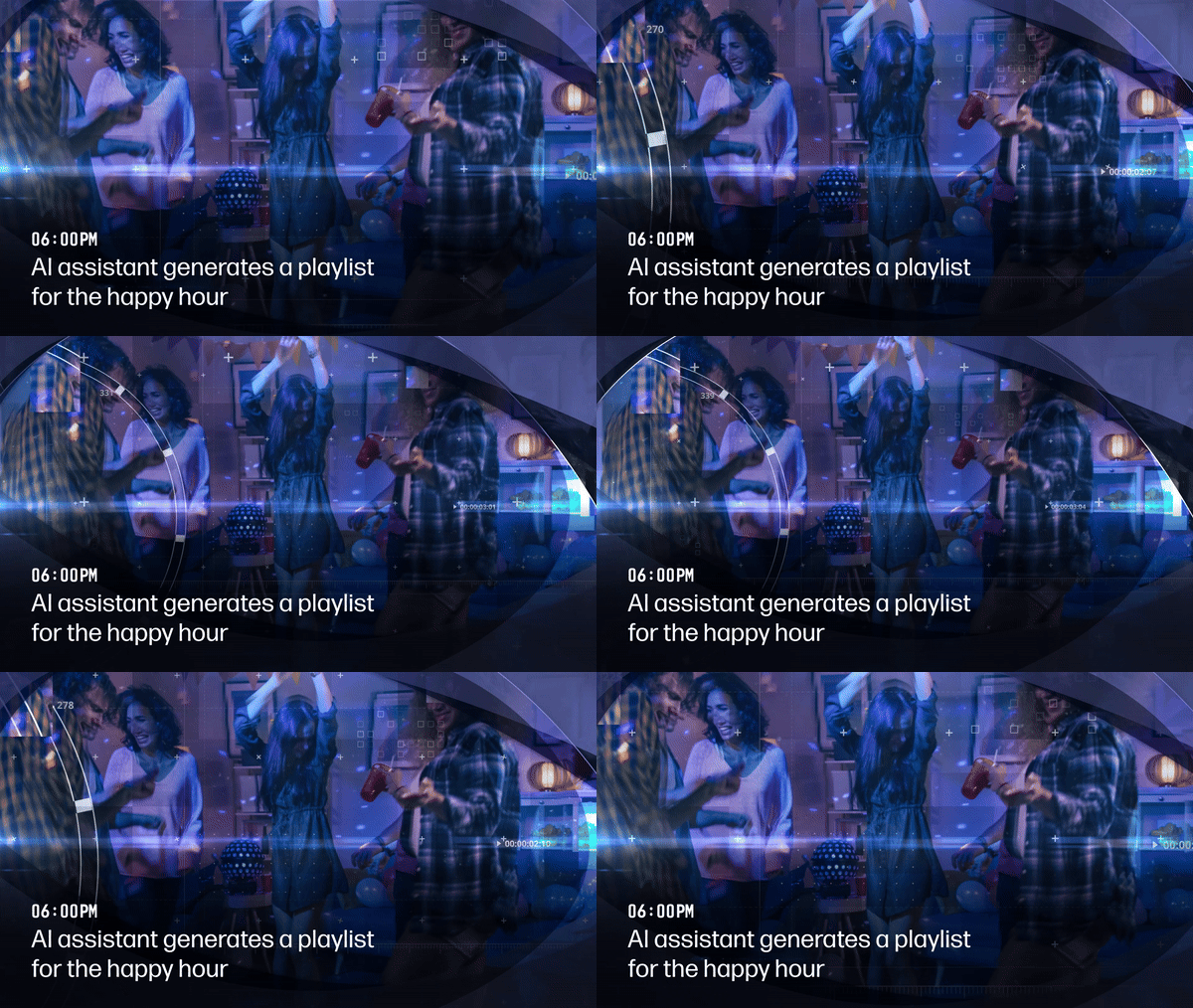
As Aiden’s friends arrive to celebrate her promotion, her AI generates a celebratory playlist for the happy hour.
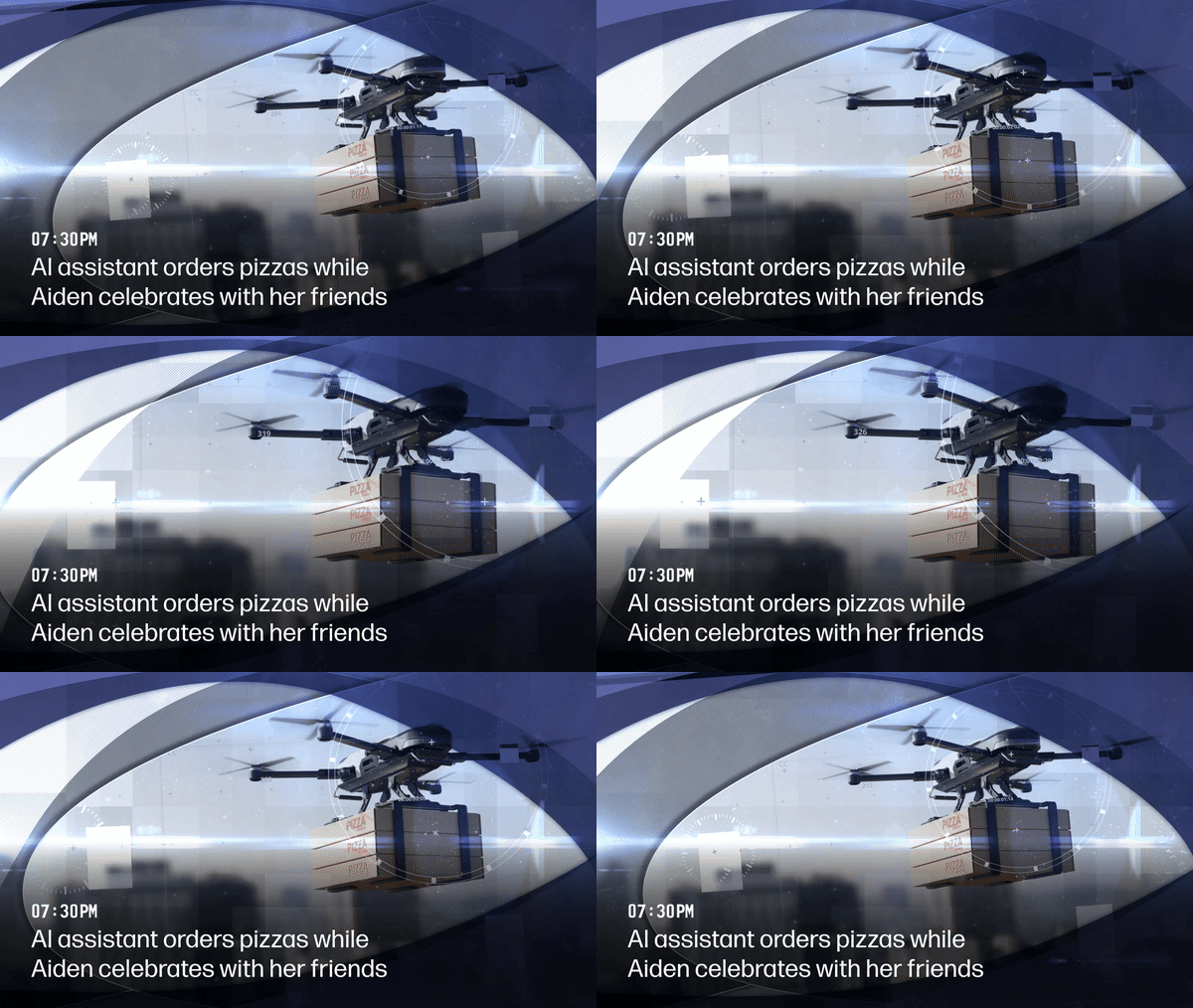
Aiden’s friends toast her accomplishment, and in the background, her AI assistant places an order for pizza delivery which her humanoid robot receives and brings inside. Enjoy!
Evening Routine
Aiden’s friends head home, and her AI assistant adapts the lighting and sound to her relaxation needs, offering her a comfortable and personalized environment to unwind. She settles into the couch to watch a series curated specifically for her previous viewing preferences.
Before she goes to sleep, Aiden delegates the household and work tasks she would like her AI assistant, digital twin, and humanoid robot to complete tomorrow.
Generative AI promises a future where technology enhances our routines, making our lives more efficient and enjoyable. From handling mundane tasks to offering personalized experiences, AI is set to become an integral part of our daily existence, turning futuristic visions into everyday realities.
How do you envision generative AI reshaping your daily life as we move toward this future?
From the early days of bulky, room-sized computers to today’s sleek, powerful smartphones, technology has continuously become more integrated into our daily lives. The rise of AI has further accelerated this transformation, enabling innovations such as voice-activated virtual assistants, smart home devices, and autonomous vehicles. Amidst these technological strides, social and home robots have emerged, bringing a new dimension to how we interact with machines in our personal spaces.
Social robots are designed to engage with humans socially, often serving as companions, educators, or caregivers. These robots can recognize and respond to emotions, hold conversations, and even provide companionship to older people or those living alone.
On the other hand, home robots are primarily designed to perform household tasks, making our lives more convenient and efficient. These robots can assist with cleaning, security, and even personal care.
As technology continues to advance, the capabilities of social and home robots will only expand, further integrating into our lives and transforming the way we live, work, play, and interact with our surroundings.
Robots in our lives
Social and home robots are emerging as valuable tools in modern society. They can play a crucial role in enhancing emotional well-being by providing companionship and reducing loneliness, particularly among older people and those living alone.
Social robots also offer practical benefits by assisting with household chores, allowing individuals more time for meaningful activities. They also support learning in educational settings by providing personalized assistance and engaging students in interactive ways.
As we integrate robots like these into our daily lives, it is crucial to understand the complexities of this technology. Ensuring that robots enhance rather than detract from our lives requires careful consideration of ethical and practical implications. Privacy concerns, the potential for over-reliance, and the need for human oversight are essential factors to address. By thoughtfully incorporating robots into our homes and social environments, we can leverage their benefits while mitigating potential drawbacks, ultimately enriching our lives meaningfully.
It can be your AI companion. As I mentioned, one of the most notable benefits of social robots is their ability to combat loneliness, especially among older people and individuals living alone. An example is Intuition Robotics. The company aims to empower older adults to live happier, healthier, and independent lives at home with an empathetic digital companion.
A study by the University of Glasgow, published in the International Journal of Social Robotics, highlighted another social robot, Pepper’s, potential to combat loneliness. Participants interacted with Pepper via Zoom over five weeks, and results showed that people disclosed more about themselves over time and felt less lonely. This interaction also improved their mood, indicating the robot’s potential as an emotional support tool. These robots can engage in conversations, provide reminders, and even offer entertainment, creating a sense of presence and interaction.
How about a robotic tutor? Researchers recently conducted an experiment involving 26 university students whose native language was Japanese. The students underwent a pre-test to assess their English-speaking skills. Based on their average scores, the students were divided into two groups: 14 students received instruction from a robot, while the remaining 12 participants received online lessons from English language teachers.
The results indicated that the group taught by the robot made fewer errors and spoke more fluently than the group taught by human tutors.
Who doesn’t want a house-cleaning “humanoid”? In addition to emotional and educational support, home robots can significantly reduce the time and effort spent on household tasks. Take Eve, for example. It is a humanoid robot that can perform a range of tasks. Equipped with cameras and sensors to perceive and interact with their surroundings, their mobility, dexterity, and balance allow them to navigate complex environments and manipulate objects effectively. This capability is particularly beneficial for busy families and individuals with physical limitations.
The future with robots
Social and home robots promise to transform our homes and enhance our daily lives in profound ways in the future. These robots can perform mundane tasks, creating more leisure time for us to spend on activities that matter most, such as pursuing hobbies, spending time with loved ones, and engaging in meaningful experiences.
According to Dr. Guy Laban, an Affiliated Research Associate at the University of Glasgow and a Postdoctoral Research Associate at the University of Cambridge, these robots can also become valuable conversational partners, crucial in interventions that support emotional health. His research highlights how robots can provide meaning and a safe space for those in need, lifting people’s moods even during challenging times like the pandemic.
Roboticists often cite Moravec’s paradox: What is hard for humans is easy for machines, and what is easy for humans is hard for machines. AI is changing that.
One idea is to use the generative AI behind ChatGPT and similar tools to complete faster training and develop more skills for robots. Efforts include ways to program robots with plain written English rather than complex code and using AI systems to have robots learn by observing.
Specialized computer chips for robots will help, too. Nvidia recently unveiled a new chip and AI software for humanoid robots. AMD, Intel, Google, and Qualcomm also designed systems for robots.
AI capabilities will also enable robots to learn, reason, and make decisions based on complex data sets. This will allow robots to perform more complex tasks and adapt to changing environments, making them more versatile and useful.
Sensory abilities such as sight, touch, and hearing will enable robots to navigate their environment more effectively, interact with humans more intuitively, and perform more complex tasks that require precise sensory input.
Ultimately, the goal is not to eliminate human-to-human interaction but to create more space for it. Ethics must be at the forefront as we integrate these technologies into our homes. Understanding how humans establish healthy and constructive relationships with robots is critical to ensuring their ethical and responsible deployment. This careful consideration will help us harness the benefits of social and home robots while safeguarding our values and well-being.
In 2016, I wrote an article titled “Robots Aren’t Taking Our Jobs, They’re Transforming Them,” in response to a flurry of articles I read about robots taking over the workforce in the coming years. Now, nearly four years later, we see the same headlines.
While innovation is happening at an astonishing rate, we’re still nowhere near a Westworld-esque future where robots and automation rule. Robots have come a long way, but still need human expertise and skills to function. Therefore, the outcome is less likely a replacement of humans, but rather a reskilling.
There is a valid concern over the possibility of increasing inequality in our automated future. Once robots enter the workforce fully, most highly-skilled, educated workers are likely to experience a smaller shift in responsibilities than their less-skilled, educated counterparts. In order to adapt, those with fewer skills and education will likely have to expand their abilities to either empower them to work with robots or fall within the realm of abilities that robots currently lack, such as emotional intelligence and creativity.
For those that adapt to work alongside robots and automation, most will experience an increase in job quality, or even safety. For example, customer service professionals have been using AI chatbots for a few years now, and chatbots like bold360 allow the AI to answer the simpler questions, giving the humans more time to focus on complex customer issues. For example, HP’s virtual agent helps its support team sort through nearly 600 million technical support requests each year. There are also bomb disposal robots that use VR to allow soldiers to pilot them while disarming bombs from a safe distance.
It’s predicted that, despite disruption, there is still a net positive outlook for jobs. In other words, though 75 million current roles may be displaced by technology, 133 million entirely new roles may emerge simultaneously. These roles will likely be of two categories, one that deals predominantly with emerging technologies, like IT Services or AI Specialists, and one that provides the exclusively human touch, such as Designers or Human Resources.
Other reports, like this one from Brookings Institute, find that approximately 25% of US jobs are likely to be affected by automation. At face value, this number can seem concerning, but it’s important to remember that the process of implementation will still take time.
In the time it takes for the world to fully implement robots and automation in the majority of work systems, humans will be able to adapt and learn new skills, especially if they are empowered by their employers. Some are calling this the “Skills Revolution,” which refers to the fact that the skills required in the workforce are changing at a rapid pace. In the face of this, workers must embrace continuous learning opportunities, and employers must provide ongoing training to future-proof their employees.
To do just that for your employees, consider the following steps:
Pay attention to trends
As a futurist, I am constantly on the lookout for new Megatrends and patterns that may affect our future. This skill has served me and many others well over the years and has helped HP prepare itself for the years to come.
When it comes to future-proofing yourself in the face of automation, pay attention to new careers and job opportunities. It’s predicted that 65% of the jobs that Gen Z will perform don’t even exist yet. If you are able to spot a job trend and properly prepare for it, you could help usher in an entirely new career field.
Embrace lifelong learning
Gone are the days where you could learn a set of skills, perform them for the rest of your life, and earn a living. Nearly all careers require the occasional training or upskilling, but soon it will be necessary to dedicate time to learning on an ongoing basis. For some, this could mean improving their existing abilities and adding complementary skillsets, but for others it could mean learning an entirely new skill. It’s predicted that 42% of required skills will change by 2022, requiring the average worker to adapt to new tasks such as analytical thinking and negotiation. To adjust to these new skills by 2022, employees will need 101 days of training on average.
Thankfully, there are plenty of resources that will help, like Coursera and Lynda, as well as an emergence of recognized online higher education.
Maintain a growth mindset
How do you cope with challenge and difficulty? Do you give up when you feel that something is out of your range of abilities, or do you accept it as a learning opportunity? To maintain a growth mindset, you must learn to embrace challenges and failure as opportunities for growth, rather than letting them stop you in your tracks.
When you develop a growth mindset, you’re able to have the confidence to push through challenges, and this persistence will help you prepare for our automated future. Whether this is a small shift in your career or a larger transition to an entirely new field, a growth mindset will help you see things through a positive lens.
Automation technology is moving into the workplace with unstoppable momentum. As bots and robots take on more kinds of tasks, will they eliminate jobs? Or will they instead generate opportunity for workers to leverage their own strengths and manage their tireless mechanical colleagues?
In today’s workforce a factory line worker, a university professor, and a customer service rep are guaranteed to have one thing in common: a job that will be transformed by the presence of robots and AI in the coming decade. Will that worker be able to change along with it?
“It’s the end of the world as we know it.” The iconic song from rock band R.E.M. has been the soundtrack for many dark days since its original release in…wait for it…1987. It was a simpler world then…wasn’t it?
Actually, there’s ongoing debate over whether we are living in an increasingly dangerous world, or whether 24-hour news cycles and social media are decrying global crime conditions that may actually be stable or in decline. Still, the news delivers a daunting barrage: terrorist attacks, gang murders, warring militant groups, gun violence and cybercrime. It can be hard to know where to focus and how to stay safe both in the physical and digital environments.
Better news: AI and Robotics in public safety and security present a growing, diverse and powerful force for good against an evolving threat landscape. From tireless patrol robots to game-theory based monitoring of harbors and airports to predictive analytics at IoT scale…security technology is helping law enforcement, businesses, communities, and citizens stay safe and quash criminal activity.
Robo-guards: At a data center or street corner near you
There’s a long tradition of retired police and military personnel joining the civilian security workforce. Military robots are following suit, being deployed as extensions of police departments and security staffing teams. Robots are increasingly being used as smart, and uber-efficient patrol guards in businesses, institutions, city streets and transit hubs. They have become affordable enough to justify cost even for smaller businesses. The global security robots market is likely to reach $2.71 billion in 2021, according to Arcluster, in the first-of-its-kind report on the Worldwide Security Robots Market (2016–2021).
There are numerous examples of military-style robots reporting for duty. The Los Angeles Police department handles car bombs with a 50-foot telescoping arm on their burly Bomb Assault Tactical Control Assessment Tool (BatCat), built on a Caterpillar tractor chassis. In Cleveland, a tiny version, the 12-inch robot Griffin, that under cars and behind dumpsters to scan for hidden explosive devices.
South Korea will be making extensive use of robo-guards to enforce security at the 2018 Olympic Games in Pyeongchang. In Greece, aquatic rescue robots have sped flotation devices across the water at 20 mph to Syrian refugees stranded by capsized boats. In Japan, suspicious drones flying over sensitive areas are scooped up by defense drones wielding what are essentially six-by-ten foot butterfly nets — the better to avoid falling debris that would result from shooting at them and destroying them in flight.
One company with early mainstream momentum is Knightscope, makers of the Autonomous Data Machines (ADMs). They are 4-to-5-foot tall robotic security guards, able to monitor and report activity, stream video, and sniff out cybercrime, detecting devices that are trying to access data on a network. They can detect and alert authorities to the presence of certain kinds of items — guns, for example — a person may be carrying into a public area.
While their AI-driven capabilities are impressive, these robo-guards are at their best when they are feeding insight to, and taking direction from, their human counterparts. And when they are visible in public spaces, it will be natural for them to fulfill other typical aspects of a human security guard’s role: being an greeter for a business or city; providing directions, and gathering input from members of the community or business they serve.
AI: The brains of the operation for tech-enabled public safety
Artificial Intelligence is the other half of the story. Oceans of data are generated daily, both by humans and by the global mesh of devices that interact with us and with each other.
There is tremendous promise in the ability to aggregate and crunch that data and turn it into usable insights for public safety officials. AI can help us pre-empt crime by recognizing patterns, finding anomalies, and using predictive analytics to anticipate the likely next moves of terrorists and criminals from the physical and digital realms.
Digital transformation in the public safety field is no small challenge. It requires legacy IT systems and entrenched processes and behaviors. But the CIA, recognizing an existential need to modernize, did just that a few years ago. It moved onto the commercial cloud a few years ago and is now able to instantly and securely inter-operate across all 16 of its agencies and all levels of classification — a development its leadership describes as “game changing.”
Collaborating with AI and Robots to cut cost and improve safety
AI and robotics have much to offer security professionals who are responsible for the safety of people, places, and things (physical and digital.) There’s no question that protecting human life, sensitive data and other assets are worthy of our investment. But resources are finite, and there is tremendous value in using technology to replicate elements of human judgement, observation and insight.
Accenture recently asked 165 technology leads in police, justice and intelligence departments worldwide to identify the biggest challenges they face today. Their top three answers were: financial constraints, increased citizen expectations and the need to modernize operations. Digital transformation is essential to overcoming those challenges — as is adopting a proactive, preventive security strategy to ensure greater safety for individuals and communities everywhere.
There is constant innovation and imagination flowing through the building at the HP Robotics Lab in Boise, Idaho. During my most recent visit to the lab, I experienced that magic first hand, so we decided to try and capture it on video.















 Andrew Bolwell