Using trends to create a sustainable future

Thinking like a futurist in this era of constant change provides an incredible opportunity to create the future we want. By staying on the lookout for trends and weak signals shaping the world around us, futurists can identify future opportunities that lead to consequential disruption.

But what happens if you miss these trends?

In the best-case scenario, missing these signals may simply leave you reacting to disruption and working hard to catch up. At worst, however, you are in danger of becoming irrelevant and going out of business. The corporate graveyard is littered with companies that didn’t react fast enough to the changes in the world around them.

Blockbuster

Founded in 1985 by David Cook, Blockbuster was an entertainment staple in the 1990s and early 2000s. At its peak, there were 9,094 stores globally. Consumers would flock to their local stores to rent movies and buy snacks for their Friday nights, making Blockbuster a fixture in households worldwide.

After a few CEOs and missteps, Blockbuster made its biggest blunder when it failed to acquire Netflix in 2000. Netflix saw the rise of DVDs as a significant opportunity and launched its original mail-based DVD rental business in 1997. Because DVD players were not yet standard in the average household, Netflix partnered with HP, Sony, and Toshiba to offer free DVD rentals to new DVD player buyers. Netflix grew in popularity but wasn’t yet profitable, so its leadership approached Blockbuster to propose an acquisition, which the movie-rental giant declined.

Netflix persisted, confident that DVD players would gain popularity, and that confidence paid off as the company became profitable in 2003. The following year, Blockbuster began its DVD-by-mail service seven years after Netflix. From 2007 to 2010, Netflix continued to monitor trends and take calculated risks that majorly paid off, starting their on-demand video streaming service and signing deals with industry giants from Disney to Paramount.

On the other hand, Blockbuster failed to innovate in time and had to play catch up with Netflix while rapidly losing customers. That failure to embrace change, paired with severe debt, became the unraveling of Blockbuster, which declared bankruptcy in 2010 and closed all but one store.

Toys “R” Us

Later considered a category killer, Toys “R” Us had a humble beginning as a baby-furniture retailer in Washington, D.C., in 1948. Initially named “Children’s Bargaintown,” founder Charles P. Lazarus changed it to Toys “R” Us in 1957, dedicating the store entirely to toys and moving it to Rockville, Maryland. Throughout the next half-century, Toys “R” Us experienced incredible success, building a powerful brand, exploring spin-off clothing stores, and assisting in the launch of several pop culture games and toys.

By the late ‘90s, Toys “R” Us began to feel the pressure from growing competition, like Walmart and Target, which eventually led to the closure of its spin-off, Kids “R” Us, in 2003. While competing companies created their e-commerce sites, Toys “R” Us entered an exclusive 10-year partnership with Amazon in 2000. This partnership, while successful, prevented Toys “R” Us from developing autonomy over its online presence, which became a severe problem when Amazon elected to grow its toy category and allow competitors to sell on its platform.

Toys “R” Us sued Amazon and won, but it was too late. The once powerful toy seller had lost out on the essential opportunity to create its e-commerce website, and by the time it had one, it fell far behind what competitors had to offer. Toys “R” Us not only failed to keep up with e-commerce, but it also ignored changing consumer habits and buying preferences, instead focusing on offering the lowest prices, which proved unsustainable. Finally, Toys “R” Us failed to create an enticing in-store experience, instead deciding to cut costs. Unable to provide a satisfying in-store experience and struggling to keep up with e-commerce innovation, Toys “R” Us filed for bankruptcy in 2017 and closed all stores in 2018.

In 2019, the company rebranded as Tru Kids post-bankruptcy, opened new stores, and partnered with Target to sell toys. By 2020, the agreement had lapsed, and Amazon took on Target’s role as a fulfillment partner. In 2021, the financial impact of the COVID-19 pandemic closed its stores again. In 2022, the company plans to open stores within all U.S. Macy’s by October 15.

Borders

The first Borders bookshop opened in Ann Arbor, Michigan, in 1971, by brothers Tom and Louis Borders. The company didn’t open its second store in Beverly Hills, Michigan, until 1985 and was subsequently acquired by Kmart in 1992. Three years later, Kmart spun off Borders into a new company named Borders Group. Through the 1990s and early 2000s, the Borders Group expanded globally, with stores and franchises everywhere from Singapore to Puerto Rico.

Initially, Borders stayed ahead of innovation with a robust inventory system that could predict consumer behavior. However, when the industry began to go digital in the early 2000s, Borders began to lose its grip, leaning heavily into CD and DVD sales instead of working on its internet presence. Competitors like Barnes & Noble focused on online sales and digital innovations like e-readers, while Borders chose to outsource its online operation to Amazon, which rapidly became a competitor.

As competitors grew and embraced innovation, Borders steadily lost revenue, and its last profitable year was 2006. After constant financial trouble, Borders filed for bankruptcy in 2011, closing all its stores except those operating in the United Arab Emirates, Oman, and Malaysia, which other owners took over.

In the examples above, it’s clear that while some companies missed the boat on specific innovations, others were on the right track. They did this by paying attention, listening to the true needs of their customers, and prioritizing learning from all failures.

So how can you avoid missing trends?

I may sound like a broken record, but thinking like a futurist is the best way to avoid being left behind by innovation. Pay attention to weak signals, explore emerging trends and technologies, and adopt an innovative mindset. You need to have a good sense of what you want in the future. Ask yourself:

  • What outcomes am I looking for?
  • What inspiring vision and goals do I need to put in place?

Your goals need to be bold enough that they cause you to work backward to discover what disruptions will get you there, rather than taking today’s solutions and incrementally improving them over time.
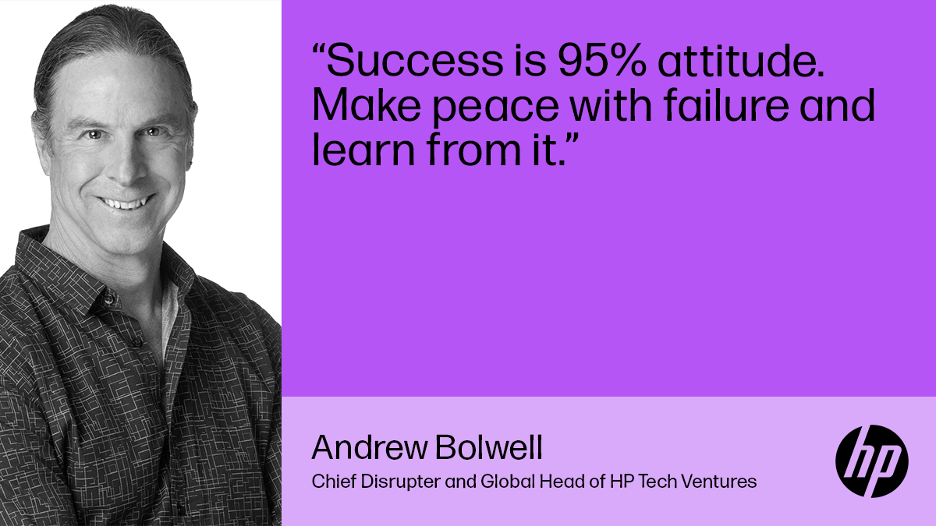
Visualizing outcomes is essential, and so is having an open, innovative mindset and attitude. Success is 95% attitude. Make peace with failure and learn from it instead. Think boldly, and never give up. Having the right attitude is essential to staying ahead of all this change and creating the future you seek.

Finally, remember: the future hasn’t happened yet. The future is something that we all get to create. It is the result of all the choices that we make today.

What future will you create?

Blog Futurism & Technology Trends Innovation Leadership

E3 Reckoning: Equality, Equity, and Environment

The COVID-19 pandemic shined an unflattering light on the need for further advancements in equality and equity, as well as growing concerns for sustainability post-pandemic. As our team began to study the cause and effect of these dire circumstances, we noticed three key trends and opportunities that will impact all of our futures.

1. From digital divide to digital parity

Nearly half of the world’s population remains unconnected to the Internet and locked out of opportunity. Inequality in access to the Internet and communication services, known as the digital divide, affects 52% of women and 42% of men worldwide. That gap becomes even more pronounced in rural regions of the world or here in the U.S. in urban locations that lack affordable and reliable access to broadband Internet. In Africa, only 39.3% of its inhabitants have Internet access, compared to 87.2% of Europeans and 94.6% of Americans.

COVID-19 further highlighted this issue when it pushed us all to work and study from home. Take education, for example. Pre-COVID, roughly 260M children were not in school, which soared to 460M. However, according to the United Nations, almost half of the earth’s inhabitants — some 3.6 billion people — did not even have access to the Internet at the end of 2019. It is nearly impossible to work or study from home without access to the Internet.

There’s also a cost to digital equity. The U.S. alone loses more than $130 million a day in economic activity when people aren’t online.

Closing the digital divide will take trillions of dollars, and no one company can solve it alone. Yet digital equity is indispensable for exercising fundamental human rights, including access to education, healthcare, and economic opportunity.

The HP Refresh Program aims to empower communities by providing schools with the resources to equip every student with the tech they need. HP software helps organizers restore previously used PCs, providing a workaround that avoids dipping into already-strained school district budgets. Plus, this helps to reduce tech waste by keeping devices in good condition and in use.

Microsoft also recently expanded their Airband Initiative, connecting rural areas to eight cities: Atlanta, Cleveland, Detroit, Los Angeles, Milwaukee, New York City, El Paso, and Memphis. The Airband program provides affordable internet access and computers. Microsoft also intends to make devices more affordable by providing free and low-cost refurbished computers and tablets to communities of color. Microsoft is partnering with companies like PCs for PeopleHuman-I-T, and PlanITROI, whose Digital Dreams Project provides refurbished devices to K-12 students in need.

HP has also set very aggressive goals to help bridge the divide by 2025:

  • Enabling better learning outcomes for 100 million people by 2025, since the beginning of 2015
  • Contributing 1.5 million employee volunteering hours by 2025
  • Contributing $100 million in HP Foundation and employee community giving by 2025

2. From business capital to human capital

According to the Credit Suisse Global Wealth Report, the world’s richest 1 percent, those with more than $1 million, own 43.4% of the world’s wealth. That disparity only grows greater when you look at it by class and race.

According to a McKinsey study, Black workers make approximately 30% less than their white co-workers. At the same time, Latinx Americans make just 73 cents for every dollar earned by white Americans.

At HP, we believe leveling the playing field is critical. We believe in creating a culture of inclusion, equality, and empowerment for our employees. We also believe in creating a platform for human rights that extends beyond HP, where we will strive to drive policy changes that fight racism, advocate for human rights, and advance social justice across the globe.

Diversity and inclusion are fundamental drivers of innovation and creativity. HP was built on the values of diversity and inclusion, fairness, and equality. We embed diversity, equity, and inclusion into everything we do. HP’s Board of Directors is one of the most diverse of any U.S. technology company. We encourage our suppliers and business partners to commit to diversity, equity, and inclusion goals and invest in programs and partnerships that build the pipeline for diverse talent. We are committed to creating inclusive technology that affirms human dignity, promotes independence, and unleashes creativity.

Our 2025 goals include:

  • Double the number of Black and African American HP executives (VP level and above) in the U.S. by 2025
  • Developing skills and improving the well-being of 500,000 factory workers by 2025
  • Doubling factory participation in our supply chain sustainability programs by 2025, compared to 2015

One of those programs helping us achieve these goals is HP LIFE, a free, skill-training program for entrepreneurs, business owners & lifelong learners. HP LIFE is intentionally accessible offline — given the current digital divide. Since 2012, more than 1 million people have taken courses.

3. From resource consumer to environmental steward

Corporations across the globe are stepping up and making more meaningful goals to battle climate change. Climate impact on business and supply chain and growing demand from customers to buy from and work with companies that better align with their values drive these efforts.

Nielsen studies show that 66% of consumers would spend more for a product if it came from a sustainable brand, and 81% of global consumers feel strongly that companies should help improve the environment.

At HP, we have long been proponents of climate action. Our mission is to drive toward a net-zero carbon, fully regenerative economy while engineering the industry’s most sustainable portfolio of products and solutions. In April 2021, we set new goals that outline our comprehensive plans to combat climate change, focused on carbon emissions, circularity, and forests. We are also working to address the fiber of non-HP paper used in HP printing products and services through initiatives like the HP Sustainable Forests Collaborative and are restoring, protecting, and improving the management of over 200,000 acres of forest in Brazil and China. Being an environmental steward is not only good business but also smart and impactful business.

Our broad goals include:

  • Using 30% post-consumer recycled content plastic across HP’s personal systems and print product portfolio by 2025.
  • Eliminating 75% of single-use plastic packaging by 2025, compared to 2018
  • Recycling 1.2 million tonnes of hardware and supplies by 2025
  • Achieving zero deforestation associated with HP brand paper and paper-based product packaging
  • Using 100% renewable electricity in our operations by 2025

We have an opportunity as technologists, entrepreneurs, and global leaders to drive the change needed to create a more balanced, equitable, and sustainable future. What steps will you take this year?

Blog Futurism & Technology Trends

Answers to 4D Printing’s Top Questions

Did you know the 4D printing industry is expected to be worth upwards of $537 million by 2025 and grow by a CAGR of 42.95% between 2019 and 2025? This is being driven by the need to reduce the costs of manufacturing and processing in the face of an increasing focus to ensure a sustainable environment. Today, I’m diving into the top 4 questions about 4D printing:

Picture1

  1. What is the difference between 3D and 4D printing?

    4D printing is similar to 3D printing since it uses the same techniques of computer-programmed “printing” of layered materials to create a three-dimensional object. However, during the fabrication process of 4D printing, the printed produce reacts to external stimuli — heat, water, chemical, pressure, etc. — to self-assemble or change

    It’s a further evolution of 3D printing and is set to completely alter how we create and produce materials by adding the dimension of transformation over time into the creation process.
  2. How does 4D printing work?

    4D printing involves 3D printing objects that can self-assemble and transform based on some external stimuli. For example, a table that assembles itself when you touch a part, or an airplane wing that transforms with wind speed, or a temperature-activated cardio stent.

    In order to make something “4D” — assemble itself or change precisely under certain conditions — a precise geometric code is used based on the object’s angles and dimensions, as well as measurements that dictate how it should change shape when interacting with outside forces.

    It’s all about self-assembly. The ability to program a particular area of the material and be able to activate it through heat, water, chemical reaction, pressure and many other external influences to actually do self-assembly. Altogether these represent what I believe will be the next industrial revolution and a fundamental transformation in manufacturing overall.

  3. What is 4D printing used for?

    4D printing technology is not merely a novelty, but a necessity due to increasing urbanization caused by world population growth that is expected to reach 8 billion people over the next 30 years. This will cause an increase in “megacities — or cities with populations over 10 million people — from 10 in 1990 to 41 over the next ten years. This rapid urbanization will put an incredible demand on manufacturing and the distribution of materials.

    Numerous organizations are pouring money in 4D printing research and development, including Airbus SAS who is using 4D-related “smart” material that reacts to temperature to cool jet engines and a wing that morphs according to aerodynamic conditions to decrease air resistance. Briggs Automotive Company is developing a morphable wing for its supercar that can adjust to external weather conditions and automatically adjust itself to provide maximum downforce to the car.

    As many of you know, I am a drone aficionado. When I saw this research, I was excited. Engineers at Rutgers University–New Brunswick are fabricating smart materials in 4D that will transform according to their environment. This leads to shock-absorbing materials that will change as needed for use in aircraft or drone design for parts like wings that need to self-alter for varying performance.

    4D printing will also have a profound impact on healthcare of the future. It could be used for tissue engineering, self-assembling human-scale biomaterials, design of nanoparticles, and nanorobots for chemotherapy.

    It doesn’t stop there. You’ll see 4D printing transform and disrupt a variety of industries including consumer products, healthcare, automotive, construction, and aerospace

Overall, how 4D printing evolves in the future is up to the innovators and makers of the world. We must remain open to fresh ideas, new tools, and collaboration from all industries

ICYMI: Answers to Industry 4.0’s Top Questions

Blog Futurism & Technology Trends Innovation