Humanoid robots

AI, Robotics & Biotechnology: 3 Game-Changing Technologies Transforming 2025

At the beginning of the year, I outlined 10 technology trends and weak signals I felt would have a transformative impact on 2025 and beyond. These emerging innovations represent not just incremental improvements but potential paradigm shifts that could fundamentally alter industries, economies, and societies.

These trends fall into three categories for me:

Game Changers are set to have a significant impact on industries, societies, and markets in 2025 and beyond. Will transform how we work, learn, and live.

Foundational Breakthroughs are major technological advancements needed for game changer technologies to succeed.

Weak Signal Wild Cards present the opportunity to be a future game changer or a foundational breakthrough but still in a nascent stage with a number of headwinds to overcome.

Today, I’m diving into the game changers — AI, Humanoid Robotics, and BioTech & Synthetic Biology, the opportunities and the questions they raise.

How will AI evolve beyond chatbots to digital companions?

Artificial intelligence is rapidly evolving beyond the familiar chatbot interfaces with which we’ve grown accustomed to. The next wave of AI development promises to fundamentally reshape how we work, interact, and live our daily lives.

Market Context: 77% of companies are using or exploring the use of AI in their businesses, and 83% of companies claim that AI is a top priority in their business plans. 

Will AI co-workers be your new colleagues?

The workplace of tomorrow will feature AI co-workers that not only answer questions but also actively collaborate on complex projects. These AI co-workers will understand context, maintain continuity across conversations, and contribute meaningfully to team dynamics. Unlike today’s AI assistants that operate in isolation, these systems will integrate seamlessly into existing workflows, attending meetings, managing projects, and even mentoring junior team members.

What This Means for You: Expect to see AI assistants to manage entire project workflows, attend meetings on your behalf, and maintain context across weeks or months of collaboration.

Can personalized AI become your next best friend?

Personalization is evolving beyond recommendation algorithms to AI systems that genuinely comprehend individual preferences, habits, and objectives. These personalized AI companions will learn from your behaviors, anticipate your needs, and adapt their communication style to match your personality. They’ll serve as personal advisors, creative collaborators, and decision-making partners across every aspect of life.

Will digital clones become a digital you?

Perhaps the most intriguing development is the emergence of digital clones — AI representations that can think, speak, and act like their human counterparts. These aren’t simple avatars, but sophisticated AI systems trained on personal data, communication patterns, and decision-making processes. Digital twins could attend meetings on your behalf, manage routine correspondence, or even continue your work in your absence.
 
Andrew Ng, along with DeepLearning.AI and RealAvatar, created a digital twin of himself.

Can AI wearables offer you intelligence at your fingertips?

The integration of AI into wearable devices is creating new forms of ambient intelligence. Smart rings, glasses, and clothing embedded with AI chips will provide real-time insights, health monitoring, and contextual assistance without the need to reach for a phone or computer. These devices will understand your environment, mood, and activities to provide perfectly timed interventions and support.
 
For example, news recently broke that Amazon acquired Bee, an AI wearables startup best known for a $50 wristband and companion app that records and transcribes nearly everything a user (and anyone within earshot) says.

Will digital AI become physical AI?

The same large language models powering today’s digital AI systems are being adapted to control robotic bodies. AI-enabled robots are now able to comprehend complex instructions, reason about their environment, move around the world like humans do, and interact naturally with us. The result is robots that can be taught new tasks through conversation rather than programming, and learn like humans do, through experience.

What are humanoid robots, and when will they arrive?

The convergence of multiple technological advances is bringing humanoid robots closer to mainstream reality. This isn’t science fiction — it’s an engineering challenge being solved through incremental breakthroughs across multiple domains.
 
Market Opportunity: The global market for humanoid robots is projected to reach $38 billion by 2035.

Large Language Models and Robotics

The same large language models powering today’s AI chatbots are being adapted to control robotic bodies. These foundational models enable robots to comprehend complex instructions, reason about their environment, and interact naturally with humans. The result is robots that can be taught new tasks through conversation rather than programming.

What Is Multimodal Sensing and Understanding?

Modern robots are developing human-like sensory capabilities through advanced computer vision, tactile sensors, and audio processing. This multimodal approach enables humanoid robots to understand their environment in rich detail, perceiving obstacles, sensing textures, and interpreting commands or environmental cues. The integration of these senses creates a more intuitive and responsive robotic experience that mimics natural human perception.

How Will Recent Dexterity Breakthroughs Come Into Play?

Recent advances in robotic manipulation are solving one of the field’s longest-standing challenges: dexterous hand control for humanoid robots. New approaches to finger movement, grip strength, and object manipulation are enabling humanoid robots to perform delicate tasks that were previously impossible. From threading needles to preparing meals, robots are gaining the fine motor skills necessary for everyday tasks that require human-like dexterity.

Will Edge Computing Improve Real-Time Decision Making?

The deployment of powerful computing directly within robotic systems is reducing latency and improving real-time decision-making. Edge computing allows humanoid robots to process information locally, enabling faster responses and reducing dependence on cloud connectivity. This advancement is crucial for robots operating in dynamic environments, where split-second decisions are essential for natural human-robot interaction.

FREQUENTLY ASKED QUESTIONS — HUMANOID ROBOTS

Q: When will I be able to buy a humanoid robot? 
A: Limited commercial models will be available in 2025–2026 for businesses. Consumer models are expected by 2027–2028.

Q: What will humanoid robots cost? 
A: The manufacturing cost of humanoid robots has dropped from a range that ran between an estimated $50,000 (for lower-end models) and $250,000 (for state-of-the-art versions) per unit in 2023, to a range of between $30,000 and $150,000 currently.

Q: What jobs will humanoid robots do first? 
A: Manufacturing assembly, warehouse operations, elder care assistance, and household cleaning are the first target applications.

What are biotechnology and synthetic biology?

Biotechnology utilizes biological systems for practical purposes, while synthetic biology aims to design and construct new biological systems or redesign existing ones with specific functionalities, often by combining biological parts in novel ways. Synthetic biology, a subset of biotechnology, is creating new breakthroughs by merging biology with engineering design principles to create living systems with tailored functions. Unlike traditional biotechnology, which moves genes between organisms, synthetic biology enables building organisms from the ground up.

From creating therapies to treating diseases, to building microbes that allow plants to create their own fertilizer, synthetic biology is revolutionizing medicine, agriculture, and environmental advancements.

The convergence of biology and technology is creating unprecedented opportunities to design and manufacture biological systems. This field represents perhaps the most transformative frontier in science and technology.
 
📊 Market Growth: BCC Research Market Analyst predicts the global market for synthetic biology products was valued at $15.4 billion in 2023. The market is projected to grow from $19.3 billion in 2024 to $61.6 billion by the end of 2029.
 
Moving forward, artificial intelligence will likely supercharge synthetic biology, starting with molecular, pathway, and cellular design.
 
This immense potential comes with equally significant responsibilities for careful oversight and regulation. Effective management requires robust safety protocols, international coordination on standards, transparent public engagement about risks and benefits, and adaptive regulatory frameworks that can keep pace with rapid scientific advancement.

How will gene editing transform medicine?

CRISPR and next-generation gene editing technologies are moving beyond treating genetic diseases to enhancing human capabilities and creating new biological functions. The precision and accessibility of these tools are democratizing genetic engineering, allowing researchers to make targeted modifications with unprecedented accuracy and speed.

Current Applications: Gene therapies for sickle cell disease and beta-thalassemia are already FDA-approved. CAR-T cell therapies (using edited immune cells) have shown promising results for certain blood cancers.

Will cellular agriculture allow us to grow products without farming? 

The ability to produce animal products in laboratories is revolutionizing food production. Cellular agriculture bypasses traditional farming by growing meat, dairy, and other animal products directly from cells. This approach promises to reduce environmental impact, eliminate animal suffering, and create new forms of nutrition that were previously impossible.
 
Recent Breakthrough: The FDA has its first-ever approval for a safety consultation on lab-grown fish. Wildtype can now sell cell-cultivated animal products.

What is biomanufacturing?

Engineered microorganisms are becoming sophisticated manufacturing platforms capable of producing everything from pharmaceuticals to materials. 

These biological factories can be programmed to synthesize complex molecules, self-replicate, and even respond to environmental conditions. The result is a new form of manufacturing that’s both more sustainable, more adaptable than traditional industrial processes and which can create entirely new products.
 
For example, Cellibre is a US-based startup specializing in engineering cells to function as biomanufacturing units for a range of high-value products, from cannabinoids to pharmaceutical ingredients. By leveraging synthetic biology and precision fermentation, Cellibre creates efficient, scalable, and sustainable production methods.

Can gene synthesis write the code of life?

Advances in DNA synthesis are making it possible to write genetic code from scratch rather than just editing existing genes. This capability opens the door to designing entirely new biological systems, from custom microorganisms to synthetic organs. Gene synthesis is becoming faster, cheaper, and more precise, enabling researchers to prototype biological solutions rapidly.
 
This year, gene synthesis is experiencing significant growth and innovation, from advancements in synthetic biology, personalized medicine, and the need for high-throughput gene synthesis in research and industry. With trends like cost reduction, custom gene libraries, automation, and collaborations emerging, things are changing rapidly.

How could metabolic engineering optimize life’s processes?

Scientists are learning to redesign the metabolic pathways that power living cells, creating organisms optimized for specific functions. This might involve engineering bacteria to produce biofuels, modifying plants to absorb more carbon dioxide, or creating microorganisms that can break down plastic waste. Metabolic engineering is turning biology into a programmable platform for solving global challenges.
 
 Recent technical advances are leading to a rapid transformation of the chemical palette available in cells, thus making it conceivable to produce nearly any organic molecule of interest — from biofuels to biopolymers to pharmaceuticals.

TECHNOLOGY CONVERGENCE: What Happens When These Merge?

These three domains — AI, robotics, and biotechnology — are not developing in isolation. Their convergence promises to create entirely new categories of innovation:

  • AI-powered biological research: Robots conducting experiments 24/7, accelerating drug discovery
  • Biological materials for robotics: Self-healing robot components grown from engineered cells
  • Personalized medicine AI: Digital twins that predict your health needs before symptoms appear
  • Synthetic biology computers: DNA-based data storage and biological processors

What’s next?

The future is not a distant possibility.
 
It’s being built today in laboratories, startups, and research institutions around the world. The question isn’t whether these technologies will reshape our world, but rather how quickly and profoundly they will do so — and how we prepare for those changes.

The convergence of AI, robotics, and biotechnology isn’t just changing technology — it’s redefining what it means to be human in an age of artificial intelligence and synthetic biology.

Blog Futurism & Technology Trends
AI Sustainability

The Dual Nature of AI’s Impact on the Environment

Key Takeaway: While artificial intelligence faces scrutiny for its environmental costs, it simultaneously offers revolutionary sustainability solutions that could reduce global carbon emissions by 4% while driving $5.2 trillion in economic benefits by 2030.

Addressing the Environmental Elephant in the Room

The current narrative around AI and sustainability is dominated by concerns about energy consumption and carbon emissions. Headlines warn of data centers consuming city-sized amounts of electricity and AI training processes with massive carbon footprints. These concerns are valid and deserve serious attention.

However, this focus on AI’s environmental costs obscures a more complex reality. The same technology that challenges our energy infrastructure also offers unprecedented opportunities for environmental optimization and sustainability transformation across industries.

We’re at a crossroads where artificial intelligence and sustainability converge in ways that could create unprecedented business transformation opportunities over the next decade. As someone who analyzes emerging trends and their implications for strategy, I’m convinced that the AI-sustainability nexus represents significant opportunities and challenges facing organizations today.

The big question isn’t whether AI will impact sustainability — it’s how quickly your organization can harness its potential while minimizing environmental costs.

The Dual Nature of AI’s Environmental Impact

The relationship between AI and sustainability is a complex one. On one hand, AI systems are energy intensive. Training large language models can consume as much electricity as a small city uses in a year, and the proliferation of data centers to support AI workloads is driving unprecedented demand for power.

The Energy Challenge: AI’s Growing Carbon Footprint

AI systems are notoriously energy intensive. Consider these sobering statistics:

  • Training a single large language model consumes electricity equivalent to what a small city use annually
  • Global data center energy consumption is projected to reach 8% -12% of total electricity demand by 2030
  • The carbon footprint of AI workloads grows exponentially with model complexity

The Optimization Opportunity: AI as Environmental Game-Changer

Yet this same technology offers unprecedented capabilities for environmental optimization. AI can analyze vast datasets to identify inefficiencies, predict system failures before they occur, and optimize resource allocation in ways that would be impossible for human analysts alone.

Real-world example: IKEA leverages AI algorithms to estimate product longevity, optimize resale strategies, and guide consumers toward environmentally responsible purchasing decisions, resulting in a 15% reduction in product waste.

Another success story: Google’s DeepMind reduced data center cooling energy consumption by 40% through AI-powered optimization, according to Vert Energy Group analysis. This same approach is being applied to commercial buildings across industries, where AI optimization can reduce energy consumption through intelligent heating, cooling, and lighting management.
 
Now the question is how we’ll harness its potential while mitigating its costs.

5 Transformative Applications on the Horizon


1. Smart Grid Revolution: 

What is it: AI-powered energy management systems that predict demand, balance renewable sources, and optimize heating, cooling, and lighting distribution networks in real-time.

Business impact:

  • 30–50% reduction in energy waste
  • Improved renewable energy integration
  • Predictive maintenance prevents costly outages

Prediction: Within five years, I expect to see widespread deployment of AI systems that can predict energy demand with remarkable precision, automatically balance renewable energy sources, and optimize distribution networks in real-time.

Key technologies: Machine learning algorithms, IoT sensors, predictive analytics

2. Circular Economy Acceleration:

What is it: AI systems that optimize recycling processes, enable predictive maintenance, and extend product lifecycles through intelligent design.

Business impact:

  • AI-powered recycling revolutionizes waste sorting efficiency and accuracy, creating closed-loop systems that are fundamental to circular economy principles. Humans typically sort 50 to 80 items each hour, while an AI robot with optical sensors can sort up to 1,000 items per hour with greater accuracy, enabling more materials to be recovered and reused rather than sent to landfills.
  • 25% extension in average product lifespan
  • Closed-loop systems track and optimize materials throughout their entire lifecycle.

3. Supply Chain Transformation:

What is it: AI-powered supply chain analytics that track carbon hotspots, predict disruptions, and optimize logistics across multi-tier networks.

Carbon hotspots are points in the supply chain where emissions are significantly higher than average, often due to energy-intensive processes, transportation inefficiencies, or unsustainable sourcing practices. Identifying and addressing these hotspots can dramatically reduce the overall environmental impact.

Business impact:

  • Real-time carbon hotspot identification
  • 20–30% reduction in supply chain emissions
  • 30% improvement in operational efficiency and reduced product delays
  • Risk prediction and mitigation: This capability directly supports sustainability by preventing disruptions that often lead to emergency measures with higher environmental costs, such as expedited shipping or the use of alternative suppliers with less sustainable practices.

Innovation example: Companies are using AI to create digital twins of their supply chains, allowing them to test sustainable alternatives without real-world risks.

4. Precision Agricultural:

What is it: AI-driven farming solutions using drones, computer vision, and machine learning to optimize resource usage at the individual plant level.

Environmental impact:

Key technologies: Computer vision drones, soil sensors, predictive analytics, automated irrigation systems

5. Carbon Intelligence:

What is it: Advanced AI algorithms that predict carbon impact of business decisions, identify offset opportunities, and optimize operations for carbon neutrality.

Strategic advantage:

  • Real-time carbon impact assessment
  • Automated offset identification
  • Seamless integration into business processes

Prediction: Carbon considerations will be automatically integrated into every business decision, from procurement to product development.

Overcoming the Infrastructure Challenge

The most significant barrier to realizing AI’s sustainability potential is infrastructural. The current generation of data centers powering AI workloads is fundamentally misaligned with sustainability goals. However, this challenge is driving innovation in several key areas.

Emerging Solutions


Edge Computing Revolution

  • Reduces data transmission energy costs by 65–80%
  • Enables real-time AI processing without cloud dependency
  • Minimizes latency while maximizing efficiency

Specialized AI Chip Development

  • 10x improvement in energy efficiency for machine learning operations
  • Purpose-built hardware optimizing performance per watt
  • Reduced cooling requirements and space needs

Renewable-Powered Data Centers

  • By 2030, a third of data centers will produce their own power
  • Major cloud providers are committing to 100% renewable energy
  • Solar and wind-powered AI infrastructure
  • Carbon-neutral computing is becoming industry standard

The Measurement Revolution: Real-Time Sustainability Dashboards Beyond Annual Sustainability Reports

One of the most significant developments is the emergence of AI-powered sustainability measurement systems, which provide real-time visibility into environmental impact across all business operations. Traditional sustainability reporting, with its annual cycles and estimated metrics, will give way to continuous monitoring and dynamic optimization.

Key Features of Next-Generation Sustainability Platforms:

  • IoT sensor integration for real-time environmental data
  • Satellite imagery analysis for supply chain monitoring
  • Operational system connectivity for comprehensive impact tracking
  • Predictive analytics for proactive sustainability management

Business Value:

  • Real-time visibility into environmental impact
  • Data-driven sustainability decision making
  • Automated compliance reporting
  • Dynamic optimization opportunities

Strategic Implications for Business Leaders

For leaders, the intersection of AI and sustainability demands a fundamental shift in thinking. Sustainability can no longer be viewed as a separate function or compliance requirement. It must be integrated into the core business strategy and operations. AI provides the tools to make this integration not just possible, but profitable.

Organizations that successfully harness AI for sustainability will gain competitive advantages in multiple dimensions: operational efficiency, risk management, brand value, and regulatory compliance. Those that fail to make this transition risk being left behind as stakeholders increasingly demand environmental accountability.

The timeline for this transformation is compressed. While full deployment of AI-powered sustainability systems may take a decade, the competitive advantages will begin accruing much sooner. Companies that start building these capabilities now will be positioned to lead in the sustainable economy of the future.

The Future Belongs to AI-Powered Sustainability

The convergence of artificial intelligence and sustainability represents a significant business transformation opportunity. Organizations that successfully harness AI for environmental stewardship will gain substantial competitive advantages across multiple dimensions.

The path forward requires investment in technology and talent, as well as partnerships across industries, and a commitment to transparency regarding environmental impact. For those willing to embrace this challenge, the rewards extend far beyond compliance or cost savings. They can build more resilient, more valuable, and more sustainable businesses for the future.

AI will transform sustainability. Will you be part of leading that transformation or struggling to catch up? The future belongs to those who can harness artificial intelligence to optimize their operations and impact on the world.

Blog Futurism & Technology Trends

A Look at the Future of Advanced Compute and Clean Energy

The global technological landscape is undergoing a transformation driven by several converging forces.

These emerging innovations represent not just incremental improvements, but potential paradigm shifts that could fundamentally alter industries, economies, and societies.

While attention often focuses on established trends, it’s the subtle indicators — the weak signals — that offer the most valuable insights into future disruptions. These early indicators, though not yet mainstream, carry significant implications for strategic planning and competitive advantage.

What trends are we seeing?

The tech landscape is constantly shifting, composed of established trends as well as weak signals. Some trends may be game changers while others are foundational breakthroughs, along with a few wild cards still in their nascent phase. Here are some of those trends we are watching closely.

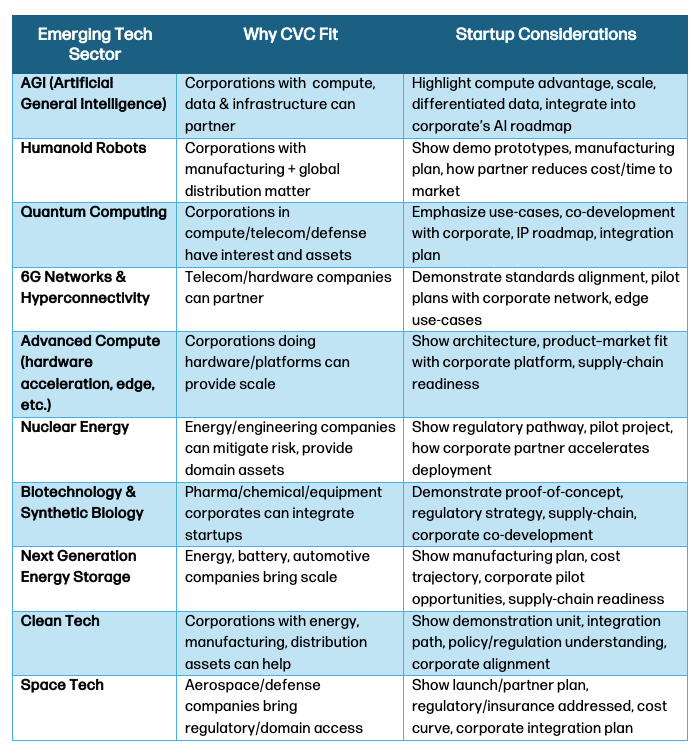
  • Artificial General Intelligence (AGI)
  • Humanoid robots
  • Quantum computing
  • 6G Networks and hyperconnectivity
  • Advanced compute
  • Nuclear energy
  • Biotechnology and synthetic biology
  • Next generation energy storage
  • Clean tech
  • Space tech

Today, I’m diving into two of these trends: advanced compute and clean tech and energy.

Advanced compute

Driven by AI, the increasing demand for computing power is colliding head-on with energy constraints that challenge this infrastructure build out. The result? We will need advancements in both energy efficiency and energy creation to keep up. Innovations such as microfluidic-cooled chips and composable computing architectures are driving computing efficiency and performance to new heights.

At the same time, data centers, cloud computing, and other high-performance applications are placing immense pressure on the global energy supply, pushing the need for cleaner, more reliable energy sources. We’ve seen numerous clean tech products and services focused on energy efficiency and sustainable reuse, and you can expect this trend to accelerate.

The question is: How quickly can we implement solutions that strike a balance between technological growth and sustainability? The interaction between computing and energy production is becoming one of the most critical challenges and opportunities of the modern era.

Compute is getting smarter — and hungrier

Computing advancements are reshaping industries, bringing both efficiency gains and new challenges.

The evolution from massive supercomputers to high-performance, compact chips makes processing power more accessible and scalable, enabling more sophisticated AI models, data analysis, and automation.

These innovations drive digital transformation across sectors, from healthcare to finance, but they also come with a steep energy demand. AI-driven applications, especially large-scale models, require immense computing power, leading to a surge in electricity consumption and an urgent need for clean energy solutions to support this growth.

Today, data centers account for 1% to 2% of overall global energy demand, similar to what experts estimate for the airline industry. When costs related to delivering AI to the world is factored in, that figure is expected to hit 21% by 2030.

Moreover, the International Energy Agency projects that data centers will use 945 TWh of electricity in 2030, roughly equivalent to the current annual electricity consumption of Japan according to Nature.

New energy sources, storage, and compute power

This is resulting in looking at new energy sources. Including a revival of nuclear power, which today accounts for nearly 10% of the world’s electricity but could grow significantly in the coming years due in part to its low-carbon footprint.

That’s why Small Modular Reactors (SMRs) from startups such as Nuscale and TerraPower are stepping into the spotlight as a potential answer to powering AI-driven data centers, offering a steady and reliable energy source that can be deployed more flexibly than traditional nuclear plants. These reactors can generate consistent, carbon-free electricity, making them an attractive option for reducing the environmental footprint of high-performance computing. SMRs can generate up to 300 MW per unit, which is significant when considering that a typical hyperscale data center requires 20–50 MW of power capacity, making them an ideal power source for AI-driven supercluster data centers.

Similarly, looking to other sustainable energy innovations in solar, wind, and gas will be needed for AI to advance. But it’s not just how we create power but also store and distribute it that will be key to new compute models. Solid-state batteries, or SSBs, could play a crucial role in grid storage applications needed to power the future computing needs of AI. While initially being developed for electric vehicles, these next-generation energy storage solutions have the potential to support gri-dscale applications, helping bridge the gap between fluctuating renewable energy sources and computing technology’s increasing power demands. In fact,the solid state battery market is expected to grow at a compound annual growth rate (CAGR) of 33%, with commercialization efforts ramping up.

Advanced Compute Breakthroughs

The energy challenge is also driving innovation in computing itself. New processor architectures designed specifically for AI workloads are dramatically improving performance while reducing energy consumption.

Neuromorphic computing, which mimics the efficiency of the human brain, shows promise for reducing energy requirements by orders of magnitude compared to traditional computing approaches. Research from Intel’s Neuromorphic Research Lab demonstrates that neuromorphic systems can be up to 1,000 times more energy-efficient than conventional architectures for certain AI workloads.

Quantum computing developments could revolutionize how we approach certain computational problems, potentially solving in seconds what would take today’s supercomputers years, all with a fraction of the energy.

These compute breakthroughs, paired with energy innovations, will be essential to sustainable AI growth.

The Power Players

The compute and clean energy race is full of power players. Here’s where innovation is heating up:

Advanced Compute

Clean Tech

Nuclear Energy

Next-Gen Energy Storage:

Unexpected outcomes

The AI energy equation could take unexpected turns in coming years:

What if AI algorithms emerge that drastically reduce computational requirements? Some researchers are exploring “small language models” that deliver impressive results with far less computing power, similar to how the human brain achieves remarkable efficiency.

IBM, Google, Microsoft, and OpenAI have all recently released small language models (SLMs) that use a few billion parameters — a fraction of their bigger LLM counterparts.

Geopolitical implications could be profound if certain nations successfully implement nuclear or other sustainable energy solutions for AI infrastructure while others remain reliant on fossil fuels. Countries that solve the energy puzzle could gain significant advantages in the AI arms race, potentially reshaping global power dynamics.

Could success in one domain–either compute efficiency or clean energy–accelerate the other in a virtuous cycle? Or might we face a scenario where breakthroughs in AI capabilities consistently outpace our ability to power them sustainably?

A global shortage of critical minerals like lithium could emerge as a limiting factor, constraining the growth of both advanced computing and clean energy technologies.

These minerals are essential for producing high-performing batteries, semiconductors, and energy storage systems–components that power AI data centers, renewable energy grids, and more.

AI’s promise could become a paradox if we don’t solve the energy storage issue. We will have smarter tools powered by unsustainable systems.

Moving forward

As computing power and energy needs evolve, the intersection of advanced compute and clean energy will shape the next wave of technological and environmental progress.

The race to develop sustainable, high-performance computing solutions is accelerating, and innovations in energy efficiency, storage, and nuclear technology will define the next decade.

Will we rise to meet the energy demands of intelligent machines? Or will innovation outpace our ability to power it? I want to hear your thoughts on what breakthrough or roadblock you see defining the next decade.

Blog Futurism & Technology Trends Innovation

Driving Strategic Value through Corporate Venture Capital

Since 2014, corporate venture capital (CVC) has participated in over 21% of venture capital deals with 46% of total VC deal value. Yet, according to PitchBook the number of CVC-backed companies their CVC investors eventually acquired has remained below 4%.

If mergers and acquisitions (M&A) aren’t the primary drivers of the active CVC landscape, what motivates companies worldwide to invest in startups?

Investing for strategic advantage

As the world of technology has continued to flourish and startup companies have emerged as drivers of innovation and markets, larger corporations have looked for ways to tap into the startup and venture communities to drive new business growth and stay competitive. Corporate venture capital allows companies to look beyond their core business to explore and drive future growth opportunities.

Unlike traditional venture capital firms, in many cases CVCs invest strategically to align with their parent company’s long-term goals. These investments drive market and technology insights and help foster strategic partnerships that provide startups with access to enterprise resources—such as distribution channels, marketing, and manufacturing—while allowing corporations to stay ahead of industry trends and technological advancements.

Value creation

As HP’s corporate venture arm, HP Tech Ventures focuses on three key areas of value creation:

  1. Strategic Investments—HP Tech Ventures invests in startups aligned with our corporate strategy to drive insights, deepen commercial relationships, strengthen HP’s market position, and hedge against future industry shifts. These investments aim to drive growth while also delivering financial returns.
  2. Startup Partnerships—Supporting commercial partnerships with startups complements HP’s R&D efforts, helping to fill technology gaps and enhance product differentiation.
  3. Startup and Venture Insights—Investing in startups provides HP valuable insights into emerging markets and disruptive technologies. By leveraging these insights, HP can refine its strategy and remain at the forefront of industry innovation.

Example: creating value in Healthcare

HP’s investment and partnership with Adaptiiv led to the development of 3D-printed, personalized accessories for cancer radiation treatments, enabling more precise and consistent radiation dosage.

Example: creating value in Retail

HP’s investment and partnership with AiFi is enabling game-changing retail experiences. AiFi’s autonomous checkout solution is powered by AI computer vision and demonstrates what happens when technology and retail converge to really deliver on what the customer wants: convenience, speed, ease, and a more informed, personalized shopping experience. AiFi’s solution leverages the HP Engage Express and HP Z Workstations to power its next generation retail experience.

Tapping into trends

Strategic investing also offers corporations a way to tap into trends and innovations early. Investing in startups developing new technologies and business models in emerging areas allow companies to stay ahead of customer demand and position themselves for competitive success.  A great example of this is the staggering number of AI Funds created over the past few years by corporations.  From Google’s launch of Gradient back in 2017 to Cisco’s $1B AI fund established in 2024 there is ongoing, deep corporate investing in this emerging area.  In 2024, AI alone accounted for 37% of CVC-backed funding and 21% of CVC deals.

Shaping your future through investment

Long-term growth and adaptability in a rapidly changing world require companies to develop diverse strategic capabilities. Engaging with the startup ecosystem has become a crucial component of corporate success. HP Tech Ventures is dedicated to this mission, using startup investing as a strategic tool to drive innovation and enable future growth.

Blog Innovation

Preparing for Generation Alpha in the Workforce

Throughout history, each generation has left its mark on the workplace, transforming how we work, communicate, and collaborate. From the structured work environments preferred by baby boomers to the tech-savvy, flexible preferences of millennials and Gen Z, workplaces have evolved to meet the needs of emerging generations.

Now, the world is preparing for Generation Alpha (Gen Alpha) — the generation born between 2010 and 2025 — who will soon enter the workforce. With their unique characteristics and expectations, they will once again reshape the future of work.

Like their Gen Z counterparts, Gen Alpha is extremely tech savvy, probably even more so with their exposure to screen technology and AI from such an early age. They are also very brand, and purpose-driven. And early studies indicate they may be more independent and driven than their generational predecessor. These characteristics will deeply impact where, how, and why they choose to work.
As Gen Alpha begins to enter the workforce, their impact will be profound. Here are some key statistics of what to expect:

  • Size and influence: Gen Alpha is projected to be the largest generation in history, with approximately 2 billion individuals globally. (Fast Company)
  • Diversity: In countries like the U.S., more than half of the children born in 2011 were from minority backgrounds, reflecting a future workforce that is more diverse than ever. (Fast Company)
  • Technological fluency: Raised in an era of AI and automation, Gen Alpha will push for the widespread adoption of cutting-edge technologies at work, making them likely champions of digital transformation. (LinkedIn)
  • Education: With access to more online educational tools than any previous generation, Gen Alpha will likely be the most formally educated cohort, with 65% expected to have careers that don’t exist yet. (ExplodingTopics)
  • Entrepreneurial mindset: A significant portion of Gen Alpha , approximately 76%, aspires to become their own boss or have a side hustle, showing a strong entrepreneurial spirit. This generation will likely prioritize flexibility, autonomy, and the ability to launch their own ventures, reshaping traditional career paths and workplace expectations (LinkedIn)
  • Purpose-driven careers: Gen Alpha strongly emphasizes aligning their careers with social and environmental values. According to a VML study, 66% of Gen Alphas prefer to buy from companies that make a positive difference in the world. This focus on purpose-driven work is expected to significantly shape their career choices and influence the future of corporate social responsibility (VML)
  • Prioritization of mental health: Gen Alpha is expected to significantly emphasize mental health and well-being in the workplace. According to the Razorfish study, 75% of 8-to-10-year-olds are already thinking about their mental health, so it’s safe to assume that well-being will be a priority when they enter the workforce. (Razorfish)

Organizations that understand and adapt to Gen Alpha‘s needs will attract top talent and position themselves as innovators. The future workplace will be one of flexibility, digital collaboration, and inclusivity, and Gen Alpha will expect nothing less.

Companies that offer remote work options, prioritize employee well-being, and integrate sustainable practices will appeal to this socially conscious generation. Furthermore, embracing AI and automation will be key to staying competitive, as Gen Alpha will expect technology to enhance productivity and efficiency.

Adapting to these shifts is not just about staying relevant — it’s about seizing the opportunity to foster a culture of innovation and inclusivity. As older generations retire, Gen Alpha will fill these gaps, bringing fresh perspectives and energy into the workforce.

As we prepare for Gen Alpha to join the workforce, it’s clear that they will drive a new era of workplace transformation. Their comfort with technology, emphasis on flexibility, and commitment to inclusivity will challenge companies to evolve rapidly. The businesses that recognize and respond to these shifts will thrive, while those that resist may struggle to keep up.

So, as we look toward the future of work, the question remains: Is your organization ready to embrace the Generation Alpha revolution?

Futurism & Technology Trends

Your greatest superpower: become a change agent

The pace of change just continues to accelerate.  From near-interstellar spaceships to self-driving robots, and AI professors at Ivy League schools, innovation and invention are happening at breakneck speeds.

So as business leaders, marketers, salespeople, etc. how do we not only deal with all this change but embrace it to create the future we envision?

Become a change agent

Being a change agent means being the person your organization, your customers, and your partners rely on to help them navigate and tap into the changing world around us. There are lots of ways to do this. A good place to start is with what I think are three core principles of an effective change agent.

Embrace change

This may sound simple, but it’s a lot harder than you think. I remember an HP training class I took back in the day.  We were talking about how to work with people who didn’t have the same point of view as you. They used a physical metaphor that really hit home for me and that I still remember. If you push someone their natural instinct is to push back. But if you walk with someone in the same direction they’re already going, it is much easier to walk alongside them. Once you are walking together, you can then lead them in a different direction. Much like the marital art of Aikido, where you use someone’s strength and power to your advantage.

Don’t try to wrestle all this change to the ground. Walk with it instead. Then use it to take you in whatever direction you want to go. Approach change as an Aikido master and not the Incredible Hulk!  Take time to understand it, why it’s happening, and how it can best serve you and your business.

Lead by example

Think about the challenges your customers and partners are facing.  Take those challenges on with them and be their improv partner, helping them look for new approaches and ways to tap into change to solve problems.

Help them expand their thinking and think “out of the box” by challenging them with “what if” questions.  This can help broaden their view and uncover ideas they may never have considered before.  Also share examples of how new approaches have made tangible impacts.

Monitor shifts

Finally, it’s critical to understand the trends and technologies that are shaping the world around us.  So, you can anticipate what’s coming, and help your organization and customers catch these shifts early so they can take advantage of them instead of being disrupted by them.  You need to be constantly monitoring shifts and weak signals to stay ahead.

I recently gave a talk on some of the trends and disruptive technologies we are helping our customers to better understand and tap into.

I encourage you to become a change agent. Watch for trends, technologies, and shifts. Proactively look for ways they apply to your business as well as your customers’ business.  Tap into internal and external innovation, share best practices, and most importantly make change your new best friend.

Become an expert in change. Understand it and leverage it to help customers. Be their trusted advisor and a thought leader. Because when it comes to dealing with change remember to be an Aikido Master, not the Hulk.

Uncategorized

A Day-In-The-Life with Generative AI Part 2: Maximizing Efficiency

Generative AI is becoming embedded in our everyday lives and transforming how we approach daily tasks and activities. With AI seamlessly integrated into our routines, we can experience efficiency and personalization that was once the realm of science fiction.

Remember Aiden, a 26-year-old living in San Francisco, who weaves AI into her daily life to optimize her productivity and enhance her experiences? She’s not the only one leveraging generative AI to create a more streamlined daily life.

Meet Dylan, a 40-year-old corporate executive who expertly uses AI to be more productive, achieve his fitness goals, and maximize his free time.

Morning Start

GIF showing AI-generated vivid dream replay. Very colorful

Dylan enjoys an AI-generated replay of a vivid dream he had, complete with visual and narrative details, providing creative inspiration and insights as he starts his day.

Digital news feed from AI

A customized AI-generated news briefing, with curated headlines and stories based on his preferences and current interests sets a focused tone for Dylan’s day.

bike workout screen with data from AI trainer

After the news briefing, Dylan’s personalized AI trainer analyzes his recent workout data and suggests a customized exercise routine, including specific cardio and strength training exercises to help him meet his fitness goals.

Efficient Afternoon

food shopping bag ordered by AI chef

Dylan’s AI Chef orders culinary ingredients according to his AI customized meal plan and schedules delivery, ensuring he has fresh produce and essentials for later, delivered by an AI robot personal shopper.

smart watch on wrist sending emails automatically

While in a meeting, Dylan asks his AI assistant to draft and send follow-up emails, including a proposal for a new project. This allows him to focus on strategic planning while the AI handles the communications.

Engaging Interactions

Virtual Reality meeting with Madam C.J. Walker

During a staff meeting, an AI-powered digital twin of Madam C.J. Walker joins Dylan’s team for a Q&A session. Walker shares insights into her entrepreneurship, philanthropy, and social activism approaches.

Virtual Tutor

Dylan takes a break to learn about AI advancements via a virtual tutor, exploring topics like machine learning algorithms and their practical applications in his industry.

Wearable device capturing meeting notes

His AI wearable device discreetly reminds him of key contacts he met earlier, captures important meeting notes, and follows up on promised actions.

Evening Relaxation

Chicken and broccoli meal prepared by a Robot

As he winds down from work, Dylan’s robot sous-chef prepares a gourmet dinner, following a recipe from his meal plan, while he relaxes and catches up on personal projects.

Personalized movie on a TV screen

Dylan ends his day watching a movie tailored to his tastes and current mood, with AI creating a personalized viewing experience with a custom storyline.


Generative AI can transform how to manage tasks, access information, and enjoy leisure time. It’s not just about efficiency; it’s about creating a more personalized and enjoyable experience.

How do you envision generative AI transforming your routine and bringing more ease and excitement into your daily life?

Blog Futurism & Technology Trends Innovation

A Day-In-The-Life with Generative AI: A Glimpse into the Future

Technology is seamlessly integrated into our daily routines, and generative AI will revolutionize how we live and work. Let’s imagine a day in the not-too-distant future where generative AI doesn’t just serve as an assistant but as an active participant in every aspect of your life.

Meet Aiden. As a 26-year-old living in San Francisco, Aiden spends her time working at a healthcare startup, socializing with friends, and focusing on hobbies like fitness and reading. Here’s a peek into what a typical day for her might look like with generative AI:

Morning Routine

AI trainer delivers a custom workout plan

Aiden likes to exercise before she starts her day. Her AI trainer sends her a customized workout plan each morning and adjusts her exercise plan based on her current fitness goals.

Digital twin of women attending a virtual meeting

After she finishes her workout, Aiden is ready to start her workday. A morning meeting pops up that could have been handled as an email. Aiden sends her digital assistant to attend the online meeting on her behalf.

Aiden’s digital twin participates by handling routine discussions and updates. As soon as the meeting is complete, her digital twin sends Aiden the meeting notes, key takeaways, and action items.

flying car over Oakland, CA

While her digital twin is in the meeting, Aiden takes a flying car to a face-to-face meeting in Oakland with her boss. With this commute, she cuts down on travel time and avoids traffic on the ground.

Robot feeding a black and white husky dog in a living room

Aiden attends her face-to-face meeting in Oakland, while a humanoid robot manages her household chores back at her apartment – feeding her dog, cleaning her kitchen, folding her laundry, and preparing her lunch. By offloading mundane tasks, Aiden can focus on more high-level tasks, such as in-person meetings and sharing her latest strategy ideas.

Health, Wellbeing, and Lunch

watch showing vital signs being captured and sent to an AI doctor

Aiden continues to work while wearing her AI wearable. Her AI doctor monitors her health statistics and raises a couple of irregularities to Aiden’s human doctor, who is based in Sacramento. When she receives the information, her human doctor sends a report to Aiden with key takeaways, updated prescriptions, and health information.

The meeting concluded in Oakland, and Aiden got a promotion! She’s thrilled and heads back to the City for lunch. On her way home, she sends a request to her AI Assistant to invite her friends for happy hour at her apartment to celebrate her promotion.

Once Aiden returns to her apartment, she enjoys the BLT her humanoid robot prepared for lunch while she answers work messages.

Happy Hour

Young people dancing in a living room

As Aiden’s friends arrive to celebrate her promotion, her AI generates a celebratory playlist for the happy hour.

Drone delivering pizza

Aiden’s friends toast her accomplishment, and in the background, her AI assistant places an order for pizza delivery which her humanoid robot receives and brings inside. Enjoy!

Evening Routine

AI assistant lowers the lights in a living room

Aiden’s friends head home, and her AI assistant adapts the lighting and sound to her relaxation needs, offering her a comfortable and personalized environment to unwind. She settles into the couch to watch a series curated specifically for her previous viewing preferences.

Person touching screen and selecting next day tasks for AI assistant

Before she goes to sleep, Aiden delegates the household and work tasks she would like her AI assistant, digital twin, and humanoid robot to complete tomorrow.


Generative AI promises a future where technology enhances our routines, making our lives more efficient and enjoyable. From handling mundane tasks to offering personalized experiences, AI is set to become an integral part of our daily existence, turning futuristic visions into everyday realities.

How do you envision generative AI reshaping your daily life as we move toward this future?

Blog Futurism & Technology Trends Innovation

23 Stats To Show Generative AI’s Role in Our Daily Lives

Generative AI is becoming a cornerstone of modern life, transforming various aspects of our daily routines and industries.

This powerful technology, capable of creating content, providing recommendations, and automating tasks, is poised to revolutionize how we work, learn, receive healthcare, and entertain ourselves.

As AI continues to evolve, its integration into our daily lives is becoming more seamless and impactful. A recent survey highlights this shift, with 78% of people believing that the benefits of generative AI outweigh the risks. This growing confidence in AI’s potential signifies a major shift in public perception, paving the way for broader adoption and innovative applications.

Take a look at these stats that show generative AI’s impact on our daily lives:

Workplace

  • 64% of businesses expect AI to increase productivity. Source: Forbes
  • AI will create 97 million new roles. Source: WeForum
  • 75% of knowledge workers use AI at work today. Source: Microsoft
  • 76% of professionals believe AI skills are essential for job market competitiveness. Source: Microsoft Cloud
  • 68.1% of companies reported increased use of AI tools for hiring. Source: RecruitBetter

Education

  • 54% of parents think AI could potentially have a positive effect on their child’s education. Source: National University
  • 60% of teachers use AI in their classrooms. Source: Forbes
  • AI in the education industry is expected to reach a CAGR of 40.3% between 2019-2025. Source: India AI
  • By 2030, artificial intelligence will automatically score 50% of college essays and nearly all multiple-choice examinations. Source: MMC Global
  • A majority (51%) think AI technologies will improve teacher education. Source: Quizlet
  • Approximately 56% of college students have used AI tools to complete assignments or exams. Source: Best Colleges

Healthcare

Personal Life

  • 54% of consumers think that written content will improve with AI technology. Source: Forbes
  • One in 10 cars will be self-driving by 2030. Source: Marketsandmarkets
  • 63% of consumers expect companies to use AI to personalize their experiences. Source: Master of Code Global
  • 75% of consumers are comfortable with chatbots managing routine customer service tasks. Source: AuthorityHacker
  • 51% of people consider AI helpful for finding a good work-life balance. Source: SnapLogic/Juliety
  • 69% of households in the US have at least one smart device. Source: Hippo/Juliety

Generative AI will play a pivotal role in our future, touching nearly every facet of our lives. From the workplace to education, healthcare, and personal experiences, AI is driving significant changes.

As we continue to embrace this technology, it is crucial to recognize both its potential benefits and the need for responsible implementation to ensure it serves the greater good. 

How will you integrate AI into your life to maximize its benefits?

Blog Futurism & Technology Trends Innovation

Revolutionizing daily lives: The future of AI wearables

Integrating artificial intelligence (AI) with wearable technology is poised to revolutionize our daily lives, blurring the boundaries between the human body and digital interfaces.

The AI wearable market is currently experiencing significant growth. According to Market.us, The Wearable AI Market is estimated to reach USD 304.8 billion by 2033, with a robust CAGR of 25.6% over the forecast period 2024-2033.

As we experience this explosive growth, let’s delve into the possibilities and implications of this technological evolution.

The evolution of wearables

Wearable technology started with basic fitness trackers and quickly moved to sophisticated smartwatches that monitor many health metrics. In 1977, Hewlett Packard released the HP-01 watch, which is considered the first instance of a mass-market wearable.

At the time, the ground-breaking, 28-key interface provided an alarm, data types, a timer/stopwatch, dynamic calculations, and more.

Over the next couple of decades, into the early 2000s, the miniaturization of electronics began. We saw devices that produced music transform from Walkmans to CD players to MP3 players.

This change brought about portability, making it easier to carry electronics around and ushering in a new era of wearables. During this time, cameras were also reduced tremendously in size from their origins, allowing them to be worn like GoPros, and recording was embedded into sunglasses, such as Snapchat’s Spectacles.


The next leap was embedding AI into these devices, enabling them to learn from our behaviors, predict our needs, and even intervene in real time to enhance our well-being.

Advancing health and wellness

As AI-powered wearable devices become more than passive trackers, they become proactive health advisors, continuously analyzing biometric data to provide personalized health insights. AI and wearable data can yield up to a 23.8% improvement in health prediction performance.

Research from MIT and Google shows that large language models (LLMs) can be trained on wearable sensor data based on contextual information, such as user demographics and health knowledge, and physiological data, including resting heart rate and sleep minutes, to deliver personalized, multi-modal health predictions.

AI-enabled wearables can then use this data to predict potential health issues before they manifest, recommend lifestyle changes, and even alert medical professionals in case of emergencies.

Oura has also made waves in the health and wellness space. The company’s ring translates our body’s most meaningful messages from 20 biometrics, including sleep, activity, stress, and heart health.

Enhanced cognitive abilities

AI wearables also have the potential to augment our cognitive functions. Devices can assist us with memory enhancement, language translation, and real-time information retrieval. Imagine wearing a sleek, discreet device that provides you with the names and details of people you meet at a conference or instantly translates foreign languages as you travel, breaking down communication barriers and fostering global connectivity.

AI startup Limitless will soon be launching a broach-like wearable device that records and processes conversations. The small device clips onto a shirt collar and sends recordings to a secure, encrypted, and AI-enabled cloud service, allowing you to remember and recall the conversations you’ve had and the people you’ve had them with.

This could also be helpful for a day when you are in back-to-back meetings or unable to take notes. The device can help you track action items and better connect with the person in front of you.

As AI advances, it won’t be long before we can wear a device that can record and summarize your conversations, create a to-do list, and automatically schedule a follow-up meeting with key stakeholders.

Seamless human-technology interaction

The future of AI wearables’ success lies in their ability to integrate seamlessly into our daily routines. Voice-activated assistants, gesture recognition, and even brain-computer interfaces will make interacting with technology as natural as breathing.

AI wearables could become an extension of our senses, intuitively understanding and responding to our needs.

Ethical and privacy considerations

With this great power comes great responsibility. The widespread adoption of AI wearables raises ethical and privacy concerns. As devices collect vast amounts of personal data, robust security measures to protect user privacy are necessary. Transparent data usage policies and stringent regulations will be crucial to ensure that the benefits of AI wearables do not come at the cost of our personal freedoms.

The future workplace

AI wearables will transform how we work. For example, AI-enabled wearables could monitor your stress levels and suggest short breaks or mindfulness exercises to maintain optimal performance.

Social and cultural impacts

The integration of AI wearables into everyday life will have profound social and cultural impacts. These devices will redefine how we connect with each other, potentially reducing the digital divide and fostering inclusivity. However, if access to advanced wearables becomes a privilege of the few, it may also exacerbate existing inequalities. Addressing these disparities will be essential to ensure that the benefits of AI wearables are equitably distributed.

Embracing the future

As we stand on the brink of this transformative wave in AI wearables, we must approach it with a balanced perspective, embracing the potential benefits while remaining vigilant about the ethical and societal challenges.

The future of AI wearables is about technological advancement and enhancing the human experience, empowering us to live healthier, more connected, and ultimately more fulfilling lives.

Envision a world where AI wearables are not merely gadgets but integral components of our daily existence, seamlessly woven into the fabric of our lives. The journey ahead is filled with promise, and it is up to all of us to navigate it wisely.

Blog Futurism & Technology Trends