Technology is seamlessly integrated into our daily routines, and generative AI will revolutionize how we live and work. Let’s imagine a day in the not-too-distant future where generative AI doesn’t just serve as an assistant but as an active participant in every aspect of your life.
Meet Aiden. As a 26-year-old living in San Francisco, Aiden spends her time working at a healthcare startup, socializing with friends, and focusing on hobbies like fitness and reading. Here’s a peek into what a typical day for her might look like with generative AI:
Morning Routine
Aiden likes to exercise before she starts her day. Her AI trainer sends her a customized workoutplan each morning and adjusts her exercise plan based on her current fitness goals.
After she finishes her workout, Aiden is ready to start her workday. A morning meeting pops up that could have been handled as an email. Aiden sends her digitalassistant to attend the online meeting on her behalf.
Aiden’s digital twin participates by handling routine discussions and updates. As soon as the meeting is complete, her digital twin sends Aiden the meeting notes, key takeaways, and action items.
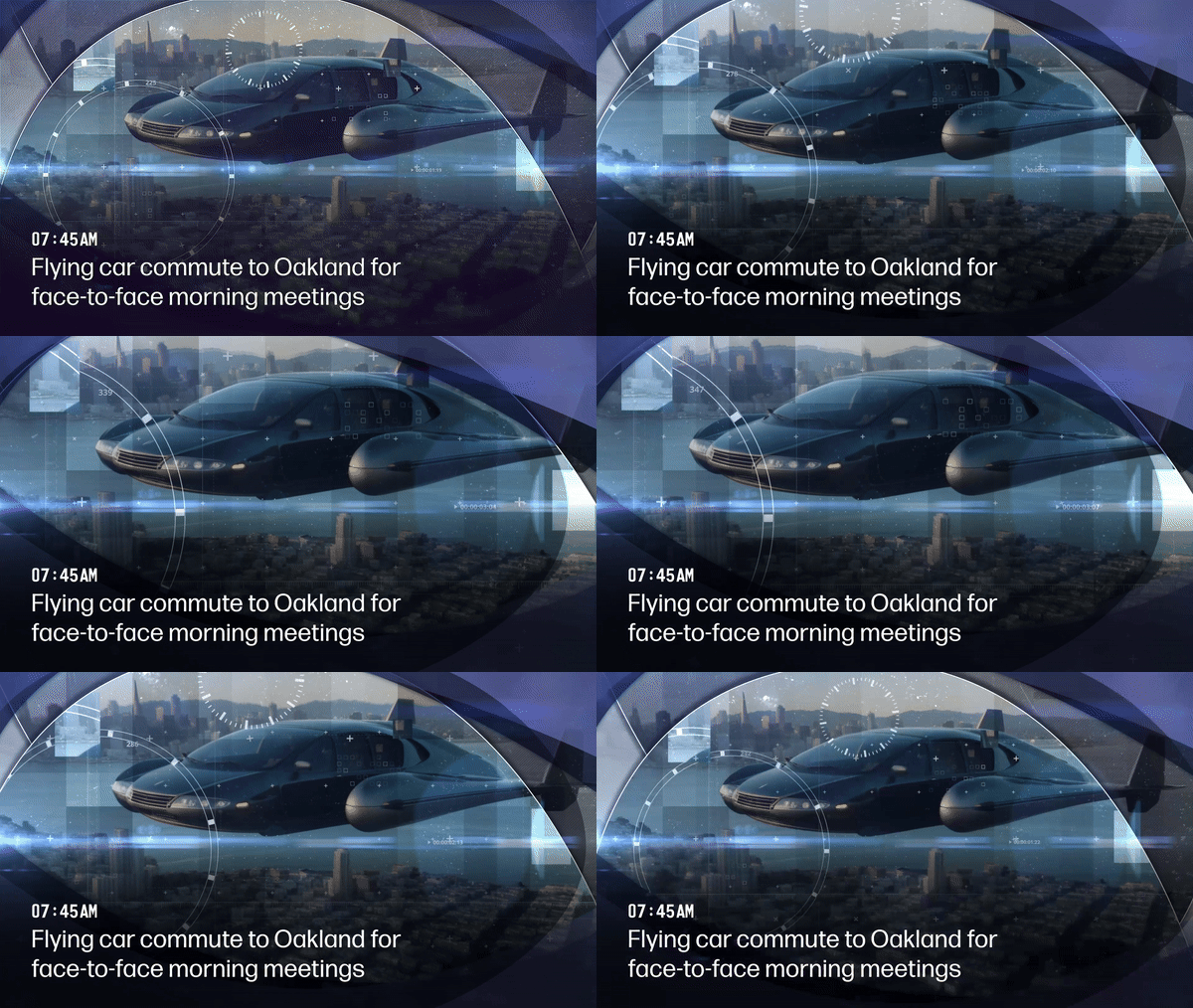
While her digital twin is in the meeting, Aiden takes a flying car to a face-to-face meeting in Oakland with her boss. With this commute, she cuts down on travel time and avoids traffic on the ground.
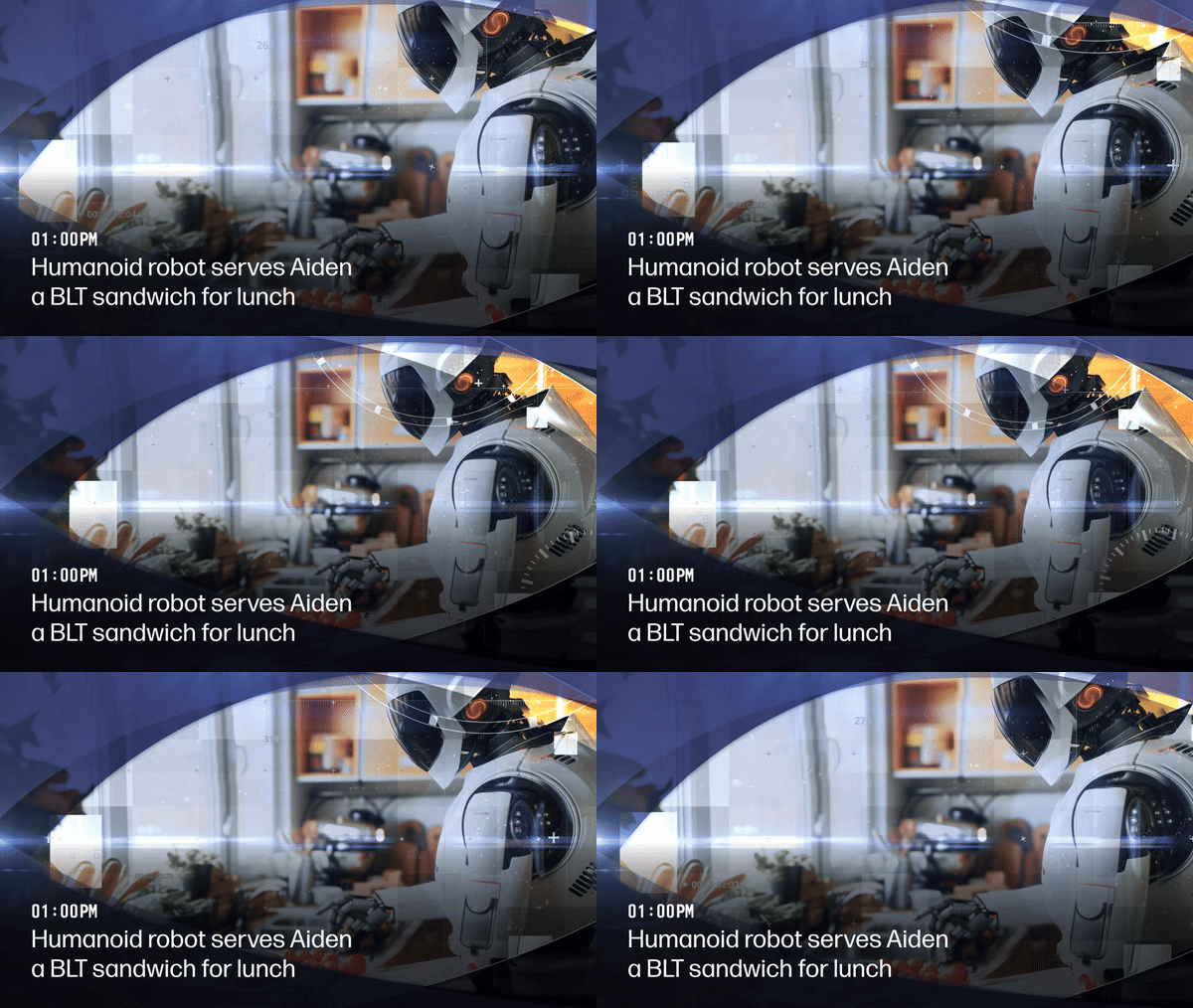
Aiden attends her face-to-face meeting in Oakland, while a humanoid robot manages her household chores back at her apartment – feeding her dog, cleaning her kitchen, folding her laundry, and preparing her lunch. By offloading mundane tasks, Aiden can focus on more high-level tasks, such as in-person meetings and sharing her latest strategy ideas.
Health, Wellbeing, and Lunch
Aiden continues to work while wearing her AI wearable. Her AI doctor monitors her health statistics and raises a couple of irregularities to Aiden’s human doctor, who is based in Sacramento. When she receives the information, her human doctor sends a report to Aiden with key takeaways, updated prescriptions, and health information.
The meeting concluded in Oakland, and Aiden got a promotion! She’s thrilled and heads back to the City for lunch. On her way home, she sends a request to her AI Assistant to invite her friends for happy hour at her apartment to celebrate her promotion.
Once Aiden returns to her apartment, she enjoys the BLT her humanoid robot prepared for lunch while she answers work messages.
Happy Hour
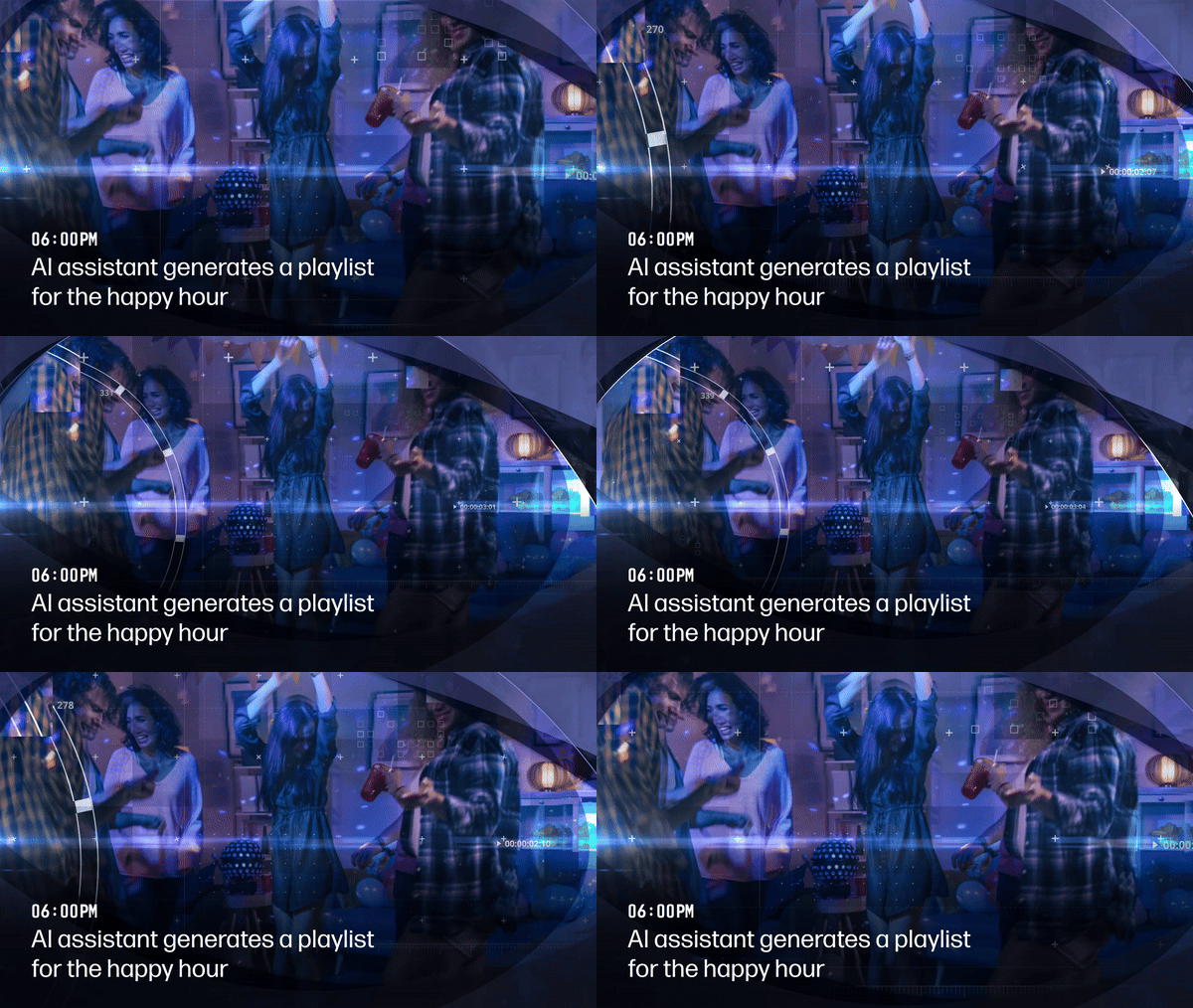
As Aiden’s friends arrive to celebrate her promotion, her AI generates a celebratory playlist for the happy hour.
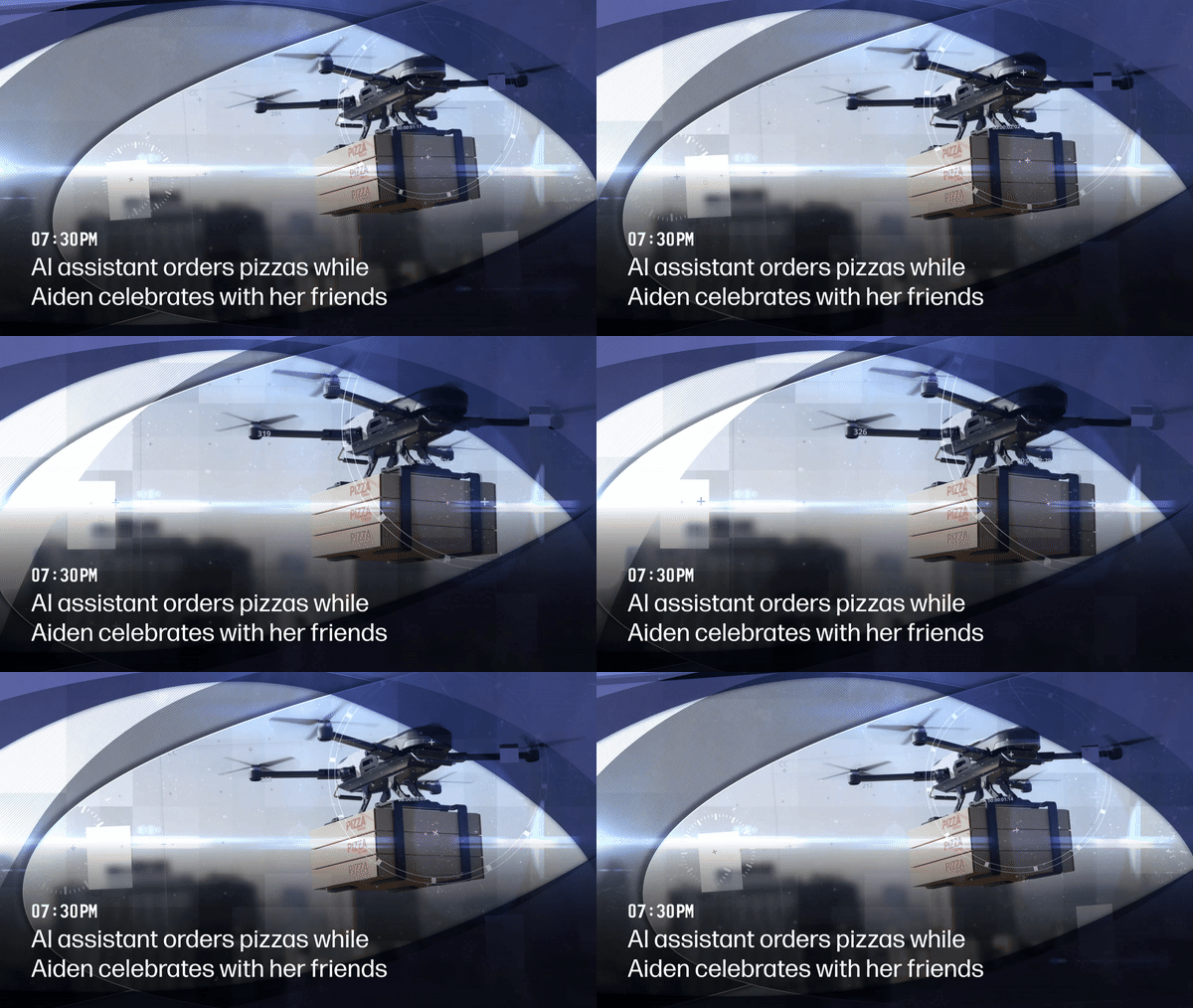
Aiden’s friends toast her accomplishment, and in the background, her AI assistant places an order for pizza delivery which her humanoid robot receives and brings inside. Enjoy!
Evening Routine
Aiden’s friends head home, and her AI assistant adapts the lighting and sound to her relaxation needs, offering her a comfortable and personalized environment to unwind. She settles into the couch to watch a series curated specifically for her previous viewing preferences.
Before she goes to sleep, Aiden delegates the household and work tasks she would like her AI assistant, digital twin, and humanoid robot to complete tomorrow.
Generative AI promises a future where technology enhances our routines, making our lives more efficient and enjoyable. From handling mundane tasks to offering personalized experiences, AI is set to become an integral part of our daily existence, turning futuristic visions into everyday realities.
How do you envision generative AI reshaping your daily life as we move toward this future?
Generative AI is becoming a cornerstone of modern life, transforming various aspects of our daily routines and industries.
This powerful technology, capable of creating content, providing recommendations, and automating tasks, is poised to revolutionize how we work, learn, receive healthcare, and entertain ourselves.
As AI continues to evolve, its integration into our daily lives is becoming more seamless and impactful. A recent survey highlights this shift, with 78% of people believing that the benefits of generative AI outweigh the risks. This growing confidence in AI’s potential signifies a major shift in public perception, paving the way for broader adoption and innovative applications.
Take a look at these stats that show generative AI’s impact on our daily lives:
Workplace
64% of businesses expect AI to increase productivity. Source: Forbes
AI will create 97 million new roles. Source: WeForum
75% of knowledge workers use AI at work today. Source: Microsoft
76% of professionals believe AI skills are essential for job market competitiveness. Source: Microsoft Cloud
68.1% of companies reported increased use of AI tools for hiring. Source: RecruitBetter
Education
54% of parents think AI could potentially have a positive effect on their child’s education. Source: National University
60% of teachers use AI in their classrooms. Source: Forbes
AI in the education industry is expected to reach a CAGR of 40.3% between 2019-2025. Source: India AI
By 2030, artificial intelligence will automatically score 50% of college essays and nearly all multiple-choice examinations. Source: MMC Global
A majority (51%) think AI technologies will improve teacher education. Source: Quizlet
Approximately 56% of college students have used AI tools to complete assignments or exams. Source: Best Colleges
Healthcare
39% of adults are okay with healthcare providers using AI. Source: Pew Research Center
51% thought AI could help reduce instances of racial and ethnic bias in healthcare. Source: Pew Research Center
The global AI in healthcare market is expected to grow to $148.4 Billion by 2029. Source: GrandView Research
54% of consumers think that written content will improve with AI technology. Source: Forbes
One in 10 cars will be self-driving by 2030. Source: Marketsandmarkets
63% of consumers expect companies to use AI to personalize their experiences. Source: Master of Code Global
75% of consumers are comfortable with chatbots managing routine customer service tasks. Source: AuthorityHacker
51% of people consider AI helpful for finding a good work-life balance. Source: SnapLogic/Juliety
69% of households in the US have at least one smart device. Source: Hippo/Juliety
Generative AI will play a pivotal role in our future, touching nearly every facet of our lives. From the workplace to education, healthcare, and personal experiences, AI is driving significant changes.
As we continue to embrace this technology, it is crucial to recognize both its potential benefits and the need for responsible implementation to ensure it serves the greater good.
How will you integrate AI into your life to maximize its benefits?
Integrating artificial intelligence (AI) with wearable technology is poised to revolutionize our daily lives, blurring the boundaries between the human body and digital interfaces.
The AI wearable market is currently experiencing significant growth. According toMarket.us, The Wearable AI Market is estimated to reach USD 304.8 billion by 2033, with a robust CAGR of 25.6% over the forecast period 2024-2033.
As we experience this explosive growth, let’s delve into the possibilities and implications of this technological evolution.
The evolution of wearables
Wearable technology started with basic fitness trackers and quickly moved to sophisticated smartwatches that monitor many health metrics. In 1977, Hewlett Packard released the HP-01 watch, which is considered the first instance of a mass-market wearable.
At the time, the ground-breaking, 28-key interface provided an alarm, data types, a timer/stopwatch, dynamic calculations, and more.
Over the next couple of decades, into the early 2000s, the miniaturization of electronics began. We saw devices that produced music transform from Walkmans to CD players to MP3 players.
This change brought about portability, making it easier to carry electronics around and ushering in a new era of wearables. During this time, cameras were also reduced tremendously in size from their origins, allowing them to be worn like GoPros, and recording was embedded into sunglasses, such as Snapchat’s Spectacles.
The next leap was embedding AI into these devices, enabling them to learn from our behaviors, predict our needs, and even intervene in real time to enhance our well-being.
Advancing health and wellness
As AI-powered wearable devices become more than passive trackers, they become proactive health advisors, continuously analyzing biometric data to provide personalized health insights. AI and wearable data can yield up to a 23.8% improvement in health prediction performance.
Research from MIT and Google shows that large language models (LLMs) can be trained on wearable sensor data based on contextual information, such as user demographics and health knowledge, and physiological data, including resting heart rate and sleep minutes, to deliver personalized, multi-modal health predictions.
AI-enabled wearables can then use this data to predict potential health issues before they manifest, recommend lifestyle changes, and even alert medical professionals in case of emergencies.
Oura has also made waves in the health and wellness space. The company’s ring translates our body’s most meaningful messages from 20 biometrics, including sleep, activity, stress, and heart health.
Enhanced cognitive abilities
AI wearables also have the potential to augment our cognitive functions. Devices can assist us with memory enhancement, language translation, and real-time information retrieval. Imagine wearing a sleek, discreet device that provides you with the names and details of people you meet at a conference or instantly translates foreign languages as you travel, breaking down communication barriers and fostering global connectivity.
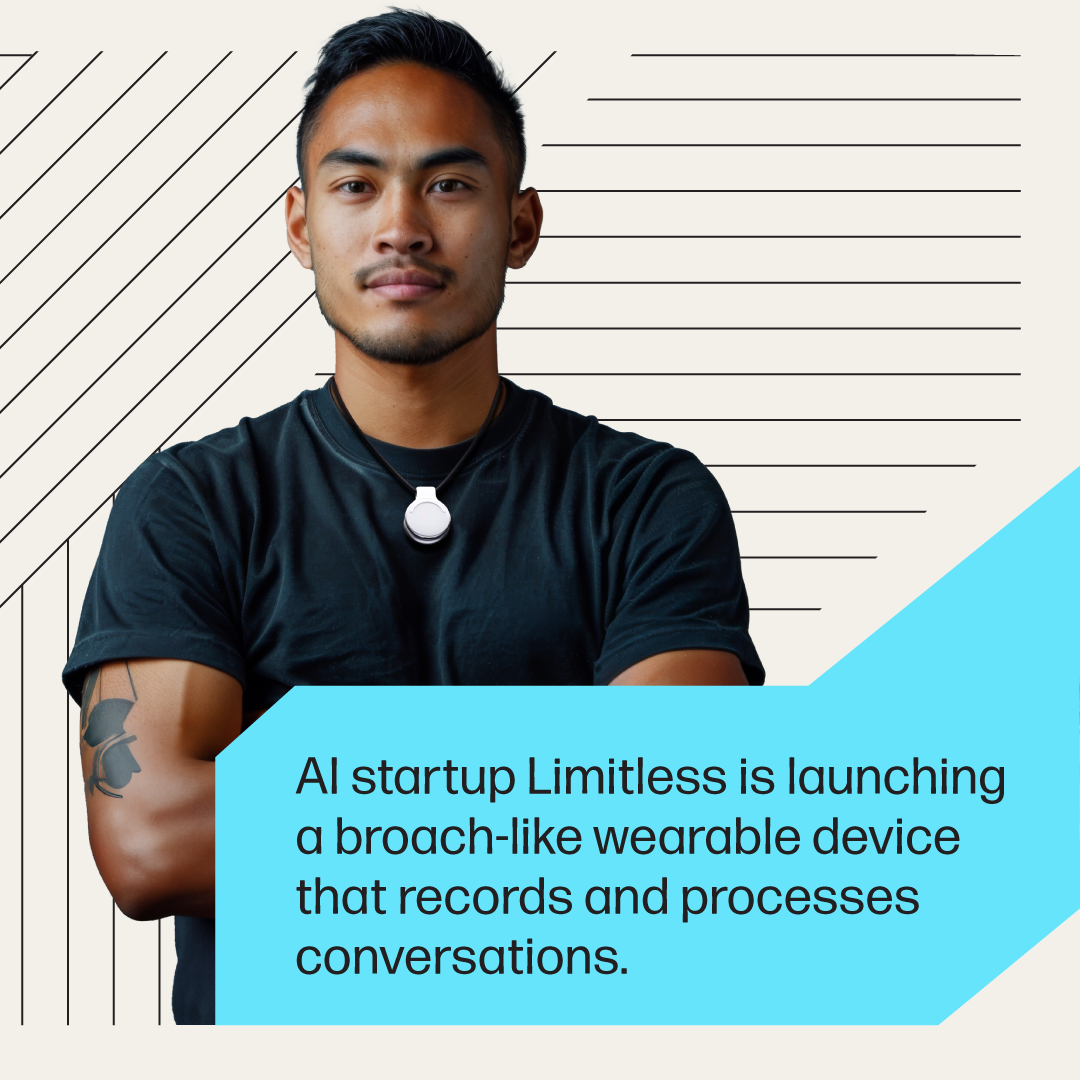
AI startup Limitlesswill soon be launching a broach-like wearable device that records and processes conversations. The small device clips onto a shirt collar and sends recordings to a secure, encrypted, and AI-enabled cloud service, allowing you to remember and recall the conversations you’ve had and the people you’ve had them with.
This could also be helpful for a day when you are in back-to-back meetings or unable to take notes. The device can help you track action items and better connect with the person in front of you.
As AI advances, it won’t be long before we can wear a device that can record and summarize your conversations, create a to-do list, and automatically schedule a follow-up meeting with key stakeholders.
Seamless human-technology interaction
The future of AI wearables’ success lies in their ability to integrate seamlessly into our daily routines. Voice-activated assistants, gesture recognition, and even brain-computer interfaces will make interacting with technology as natural as breathing.
AI wearables could become an extension of our senses, intuitively understanding and responding to our needs.
Ethical and privacy considerations
With this great power comes great responsibility. The widespread adoption of AI wearables raises ethical and privacy concerns. As devices collect vast amounts of personal data, robust security measures to protect user privacy are necessary. Transparent data usage policies and stringent regulations will be crucial to ensure that the benefits of AI wearables do not come at the cost of our personal freedoms.
The future workplace
AI wearables will transform how we work. For example, AI-enabled wearables could monitor your stress levels and suggest short breaks or mindfulness exercises to maintain optimal performance.
Social and cultural impacts
The integration of AI wearables into everyday life will have profound social and cultural impacts. These devices will redefine how we connect with each other, potentially reducing the digital divide and fostering inclusivity. However, if access to advanced wearables becomes a privilege of the few, it may also exacerbate existing inequalities. Addressing these disparities will be essential to ensure that the benefits of AI wearables are equitably distributed.
Embracing the future
As we stand on the brink of this transformative wave in AI wearables, we must approach it with a balanced perspective, embracing the potential benefits while remaining vigilant about the ethical and societal challenges.
The future of AI wearables is about technological advancement and enhancing the human experience, empowering us to live healthier, more connected, and ultimately more fulfilling lives.
Envision a world where AI wearables are not merely gadgets but integral components of our daily existence, seamlessly woven into the fabric of our lives. The journey ahead is filled with promise, and it is up to all of us to navigate it wisely.
From the early days of bulky, room-sized computers to today’s sleek, powerful smartphones, technology has continuously become more integrated into our daily lives. The rise of AI has further accelerated this transformation, enabling innovations such as voice-activated virtual assistants, smart home devices, and autonomous vehicles. Amidst these technological strides, social and home robots have emerged, bringing a new dimension to how we interact with machines in our personal spaces.
Social robots are designed to engage with humans socially, often serving as companions, educators, or caregivers. These robots can recognize and respond to emotions, hold conversations, and even provide companionship to older people or those living alone.
On the other hand, home robots are primarily designed to perform household tasks, making our lives more convenient and efficient. These robots can assist with cleaning, security, and even personal care.
As technology continues to advance, the capabilities of social and home robots will only expand, further integrating into our lives and transforming the way we live, work, play, and interact with our surroundings.
Robots in our lives
Social and home robots are emerging as valuable tools in modern society. They can play a crucial role in enhancing emotional well-being by providing companionship and reducing loneliness, particularly among older people and those living alone.
Social robots also offer practical benefits by assisting with household chores, allowing individuals more time for meaningful activities. They also support learning in educational settings by providing personalized assistance and engaging students in interactive ways.
As we integrate robots like these into our daily lives, it is crucial to understand the complexities of this technology. Ensuring that robots enhance rather than detract from our lives requires careful consideration of ethical and practical implications. Privacy concerns, the potential for over-reliance, and the need for human oversight are essential factors to address. By thoughtfully incorporating robots into our homes and social environments, we can leverage their benefits while mitigating potential drawbacks, ultimately enriching our lives meaningfully.
It can be your AI companion. As I mentioned, one of the most notable benefits of social robots is their ability to combat loneliness, especially among older people and individuals living alone. An example is Intuition Robotics. The company aims to empower older adults to live happier, healthier, and independent lives at home with an empathetic digital companion.
A study by the University of Glasgow, published in the International Journal of Social Robotics, highlighted another social robot, Pepper’s, potential to combat loneliness. Participants interacted with Pepper via Zoom over five weeks, and results showed that people disclosed more about themselves over time and felt less lonely. This interaction also improved their mood, indicating the robot’s potential as an emotional support tool. These robots can engage in conversations, provide reminders, and even offer entertainment, creating a sense of presence and interaction.
How about a robotic tutor? Researchers recently conducted an experiment involving 26 university students whose native language was Japanese. The students underwent a pre-test to assess their English-speaking skills. Based on their average scores, the students were divided into two groups: 14 students received instruction from a robot, while the remaining 12 participants received online lessons from English language teachers.
The results indicated that the group taught by the robot made fewer errors and spoke more fluently than the group taught by human tutors.
Who doesn’t want a house-cleaning “humanoid”? In addition to emotional and educational support, home robots can significantly reduce the time and effort spent on household tasks. Take Eve, for example. It is a humanoid robot that can perform a range of tasks. Equipped with cameras and sensors to perceive and interact with their surroundings, their mobility, dexterity, and balance allow them to navigate complex environments and manipulate objects effectively. This capability is particularly beneficial for busy families and individuals with physical limitations.
The future with robots
Social and home robots promise to transform our homes and enhance our daily lives in profound ways in the future. These robots can perform mundane tasks, creating more leisure time for us to spend on activities that matter most, such as pursuing hobbies, spending time with loved ones, and engaging in meaningful experiences.
According to Dr. Guy Laban, an Affiliated Research Associate at the University of Glasgow and a Postdoctoral Research Associate at the University of Cambridge, these robots can also become valuable conversational partners, crucial in interventions that support emotional health. His research highlights how robots can provide meaning and a safe space for those in need, lifting people’s moods even during challenging times like the pandemic.
Roboticists often cite Moravec’s paradox: What is hard for humans is easy for machines, and what is easy for humans is hard for machines. AI is changing that.
One idea is to use the generative AI behind ChatGPT and similar tools to complete faster training and develop more skills for robots. Efforts include ways to program robots with plain written English rather than complex code and using AI systems to have robots learn by observing.
Specialized computer chips for robots will help, too. Nvidia recently unveiled a new chip and AI software for humanoid robots. AMD, Intel, Google, and Qualcomm also designed systems for robots.
AI capabilities will also enable robots to learn, reason, and make decisions based on complex data sets. This will allow robots to perform more complex tasks and adapt to changing environments, making them more versatile and useful.
Sensory abilities such as sight, touch, and hearing will enable robots to navigate their environment more effectively, interact with humans more intuitively, and perform more complex tasks that require precise sensory input.
Ultimately, the goal is not to eliminate human-to-human interaction but to create more space for it. Ethics must be at the forefront as we integrate these technologies into our homes. Understanding how humans establish healthy and constructive relationships with robots is critical to ensuring their ethical and responsible deployment. This careful consideration will help us harness the benefits of social and home robots while safeguarding our values and well-being.
As artificial intelligence (AI) becomes more and more engrained into our daily lives, we see Generation Z and Generation Alpha pioneering the use and development of this technological frontier. Their interaction with AI is redefining its applications and creating a future that we are only just starting to imagine.
Let’s delve into how these generations use AI today and what we can expect from them in the future.
Today’s AI Playground: From virtual clones to classroom helpers
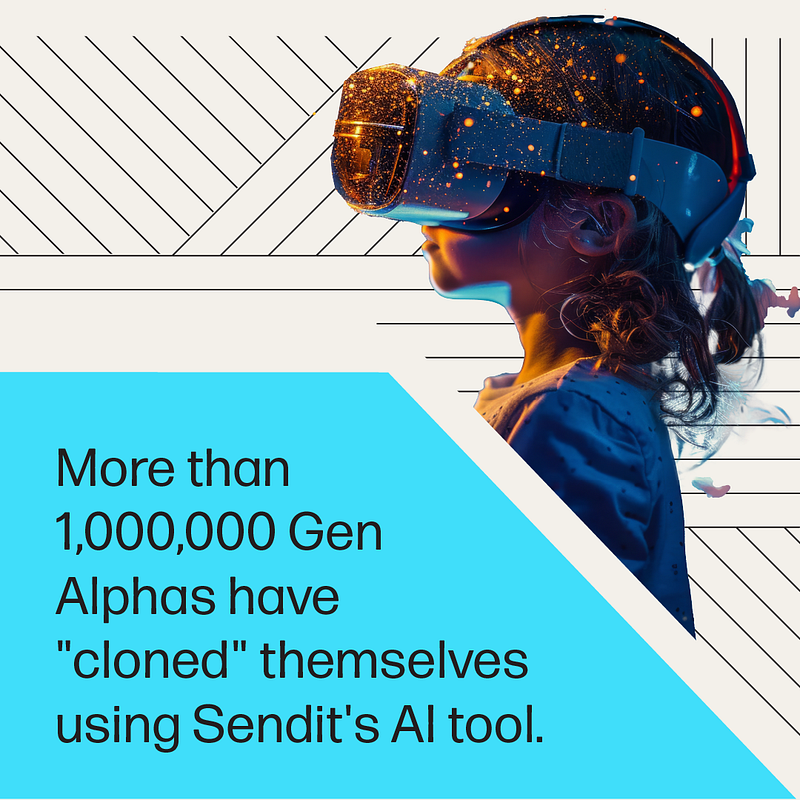
Imagine having a virtual twin — a clone that knows you so well that it can answer and initiate questions on your behalf. For 1 million Gen Alpha users, this isn’t sci-fi: it’s reality, courtesy of Sendit. More than 1,000,000 Gen Alphas have already cloned themselves using Sendit’s AI tool. The app can share your story, even when you are not there, help friends pick out a present for you, or recommend a cool new restaurant to cousins.
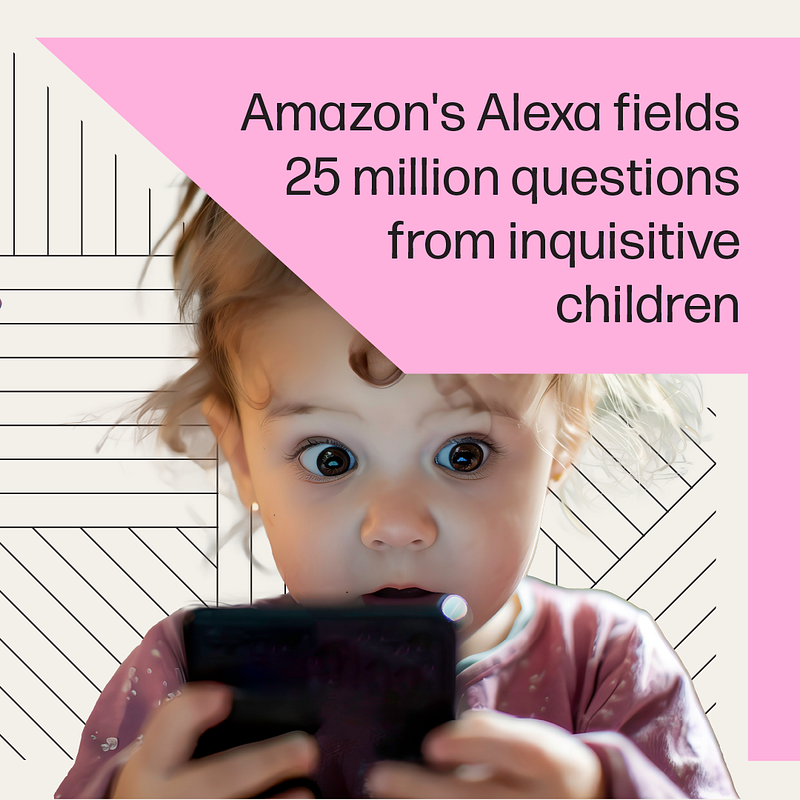
But AI is not all fun and games. It is also transforming the way learning is delivered and received. Every month, Amazon’s Alexa fields 25 million questions from inquisitive children, showing that the thirst for knowledge is now quenched through voice-activated AI.
ChatGPT is also proving to be a useful tool for both educators and students. A recent survey by Impact Research found that 51% of teachers reported using ChatGPT and a third of students.
AI in the classroom is just the beginning. As 2024 graduates step into the real world, a staggering 50% plan to acquire new skills, fully aware that tools like ChatGPT and DALL-E will be part of their future careers.
Salesforce found that 65% of today’s generative AI users are Millennials or Gen Z, and a formidable 72% of this cohort is gainfully employed, signifying the seamless integration of AI in the working world.
Moreover, nearly half of Gen Z prefer AI over their managers for advice, according to Workplace Intelligence. It’s clear that trust in AI’s capabilities is burgeoning.
Gen Z and Gen Alpha’s imprint on the next wave of AI technologies
With Gen Z being considered digital natives and Gen Alpha taking the crown as AI natives, it’s no wonder they are profoundly impacting where AI technology is heading.
Take Elemental Path’s CogniToy’s Dino, designed for young Gen Alphas, which uses IBM’s Watson to answer children’s questions and converse with them.
LEGO’s Boost Sets combine classic play with coding, demonstrating how introducing technology through fun and popular building blocks can teach kids about coding and AI. But Brian Schwab, director of interactive design at the LEGO Group sees this as only the beginning. In an interview with Toolify.Ai, Schwab shared that LEGO is incorporating AI to enhance the creative and interactive aspects of their iconic building bricks, allowing children to tell their own stories and explore their creativity in new ways.
Language learning has found a new ally in AI. The Duolingo Max application uses ChatGPT-4 to provide feedback and highly tailored lessons, much like a virtual tutor. Thus, creating more personalized learning experiences.
Personalization hits a high note as Spotify’s AI DJ presents music tailored to Gen Z and Gen Alpha tastes — be it fresh hits or old favorites. Spotify editors use GenAI to offer up facts about the music, artists, or genres being listened to. Through their acquisition of Sonantic they are also able to create AI DJs.
Gen Z doesn’t just see personalization for music; they would like to see AI bring personalization to all factors of their lives, including shopping. 88% of Gen Z consumers believe AI will improve online shopping. More than half of them hope for an AI shopping assistant to make it easier to find products based on their personal interests.
How those online products are delivered is also paramount to both Gen Z and Gen Alpha, who put sustainability and social awareness at the top of their interest list. This is helping to fuel new AI innovations. Amazon’s Package Decision Engine uses a multimodal AI model to determine the most efficient packaging for each item sold on its website. Meanwhile, DHL’s AI-powered OptiCarton software plays a game of Tetris with shipping containers, ensuring each container is filled with parcels, leaving no empty spaces.
Gen Z and Gen Alpha’s comfort level with AI and world views will shape what AI-powered apps they will use directly and how AI will be used to enhance the world around them. Their interaction with AI across learning, play, work, and lifestyle is a precursor to a society where AI is not just a tool but a collaborator, co-creator, and confidant.
The swift transformation of AI assistants into agents marks a significant shift in how we perceive and interact with digital technology. Gone are the days when these virtual helpers were simply chatbots to interact with. Now, they’re evolving into proactive, autonomous agents capable of independent decision-making and personalized assistance.
Today, AI agents are focused on accomplishing relatively simple tasks, from proactively scheduling your appointments to booking your flights, but in the future, they may help run companies. This transition from assistants to agents is reshaping our relationship with technology and opening new possibilities. 96% of executives agree leveraging AI agent ecosystems will be a significant opportunity for their organizations in the next three years.
Understanding the shift
The distinction between AI assistants and agents is their level of autonomy and intelligence. While traditional assistants primarily respond to user-initiated commands, agents operate more autonomously, leveraging advanced machine learning algorithms to anticipate user needs and take proactive actions.
For example, an AI assistant may remind you to complete a task based on certain criteria. In contrast, an agent could automatically reschedule appointments based on your calendar and preferences without explicit instructions. When ChatGPT launched, some people assumed it was actively looking up information on the web. However, it was actually generating answers based on the vast amounts of data it had been previously trained on, drawing on the relationships between that data to provide users answers. Now, plugins enable ChatGPT to access the internet and AI agents to navigate the current digital world.
And ChatGPT is not alone. Recently, a startup called Cognition AI released a demo showing an AI agent called Devin performing work usually done by well-paid software engineers. While ChatGPT can generate code, Devin goes further — planning how to solve a problem, writing the code, and then testing, debugging, and implementing it.
Proactive personalization
One of the emerging characteristics of AI agents is their ability to provide proactive, personalized assistance. These agents can anticipate user needs by analyzing user behavior, preferences, and historical data to offer tailored recommendations or actions.
Imagine having an AI agent that reminds you of upcoming meetings or birthdays, suggests relevant articles based on your interests, orders groceries when your supplies are running low, and adjusts your smart home devices to optimize energy usage — all without asking it to do so.
As AI agents become increasingly sophisticated, they can be entrusted with more decision-making authority. These agents can make informed decisions on behalf of users, ranging from scheduling appointments to making purchase recommendations by learning from past interactions and analyzing real-time data.
In business, AI agents empower employees with insights and recommendations to enhance productivity and decision-making, enabling them to focus on other tasks. For example, in customer service, agents equipped with AI capabilities can analyze customer inquiries, identify patterns, and recommend solutions in real time, leading to more efficient and personalized interactions. This leaves them more time to focus on tasks that require a human touch. Several innovative startups are in this space. Ema, a Universal AI employee, is described as an operating system that makes Generative AI work at an enterprise level. The company believes that if there were fewer repetitive tasks, there would be more time for creative thinking. Gen AI offers an unprecedented opportunity to enable this. Watching apps like these transform the future of work will be fascinating.
Sierra AI is another great example of a startup making waves. Focused on elevating customer experiences with AI, Sierra AI enables customers to self-serve–getting answers, solving problems, and taking action through a natural, conversational experience. The AI agent is personalized to your business and its customers.
There is even work being done to explore the collaboration of Multi-Agent AIs working across an enterprise and various operations tapping into data across an organization to make faster and more informed decision-making.
Ethical considerations and challenges
While the evolution of AI assistants into agents offers immense potential, it raises important ethical considerations and challenges. Issues like data privacy, algorithmic bias, and accountability become more pronounced as AI agents gain autonomy and decision-making capabilities. We must all discuss and address these concerns proactively and ensure that AI agents are designed and deployed responsibly to uphold ethical principles and protect user interests. For example, the United States and Europe have enacted extensive legislation regarding employees and data protection. In Europe, Article 22 of the GDPR specifies that no employment decisions should be made entirely in an automated fashion.
AI’s future
The advancement of AI technology is expected to accelerate the transformation of assistants into agents, ushering in a new era of intelligent, autonomous digital entities.
AI agents promise to revolutionize how we interact with technology and navigate our daily lives, from enhancing productivity by adding time back in our day and personalization to driving innovation across industries.
While the journey to this future has begun, we are just at the beginning. We must all play a role in ensuring we manage it in a way that benefits humanity. A paradigm shift in human-computer interaction is blurring the lines between tools and autonomous entities. It includes everything from apps to agents, from point-and-click to natural language interfaces, and from static UI to UI, which is dynamically generated based on what the user wants. AI agents are becoming AI employees. As a society, we must learn how to collaborate with them as teammates and employees. It’s up to us — will we embrace this transformation with careful consideration of ethical implications and a commitment to leveraging AI technology for the betterment of society? If so, we can unlock our full potential to empower individuals, businesses, and communities in the digital age.
Potential to change the way we interact with computers. From apps to agents, from point-and-click to natural language interfaces, and from static UI to UI that is dynamically generated based on what the user wants to do.
AI agents become AI employees. As a society, we will need to learn how to collaborate with them as teammates and employees.
At HP, we constantly monitor technology trends that we believe will significantly impact our society, the environment, industries, and customers.
As I sat down to write this blog post and synthesize some of our latest thinking, I thought I would turn to the first trend on my list for some help and to compare notes. So, I asked OpenAI’s ChatGPT for their take on the top trends, and here’s our dialogue (note: I did not edit the responses below for content or grammar):
Me: What do you think are the top 10 technology trends to watch in 2023?
ChatGPT: It’s difficult to predict exactly what the top technology trends will be in 2023, as technology is constantly evolving and new developments are being made all the time. However, some trends that are likely to continue to be important in the coming years include:
Artificial intelligence and machine learning
Edge computing
5G and other advanced wireless technologies
Internet of Things (IoT)
Virtual and augmented reality
Cybersecurity
Blockchain
Quantum computing
Robotic process automation
Biometric authentication and security
These are just a few examples, and it’s possible that other emerging technologies could also rise to prominence in the coming years.
Me: Why is artificial intelligence at the top of your Tech Trends for 2023 list?
ChatGPT: Artificial intelligence (AI) is at the top of my Tech Trends for 2023 list because it has the potential to revolutionize many industries and fundamentally change the way we live and work. AI refers to the development of computer systems that can perform tasks that would normally require human intelligence, such as understanding natural language, recognizing patterns, and making decisions.
AI has already made significant progress in recent years, and it is expected to continue to advance rapidly in the coming years. Some potential applications of AI include:
Improving healthcare: AI can be used to analyze medical records, identify patterns and trends, and help doctors to make more accurate diagnoses and treatment recommendations.
Enhancing customer service: AI-powered chatbots and virtual assistants can provide personalized and efficient customer service, freeing up human employees to handle more complex tasks.
Improving transportation: AI can be used to develop self-driving cars and other autonomous vehicles, which could improve safety and efficiency on the roads.
Improving cybersecurity: AI can be used to detect and prevent cyberattacks by analyzing network traffic and identifying unusual patterns.
Enhancing productivity: AI can be used to automate routine tasks, freeing up human workers to focus on more valuable work.
Overall, AI has the potential to impact many aspects of our lives significantly, and it is likely to be a major technology trend in the coming years.
Now while I have a slightly different take on what technology will rise this year, I was impressed with ChatGPT’s responses and ability to articulate logical and believable answers. While they could use a good edit (can’t we all) and some help with tone and depth, they were as strong as many blog posts I’ve read.
This a great example of why I believe Creative AI will be one of the top 10 technology trends in 2023. Let’s jump into the entire list.
1. Creative AI
More and more, AI is being used to generate creative content — blog posts, poetry, illustrations, 3D photography, etc. By using machine learning models, creative AI software can be trained to generate responses to creative prompts like my questions above, create art, translate copy, perform sentiment analysis, and more. This could profoundly impact creative fields such as marketing, entertainment, design, gaming, etc. I don’t believe it will replace professionals in these fields (yet), but it will enrich their own creative expressions. By leveraging creative AI, we’ll be able to challenge our own conceptions, explore new design inspirations, save research time, and potentially improve our overall creative output. There is enormous potential here, and VC investors are taking note, with OpenAI, the creator of ChatGPT, rumored to be in talks to sell existing shares in a tender offer that would value the company at around $29 billion. Much more of this to come in 2023!
Various images generated by DALL-E 2: Prompt: A cup of coffee that is also a portal to another dimension, digital art.
2. Game Engines Everywhere
A game engine is software that makes it easy for game developers to design and build games. It’s estimated that 60% of game developers use game engines. Some of the big names in game engines are Unity, Unreal Engine, and Game Maker Studio. The flexibility and robust visual and audio support also make these engines attractive for use well beyond game development. NASA is turning to game engines for astronaut training, automotive designers and architects are using them to visualize designs, and movie and TV studios are using them to create elaborate virtual productions. They are also an enabling technology for the Metaverse. Game engines are powerful tools that will continue to impact new markets and industries in the year ahead.
Daemon Targaryen on a virtual bridge at Dragonstone. Ollie Upton / HBO
3. The rise of the virtual office
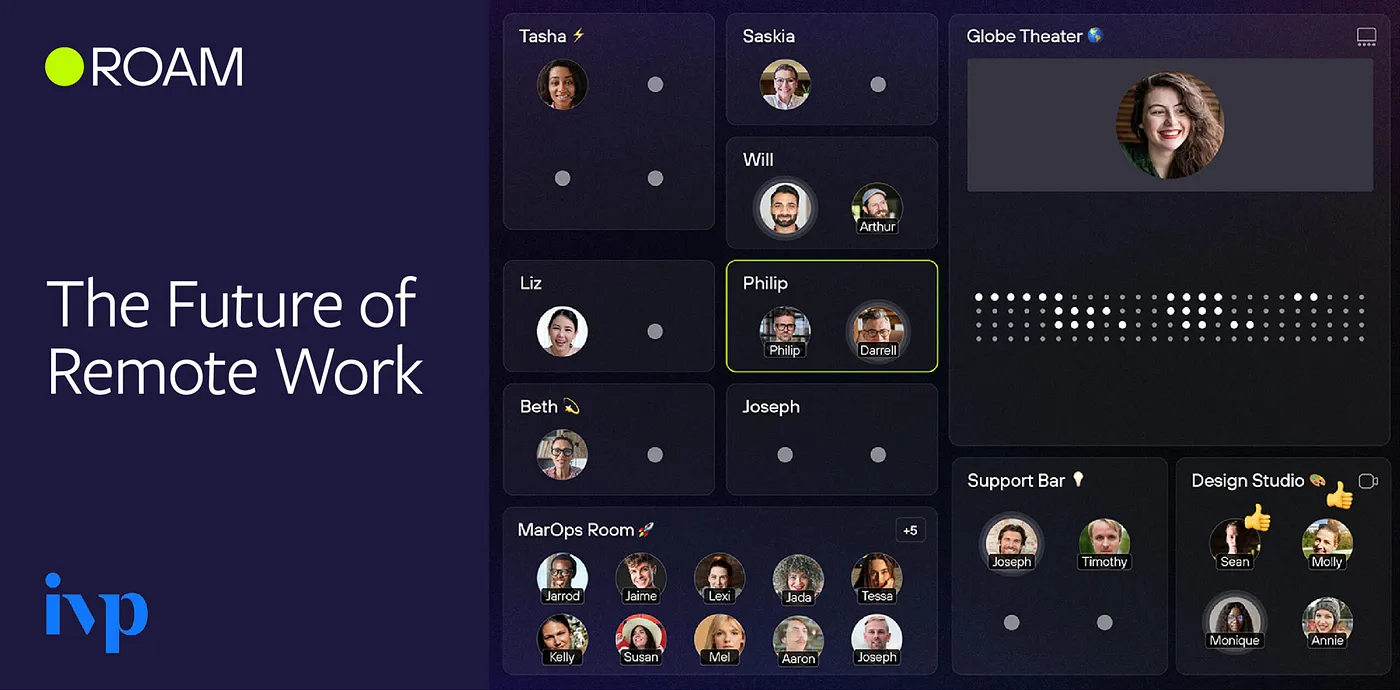
A Gallup survey last year found that 8 in 10 people are working hybrid or remotely. And while remote and hybrid workers have proven they can remain productive even when not in the office, the software and tools to make their lives easier have been slow to develop. Over the past few years, we’ve all experienced the limitations of meeting and collaboration software, which were never intended to replace offices. This has led to a new breed of virtual office platforms called virtual offices. These virtual offices are digital replicas of physical spaces dedicated to getting your work done alone and with co-workers. They are designed to offer transparency, ease of communication, and collaboration and are committed to how you and your company work. Roam recently raised $40 million and is one such platform provider. Their virtual headquarters allow employees to drop by, attend video conferences or town-hall meetings, and get work done. I expect we’ll see more and more of these virtual office platforms start to launch in the coming year.
ROAM is a new collaboration platform that is customizable to meet the needs of all distributed teams.
4. From security to resiliency
Our society has become dependent on digital tools and technologies, and the impact of cybersecurity breaches and attacks cannot be overstated. When cybersecurity fails or is ill-equipped, several aspects of our lives are at risk, from our data and identities to our safety. That’s why there are increasing efforts underway not just to prevent attacks but also to be prepared to withstand them and quickly recover if they do occur. Moving beyond cyber security to cyber resiliency will become increasingly important this year, with more technological emphasis on risk assessments, detection and response, data recovery, and compliance.
5. Sustainable technology
Net zero climate goals and environmentally minded consumers mean that tech companies―and companies across all industries―will need to step up their sustainability credentials in 2023. Consumers are increasingly aware of their choices and environmental impact and want to select brands that prioritize sustainable practices and values. At HP, we have long been proponents of climate action. Our mission is to drive toward a net-zero carbon, fully regenerative economy while engineering the industry’s most sustainable portfolio of products and solutions. As seen at CES recently, companies will be pushing the sustainable innovation envelope this year. New technologies are being deployed, from electric watercraft to clean water robots and vertical farms, to solve some of our toughest sustainability challenges.
The Candela C-8 electric hydrofoil boat @ CES 2023 in Las Vegas (Photo by Patrick T. Fallon / AFP).
6. Super Apps
In our increasingly mobile-first world, the desire for apps to do more and more is paramount. That is spurring a new application platform called “super apps.” Think of them as Swiss army knife-like applications that perform as a suite of multiple mini apps. WeChat is probably one of the best-known super apps, with the ability to message, shop, stream content, and even book a trip all in one place. Many other super apps are also rising in popularity, including Revolt, an all-in-one money management app. Omni is one of South America’s fastest-growing apps that allows you to do everything from bike-sharing to managing your finances and health. Super apps have also made their way into the business realm, with apps like Microsoft Teams, Slack, and Peerbie making it easier for teams to communicate and get work done.
7. Metaverse goes phygital
As technology develops, we will continue to see the real world and our digital worlds synchronize in new and exciting ways. One way the metaverse does this is by bridging the physical and digital worlds to create a cohesive user experience. The need for this seamless physical-digital experience is growing. Thanks to NFTs, the metaverse “phygital” (a bundle of physical and digital goods) is arguably one of the most exciting applications of these blended experiences. Brands are creating NFTs and/or virtual storefronts in the metaverse to offer their products to a broader audience. With the gradual adoption of the metaverse phygital infiltrating every sector in the coming years, we’ll see new buying behaviors, purchase patterns, and physical brand and digital creator collaborations. Some recent examples include Holographic NFT Display Cubes, digital and physical clothing, phygital retail stores, and collectible craft cocktails.
An ultra-exclusive 1 of 1 digital and physical hoodie crafted by MCQ with an embedded NFC chip which allows the product to be registered via the brand’s own blockchain. (photo: MCQ)
8. Spatial computing
From Fortnite to virtual reality (VR), spatial computing is essential to our current and future digital experiences. In previous iterations of computer games and virtual worlds, we moved using 2D mouse pointers on screens. Now, more and more, we are transitioning to 3D experiences, which feel much closer to how we move around in the physical world. Spatial computing allows users to digitally interact in 3D vs. 2D, which is more intuitive for most people and will enable us to interact with a digital world, similarly to how we navigate the physical world. VR/AR/MR are good examples of this, but so is playing Fortnite on your phone.
9. Ambient computing
Making computing more ubiquitous and seamless to users is called ambient computing. From the smart thermostat heating your home to the perfect temp at the right time to your favorite AI device turning on your TV or lowering the lights, ambient computing continues to become increasingly integrated into our everyday lives. I expect to see more advancements in this space, especially in our hybrid work lives. At CES, HP just launched the HP E-Series G5 Monitors, which include an Ambient Light Sensor that automatically adjusts the screen brightness. We also introduced a suite of PCs enhanced by HP Presence, offering intelligent camera face tracking for video calls and PC hibernation mode based on usage patterns. These are features, enabled by technology, that work seamlessly together in the background to create a better user experience.
The HP Dragonfly Pro is engineered to optimize and balance performance and includes HP Presence software for enhanced audio and video collaboration experiences.
10. Web3 2.0
I also expect that 2023 may be the year we see blockchain gain traction in enterprise applications. Blockchain saw much skepticism in 2022 with many wondering whether it is a technology in search of a problem or something the world really needs. The jury is still out, with people taking a position on both ends of the spectrum, sometimes with the ‘enthusiasm’ of a presidential election, but my bet is that in 2023 we’ll see use cases and adoption emerge in the enterprise space that will start to point at where blockchain technology could gain more widespread traction in the future. I also think blockchain technology will need to evolve to meet enterprise needs — sustainability, scalability, and performance — so it’s possible the blockchain of tomorrow will look very different from the blockchain of today, ushering in the era of Web3 2.0.
As ChatGPT said, it’s difficult to predict precisely what the most significant technology trends will be this year, but these are the ones I’ll be tracking at the top of my list.
What do you think of the trends above? Are there others you think will rise to the top 10?
The lasting impact of remote work results in a reassessment of the IT infrastructure that enables workforce automation capabilities. Worldwide IT spending is expected to reach $4.5 trillion in 2022 as the post-pandemic recovery continues and remote and hybrid work takes an even greater hold on businesses everywhere. This creates a significant opportunity for companies looking to bridge the gap between home and office work, create remote first solutions, automate workplace processes, and create a more seamless experience for employees.
Digital products and services will play a critical role in these digital transformation efforts, requiring continued investment in remote-first technology implementations and new technologies. Peerbie, for example, transforms how teams work with one super app for everyone and everything needed to get work done.
It’s estimated that 31% of all workers worldwide will be hybrid or fully remote in 2022. The U.S. is projected to harness the trend, with remote workers reaching 53% of the workforce. A hybrid workforce will continue to increase the demand for PCs and tablets. In fact, in 2021, PC and tablet shipments exceeded 500 million units for the first time in history, highlighting the demand across both business and consumer markets. Hofy offers a device pre-configuration service to give IT teams peace of mind–knowing that any devices they provide are set up correctly and securely–and to spare new hires a tedious first-day setting things up.
A hybrid workforce will continue to increase the demand for PCs and tablets.
The pandemic-fueled growth in the adoption of software robots designed to ease routine office work is making at least one task easier for CIOs: selling the idea to their corporate bosses. The technology — robotic process automation (RPA), or software bots — became a critical tool last year during COVID-19 lockdowns and office closures as companies worked to keep their businesses up and running. Many turned to bots to handle tasks like processing payroll data or expense reports and fielding call-center queries. At the height of the pandemic last year, UiPath said it added more than ten corporate customers daily.
The complexity and interdependency of systems today mean that when something doesn’t work between two entities — be it apps, servers, or something else — the effects can be disastrous unless those overlaps can be detected and mitigated ahead of a live deployment or found and fixed quickly even if they are already out in the wild. Gluware has built a platform that aims to do just that — specifically by providing network orchestration and automation tools that identify and automatically fix when something is about to go awry on a network.
Opportunities to automate common workplace processes are everywhere, which is why automation is becoming a common element of every business. This includes providing good customer service, streamlining the hiring process, or managing marketing campaigns more efficiently. As technology improves, more tasks will become suitable for automation.
Opportunities to automate common workplace processes are everywhere, which is why automation is becoming a common element of every business.
Machine learning and artificial intelligence enable new forms of “smart” automation. As the software learns, the more adaptable it becomes. These technologies open the door for the automation of higher-order tasks in addition to basic, repetitive tasks. There’s much focus now on tasks humans don’t want to do, but in the future, automation will not just be about automating those tasks humans are doing today. Still, it will be about realizing potential opportunities. For example, RPA can automate tedious insurance processes as insurers undergo many manual but critical processes involving disparate systems. RPA can help streamline and automate these processes without changing large amounts of legacy code — assisting insurers in cutting costs in necessary departments like underwriting, claims, and regulatory and compliance, as well as expedite policy decisions.
As data sets become more thorough and available, and as software draws on more sources and synthesizes more data sets, contextual information in human decision-making will only improve. Machine learning will serve as a supplement to–or perhaps even an enhancement to–human knowledge. Combine AI capabilities with improved data retention through the Internet of Things (IoT), and the possibilities are endless. Kadence is building an all-in-one solution for desk booking, room scheduling, people, and visitor management. The company’s platform helps transform workspaces into smarter, safer spaces to create frictionless experiences. It also offers workplace leaders to deliver data-driven insights into how people use spaces to work, enabling clients to manage their spaces when work patterns and workflows change dynamically in response to our ever-changing world.
VC and startup opportunities
Workforce automation sectors are becoming a hotbed for venture capital investing. In 2021, HR technology alone received $12.3 billion in investments worldwide. At the same time, global funding to RPA companies hit a record high of $3.5B, driven predominantly by a handful of mega-rounds (deals worth $100M+). And in the first part of this year, we saw Lattice, a start-up making software to help employers fight the “big quit,” tripling its valuation to $3 billion in 10 months. While Envoy, the leading workplace platform that allows companies to reopen safe and flexible workplaces, secured $111 million in Series C funding led by Brookfield Growth. Envoy’s workplace platform is built to solve the problems of flexible workplaces where teams split their time between home and the office.
In 2021, HR technology alone received $12.3 billion in investments worldwide.
These are exciting times for startups in this space, and these are a few of the ones that have caught our attention.
EthSign is a developer of a decentralized application designed to revolutionize agreement and signing. The company’s application helps to make comments, edit, and access each version of your electronic agreement without privacy and communication concerns, enabling clients to have a simple and decentralized alternative and helping parties to upload a document with pending signatures.
Seatti is a developer of a flexible working platform intended to bring together your hybrid team. The company’s platform provides Microsoft Teams and Office365 integrated SaaS solutions allowing you to book a workspace in or outside of the office and share location plans with the team.
Namely is a developer of a human capital management platform intended to meet the complex demands faced by today’s HR professionals. The company’s cloud-based platform provides tools across payroll, benefits, human resource information, and talent management, enabling mid-sized companies to focus on developing their people and providing a better employee experience.
Diversio is a developer of a people intelligence platform intended to measure, track, and improve diversity, equity, and inclusion. The company’s platform is created using artificial intelligence to bring rigor data, diagnosis, and analysis to help organizations become more inclusive, develop cutting-edge technology, and eliminate barriers to diversity and inclusion. Their platform enables users to trust a platform that values feedback, transparency, collaboration, and impact.
Planless is a developer of a project and task management tool designed to automate teamwork. The company’s intelligent platform takes care of the planning by finding the people in the team who are the best suited to perform a task depending on their knowledge and availability, enabling organizations to focus on their core business.
TeamEQ can accelerate results through intelligent teams for leaders who no longer want to guess the situation of their teams but instead take their decisions based on actual data. Team analytics and intelligence platform designed to transform any group into a high-performance team that exceeds its objectives. The company’s product uses artificial intelligence to track the impact of a person’s actions. It guides people in real-time with transparent data and predictive algorithms while offering tailored people management strategies and training programs for leadership development, enabling businesses to monitor performance, discover and reduce attritions and boost productivity by promoting collective intelligence engagement and well-being.
TenSpot (Future of Work, HRtech) is a workforce engagement platform that helps companies connect and engage distributed teams to boost employee happiness, morale, and productivity. The company’s platform combines live and on-demand content with sophisticated tools that help measure engagement and sentiment, enabling clients to improve their culture, identify leaders, and create a space that welcomes everyone.
The extent to which automation transforms the economy remains to be seen, but it appears inevitable that we’re headed toward a future of more automation. What this means for businesses, workers and consumers will be the subject of enormous debate moving forward. One thing seems inevitable, however: if it can be automated, it will be.
What happens when computers become intelligent? We are just now beginning to see what this future may look like, as gains in artificial intelligence (AI) are increasing. From intelligent self-driving cars, to AI-powered robot surgeons and smart factories, computers and machines that can learn and adapt will soon change the world as we know it.
While we are still in the nascent phase of AI technology, billions of dollars are being spent on research and development, helping to accelerate AI advancements. IDC predicts AI spending will increase by more than 50 percent year over year and reach $57.6 billion in investments by 2021.
One industry poised for massive disruption from AI-led technology is transportation. Leading automotive manufacturers and technology companies are in a heated race to develop fully autonomous vehicles (AVs) for use as taxis, commercial transportation, personal transportation and more.
All major car manufacturers are currently exploring AV technology. Each day in Arizona, hundreds AVs developed by Google’s Waymo, Lyft, General Motors and Intel roam the streets of Phoenix and other cities. Arizona lawmakers intentionally created minimal regulations for AVs in order to attract AV-related companies, which encouraged a sort of tech boom in the state. Safety advocates have criticized the state’s lax approach, claiming that more regulations around safety, auto cybersecurity, insurance and privacy have not been worked out.
While AVs for personal transportation have garnered a great deal of attention, AI is now disrupting virtually all other areas of transportation. Uber, Waymo and other companies are testing and using autonomous cargo trucks to deliver goods. GE transportation is actively using AI to develop “intelligent” locomotives to improve efficiency of rail transport and Hitachi is using AI to reduce power consumption. Major airline companies already use autopilot technology to do most of the work once a plane is in the sky and can even land a plane in inclement weather. Now they are researching how AI can replace more of a pilot’s responsibilities.
AI is even having an impact on city infrastructure and planning of cities. The U.S. Department of Transportation issued a call for proposals from cities looking into smart infrastructures. It will award 40 million dollars to a city that can demonstrate how to solve critical municipal challenges using innovative transportation technologies, data and applications.
“It is very clear to us that autonomous technology will fundamentally change the industry,” said Michael Ableson, GM’s vice president of global portfolio planning and strategy. “There is no greater impact on the industry than self-driving cars.”
The brains behind self-driving vehicles Soon, we may well see the road filled with AVs. According to WinterGreen Research, over 90 million autonomous-capable consumer vehicles, cars and light trucks will be on the road worldwide by 2023.
In order for this to happen, a fully functioning, safe AV needs an enormous amount of computing resources, power and AI that can sort through large amounts of data in milliseconds. The biggest challenge facing AVs is to improve the software powered by machine learning and AI to correctly interpret data that is fed through the car’s sensors. It needs to safely drive a vehicle through various weather scenarios and identify and respond to other cars, animals, pedestrians, bike riders and more. In other words, the AI that controls self-driving cars needs to be error-free. “This is not a recommendation engine for Netflix,” said Danny Shapiro, senior director of automotive at chipmaker Nvidia. “The AI has to be spot on.”
AI is already being used for AVs today, including Tesla’s Autopilot system that helps drivers navigate highways and parking lots. Tesla claims every vehicle it produces has the ability for complete, autonomous driving, yet it will only be activated when the necessary software and government regulations are in place.
Cameras inside certain vehicles now identify drivers and track eye position to see if the driver is distracted or asleep. Cars also now identify and predict potential cross traffic danger. Auto braking features that prevent collisions are in place. In fact, if you have a 2017 car, it most likely has level two partial automation features, which can be steering assistance and accelerating or decelerating under certain situations, as defined by the Taxonomy and Definition for Terms Related to On-Road Motor Vehicle Automated Driving Systems. The next three levels in the classification system are all based on vehicles with automated driving systems that monitor and respond to the environment.
As we continue the road to AI-enabled AVs, here are some other exciting details that are expected to emerge in the coming years:
Automotive self-diagnostics and maintenance As automobiles become more like computers with wheels, they are increasingly becoming connected and, with artificial intelligence capabilities, will predictively identify maintenance needs. By combining data from advanced Internet of Things sensors, maintenance logs and other external sources, AI will help with better prediction and avoidance of machine failure, according to McKinsey. This could reduce maintenance costs by up to 10 percent.
Predii, a company that provides a platform that enables organizations greater efficiency for repairs and maintenance, predicts that connected cars will be a source of high-frequency data for predictive and proactive maintenance.
“The availability of continuous streams of data from vehicles will empower vehicle monitoring businesses which are responsible for continuous health checks of your vehicle or fleets of vehicles,” according to a white paper by Predii. “Intelligent repair solutions will monitor check engine lights, diagnostic trouble codes, symptoms and data from advanced driver assistance systems.”
Automated cars are programmed to obey laws Imagine intelligent cars that can drive somebody home who has consumed too much alcohol. Or takes over the wheel if somebody falls asleep. One of the key predicted benefits of having AVs on our roadways is the reduction of traffic accidents. In 2017, there were an estimated 40,000 traffic fatalities in the U.S., with more than 90 percent of them caused by human error, according to the National Safety Council.
Self driving cars are far better than humans at obeying traffic laws, since they are programed to do so. They don’t text and drive, or drive under the influence of alcohol, or drive too fast, which makes them much safer than humans.
Government traffic planners are optimistic that AVs won’t go over the speed limit, which will produce more cohesive and calm roadways with fewer accidents, according to a report last year on speed limits by the National Conference of State Legislatures.
Car Rental Companies become Self-Driving Car Fleet management operators If a car can drive itself, do we really need to own our own vehicle? Can’t we call Uber to pick us up in one of their AV taxis? That’s the question posed by various automakers, technology and rental car companies, who envision a near future full of “robot taxis” through a ride sharing or rental car service. This “on-demand autonomous” vehicle is a vision of Michael Ableson, GM’s vice president of global portfolio planning and strategy. And it’s why GM paid $500 million for a stake and a strategic alliance in Lyft, the second biggest ridesharing service behind Uber. Ford isn’t far behind, since in August 2016 the company announced a “high-volume, fully autonomous vehicle for ride sharing” by 2021.
With a fleet of AVs, car-sharing companies are expected to have a coherent view of an AV fleet, monitor and manage it, detect issues and enforce policies. Operators can gather data of each individual vehicle including location, mileage, fuel consumption, driving behaviors and even if a door is left open. The AVs can then be remotely controlled to drive to service stations for repair and refueling.
Reroute traffic based on congestion, accidents, etc. Google maps and other map-based apps have already helped road warriors find the shortest route possible to their destination. As AVs include greater connectivity, the AI behind it can gather data regarding traffic patterns, accidents and slows downs and appropriately — and automatically — reroute for optimal travel. This will help to ultimately lessen traffic congestion.
Tesla’s complete self-driving system will use GPS technology to find the optimal route to its given destination. If the car isn’t given a destination, it can check the owner’s calendar to determine the best destination or take the owner home.
Vehicles as “digital living environments” It now takes the average U.S. worker 25 minutes to travel to work, according to the U.S. Census Bureau. AVs are expected to free up time for passengers to focus other tasks, including work, socializing, viewing entertainment, etc. Bosch has created a show car to display the company’s “digital living environment” inside AVs. It features large-surface monitors with the ability to have video conferences, display real-time traffic and weather information, email accessibility and entertainment options.
“Alongside the home and the office, the car will become the third living environment and a personal assistant,” said Bosch CEO Volkmar Denner.
Autonomous truck services In October 2016, the world’s first successful autonomous truck delivery was completed when an Uber truck carried 50,000 cans of Budweiser beer over a distance of 120 miles from Fort Collins to Colorado Springs, CO. Now Uber’s autonomous trucks are delivering goods throughout Arizona. Other AV companies are following suit.
A report by the International Transport Forum claims autonomous delivery vehicles will save costs, lower emissions and improve road safety, compared with trucks operated by humans. New autonomous trucks will have the ability to perform a host of delivery duties including pick up garbage, deliver packages and food, and a numerous other services. All these services can be optimized through advanced logistics for traffic flow.
Public transportation safety and usage optimization Public transportation also stands to benefit from the use of AVs and the associated logistics operations systems.
In Helsinki, Finland, trial is underway where an autonomous bus transports up to a dozen passengers at a time through a quarter-mile route with restaurants and saunas. The city is expected to expand the trial and provide autonomous bus services throughout the city, in order to measure customer response and basic operations data.
“There’s a lot of demand to solve the last-mile problem,” said Harri Santamala, the city’s project coordinator, referring to the challenge of transporting passengers from centralized transit hubs to their final destinations. “I think this is something we could do with automatic buses. On a real-time basis, we can adjust how they drive and where they make the connection. We’ve learned with this pilot that you can be flexible and synchronize with this technology. We could scale this up to the entire fleet.”
Metro Magazine suggests numerous benefits to a municipal transit system powered by autonomous buses:
Trip-planning information is integrated across modes and agencies (public and private), so the general public has the ability to evaluate their travel options with comprehensive information on travel time, cost, environmental impact, and more.
Real-time schedules for all transportation modes are centrally available.
Vehicles and transit schedules are “right-sized” so fleets are used effectively and there are no more empty buses.
Fare payment is made electronically and only one payment is needed for each whole trip.
Travel times are generally predictable and well-communicated.
Lower income and people with disability populations have access to all of these services.
The future of AVs are near A world of intelligent vehicles is no longer a novel science fiction idea, but a near future. Passenger busses, taxis, personal vehicles, airplanes, trains and more are set to improve the way we get around. Ford, GE, Volkswagen, Audi, Toyota, Ford, BMW and Nissan are all hard at work creating and testing AVs they say will be road ready by 2020. And the U.S. Secretary of Transportation stated at the 2015 Frankfurt Auto show that he expects driverless cars to be in use all over the world within the next 10 years.
This AI-driven transportation revolution is expected to make our roadways safer, ease traffic congestions, make our transportation systems more efficient and make transportation more enjoyable. And, the trend toward urbanization might be reversed as AVs give people more time to work and be productive.
AI’s potential impact on transportation is immense. Advancements will continue to reshape the industry, how we drive, deliver and ship goods on earth and possibly in space in the future. Get ready to start your AI-powered engines.
Artificial intelligence (AI) will make a direct and immense impact on the healthcare field. Technology has already improved diagnostic accuracy, drug delivery, and patients’ medical records, and AI will only add to those breakthroughs. AI can mine medical records, design personalized treatment plans, handle administrative tasks to free up medical providers’ time for more meaningful tasks, and assist with medication management.
AI has already made headway in medicine, helping to do everything from processing x-ray images and detecting cancer to assisting doctors in diagnosing and treating patients. In fact, the global AI healthcare market is expected to reach $22,790 million by 2023.
And the general public is on board. According to a recent survey, 47% of people were comfortable with AI assisting doctors in the operating room. More than half of respondents over age 40 were willing to go under the knife with the help of technology, compared with only 40% under age 40. Additionally, six in ten participants (61%) were comfortable with their doctor using data from wearable devices, such as an Apple Watch or Fitbit, to assess their lifestyle and make recommendations based on that data.
So what healthcare areas will AI have an impact on in the next five to ten years?
Mining medical records
In our current age of big data, patient data is valuable. Often times, patients’ files are unorganized and mining their records to extract necessary medical insights can be a great challenge.
David Lindsay, founder of Philadelphia-based start-up, Oncora Medical, realized this struggle in radiation therapy. He and his team built a data analytics platform that helps doctors design sound radiation treatment plans for patients, personalizing each one based on their specific characteristics and medical history.
Virtual healthcare providers
AI is being used to detect emotional health issues as well. x2 developed a mental health chatbot, Tess, that delivers on-demand, psychological support. Tess coaches you through tough times to build resilience, by having text message conversations — in the same way a therapist would. The coping strategies Tess delivers are based on the emotions and concerns you express in your conversations.
Beyond Verbal is another example of a company utilizing AI to track emotional well-being. The emotions analytics company, developed a vocal biomarker to potentially help patients and their providers recognize patterns and better understand their healthcare needs.
Sensly boosts, Molly, a virtual health care assistant which dynamically generates speech, receives images and videos, and offers complete remote monitoring, with support for the common and high-cost conditions.
Drug development
Clinical trials can take more than a decade and cost millions of dollars. AI can play a part in speeding up the process of drug development, along with making it more cost effective.
GSK, a company that researches, develops, and manufactures innovative pharmaceutical medicines, vaccines, and consumer healthcare products, is active applying AI to its drug discovery arm. In fact, it created an in-house AI unit called “Medicines Discovered Using Artificial Intelligence.” In 2017, the company announced a partnership with Insilico, to identify novel biological targets and pathways.
Overall, AI can assist healthcare providers in managing their patients’ care more efficiently. I don’t believe AI will take healthcare jobs, but instead transform them. AI will provide the opportunity for healthcare works to take on higher impact jobs or at least offload their less desirable workload. AI will create growth and introduce more opportunities for the human workforce. It has the potential to automate mundane tasks, allowing humans to spend more time on more important tasks. If they can collaborate with the human workforce in hospitals and doctors’ offices, it will take care of the most important aspect of healthcare — improving patients’ experiences.






















 Andrew Bolwell